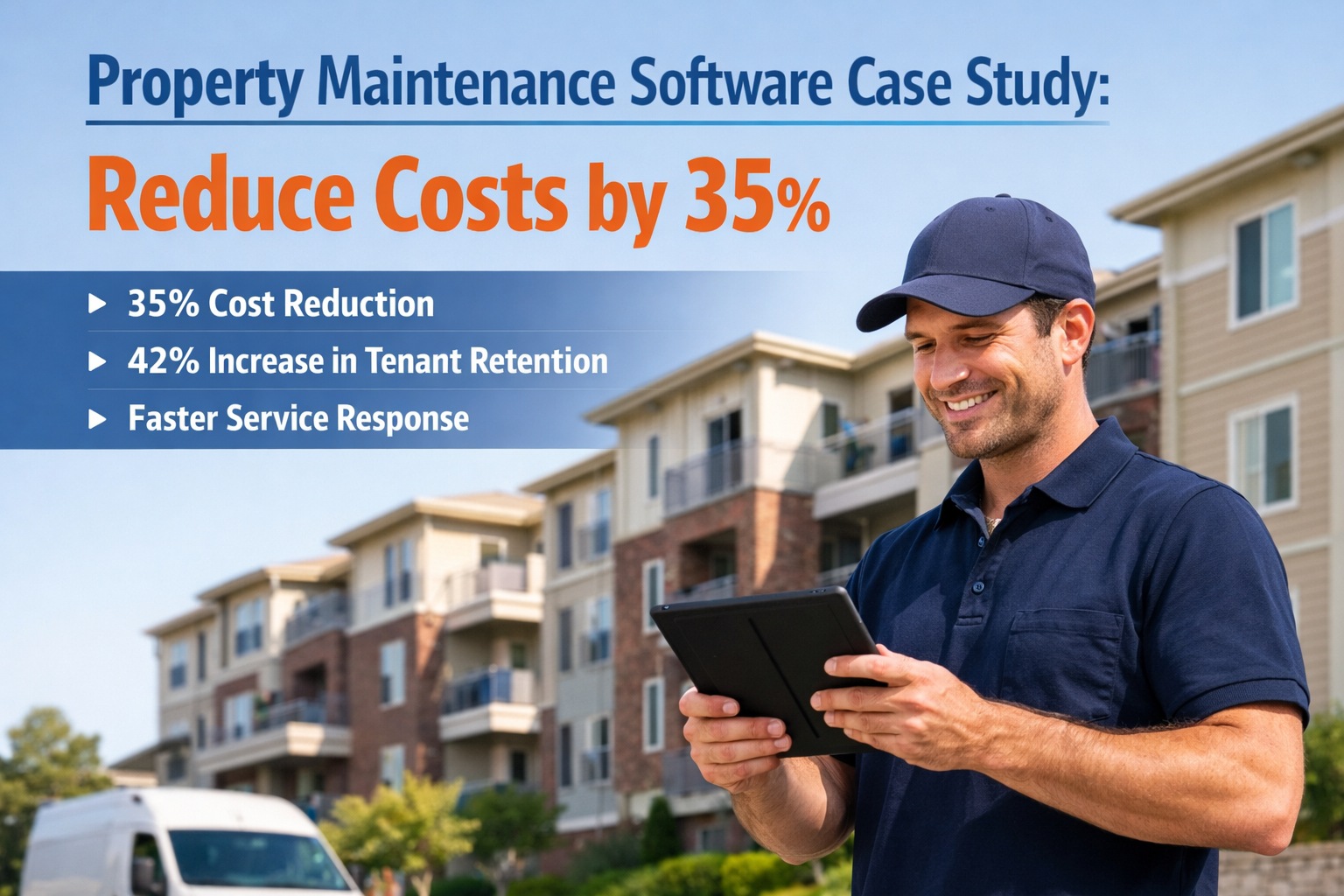
For property operators, maintenance is the single most visible expression of management quality — it is the first thing tenants experience when something breaks and the last thing they remember when deciding whether to renew. This case study follows Crestline Property Group, a mid-market multifamily operator managing 450 residential units across 9 properties, as they replaced spreadsheets and phone-tag maintenance workflows with OXMaint CMMS — cutting maintenance costs by 35%, increasing tenant retention by 42%, and transforming resident satisfaction from a persistent liability into a competitive advantage.
In an industry where maintenance costs rose 12% in 2024, tenant turnover runs $1,750 per unit, and 39% of property managers spend 20+ hours monthly just handling requests — Crestline's results offer a replicable model for operators of any portfolio size.
Maintenance Eating Into Your NOI?
See how OXMaint helps property operators turn reactive repairs into preventive savings — with real examples from multifamily portfolios like yours.
Portfolio Snapshot: Crestline Property Group
The Problem: Reactive Maintenance Draining Margins and Tenants
Crestline's properties — a mix of garden-style apartments, mid-rise buildings, and townhomes built between 1998 and 2015 — were reaching the age where HVAC systems, plumbing, and appliances all started demanding attention simultaneously. But the real problem wasn't aging infrastructure. It was a maintenance process designed around crisis response rather than prevention.
The Tenant View
The Operations View
The Hidden Cost of Turnover
At 31% annual turnover across 450 units, Crestline lost approximately 140 tenants per year. Each turnover cost an average of $4,200 in vacancy loss, unit-turn expenses, and leasing costs — totaling nearly $588,000 annually. And that number did not include the lost rent escalation from keeping a long-term tenant versus re-leasing at market rate in a competitive environment.
The OXMaint Solution: Resident-Facing Meets Operations-Grade
Crestline needed a system that did two things simultaneously: give residents a modern, transparent service experience, and give the operations team the structure to prevent problems instead of chasing them. OXMaint delivered both.
The Results: 35% Cost Reduction, 42% Better Retention
Within 9 months of full deployment, every metric Crestline tracked — financial, operational, and resident satisfaction — moved decisively in the right direction.
Complete Before vs. After Comparison
| Metric | Before OXMaint | After OXMaint | Impact |
|---|---|---|---|
| Per-Unit Maintenance Cost | $2,840 / yr | $1,846 / yr | -35% |
| Annual Tenant Turnover | 31% | 18% | -42% |
| Request-to-Resolution Time | 3.8 days | 8 hours | -91% |
| Reactive Work Orders | 87% | 34% | -61% |
| Maintenance Satisfaction Score | 2.8 / 5 | 4.6 / 5 | +64% |
| Emergency After-Hours Calls | 38 / month | 11 / month | -71% |
| PM Compliance | 12% | 91% | +658% |
| Vendor Spend Visibility | Manual tracking | Real-time per property | Complete |
Where the 35% Savings Came From
Cost reduction in property maintenance is not about spending less — it is about spending smarter. Here is the exact breakdown of how Crestline saved $447,300 annually across the portfolio.
The Retention Effect: Why Tenants Stayed
Tenant retention is the most valuable financial lever in property management — it costs 5 to 7 times more to acquire a new tenant than to keep an existing one. Crestline's 42% improvement in retention was driven by three visible changes tenants experienced daily.
ROI and Investment Summary
Lessons for Property Operators
Ready to Cut Costs and Keep Tenants?
Whether you manage 50 units or 5,000, the pattern is the same: proactive maintenance lowers costs and raises retention. See exactly how OXMaint works for property portfolios in a 30-minute walkthrough.