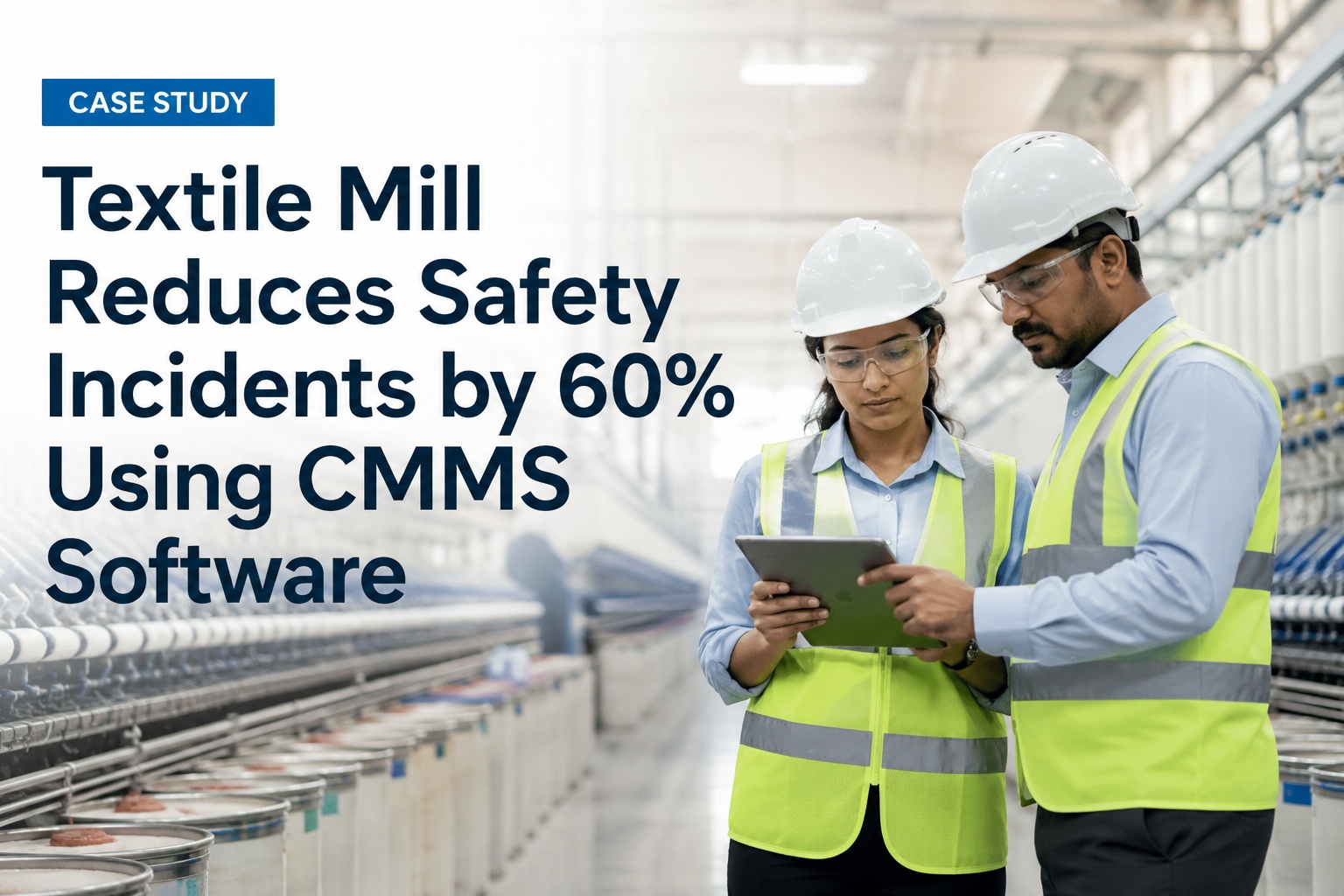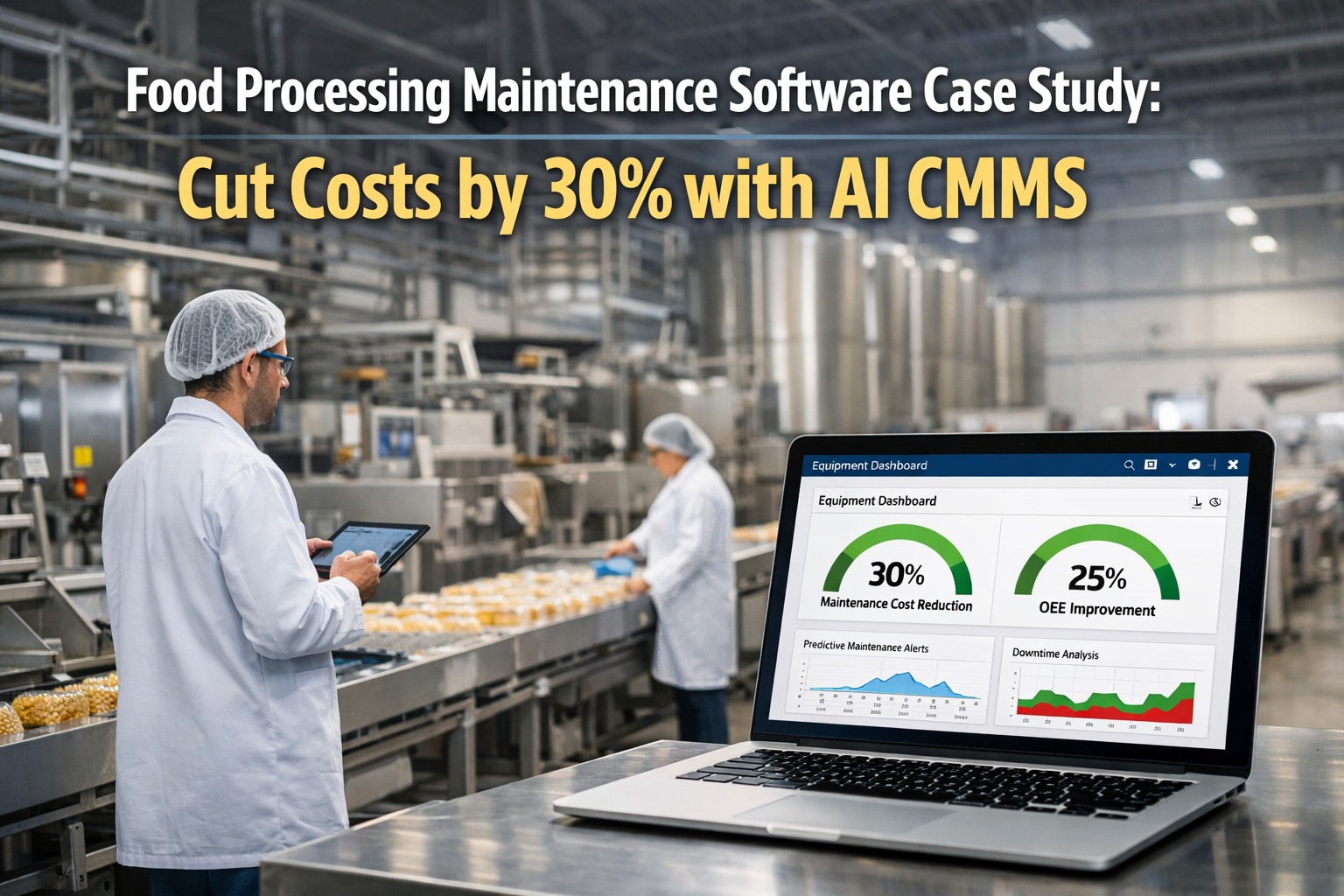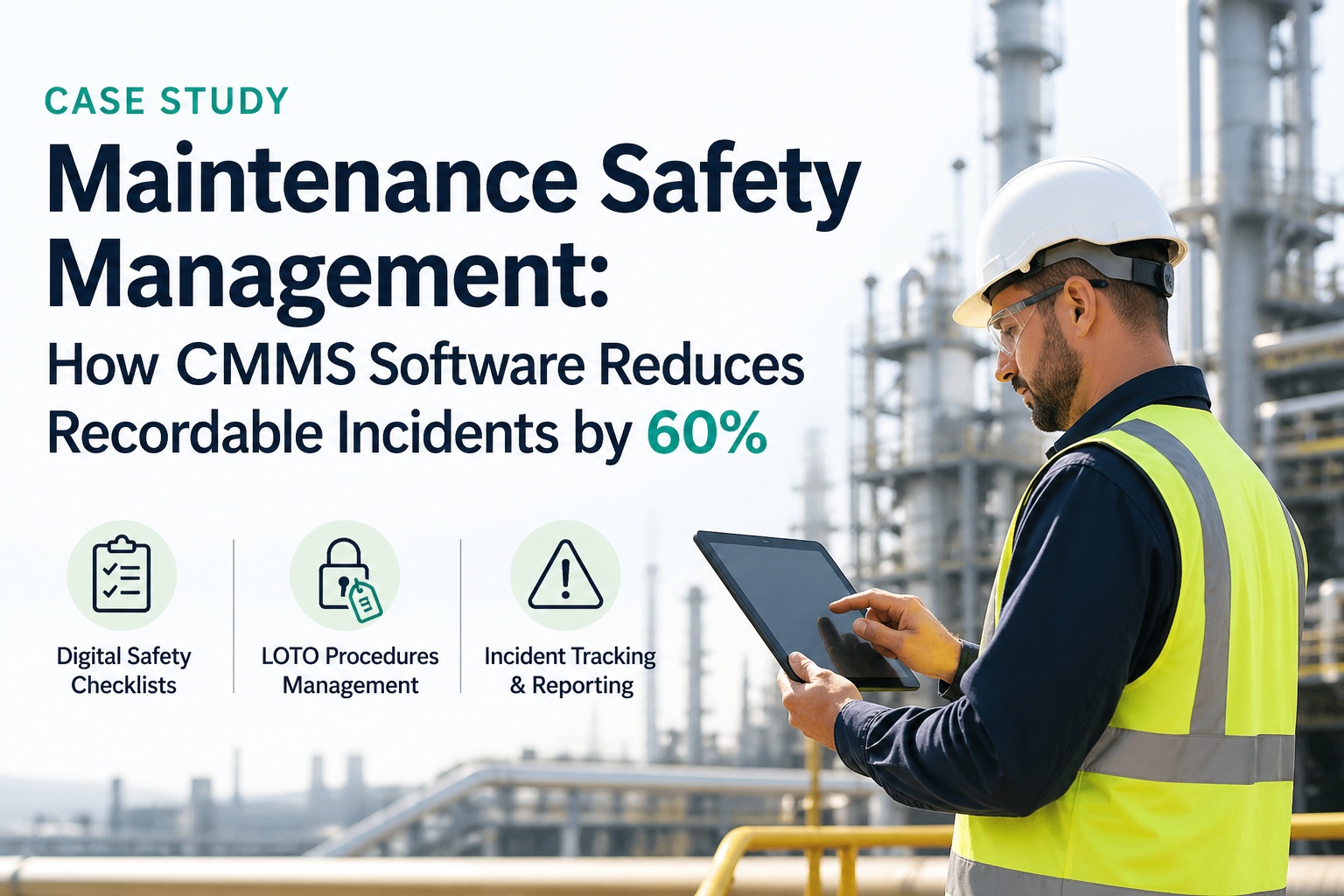
Every 7 seconds, a worker is injured on the job in the United States. In manufacturing alone, 220,000 workplace injuries are recorded annually — costing the industry over $170 billion in direct and indirect expenses. Yet the root cause of most recordable incidents is not a lack of safety awareness; it is a lack of systems that enforce consistent execution of safety-critical maintenance. This case study documents how Trident Precision Manufacturing, a 620-employee metalworking and assembly operation, used OXMaint CMMS to digitize safety checklists, enforce LOTO procedures, and automate incident tracking — reducing recordable incidents by 60%, slashing workers' compensation costs by 41%, and achieving 22 consecutive months without a lost-time injury.
For any facility where safety inspections still live on clipboards, LOTO compliance is verified by memory, and incident data is reconstructed from filing cabinets at audit time — Trident's results prove that the gap between a 4.0 TRIR and a 0.8 TRIR is not more training. It is a better system.
Still Managing Safety on Paper?
See how OXMaint digitizes safety inspections, enforces LOTO compliance, and builds audit-ready records automatically — in a walkthrough tailored to your operation.
The Problem: Paper-Based Safety in a High-Hazard Operation
Trident operates CNC machining centers, stamping presses, robotic welding cells, finishing lines, and manual assembly stations — environments where machine guarding, lockout/tagout, electrical safety, and PPE compliance are not optional but life-critical. Despite dedicated EHS staff and regular training, their safety performance was stuck at a TRIR of 4.1 — well above the manufacturing average of 2.8 — because the systems enforcing compliance were made of paper, memory, and good intentions.
The Five Failure Points
The OXMaint Safety Management System
Trident's deployment focused on one principle: make the safe way the easiest way. Every safety-critical task — from pre-shift inspections to LOTO verification to incident documentation — was digitized into workflows that technicians completed faster than the paper versions, but with 100% traceability and zero skippable steps.
Pre-shift, weekly, and monthly inspection checklists deployed to every machine via mobile app. Photo evidence required. No sign-off without completion. Auto-escalation if overdue by 1 hour.
Step-by-step digital LOTO workflows tied to each machine's specific energy isolation points. Technicians cannot proceed to the next step without photo verification of the prior step. Full audit trail.
One-tap near-miss reporting from any smartphone. Automatic root-cause investigation workflows. Pattern analysis across shifts, departments, and equipment — surfacing trends before they become injuries.
Results: 60% Fewer Recordable Incidents, 22 Months LTI-Free
Full Performance Comparison
| Metric | Before OXMaint | After OXMaint | Impact |
|---|---|---|---|
| TRIR | 4.1 | 0.8 | -80% |
| Recordable Incidents / Year | 26 | 10 | -60% |
| Lost-Time Injuries / Year | 8 | 0 (22 months) | Eliminated |
| Safety Inspection Compliance | 62% | 99% | +60% |
| LOTO Compliance (Verified) | Self-certified | 100% photo-verified | Full enforcement |
| Near-Miss Reports / Month | 4 | 38 | +850% |
| Workers' Comp Premiums | $890K/yr | $525K/yr | -41% |
| OSHA Audit Prep Time | 3+ weeks | Same day | -95% |
The near-miss reporting increase — from 4 to 38 per month — was not a sign of more danger. It was a sign of a safer culture. When reporting is frictionless, workers report. When workers report, leadership intervenes. When leadership intervenes, recordable incidents disappear. Start your free trial and digitize safety today
The Financial Case for Safety Management
Every $1 invested in safety prevention returns $4 to $6 in avoided costs. Trident's numbers confirm this ratio — and then some.
Lessons for EHS & Maintenance Leaders
Make Safety Systematic, Not Accidental
The difference between a 4.0 TRIR and a sub-1.0 TRIR is not more training — it is a system that enforces execution, captures near-misses, and generates audit-ready records automatically. See how OXMaint delivers that system in 30 minutes.