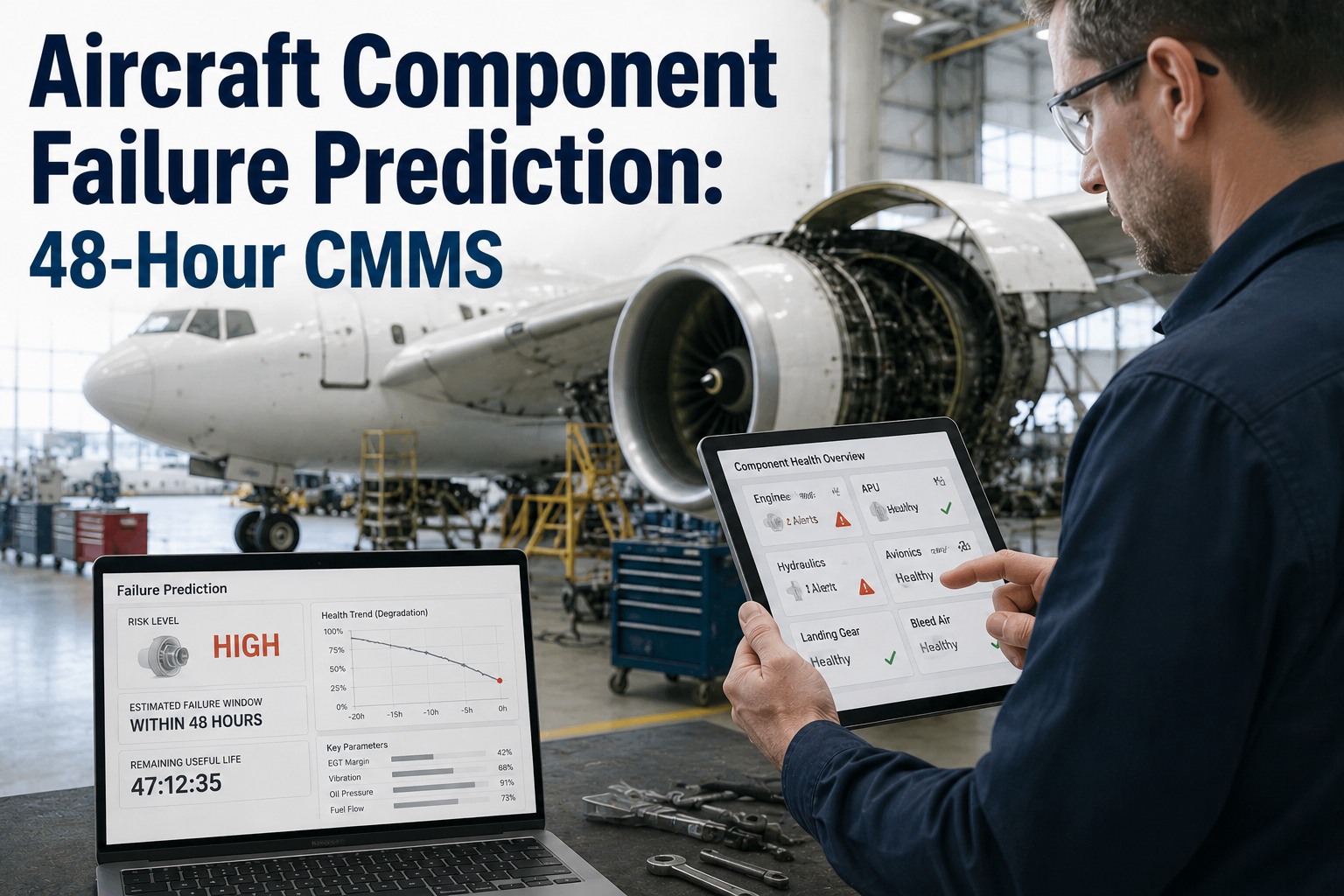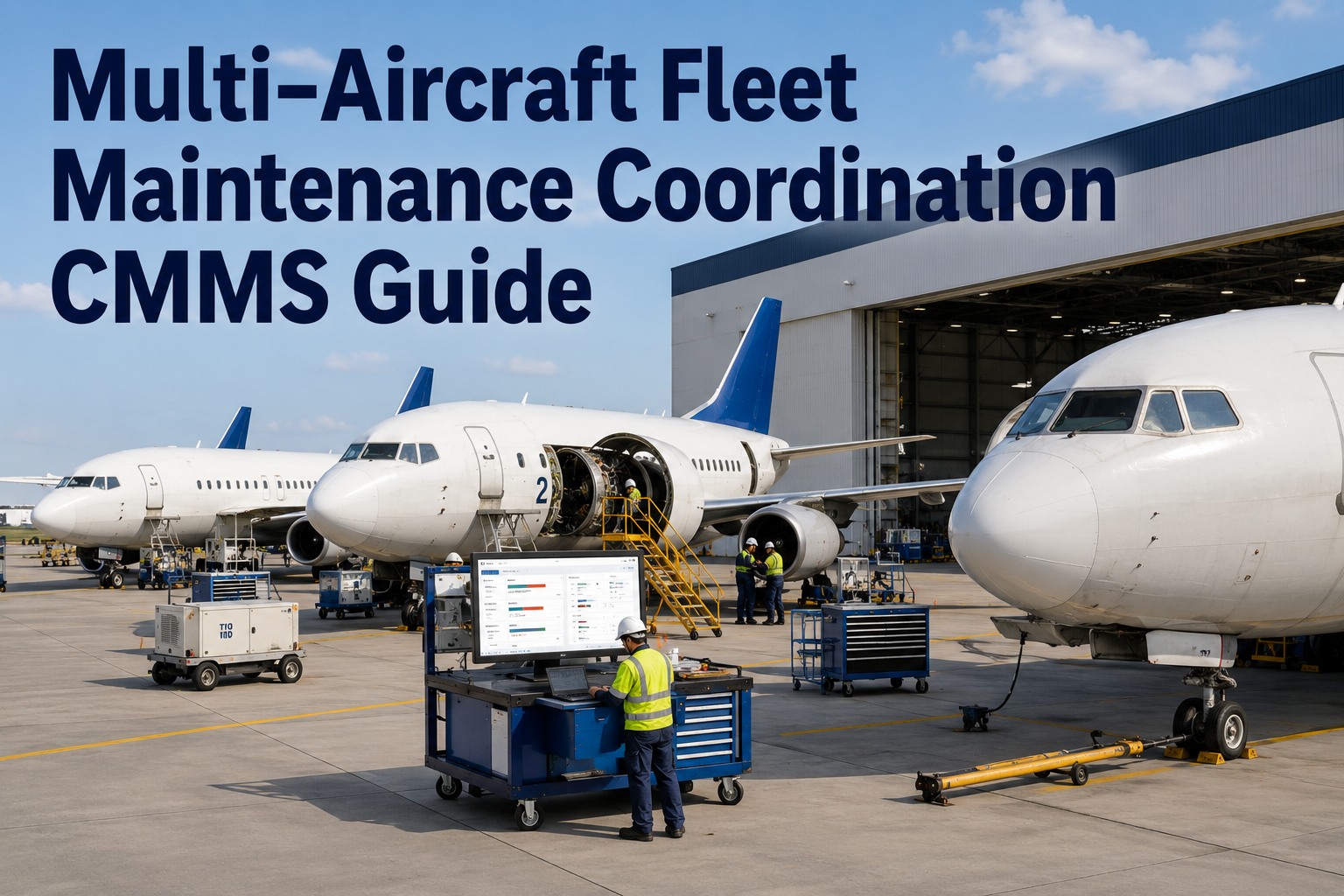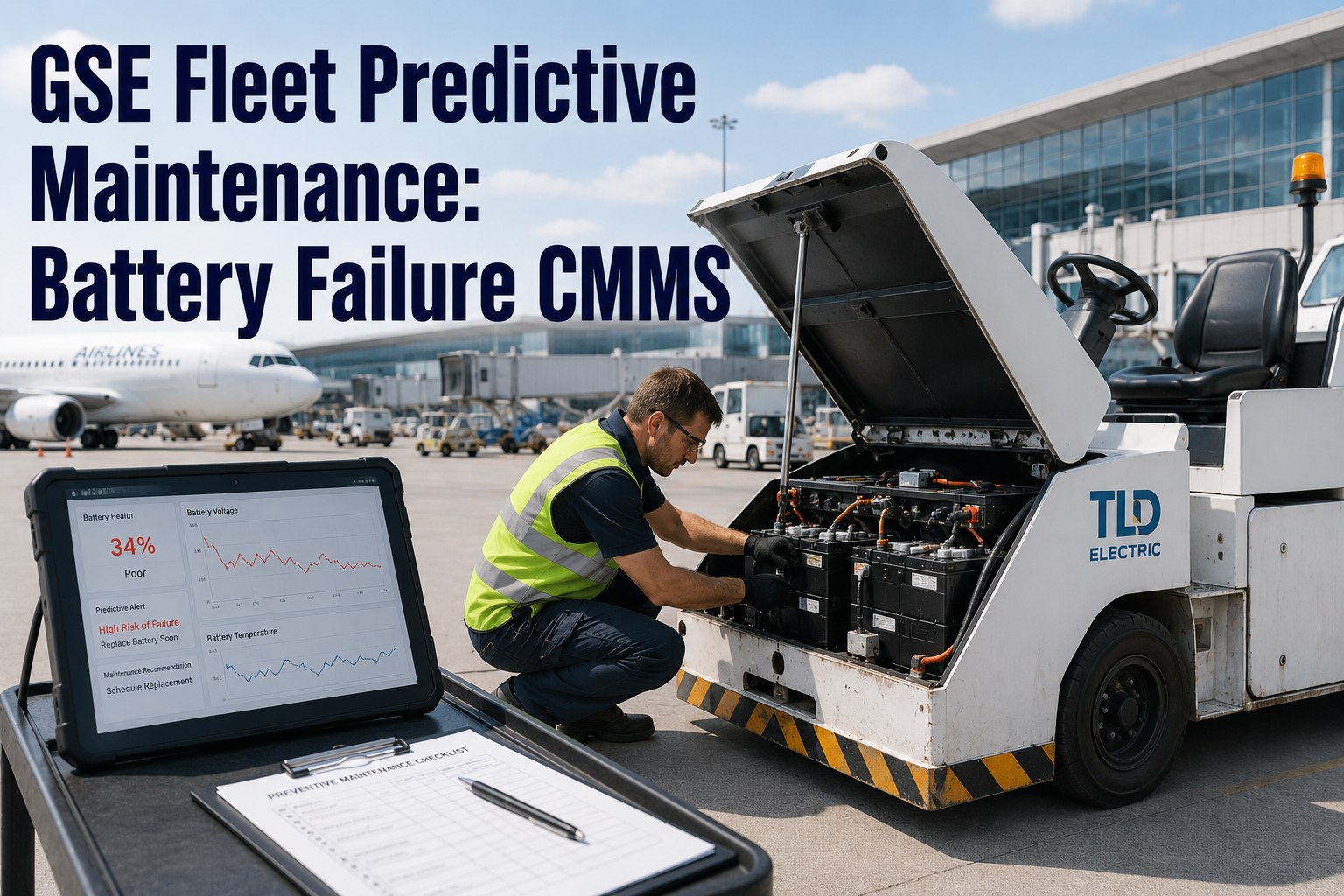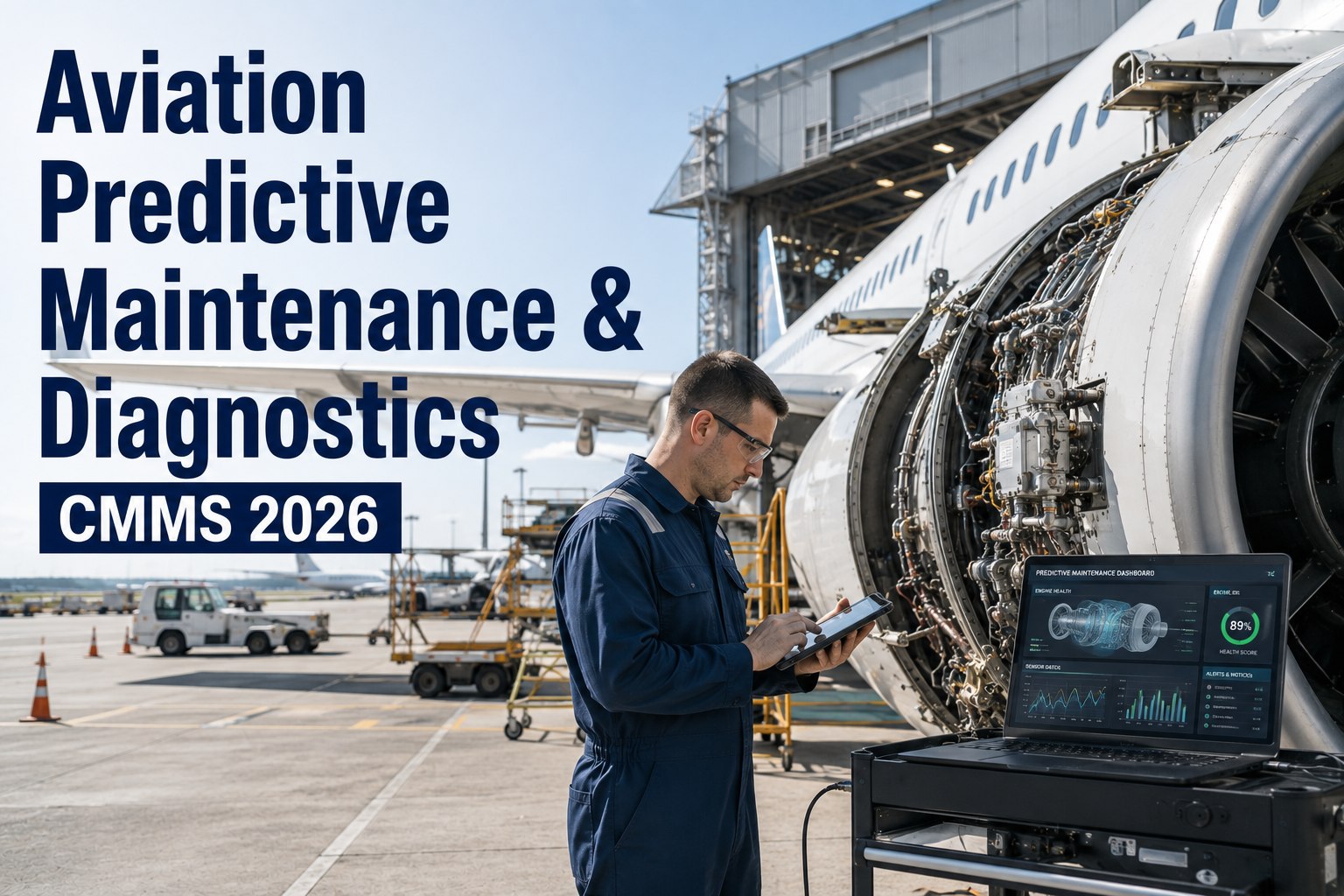
Aviation maintenance is crossing a threshold in 2026 that was unimaginable a decade ago. A single Aircraft on Ground event costs operators between $10,000 and $150,000 per hour — yet over 60% of AOG events are caused by failures that predictive AI systems detect 15 to 30 days in advance. The carriers and MRO facilities closing that gap are not doing it with bigger maintenance budgets — they are doing it with better data. OxMaint's AI-powered CMMS gives every fleet operator the predictive intelligence, automated work order management, and audit-ready compliance documentation that was once reserved for tier-one airlines with nine-figure MRO programmes. If you want to see what it means for your operation, start a free trial for 30 days or book a demo with the OxMaint team today.
OxMaint transforms raw sensor feeds, technician records, and asset history into a continuous AI failure prediction engine — giving your MRO and operations teams up to 21 days of advance notice before the next grounding event. No heavy implementation. No long onboarding. Operational from day one.
The Three Eras of Aviation Maintenance — And Why Only One Wins in 2026
Predictive maintenance is the third and final evolution of how aviation keeps aircraft flying safely. The industry moved from run-to-failure (dangerous and expensive) to time-based preventive (safe but wasteful) to condition-based predictive AI (safe, lean, and data-driven). In 2026, AI-powered predictive maintenance uses machine learning models trained on sensor telemetry, OEM failure databases, and operational history to forecast exactly which component will fail, when, and what intervention is required — before a single symptom appears on the flight deck. Applied across engines, APUs, landing gear, hydraulics, avionics, and ground support equipment, these systems are no longer carrier-grade-only. OxMaint brings the same capability to regional operators, charter fleets, MRO facilities, and airport teams — deployable without an IT project. To see how it maps to your specific asset types, start a free trial for 30 days or book a demo with the product team.
The AI Predictive Maintenance Stack: Six Layers That Make It Work
Predictive maintenance is not a single tool — it is a stack of interconnected technologies working together to create a continuous, self-improving failure prediction capability across your entire fleet and ground infrastructure. Each layer contributes a different type of intelligence, and the combined system delivers accuracy no single approach can match. Understanding the stack helps you identify exactly where your current operation has coverage gaps and where OxMaint fills them immediately. To explore how the stack integrates with your existing systems, start a free trial for 30 days or book a demo to see the integration map for your asset types.
Six Failure Points That Are Quietly Draining Your MRO Budget Right Now
Maintenance losses in aviation do not arrive randomly — they cluster around predictable operational failure points that better data and connected systems can systematically eliminate. These six patterns collectively account for the majority of avoidable spend across commercial, regional, charter, and cargo operations worldwide. If your operation exhibits more than two, the ROI case for predictive AI is already made before a single calculation is run. Start a free trial for 30 days and let OxMaint's analytics surface the exact cost exposure in your fleet, or book a demo to model the savings against your actual data.
How OxMaint Closes Every Gap — From Technician to VP of Operations
OxMaint is a modern CMMS and asset intelligence platform engineered for the operational realities of multi-asset, multi-site, compliance-intensive environments — and aviation checks every one of those boxes. Unlike legacy CMMS tools that simply log work orders, OxMaint combines condition-based asset monitoring, AI failure prediction, automated compliance documentation, and portfolio-level CapEx forecasting into a single connected system. It deploys without a consulting project or dedicated IT team — most aviation operators are operationally live within five to fourteen days. Here is what each layer of the platform delivers for your team. To see it live against your own fleet structure, start a free trial for 30 days or book a demo with a product specialist.
Maintenance Strategy Comparison: What Actually Changes When You Switch to AI Predictive
The financial and operational case for predictive AI maintenance in aviation is unambiguous when mapped across the metrics that drive real MRO budget decisions. The comparison below draws on published benchmarks from IATA, Boeing AnalytX, and ATA MSG-3 analysis — not marketing projections. These are the typical differences between a reactive operation and a mature AI predictive programme. If your current numbers sit closer to the left columns than the right, every month without a platform change is a quantifiable and avoidable cost. Start a free trial for 30 days and build the business case with your own fleet data, or book a demo to model the ROI against your actual MRO spend.
| Maintenance Metric | Reactive | Preventive | AI Predictive — OxMaint |
|---|---|---|---|
| Maintenance trigger | After component failure | Fixed hours or calendar | When sensor data signals need |
| Unplanned downtime | Maximum — fully reactive | Moderate — surprises occur | Near zero with mature system |
| Cost per event | 4.8x baseline — highest | 1.8x baseline — moderate | 1.0x — planned, lowest cost |
| Parts waste | Emergency premium costs | 30–40% replaced before EOL | Parts used to full service life |
| Failure lead time | Zero — failure is first notice | Statistical estimate only | 15–30 days advance warning |
| Annual MRO cost | Highest and unpredictable | Steady but consistently wasteful | 18–25% lower vs. preventive |
| Compliance docs | Manual — audit risk | Partial digital coverage | 100% digital, audit-ready |
| Dispatch reliability | Below 97% typical | 97–98.5% range | 99.5%+ achievable |
The ROI Case: What Aviation Operators Are Delivering with AI Predictive Maintenance
AI predictive maintenance is not a technology you justify on capability alone — it is a financial decision with documented ROI timelines. The metrics below represent outcomes from operators who have deployed condition-based maintenance systems integrated with a modern CMMS. Results are typically achievable within 6 to 18 months of deployment depending on fleet size, sensor coverage, and existing data infrastructure maturity. If you want to build the business case for your specific operation, start a free trial for 30 days or book a demo and we will model the ROI against your actual fleet data.
Frequently Asked Questions
How does OxMaint differ from OEM diagnostic programmes like Boeing AnalytX or Airbus Skywise?
OEM programmes like AnalytX and Skywise provide excellent aircraft-level health monitoring — but they are proprietary, platform-specific, and do not cover ground support equipment, airport infrastructure, or mixed-OEM fleets. They also do not integrate with your CMMS to automatically generate work orders, manage technician assignments, or produce compliance documentation. OxMaint sits above the OEM layer, consuming feeds from OEM diagnostic systems alongside your IoT sensors and maintenance records to create a unified, cross-asset intelligence platform. It fills the operational and compliance gaps that OEM-specific tools leave open — covering everything from APUs and landing gear to baggage handling systems and ground power units. To see how OxMaint maps alongside your OEM tools, start a free trial for 30 days or book a demo to map your specific asset coverage requirements.
What data does OxMaint need to generate accurate failure forecasts from day one?
OxMaint generates meaningful failure probability scores from day one using only maintenance history data — no IoT sensors required to start. Accuracy improves significantly when IoT sensor feeds (vibration, temperature, pressure, operating hours) are added, and improves further with ACARS data, OEM performance baselines, and historical parts failure records. The platform onboards incrementally: start with existing CMMS data, connect sensors as budget allows, and predictions become progressively more precise over the first 30 to 90 days. Most operators see actionable failure forecasts within the first month of deployment. To understand the data requirements for your specific asset types, start a free trial for 30 days or book a demo and we will scope the integration requirements together.
How does OxMaint handle EASA Part 145, FAA Part 135/145, and IATA compliance documentation?
OxMaint generates audit-ready compliance records automatically for every maintenance action performed on the platform. Each work order produces a complete digital record: the regulatory task reference, technician licence number and digital signature, timestamps of completion, parts used with batch numbers and traceability, and any inspection photos or findings. Records are stored in a tamper-evident, searchable digital audit trail. Annual EASA and FAA certification preparation that previously required three to five days of physical record retrieval can be completed with a filtered export in under an hour. The platform supports digital signatures compliant with both EASA and FAA eSignature requirements — eliminating paper logbooks entirely for operations ready to go fully digital. To see the compliance workflow in detail, start a free trial for 30 days or book a demo with our aviation compliance team.
How quickly can an aviation operator go live, and what does implementation involve?
Most aviation operators are operationally live within 5 to 14 days. Week one covers asset register configuration — loading aircraft, engines, GSE, and infrastructure into OxMaint's hierarchy using existing maintenance records — plus preventive maintenance schedule migration and technician onboarding on the mobile platform. Week two typically connects data integrations (IoT sensors, ACARS, existing CMMS exports) and calibrates alert thresholds. The predictive analytics layer begins generating baseline condition scores immediately upon asset registration and becomes increasingly accurate over the first 30 to 90 days as maintenance event data accumulates. No dedicated IT resources, no consulting project, no six-month timeline. OxMaint is designed to be self-configured by your maintenance management team with structured onboarding support from OxMaint's technical team. To begin the process, start a free trial for 30 days or book a demo and we will walk through the implementation timeline for your fleet size.