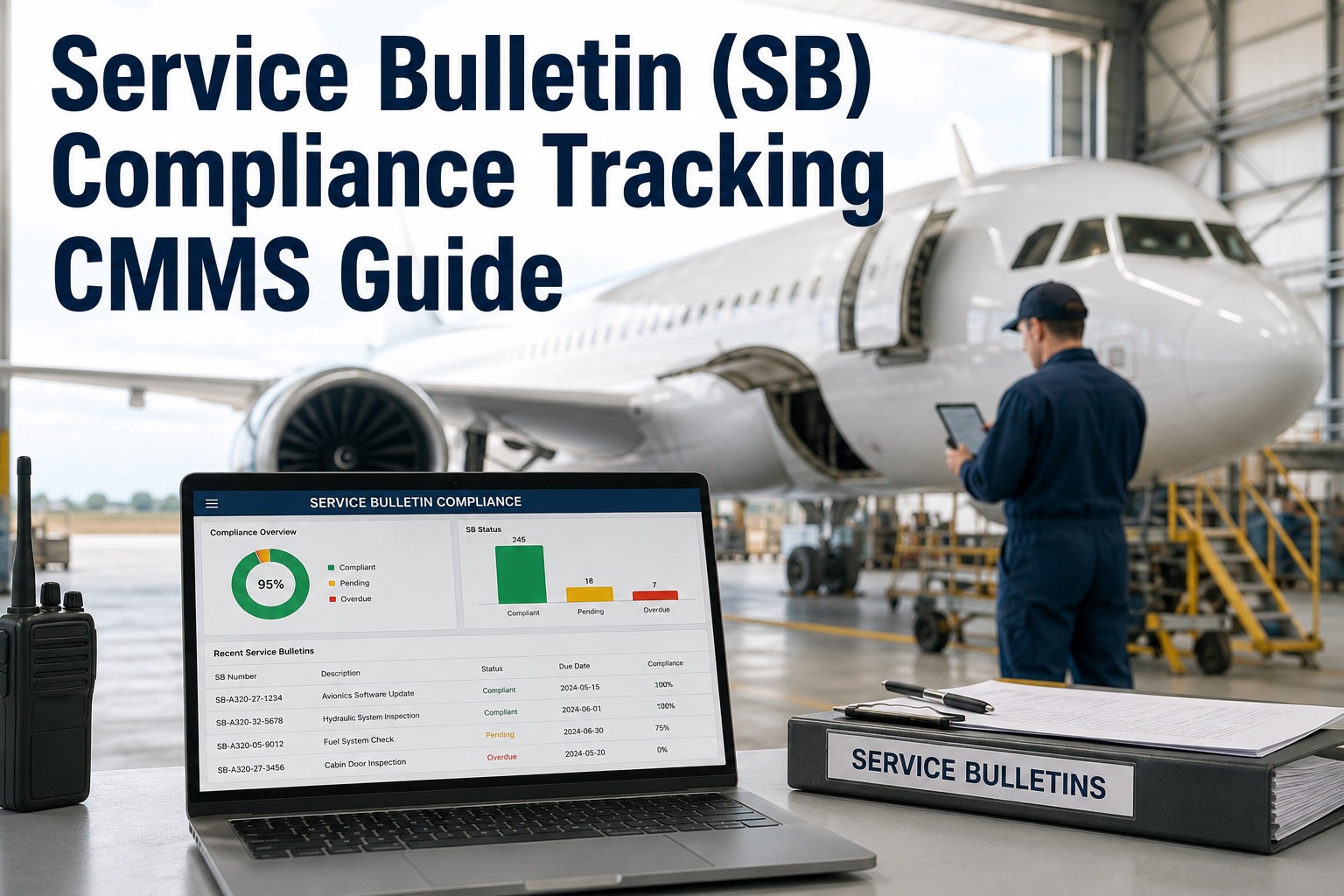
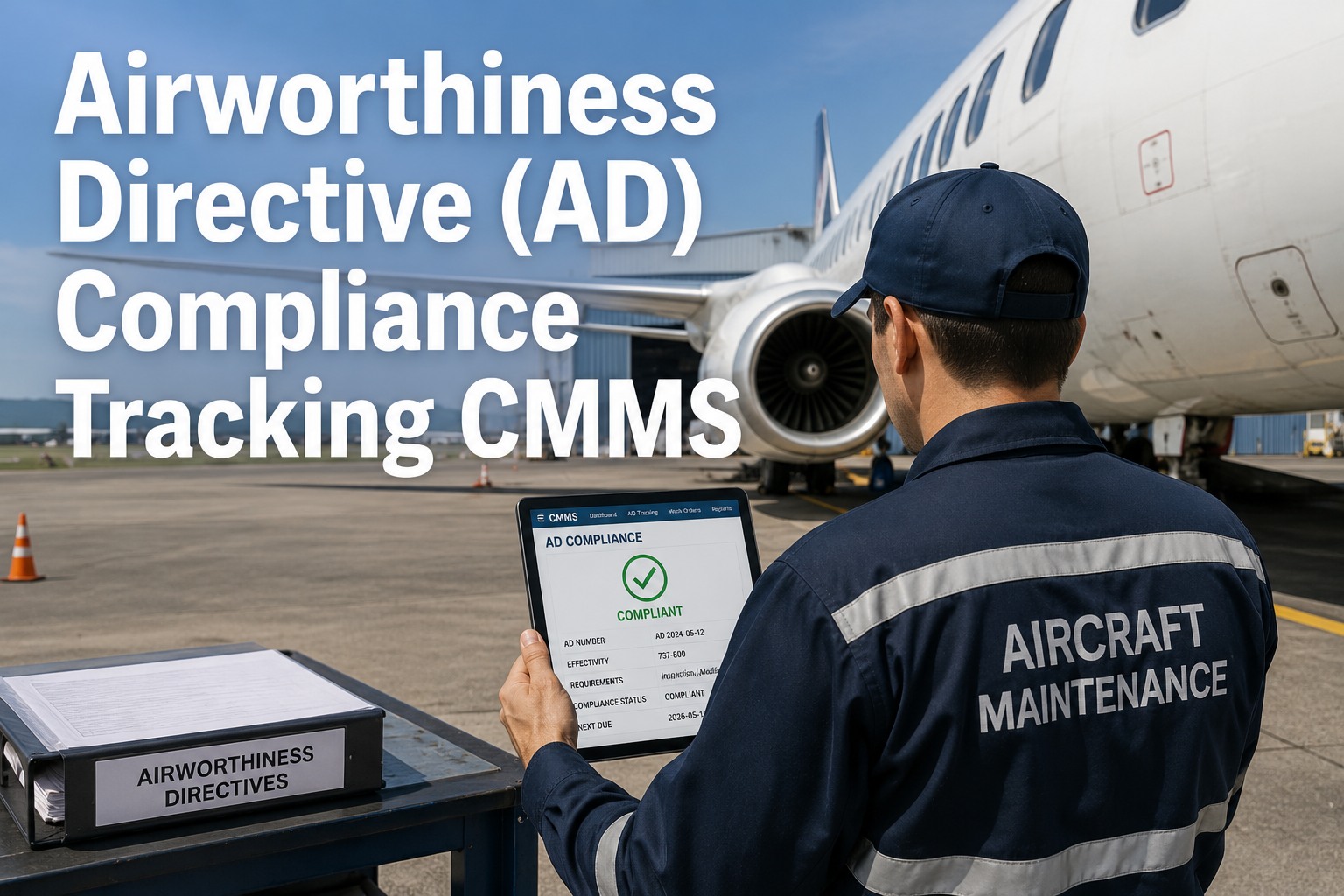
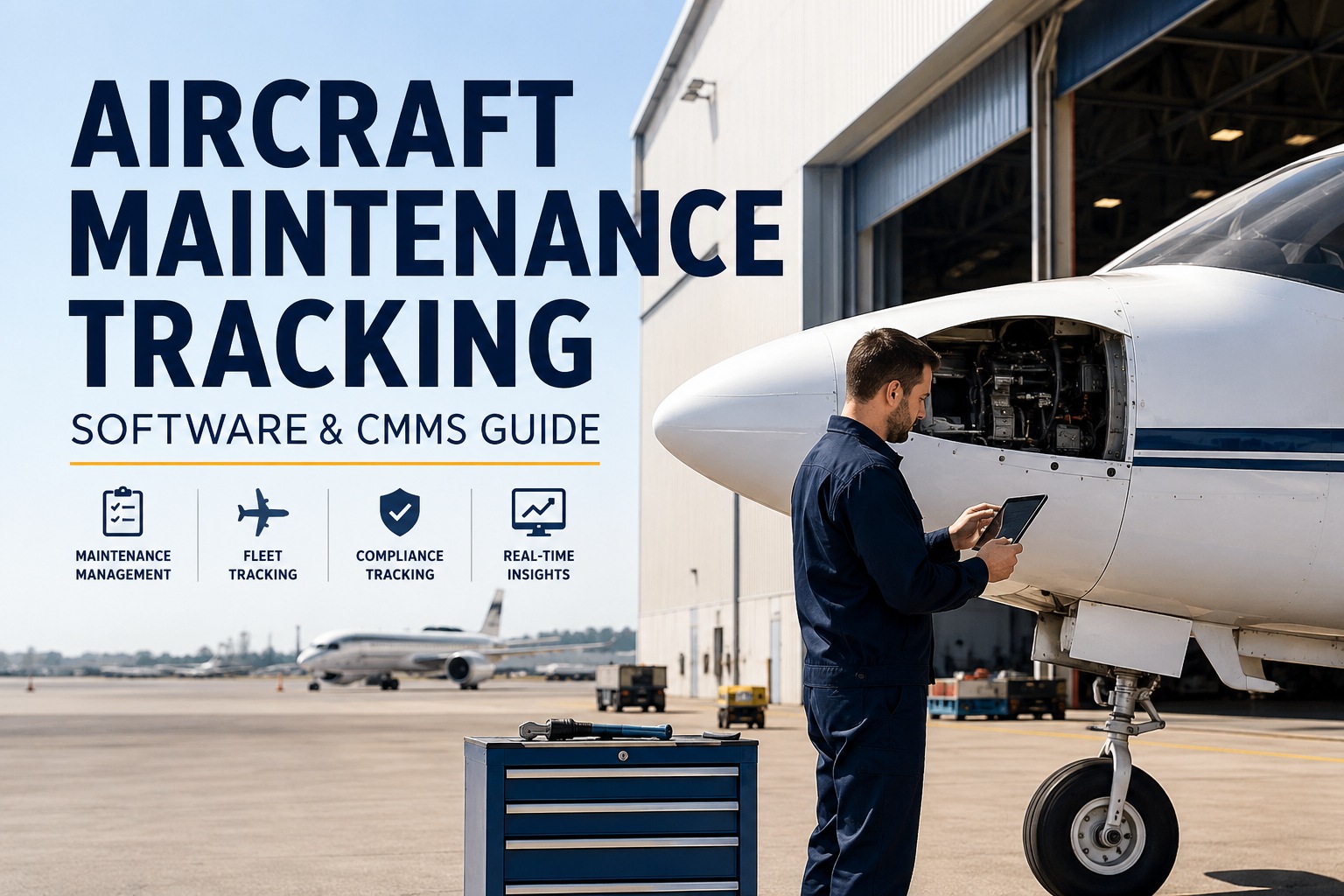
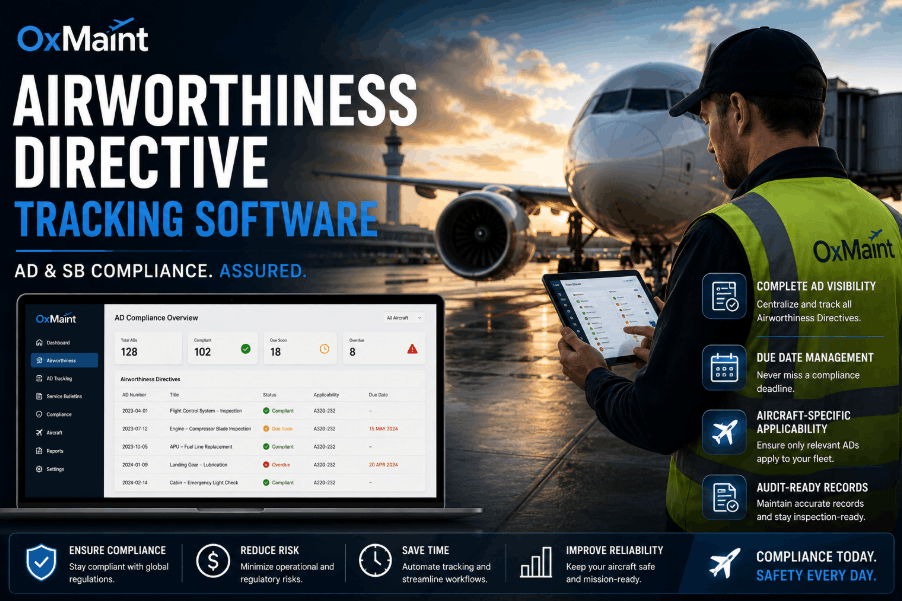
Every commercial aircraft is governed by hundreds of airworthiness directives, recurring service bulletins, life-limited part intervals, and inspection tasks that must be tracked to the flight hour, cycle and calendar day. Miss one interval — even by a single cycle — and the aircraft is grounded the moment the gap is discovered. The math gets ugly fast: with US commercial fleets averaging 14 AOG events per aircraft per year and even routine grounded narrowbodies burning $10,000 to $15,000 per flight hour in lost ticket revenue, a single missed AD compliance event can vaporize hundreds of thousands of dollars before the part even arrives. The root cause is almost never the technician — it is the tracking system. Paper logbooks, disconnected spreadsheets, and legacy ERPs that cannot apply ADs automatically to affected tails leave gaps that only surface during an FAA Part 121/135 audit or an EASA continuing-airworthiness review. Modern aircraft maintenance tracking software closes those gaps by computing every interval against live flight-hour and cycle data, applying ADs and SBs to affected tails automatically, and producing one-click compliance reports for any aircraft, any date range, any inspector. Start a free trial to see your fleet's open AD and SB obligations in one view, or book a demo and we will load a sample tail with your real interval structure.
Aviation Compliance · Fleet Tracking 2026
Aircraft Maintenance Tracking Software — Fleet Compliance & AD Tracking
Track every airworthiness directive, service bulletin, life-limited part and inspection interval across your fleet in real time. Zero missed intervals. FAA Part 121/135 and EASA Part-M ready.
spent annually by the aviation industry on irregular operations and AOG-related disruptions
23%
year-over-year rise in AOG events triggered by poor data visibility (Aviation Week 2025)
14
average AOG events per US commercial aircraft per year — most preventable with proper tracking
$2.8M
global average MRO cost per tail per year — high variation tied directly to tracking quality
What Is Aircraft Maintenance Tracking Software?
Aircraft maintenance tracking software is the system that computes, applies and documents every airworthiness obligation across your fleet — from the AD library issued by the FAA and EASA, to the OEM maintenance program, to operator-imposed reliability intervals. It maintains the master record per tail: total flight hours, cycles, calendar age, component time-since-new, time-since-overhaul, and remaining time for every life-limited part. Every interval rolls forward automatically as new flight data lands from ACARS or pilot reports.
Where it differs from a generic CMMS is the regulatory layer. A maintenance tracking platform built for aviation applies new ADs to affected tails the moment they are issued, links the method of compliance to a task card, and tracks recurring intervals to the cycle. It generates the documentation an FAA Part 121 audit, EASA Part-M review, or pre-buy inspection actually demands. Start a free trial and load a sample tail in under 15 minutes, or book a demo and see AD application live.
What Gets Tracked on Every Tail
AD
Airworthiness Directives
FAA, EASA and TCCA ADs applied automatically to affected fleet types. Effective dates, methods of compliance and recurring intervals tracked to the flight hour and cycle.
SB
Service Bulletins
OEM mandatory and recommended SBs ingested from Boeing, Airbus, Embraer, ATR and engine manufacturers. Status visibility per tail — completed, deferred, or in work.
LLP
Life-Limited Parts
Every LLP — engine discs, landing-gear components, structural parts — tracked by serial number with remaining cycles, back-to-birth records and removal forecast.
CHK
Inspection Intervals
A-check, B-check, C-check and D-check intervals managed alongside operator-imposed reliability tasks. Auto-forecast for next visit at current utilization.
MEL
MEL & Deferred Items
Minimum Equipment List items, CDL entries and deferred defects tracked with rectification deadlines, escalation rules and visibility to dispatch and maintenance control.
EOL
Component TBO Tracking
Time-controlled components — engines, APUs, propellers, landing gear — tracked against overhaul intervals with planned removal slots in the maintenance plan.
How Maintenance Tracking Fails Without the Right Platform
Missed AD Compliance
New AD issued, but the legacy tracker does not apply it to affected tails until manual cross-reference. The aircraft flies non-compliant — discovered only at audit, often months later.
Out-of-Sync Flight Hours
Flight hours and cycles updated by hand from pilot logs. Inevitable lag and re-keying errors mean intervals show "remaining" time on parts that have actually run out.
Broken LLP Traceability
Life-limited part back-to-birth records sit in PDFs, paper files and disconnected systems. Audit finds gaps — and a $200K disc with broken traceability is worth nothing on the market.
Forecasting Blind Spots
No way to forecast when the next A-check, engine removal or LLP swap is due. Heavy maintenance visits scheduled reactively — slot pricing higher, hangar availability lower.
Most fleets miss intervals not because of bad technicians — but because the tracker cannot keep up with daily flight data.
How OxMaint Tracks Every Aircraft, Every Interval
OxMaint's aircraft maintenance tracking module computes every airworthiness obligation per tail against live flight data — and surfaces every upcoming due event in plain language for planning, dispatch and maintenance control. It is built for the realities of Part 121, Part 135 and Part-M operations: ADs that drop overnight, fleets that fly variable utilization, and audits that demand complete records on 48 hours' notice. Book a demo and walk through your AD library on a live test fleet.
Auto-Applied AD & SB Engine
FAA and EASA AD library kept current and applied to every affected serial number in your fleet the moment a new directive is published. Method of compliance linked to a task card automatically.
Live Flight-Hour Sync
ACARS feeds and electronic logbook entries roll component times forward after every flight leg. No manual data entry. No re-keying errors. Intervals always reflect the actual aircraft state.
Back-to-Birth LLP Records
Every life-limited part tracked by serial number from manufacture through every installation, removal and overhaul. Full traceability dossier exportable in under 60 seconds for pre-buy or audit.
Forecast & Planning View
12-month forward view of every upcoming check, AD, SB, LLP swap and component removal. Drag-and-drop to balance hangar slots, parts availability and crew capacity.
Compliance Status Dashboard
Single fleet-wide screen shows tails approaching due, overdue, or grounded for compliance. Drill into any tail to see the full open task and document list.
Audit-Ready Export
One-click compliance dossier per tail, per fleet, or per date range. Indexed by AD number, SB reference and task card. Inspectors receive a complete record in a single PDF or data export.
Manual Tracking vs. OxMaint Aircraft Maintenance Tracking
Tracking Function
Manual / Spreadsheet / Legacy
OxMaint Tracking Software
New AD application
Manual cross-reference against fleet effectivity
Auto-applied to affected serials at publication
Flight hours & cycles update
Daily re-keying from pilot logs
Live ACARS / e-logbook sync after every leg
LLP back-to-birth record
Paper files, scanned PDFs, multiple systems
One serial number record, audit-exportable
Forecasting next check
Best-guess based on average utilization
Calculated against live hours and cycles
Audit dossier preparation
2–4 weeks of manual document assembly
One-click export, indexed by AD & SB number
MEL / deferred item visibility
Paper book in maintenance control office
Live dashboard, escalation rules, dispatch view
Multi-fleet AD library upkeep
Maintained manually per fleet type
Centrally maintained, applied across all fleets
Pre-buy / transfer dossier
Weeks of records compilation
Complete dossier exported in under 60 seconds
Results From Switching to Structured Maintenance Tracking
100%
AD compliance achievable when new directives are auto-applied to affected serials within the same business day
40%
reduction in maintenance planning cycle time reported by airlines moving from legacy MIS to modern tracking platforms
60s
to generate a complete per-tail compliance dossier — versus 2–4 weeks of manual document assembly
0
missed AD intervals and zero traceability gaps when LLP records are maintained from receipt to retirement in one system
Frequently Asked Questions
Does OxMaint maintain the FAA and EASA AD library automatically?
Yes. OxMaint maintains a continually updated AD and mandatory SB library across FAA, EASA, TCCA, CASA and major NAA sources. New directives are applied to affected aircraft serial numbers in your fleet on publication day, with the method of compliance linked to a task card and the next due interval calculated against live flight hours.
How does life-limited part tracking work in OxMaint?
Every LLP is tracked by serial number with a complete history — manufacturing details, installation events, removal events, time-since-new, cycles-since-new, and remaining life. The back-to-birth dossier is generated automatically and exportable in one click, which is critical for audits, pre-buy inspections and used serviceable material (USM) transactions.
Can OxMaint track multiple fleet types simultaneously?
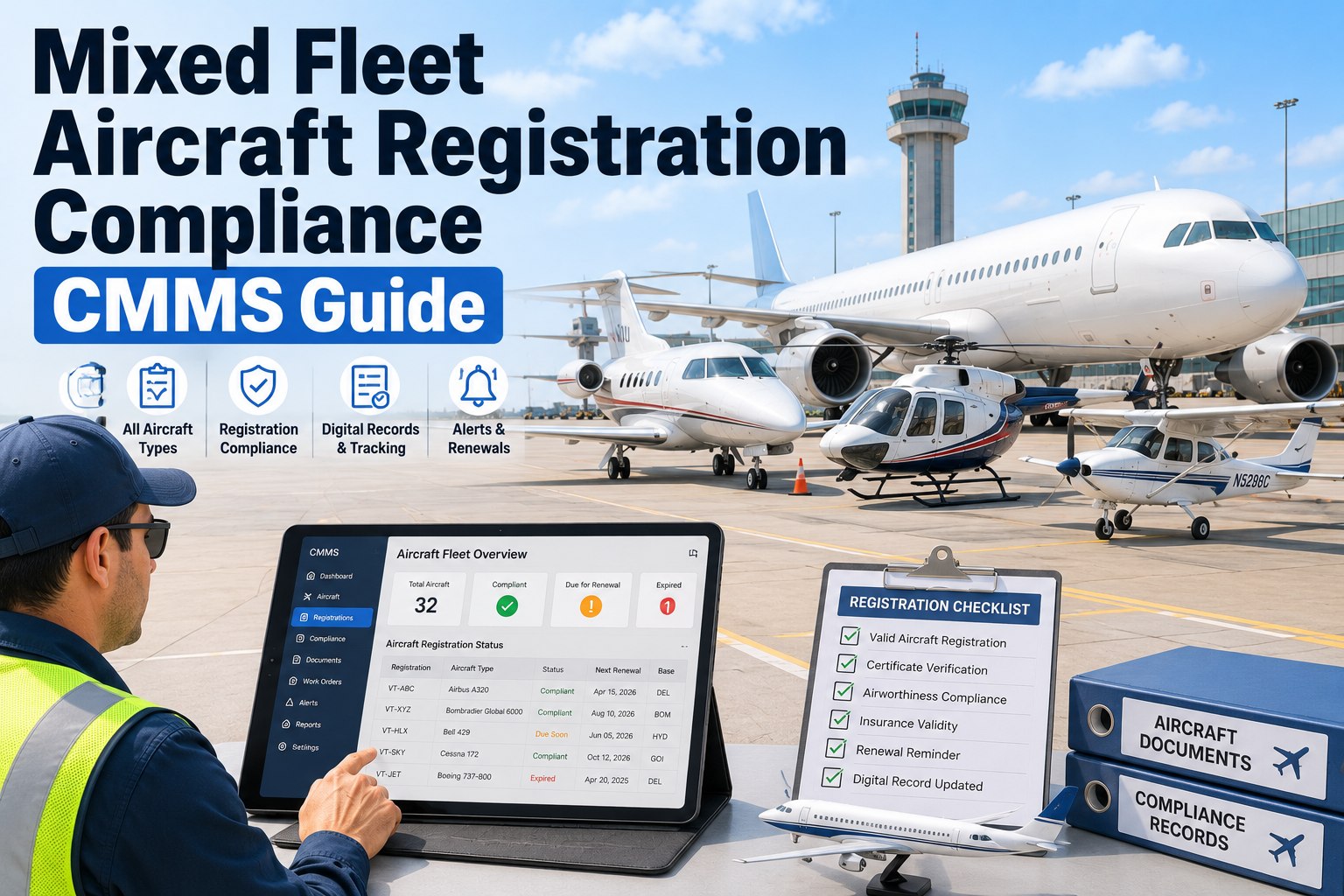
Yes. The platform handles mixed-fleet operators — Boeing, Airbus, Embraer, ATR, Bombardier, Cessna, Beechcraft and rotorcraft — in one tenant. Each fleet type carries its own AD effectivity, maintenance program, task cards and reliability program, while fleet-wide reporting rolls up across types.
How does OxMaint support FAA Part 121 and Part 135 audit preparation?
OxMaint generates audit-ready compliance dossiers per tail or per fleet on demand. Each dossier includes AD compliance records, SB status, LLP back-to-birth, task card sign-offs, deferred item rectifications and any operator-imposed reliability items. The dossier is indexed and exportable as a single PDF or data file in under 60 seconds, replacing weeks of manual assembly.
Zero Missed Intervals. Zero Audit Findings.
Track Every Tail, Every AD, Every Interval in One Platform
Stop running maintenance tracking on spreadsheets and a legacy MIS that cannot keep up with daily flight data. OxMaint applies ADs automatically, syncs flight hours live, maintains complete LLP back-to-birth, and exports audit dossiers in under a minute. Live in 6–12 weeks. Used by operators across FAA, EASA and CAA jurisdictions.