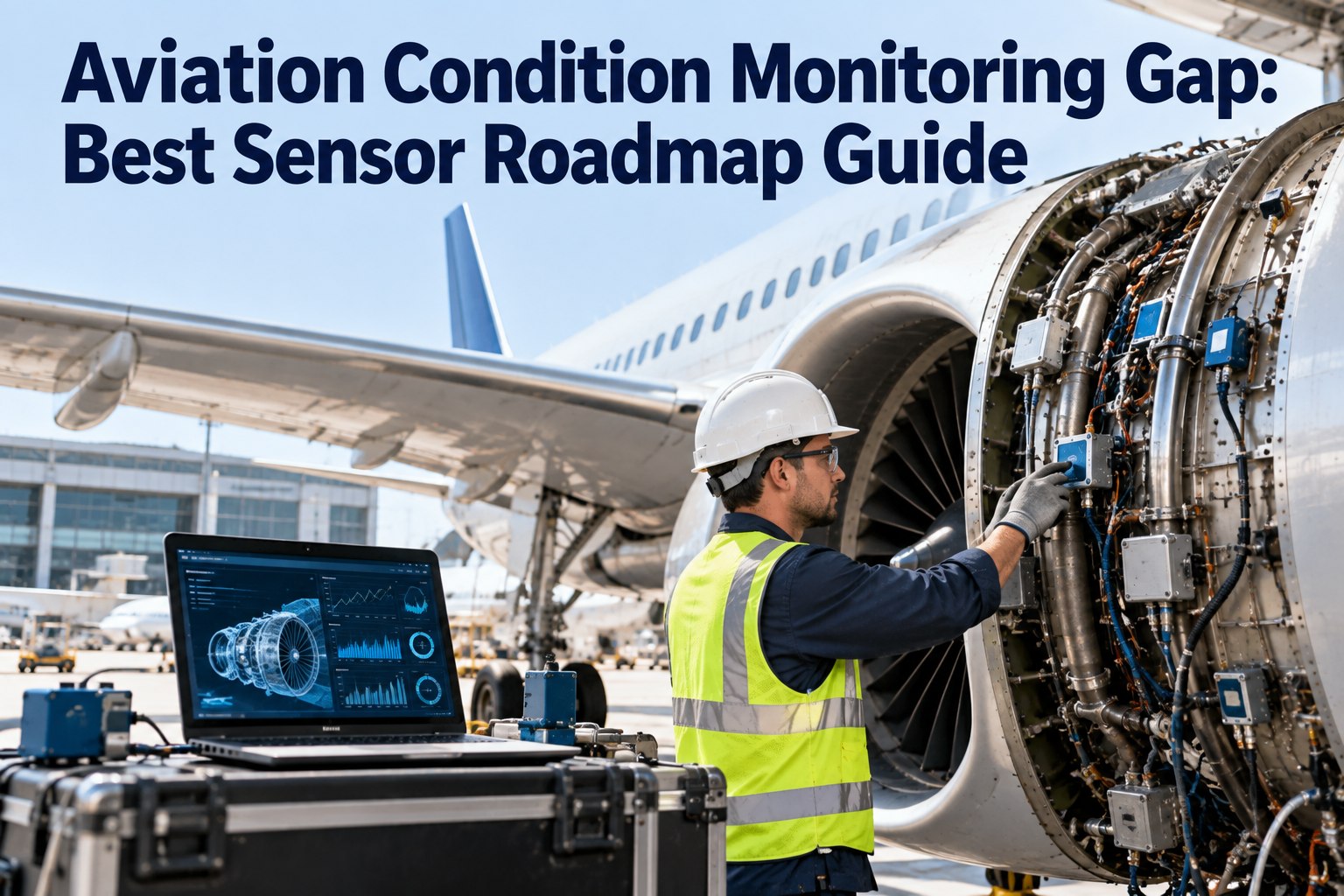
Getting started with aircraft predictive maintenance no longer demands a seven-figure, fleet-wide program — most operators already own the hardest ingredient: years of ACMS, FOQA and maintenance-log data sitting unused. A practical aviation predictive maintenance pilot begins with two to five high-value components, builds a clean data foundation, and proves ROI in 90 to 180 days before scaling across the fleet. This guide walks reliability engineers through pilot asset selection, ACMS-to-CMMS integration, baseline capture, and the exact playbook for converting early wins into a funded, fleet-wide aircraft PdM program. You can run your entire pilot inside a modern CMMS — Start Free Trial and have your first monitored components live this week.
What if your first aircraft PdM pilot cost less than one unplanned AOG event?
A single aircraft-on-ground incident runs $10,000–$150,000 per hour in delays, ferry flights and lost revenue. A focused predictive maintenance pilot on a handful of high-value components typically pays for itself the first time it catches a failure 200 flight-hours early.
How do you choose the first components for an aircraft predictive maintenance pilot?
Roughly 20% of components drive 80% of unscheduled removals on most fleets. Score candidate parts on failure frequency, cost per event, data availability and detectability — then pick the top two to five.
APUs & Starter-Generators
APU failures trigger 30–40% of dispatch delays on narrowbody fleets. EGT margin trend, start time and oil temperature are already in ACMS — ideal first targets with clear degradation signatures.
Bleed Air & Pneumatics
Bleed valves, PRSOVs and pre-coolers fail gradually and loudly in the data. A top-5 driver of in-flight turnbacks; predictive alerts here cut turnbacks 25–35% in published airline pilots.
Hydraulic Pumps & Actuators
An unscheduled pump swap costs $18K–$60K with parts, labor and delay minutes. Pressure-decay and duty-cycle trends give 100–400 flight-hours of warning — plenty of time to plan the fix.
Batteries & TRUs
Ni-Cd battery capacity checks and TRU temperature drift are simple, well-understood trends. Low sensor cost, fast baseline, and a visible early win that builds stakeholder confidence.
Engine Vibration & EGT
Engine trend monitoring is the most mature form of aviation predictive maintenance. EGT margin erosion and N1 vibration shifts predict wash, borescope and shop-visit timing months ahead.
Rare, Sudden Failures
Skip components with random failure modes, no sensor coverage or fewer than 2 events per year per fleet. No signal, no baseline, no pilot win — save these for phase two.
What data do you actually need before starting aircraft condition monitoring?
You need far less than vendors claim: 12–24 months of ACMS parameter snapshots plus a clean removal history is enough to baseline most components. The real work is hygiene, not volume.
Audit your ACMS / FOQA parameter coverage
Confirm the parameters for your chosen components are actually recorded at useful sampling rates. Most modern airframes log 1,000–3,000 parameters; older fleets may need a DAR upgrade or QAR pull for 4–8 key signals.
Clean the removal & work-order history
Predictive models learn from labeled failures. Standardize part numbers, ATA chapters and failure codes across 24 months of records — this single step typically improves alert precision from 40% to 75%+.
Connect ACMS output to your CMMS
An ACMS-CMMS integration turns a trend exceedance into an auto-generated, pre-prioritized work order with the right part and procedure attached. Without it, alerts die in inboxes and the pilot stalls.
Capture a 60–90 day healthy baseline
Record normal operating envelopes per tail and per component before setting thresholds. Seasonal and route effects (hot-and-high vs. short-haul) shift baselines 10–20% — capture both.
Add sensors only where ACMS is blind
Incremental sensing — wireless vibration on APUs, oil-debris monitors on gearboxes — fills genuine gaps for $500–$5K per point. Start with existing data; buy hardware only when the business case demands it.
A month-by-month plan to launch predictive aircraft maintenance
Most successful aviation PdM pilots reach a go/no-go decision inside six months. Here is the cadence reliability engineers actually follow.
Scope & Baseline
Select 2–5 components, freeze success metrics (alert precision, lead time, AOG events avoided), and begin the healthy-baseline capture. Load asset hierarchies and history into your CMMS.
Integrate & Threshold
Wire ACMS exports into the CMMS, set first-pass alert thresholds at 2–2.5 sigma from baseline, and route alerts to a named reliability engineer — not a distribution list.
Tune & First Catches
Expect 30–50% false positives early; tune thresholds weekly. Document every confirmed catch with cost-avoided math — these become your scaling business case.
Prove & Present
Compile precision/recall, average warning lead time and dollars avoided. A pilot showing 2+ verified catches and $150K+ avoided cost almost always wins fleet-wide funding.
What does an aircraft PdM pilot actually save? A regional-fleet scenario
Consider a 12-aircraft regional operator spending roughly $1.9M per year on unscheduled maintenance events, AOG delays and expedited parts across its APU, bleed and hydraulic systems.
| Metric | Before PdM (Reactive) | After 12-Month Pilot | Impact |
|---|---|---|---|
| Unscheduled APU removals / yr | 14 | 5 | −64% |
| AOG events / yr | 9 | 3 | −6 events |
| Avg. alert lead time | 0 hrs (no warning) | 180 flight-hours | Planned, not panic |
| Expedited shipping / yr | $86K | $22K | −$64K |
| Delay minutes / yr | 4,100 | 1,500 | −63% |
| Total annual cost avoided | — | $410K–$520K | Pilot ROI ≈ 6–9× |
Every month of delay on this fleet costs roughly $35K–$43K in avoidable unscheduled events — more than the entire pilot budget. That is the real math behind starting now versus next budget cycle.
Run your entire aviation PdM pilot inside OxMaint
OxMaint is an AI-powered CMMS + EAM platform that turns condition data into planned work — the exact connective tissue most aircraft predictive maintenance pilots are missing.
Condition Alerts → Auto Work Orders
Feed ACMS trend exceedances or sensor thresholds into OxMaint and generate prioritized work orders automatically — with the correct part, procedure and tail number attached. Teams cut alert-to-action time from days to under 2 hours.
Asset & Component Tracking by Tail
Full serialized component history — installs, removals, flight-hours and cycles — per tail and per position. Baselines stay clean, audits get easy, and reliability engineers finally trust the data behind every prediction.
Predictive Analytics & Trend Dashboards
Track EGT margins, vibration, pressure decay and custom KPIs in one dashboard. OxMaint's analytics flag degradation patterns 100–400 flight-hours before failure, cutting unplanned downtime 30–50%.
Spare-Parts Inventory Synced to Predictions
When a prediction fires, OxMaint checks stock, reserves the part and flags reorder points — eliminating the $8K–$25K expedited-shipping bills that quietly eat reactive maintenance budgets.
Book a 30-minute demo — we'll map OxMaint to your first 5 pilot components
Bring your toughest unscheduled-removal problem. Leave with a pilot plan, baseline checklist and ROI model you can present to leadership.
Aircraft predictive maintenance: common getting-started questions
How much does it cost to start aircraft predictive maintenance?
A focused pilot on 2–5 components using existing ACMS data typically costs $15K–$60K including software and integration — versus $1M+ for legacy fleet-wide programs. Starting with a CMMS free trial like OxMaint can reduce upfront software cost to nearly zero while you prove value.
Do I need to install new sensors to begin aviation predictive maintenance?
No. Most modern aircraft already record 1,000–3,000 ACMS parameters covering engines, APUs, bleed, hydraulics and electrics. Start with that data; add targeted wireless sensors ($500–$5K per point) only where you have a genuine coverage gap and a proven business case.
How long before an aircraft PdM pilot shows results?
Expect a 60–90 day baseline period, first tuned alerts by month 3–4, and a defensible go/no-go decision by month 5–6. Fleets with clean maintenance histories and mature ACMS data often see their first verified "catch" — a failure predicted 100+ flight-hours early — within the first 120 days.
Which aircraft components are best for a first predictive maintenance pilot?
Choose components that fail gradually, fail often, and are already instrumented: APUs, bleed-air valves, hydraulic pumps, batteries and engine EGT/vibration trends are the classic top five. Avoid rare, sudden-failure modes — no degradation signal means nothing to predict.
How does predictive maintenance integrate with my CMMS?
Through threshold rules or API feeds: when a monitored parameter exceeds its baseline envelope, the CMMS auto-generates a prioritized work order with parts and procedures attached. This closed loop is what separates a working aviation PdM program from a dashboard nobody acts on — book a demo to see the integration live.
Launch your aircraft predictive maintenance pilot this quarter
Pick your first components, connect your data, and let OxMaint turn early warnings into planned work orders — before the next AOG event makes the decision for you.
Free 14-day trial · No credit card · Live on your first components in days