Airport Fuel Farm and Hydrant System Maintenance: Safety and Compliance Essentials

By Jack Edwards on April 7, 2026

airport-fuel-farm-hydrant-system-maintenance-safety-compliance

Airport fuel farms do not fail in dramatic explosions — they fail in slow, invisible leaks, missed filter changes, undocumented inspections, and SPCC plans that were last reviewed when the current facility manager was still in school. When a hydrant pit valve fails under pressure during peak operations, the question is not whether fuel spilled. It is whether your inspection records prove the valve was maintained on schedule, whether your filtration logs show the differential pressure was within tolerance, and whether your SPCC documentation will survive the EPA investigator arriving 48 hours later. Most airport fuel operations managers cannot answer all three with certainty. That gap — between what compliance requires and what operations actually document — costs the average commercial airport between $1.2M and $3.8M annually in unplanned remediation, regulatory penalties, and emergency equipment replacement. If managing fuel infrastructure reactively sounds familiar, start a free 30-day trial or book a demo with Oxmaint to see how structured fuel system maintenance integrates with your CMMS workflow.


CMMS-Powered Fuel Infrastructure Management
Take Control of Every Fuel Farm Inspection, Hydrant System PM, and Compliance Record

Oxmaint gives airport operations teams a single platform to schedule fuel system preventive maintenance, track NFPA 407 and SPCC compliance by asset, generate audit-ready inspection documentation, and monitor filtration and leak detection systems — with no spreadsheets and no gaps.

73%
of Fuel Spills Trace to Maintenance Gaps
valve failures, corroded piping, and missed filter changes — not catastrophic equipment failure
$3.8M
Average Remediation Cost Per Major Fuel Spill
including EPA penalties, soil remediation, groundwater monitoring, and operational downtime at affected gates
6-12mo
Inspection Cycles Required by NFPA 407
emergency shutoff systems require documented 6-month and 12-month inspections — missed cycles trigger non-compliance
1,320 gal
SPCC Plan Trigger Threshold
any airport storing more than 1,320 gallons of fuel aboveground must maintain a certified SPCC plan — most fuel farms exceed this by 100x
The Foundation

What Is Airport Fuel Farm and Hydrant System Maintenance?

Airport fuel farm maintenance is the structured, compliance-driven process of inspecting, servicing, and documenting every component in the fuel storage and distribution chain — from bulk receiving tanks and filtration vessels through underground hydrant piping networks to the hydrant pit valves at each aircraft gate. It spans preventive maintenance on pumps, motors, and control valves; integrity testing on underground piping; filter element monitoring and replacement; cathodic protection verification; and environmental containment system inspections.

For airport operations managers and fuel facility supervisors, effective fuel system maintenance means proving — with timestamped documentation, not verbal assurances — that every component in a system handling millions of gallons of Jet-A annually is maintained within manufacturer specifications, regulatory intervals, and environmental compliance thresholds. To build this kind of structured visibility into your fuel infrastructure, start a free trial with Oxmaint and track your first fuel system assets in under an hour, or book a demo to walk through your current fuel infrastructure with our team.

Bulk Storage Tanks
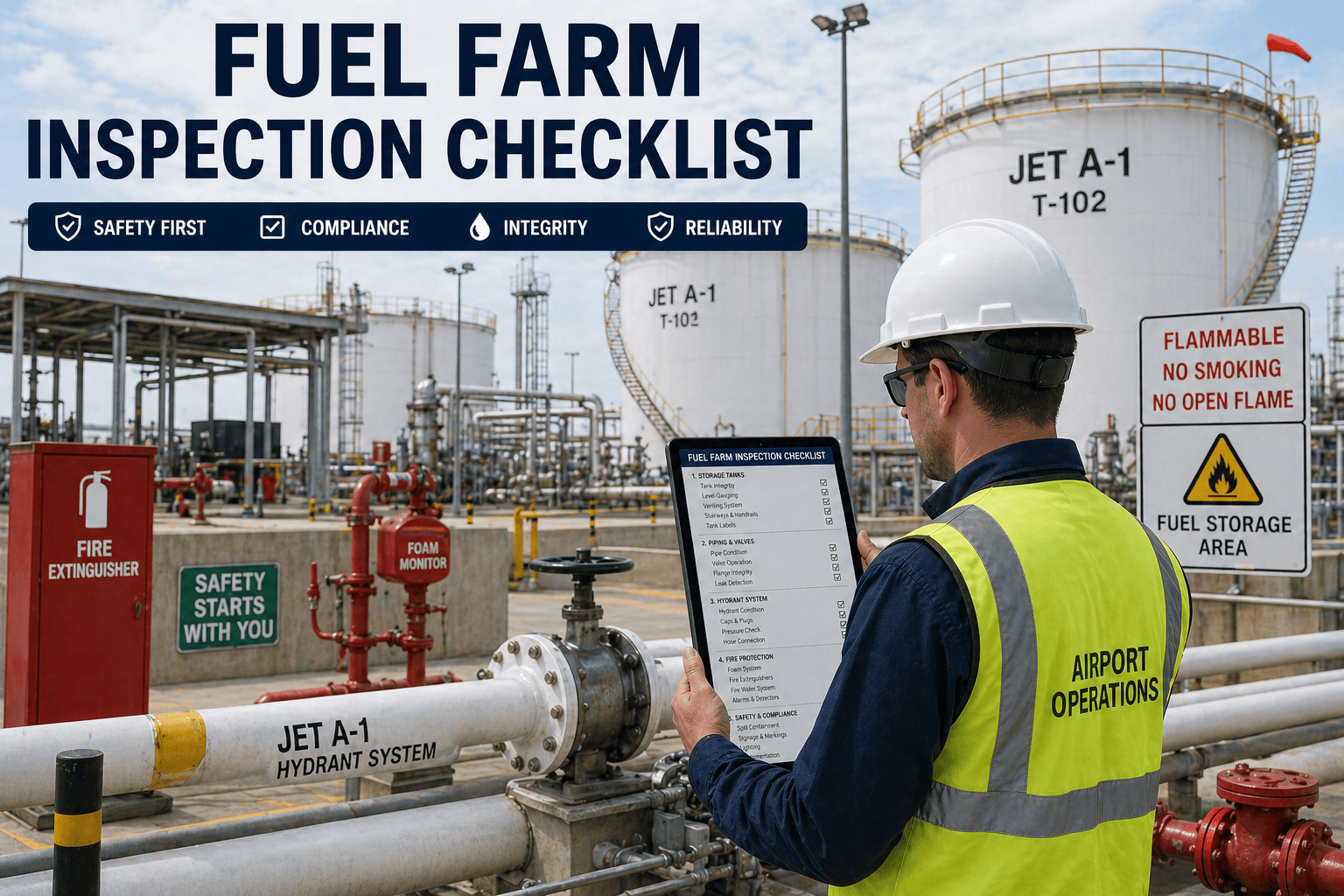
Aboveground and underground tanks storing Jet-A and Avgas. Requires API 653 inspections, cathodic protection monitoring, secondary containment verification, and tank gauging calibration on defined cycles.
Filtration and Separation Systems
Clay treaters, filter/water separators, and microfilters maintaining fuel cleanliness to EI 1581 standards. Differential pressure monitoring, element replacement scheduling, and Millipore testing at defined intervals.
Hydrant Distribution Network
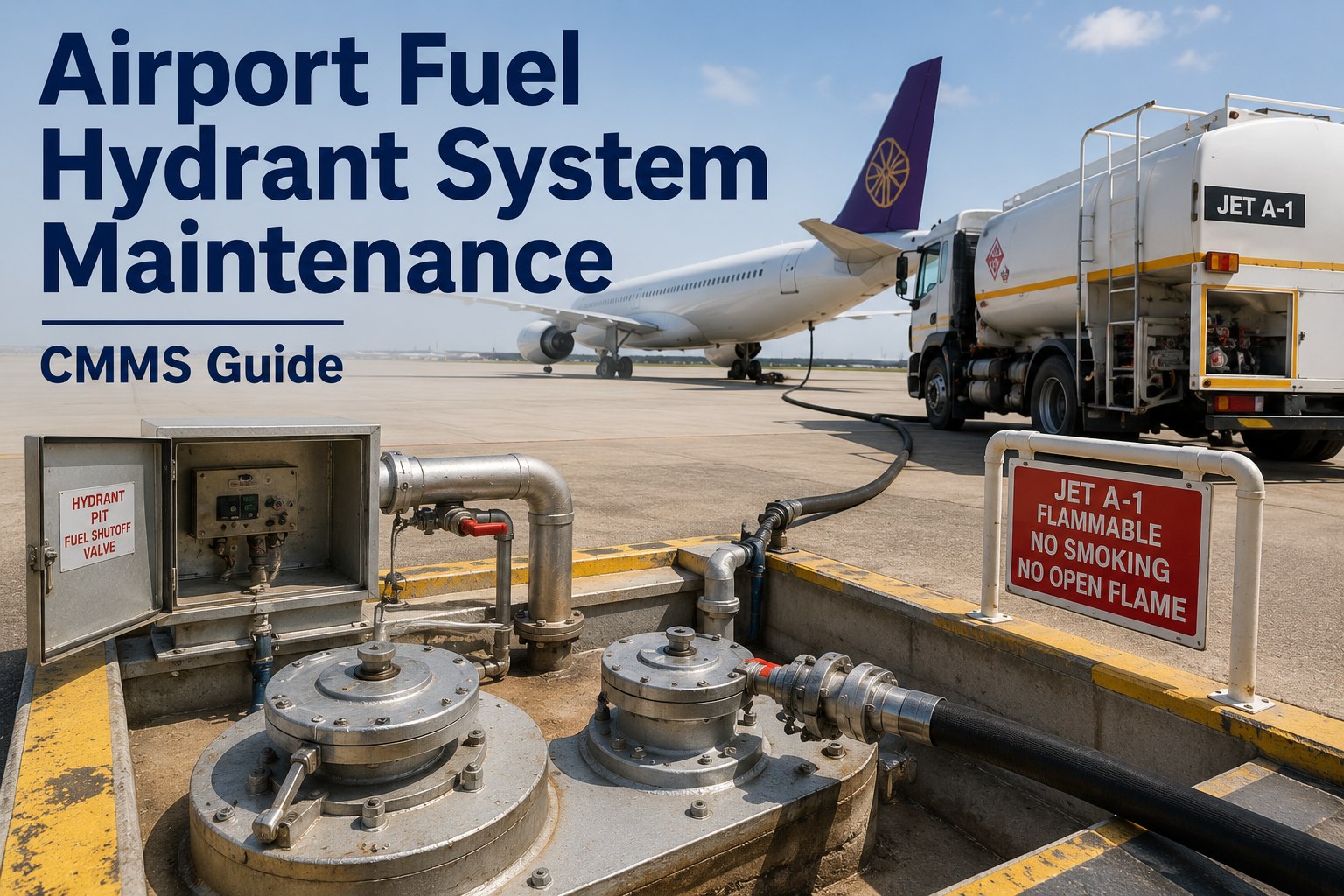
Underground pressurised piping delivering fuel from the tank farm to hydrant pits at each gate. Requires leak detection monitoring, isolation valve testing, pressure relief verification, and pigging operations on scheduled cycles.
Hydrant Pit Valves and Couplings
Gate-side access points where hydrant dispensers connect to the underground system. Pit valve actuation testing, coupler seal inspection, pressure gauge calibration, and drain system verification on monthly and quarterly cycles.
Regulatory Landscape

The Compliance Framework: NFPA 407, EPA SPCC, and FAA Part 139

Airport fuel farm maintenance is not optional preventive care — it is a legal obligation enforced by multiple overlapping regulatory authorities. A single missed inspection cycle can trigger non-compliance findings from the FAA, state fire marshal, and EPA simultaneously. Understanding where these frameworks intersect is the foundation of any defensible maintenance programme.

NFPA 407
Aircraft Fuel Servicing Standard
Emergency shutoff systems inspected every 6 and 12 months with documentation
Bonding and grounding connections maintained and tested
Fuel hose testing records — daily, monthly, and quarterly cycles
ABC dry chemical extinguishers prohibited on aprons and fuel farms
EPA SPCC
Spill Prevention, Control, and Countermeasure
SPCC plan mandatory for facilities storing 1,320+ gallons aboveground
Secondary containment inspections and integrity testing documented
Plan must be amended within 6 months of any facility change
PE-certified plan review required — self-certification only under 10,000 gal
FAA Part 139
Airport Certification and Fuel Safety
Quarterly fuel tenant facility inspections per 14 CFR 139.321(d)
12-month record retention minimum for all inspection documentation
Airport Certification Manual (ACM) must reference adopted NFPA edition
Compliance letters issued for facilities not meeting current NFPA adoption

Managing compliance across NFPA 407, EPA SPCC, and FAA Part 139 simultaneously requires a system that links inspection schedules directly to the assets they cover — not binders on a shelf. Want to see how Oxmaint consolidates multi-framework compliance into a single dashboard? Start a free trial or book a demo to review your current compliance landscape with our aviation facilities team.

Maintenance Critical Path

The Six Maintenance Pillars of Fuel Farm and Hydrant System Reliability

These are the six maintenance domains that determine whether a fuel system operates safely and passes every inspection — or generates the kind of failures that ground operations and trigger regulatory action. Each pillar requires defined PM schedules, documented inspections, and traceable work order histories.

01
Filtration and Fuel Quality
Filter/water separator differential pressure monitoring, element replacement at 15 psi threshold, clay treater colour change tracking, and weekly Millipore membrane testing. A single contaminated fuel delivery can ground an entire fleet — filter maintenance is the frontline defence.
PM Cycle: Daily monitoring, monthly element checks, quarterly replacement
02
Tank Integrity and Gauging
API 653 external inspections, internal inspection scheduling based on corrosion rate data, tank level gauging calibration, overfill protection device testing, and vent valve operation verification. Tank failures account for 28% of fuel farm environmental incidents.
PM Cycle: Monthly externals, 5-year internals, annual calibration
03
Hydrant Piping and Leak Detection
Underground piping integrity testing, leak detection system verification, isolation valve actuation testing, cathodic protection potential surveys, and pigging operations for sediment and water removal. Hydrant leaks are invisible until contamination reaches groundwater monitoring wells.
PM Cycle: Continuous monitoring, quarterly valve tests, annual pigging
04
Pump and Motor Systems
Booster pump vibration analysis, motor insulation resistance testing, mechanical seal inspection, pressure relief valve calibration, and control valve actuator maintenance. Pump failures during peak fuelling operations cascade into gate delays within minutes.
PM Cycle: Monthly vibration, quarterly seals, annual overhaul
05
Safety and Fire Protection
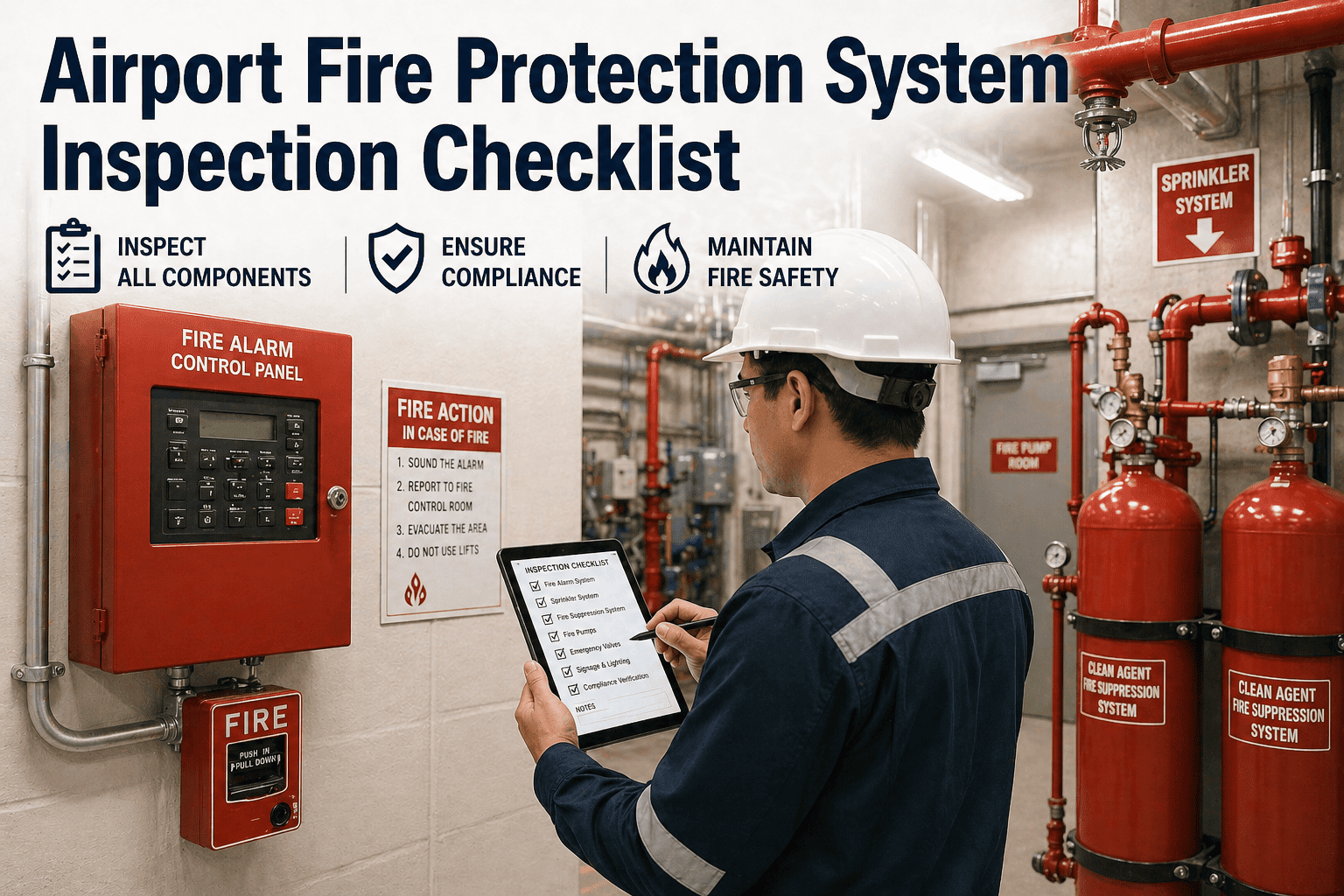
Emergency shutoff system testing (6-month and 12-month per NFPA 407), fire suppression system inspection, bonding and grounding continuity testing, deadman control verification, and spill containment equipment readiness checks.
PM Cycle: Monthly checks, semi-annual shutoff tests, annual full audit
06
Environmental Containment
Secondary containment integrity inspection, oil-water separator maintenance, stormwater drainage monitoring, groundwater monitoring well sampling, and SPCC plan documentation updates. Environmental violations carry penalties averaging $37,500 per day of non-compliance under the Clean Water Act.
PM Cycle: Weekly visual, monthly sampling, quarterly integrity tests
Comparison

Reactive Fuel System Management vs. Structured CMMS-Integrated Approach

The operational and regulatory difference between managing fuel infrastructure on paper logs and spreadsheets versus a structured CMMS-integrated preventive maintenance programme is not a marginal improvement. It is the difference between proving compliance at every audit and hoping nobody checks.

Operational Area Reactive / Paper-Based Structured CMMS (Oxmaint)
Filter Replacement Changed when differential pressure alarm triggers or fuel quality fails Scheduled by differential pressure trend data — replaced before failure threshold
NFPA 407 Shutoff Testing Logged on paper — records frequently incomplete or misfiled before audit Auto-scheduled, timestamped, digitally signed — audit-ready from day one
Hydrant Leak Detection Discovered when contamination reaches monitoring wells — average 6–18 month delay Continuous monitoring with automated work order creation on anomaly detection
SPCC Documentation Plan sits in a binder — updates triggered only by auditor findings Living document linked to asset changes — auto-flagged for review on facility modifications
Inspection Records Scattered across paper forms, email, and shared drives — 4+ hours to compile pre-audit Single-source — all records linked to asset, exportable in under 5 minutes
Vendor Accountability Contractor visits logged by sign-in sheet — scope and quality unverifiable Work orders capture timestamps, photos, parts used, and digital sign-off per visit
How Oxmaint Solves It

How Oxmaint Powers Structured Fuel Farm and Hydrant System Maintenance

Oxmaint is built for the operational complexity of airport fuel infrastructure — where hundreds of assets, overlapping compliance frameworks, and multiple maintenance vendors intersect under constant regulatory scrutiny. Rather than managing fuel system maintenance in disconnected spreadsheets and paper logs, Oxmaint links every asset to its compliance requirements, PM schedules, work order history, and vendor performance records in a single platform. Ready to move from binders to structured fuel system intelligence? Start your free trial today or book a demo with our aviation infrastructure specialists.

Asset Registry
Full Fuel System Asset Hierarchy
Every tank, filter vessel, pump, hydrant pit valve, and safety device mapped in a structured hierarchy — Fuel Farm > System > Asset > Component. Each asset linked to its compliance requirements, PM schedules, and vendor contracts.
Compliance Engine
Multi-Framework Inspection Scheduling
NFPA 407 shutoff testing, SPCC containment inspections, API 653 tank assessments, and FAA Part 139 quarterly reviews — all auto-scheduled against their required cycles with advance alerts before due dates.
Work Orders
Every Maintenance Event Documented Against the Asset
Filter changes, valve tests, pump overhauls, leak repairs — every work order captures who performed the task, what was done, parts consumed, photos, test results, and digital signatures stored permanently against the asset record.
Condition Monitoring
IoT and SCADA Integration for Real-Time Data
Differential pressure readings from filtration systems, tank level gauging data, pump vibration trends, and leak detection alerts flow into Oxmaint — triggering work orders automatically when thresholds are crossed.
Mobile Operations
Field Inspections Completed on the Fuel Farm Floor
Technicians and vendor engineers complete inspections, log readings, capture photos, and submit digital sign-offs directly from the mobile app — no paper forms, no data re-entry, no documentation gaps between field and office.
CapEx Forecasting
Fuel System Replacement Planning with 5–10 Year Models
Historical maintenance cost data per asset feeds rolling CapEx models — identifying when a filter skid, pump, or tank is approaching end-of-life economics. Replace on data, not on failure.
Measured Outcomes

What Structured Fuel System Maintenance Delivers

These outcomes reflect the operational and financial impact of transitioning airport fuel infrastructure maintenance from reactive, paper-based processes to CMMS-integrated preventive programmes. Use them to build a business case for your own programme, or start a free trial with Oxmaint to generate your own benchmarking data, or book a demo for a tailored ROI model.

41%
Reduction in Unplanned Fuel System Downtime
Facilities using CMMS-driven PM scheduling vs. time-based or reactive maintenance on fuel farm infrastructure
96%
NFPA 407 Inspection Compliance Rate
Auto-scheduled inspections with advance alerts vs. manual calendar tracking averaging 72% completion rate
5.7x
Faster Audit Documentation Assembly
CMMS-generated inspection records vs. compiling paper forms and spreadsheets pre-audit
$820K
Average Annual Savings per Fuel Farm
From avoided emergency repairs, reduced environmental remediation, and optimised vendor contract performance
Ready to Take Control?
Stop Managing Fuel Infrastructure on Paper and Spreadsheets

Oxmaint gives airport fuel operations teams a complete fuel system maintenance platform — asset registries, PM scheduling, compliance tracking, work order management, and audit-ready documentation — all connected to the infrastructure it covers. No implementation fees. No long onboarding. Operational from day one. See how it works across your fuel farm — start a free trial or book a demo with our aviation team today.
FAQ

Frequently Asked Questions

What maintenance does NFPA 407 require for airport fuel farm emergency shutoff systems?
NFPA 407 requires documented inspection of emergency fuel shutoff systems at both 6-month and 12-month intervals. This includes verifying that all shutoff stations are clearly labelled, accessible, and functionally operational. The inspection must confirm that the shutoff system can halt all fuel flow to the affected area within the specified timeframe. Documentation must be maintained and available for inspection — verbal confirmations do not satisfy compliance. Airports using CMMS platforms like Oxmaint auto-schedule these inspections against each shutoff device and generate timestamped records that satisfy both FAA Part 139 quarterly reviews and state fire marshal inspections simultaneously. Want to see how this works for your facility? Book a demo with our team.
How often should airport hydrant system piping be inspected for leaks?
Hydrant system piping requires continuous leak detection monitoring where installed, supplemented by periodic integrity testing on defined cycles. Most airport fuel system standards recommend annual pressure testing of isolation sections, quarterly verification of leak detection sensor functionality, and continuous automated monitoring with alert thresholds. Because hydrant piping is underground, leaks can persist for months before surface evidence appears — making automated monitoring and CMMS-triggered work orders essential. Oxmaint integrates with leak detection systems to create work orders automatically when anomalies are detected, ensuring no alert goes unaddressed.
What is required in an airport fuel farm SPCC plan?
An SPCC plan for an airport fuel farm must include: a facility diagram showing all oil storage containers and secondary containment structures; a spill prediction analysis identifying potential discharge locations; specific prevention measures including containment design and inspection schedules; spill response procedures with responsible personnel and equipment locations; and training requirements for all fuel-handling staff. The plan must be certified by a licensed Professional Engineer for facilities storing over 10,000 gallons, and must be amended within six months of any facility modification that materially affects spill potential. CMMS platforms like Oxmaint link SPCC documentation directly to the asset records, flagging plan review requirements automatically when facility changes are recorded in the system.
How does a CMMS improve airport fuel system compliance and maintenance?
A CMMS improves airport fuel system maintenance by connecting every compliance requirement directly to the asset it applies to — then auto-scheduling inspections, tracking completion with timestamps and digital signatures, and storing all documentation against the asset record permanently. Specifically: NFPA 407 shutoff testing, EPA SPCC inspections, API 653 tank assessments, and FAA Part 139 quarterly reviews are all scheduled against their required intervals with advance alerts. Work orders capture complete technician history per asset. Vendor performance is tracked against SLA commitments. Historical maintenance data feeds CapEx replacement planning. Oxmaint integrates all of this into a single platform purpose-built for multi-site infrastructure management. Start a free trial and see the difference structured fuel system maintenance makes.

Share This Story, Choose Your Platform!