A passenger who cannot find their gate is a passenger who is stressed, distracted, and not spending money at your retail outlets. Research shows that 67% of airport passengers rely on signage for navigation — and airports can lose nearly $700 million in annual revenue from poor passenger experience linked to wayfinding failures. The problem is rarely the design of signs. It is the state of the signs. A burned-out LED panel on a gate directory, a FIDS display frozen on yesterday's flights, an emergency exit sign with a failing battery — these are maintenance failures, not design failures. Start a free trial with Oxmaint and build a preventive maintenance program for every signage and display asset in your terminal — or book a demo to see how CMMS-driven inspections keep wayfinding systems fully operational.
Signage Maintenance · FIDS · Digital Displays · Wayfinding Systems · Asset Lifecycle
Every Dark Screen Is a
Navigation Failure.
And a Revenue Leak.
Airport signage and wayfinding systems are safety-critical infrastructure. Flight information displays, gate directories, digital wayfinding kiosks, and emergency exit signage all require structured preventive maintenance — tracked, scheduled, and documented. A CMMS that manages these assets as rigorously as mechanical systems is not optional. It is the operational standard.
Oxmaint's asset lifecycle management tracks every signage system, display panel, and wayfinding kiosk — with PM schedules, inspection histories, and CapEx forecasting built in.
FIDS Display Maintenance
LED Sign Inspection
Asset Lifecycle Tracking
PM Scheduling
Emergency Signage Compliance
Wayfinding Uptime
67%
Rely on Signage
Of all airport passengers use signage as their primary navigation tool throughout the terminal
$700M
Revenue at Risk
Estimated annual revenue airports lose due to poor passenger navigation and frustration-driven early gate arrival
43%
Choose Based on Navigation
Of passengers say ease of navigation is a factor in their airport and airline preference decisions
20%
Retail Dwell Uplift
Digital wayfinding platforms that guide passengers to retail see 15–20% increases in commercial zone dwell time
The Asset Landscape
Every Signage System That Needs a Maintenance Program
Airport wayfinding infrastructure spans dozens of asset types — each with different failure modes, inspection frequencies, and compliance requirements. Managing them all on paper or in spreadsheets guarantees gaps. A CMMS asset registry ensures nothing is missed.
Flight Information
FIDS Displays
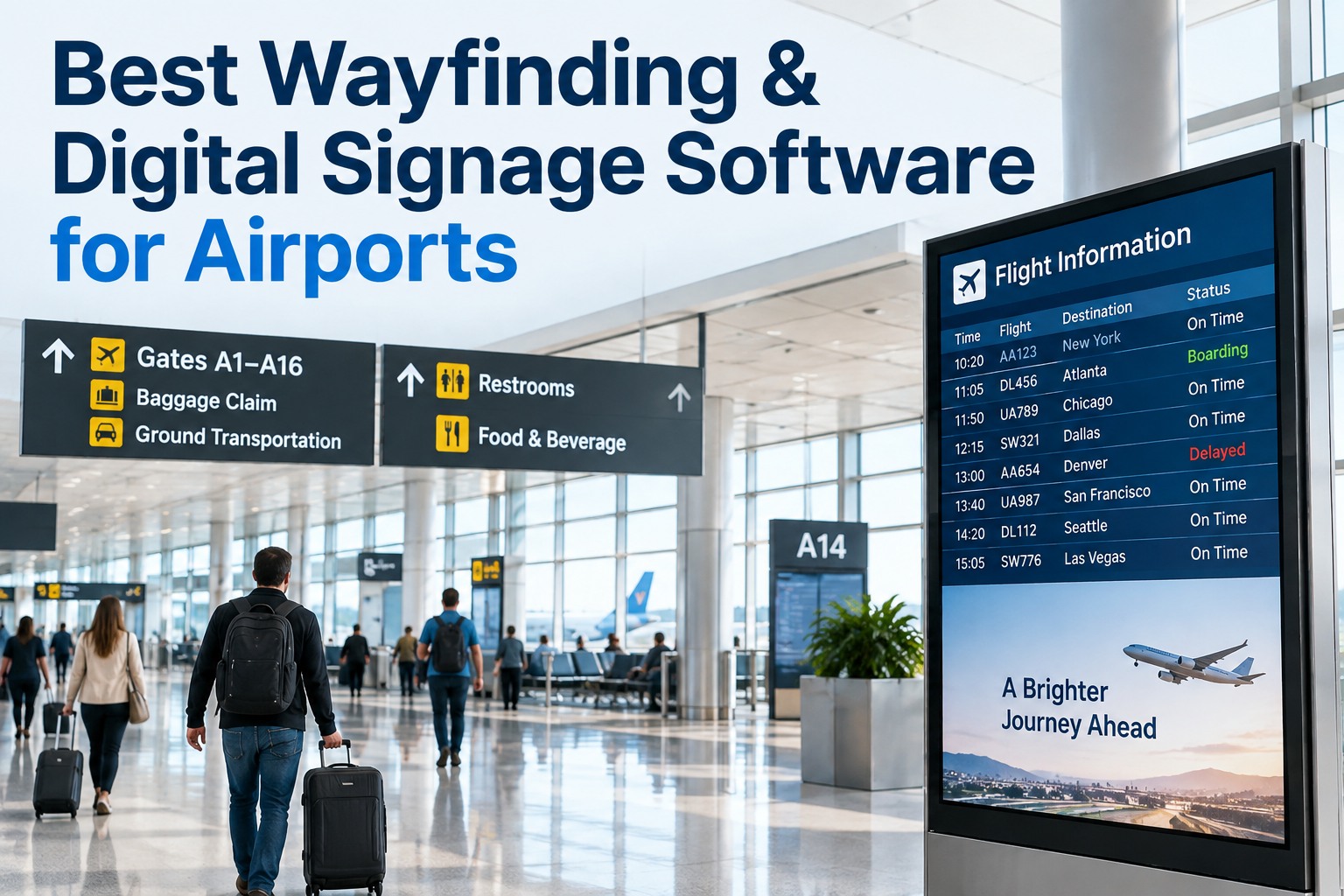
Flight Information Display Systems are the most visible and operationally critical signage asset. A frozen or dark FIDS panel during a busy departure bank creates immediate passenger disruption and staff pressure. PM schedule: weekly visual inspection, monthly hardware check, quarterly software validation.
Navigation
Gate and Terminal Directories
Static and digital gate directories require regular content audits alongside hardware inspection. LED backlight degradation, panel delamination, and mounting integrity failures are the primary physical maintenance issues — often undetected until a passenger reports the problem.
Safety Compliance
Emergency Exit Signage
Emergency exit sign maintenance is not optional — it is a life safety and regulatory compliance requirement. Battery backup systems, LED luminance levels, and visibility compliance must be inspected on defined intervals and documented with certifiable records for safety audits.
Digital Wayfinding
Interactive Kiosks
and Touch Directories
Interactive wayfinding kiosks combine display hardware, touch sensor layers, and connected software — three separate failure modes. Cracked screens, unresponsive touch surfaces, and software crashes all require distinct maintenance workflows, ideally tracked as separate asset components.
Retail and Concessions
Digital Advertising Displays
Commercial digital displays represent revenue-generating assets — downtime has a direct cost that can be quantified. Maintenance contracts for these assets should reference uptime SLAs, and CMMS tracking ensures that vendor response times are measured and contractual terms enforced.
Airside Operations
Runway and Taxiway Signage
Airfield signage operates in extreme thermal and physical stress conditions. FAA/EASA inspection requirements mandate specific inspection intervals and luminance compliance testing. CMMS tracking with regulatory compliance fields ensures every required inspection is scheduled, completed, and documented.
Operational Pain Points
Why Airport Signage Maintenance Fails Without a CMMS
Signage maintenance is often treated as a secondary priority — addressed reactively when a passenger or staff member reports a problem. This reactive posture creates compounding risks across passenger experience, safety compliance, and revenue performance. Book a demo to see how Oxmaint's asset registry transforms signage from reactive fixes to scheduled PM.
No Asset Registry for Display Hardware
Without a full asset registry, facilities teams have no record of when a display was installed, what its maintenance history is, or when it is due for replacement. Capital planning for signage refresh is guesswork, not data.
Reactive-Only Maintenance Mode
The most common signage maintenance trigger is a passenger complaint or staff report. By the time a dark FIDS panel or broken wayfinding kiosk is reported, hundreds of passengers have already been impacted — and the dwell-time and commercial revenue damage is done.
Compliance Gaps on Safety Signage
Emergency exit and safety signage inspection records are often maintained in disconnected paper binders or spreadsheets. When an auditor or inspector requires proof of compliance, pulling together complete records takes hours — and gaps create regulatory risk.
Vendor Management Blind Spots
Many airports outsource digital signage maintenance to vendors with SLA agreements. Without CMMS tracking of work order completion times and response rates, SLA compliance is unmeasured — and underperforming vendors continue to collect contract payments unchallenged.
Oxmaint Solution
How Oxmaint Manages Every Signage Asset Across Your Airport
Oxmaint's asset lifecycle management platform gives airport facilities teams a complete, structured approach to signage and wayfinding system maintenance — from preventive inspection schedules to CapEx replacement forecasting. Start a free trial and register your entire signage asset estate in under a day.
Asset Registry
Full Signage Asset Inventory
Every display panel, directory sign, kiosk, and emergency exit light is registered as an individual asset with installation date, manufacturer data, warranty status, condition score, and full maintenance history — all linked to its physical location in the terminal hierarchy.
PM Scheduling
Automated Inspection Schedules
Preventive maintenance schedules are attached to each asset class — weekly FIDS visual checks, monthly hardware inspections, quarterly emergency sign battery tests. Work orders auto-generate on schedule and are assigned to the appropriate technician or external vendor.
Mobile Inspections
Digital Checklists with Photo Capture
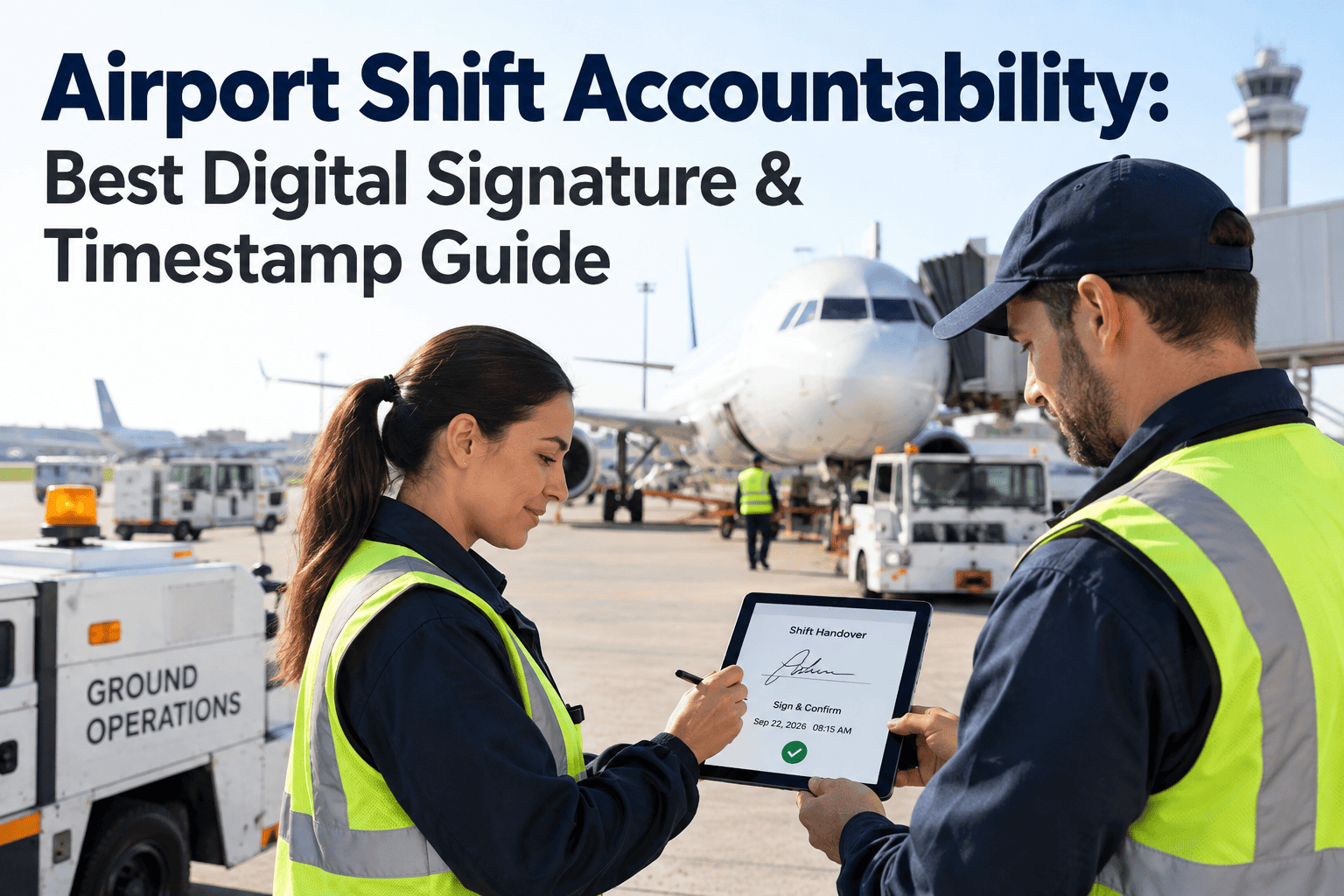
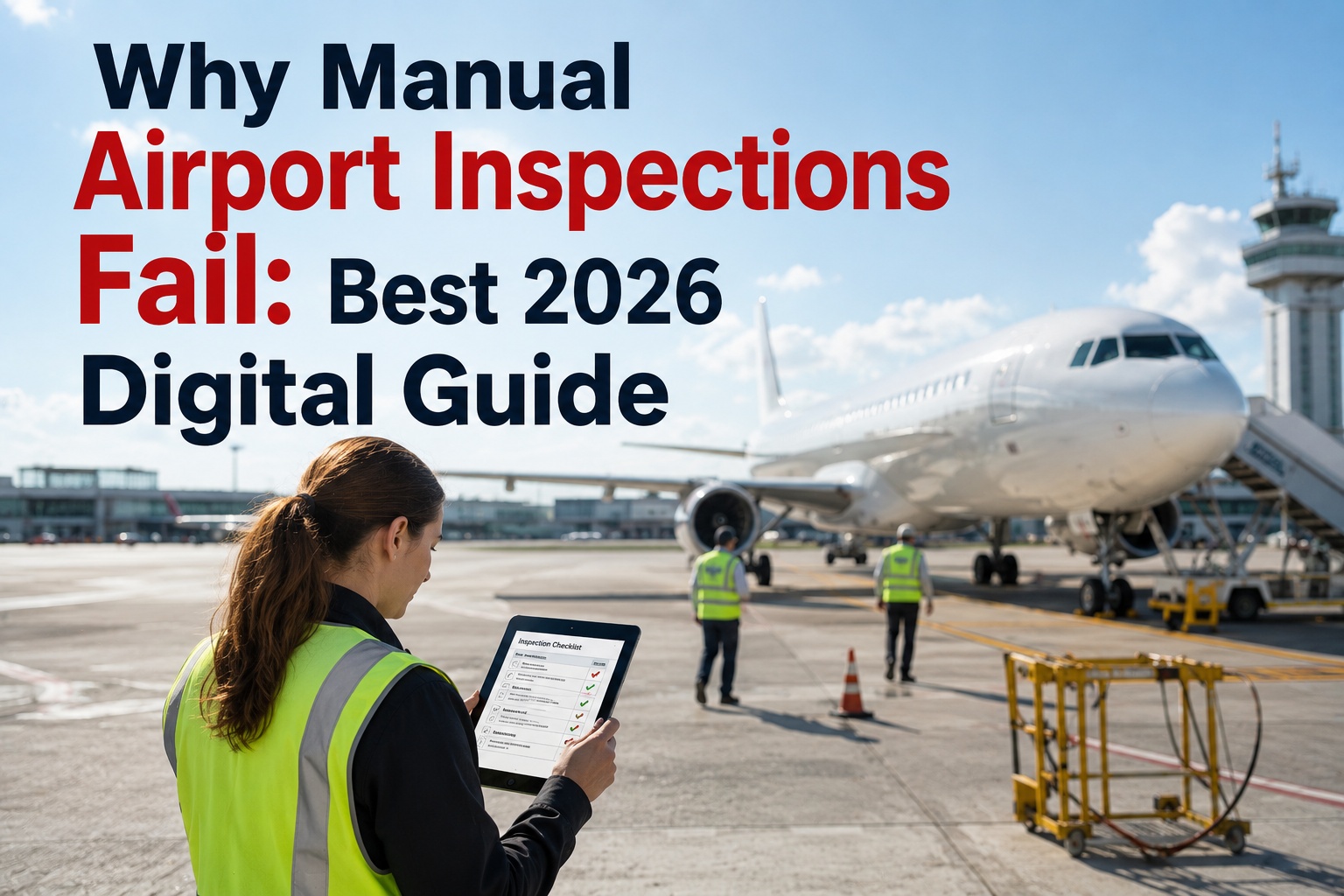
Technicians complete structured digital inspection forms on mobile devices — capturing luminance readings, physical condition ratings, and photo evidence of defects. All data is time-stamped and linked to the specific asset record, creating a defensible compliance trail.
Work Order Management
Fault Reporting and Vendor Assignment
When a display fault is detected — or reported by passenger services — a work order is created in seconds with asset context, fault description, and priority level. Vendor work orders include SLA countdown tracking, ensuring response times are measured and documented against contract terms.
CapEx Forecasting
Rolling 5–10 Year Asset Replacement Plan
Oxmaint's condition scoring and asset age data feeds a rolling CapEx forecast — projecting which display systems, kiosks, and emergency signage assets will require replacement and when. Capital budget requests for signage refresh become data-driven, not estimates.
Compliance Tracking
Regulatory Inspection Documentation
For FAA, EASA, local fire code, and building safety compliance inspections, Oxmaint generates audit-ready reports showing every inspection completed, every defect identified, and every corrective action taken — with digital technician signatures and timestamps throughout.
Asset Lifecycle Management
Reactive Repairs vs. CMMS-Driven Signage Asset Management
| Maintenance Area |
Reactive Fault-Only Approach |
Oxmaint Asset Lifecycle Approach |
| Asset Visibility |
No registry — assets unknown until failure |
Full asset registry with condition score for every display |
| Maintenance Trigger |
Passenger or staff complaint — hours of impact |
PM schedule + fault detection — before passengers are impacted |
| Emergency Sign Compliance |
Paper records — gaps create regulatory risk |
Digital inspection records — audit-ready in seconds |
| Capital Planning |
Based on visible deterioration or unexpected failure |
5–10 year rolling CapEx plan from condition and age data |
| Vendor Management |
SLAs unmeasured — response times unverified |
Work order SLA timer tracks every vendor response and resolution |
| FIDS Uptime |
95–97% at best — failures detected hours late |
99%+ target — PM schedules catch degradation before failure |
ROI and Performance
The Business Case for Structured Signage Asset Management
20%
Retail Dwell Time Increase
Airports with fully operational real-time wayfinding systems retain passengers in commercial zones longer, driving measurable revenue uplift per passenger
67%
Of Passengers Navigation-Dependent
When two-thirds of your passengers rely on signage, every dark display or frozen FIDS panel is an operational failure impacting the majority
4.8x
Emergency Repair Cost Premium
Unplanned display replacements and emergency vendor callouts cost 4.8x more than scheduled maintenance and planned asset replacements
100%
Compliance Record Completeness
Digital inspection records with mandatory fields eliminate the gaps and missing timestamps that create regulatory exposure during safety audits
Expert FAQ
Airport Signage and Wayfinding Maintenance — Common Questions
What inspection frequency is appropriate for airport FIDS and digital display systems?
Industry best practice for FIDS and digital display maintenance follows a tiered inspection schedule: daily automated uptime monitoring (where content management systems can report dark panels), weekly visual inspection by facilities staff covering luminance quality and physical condition, monthly hardware inspection covering power supply health, ventilation, and cooling system function, and quarterly deep inspection covering enclosure integrity, cable management, and component wear assessment. Emergency exit signage requires monthly battery backup test and annual luminance compliance testing as mandated by fire safety codes. Oxmaint manages all of these schedules simultaneously — auto-generating work orders on the correct calendar, with the right checklist for each asset type.
How should airports handle third-party vendor maintenance contracts for digital signage through a CMMS?
Vendor-managed signage assets should be registered in your CMMS just like in-house maintained assets — with the vendor designated as the assigned technician group. When a fault is detected or a PM work order is due, the CMMS generates and dispatches the work order to the vendor, then tracks the response time against SLA commitments. Completion confirmation — with technician name, resolution notes, and parts used — is logged back by the vendor through a mobile portal or API. This creates a complete maintenance history for each asset regardless of who performed the work, and generates the vendor performance data needed to enforce or renegotiate maintenance contracts at review intervals.
How does CMMS asset lifecycle tracking support the business case for signage system replacement?
A CMMS with asset lifecycle tracking accumulates condition score history, maintenance cost per asset, and failure frequency data for every display system over time. When an aging FIDS display has required three repair events in 18 months and its condition score has fallen below the defined replacement threshold, the CMMS generates a capital replacement recommendation with cost justification. Oxmaint's CapEx forecasting module aggregates these individual asset projections into a rolling 5–10 year capital plan — showing the facilities director and airport board exactly when signage system refresh investments are needed, with the maintenance cost evidence to support the budget request.
Does Oxmaint support compliance inspections for airfield and taxiway signage under FAA regulations?
Yes. Oxmaint's digital inspection module supports custom inspection checklists for any regulatory framework — including FAA Advisory Circular requirements for airfield signage and lighting, EASA standards for European airports, and local building and fire safety codes for terminal emergency signage. Each checklist captures the specific data fields required by the applicable regulation — luminance levels, battery backup duration, visibility distance compliance — with mandatory fields that cannot be bypassed. Completed inspections generate reports in a format suitable for submission to regulatory authorities or inclusion in safety management system documentation, with digital signatures from inspecting technicians and supervising managers.
Every Asset Tracked. Every Inspection Documented. Every Display Operational.
Manage Your Airport Signage Like the Revenue-Critical Infrastructure It Is
Oxmaint gives airport facilities teams a complete asset lifecycle management platform for signage and wayfinding systems — preventive maintenance schedules, digital inspections, vendor work order tracking, compliance documentation, and CapEx forecasting. No more reactive repairs. No more compliance gaps. No more dark screens during peak operations.