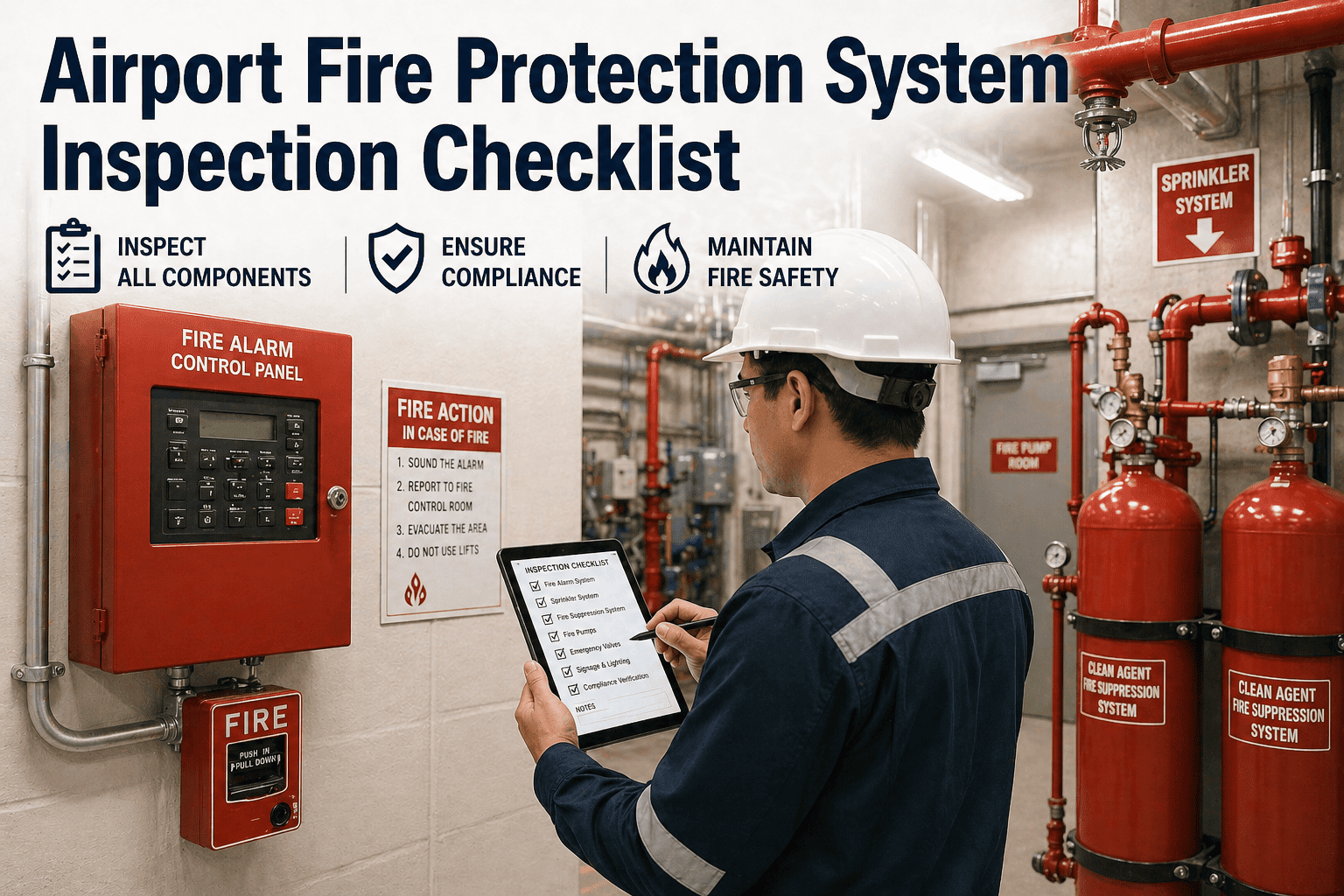
Aviation fuel is the single most hazardous material on the airport campus — and it flows through a system that spans buried pipelines, surface hydrant pits, filtration equipment, storage tanks, and fueling vehicles, all operating simultaneously during peak periods. An undetected fuel leak, a contaminated batch, or a fire suppression system that fails to activate can kill people, ground an entire fleet, and trigger regulatory enforcement that shuts an airport for days. FAA Part 139, NFPA 407, and API industry standards create overlapping inspection requirements that paper-based programs routinely fail to satisfy consistently. Digital CMMS enforcement is not optional in high-consequence environments — it is the only reliable way to close every inspection interval without gaps. Book a demo to see how Oxmaint manages fuel farm inspection schedules and compliance documentation across airport operations.
6 mo
maximum interval for emergency fuel shutoff system testing under NFPA 407
$2,500
annual energy cost of a single 1/4-inch compressed air leak — fuel leaks cost far more
15 psi
differential pressure threshold for filter/water separator replacement per NFPA 407
12 mo
minimum record retention for all fuel farm inspection documentation per FAA Part 139
Fuel Farm System Architecture
Airport fuel infrastructure is not a single asset — it is a chain of interdependent systems where a failure in one stage compromises the entire fueling operation. Understanding each system's inspection requirements prevents the cascading failures that ground aircraft and trigger environmental liability. Want to build a complete fuel farm asset registry? Start a free trial and digitize your fuel infrastructure hierarchy in Oxmaint.
Storage
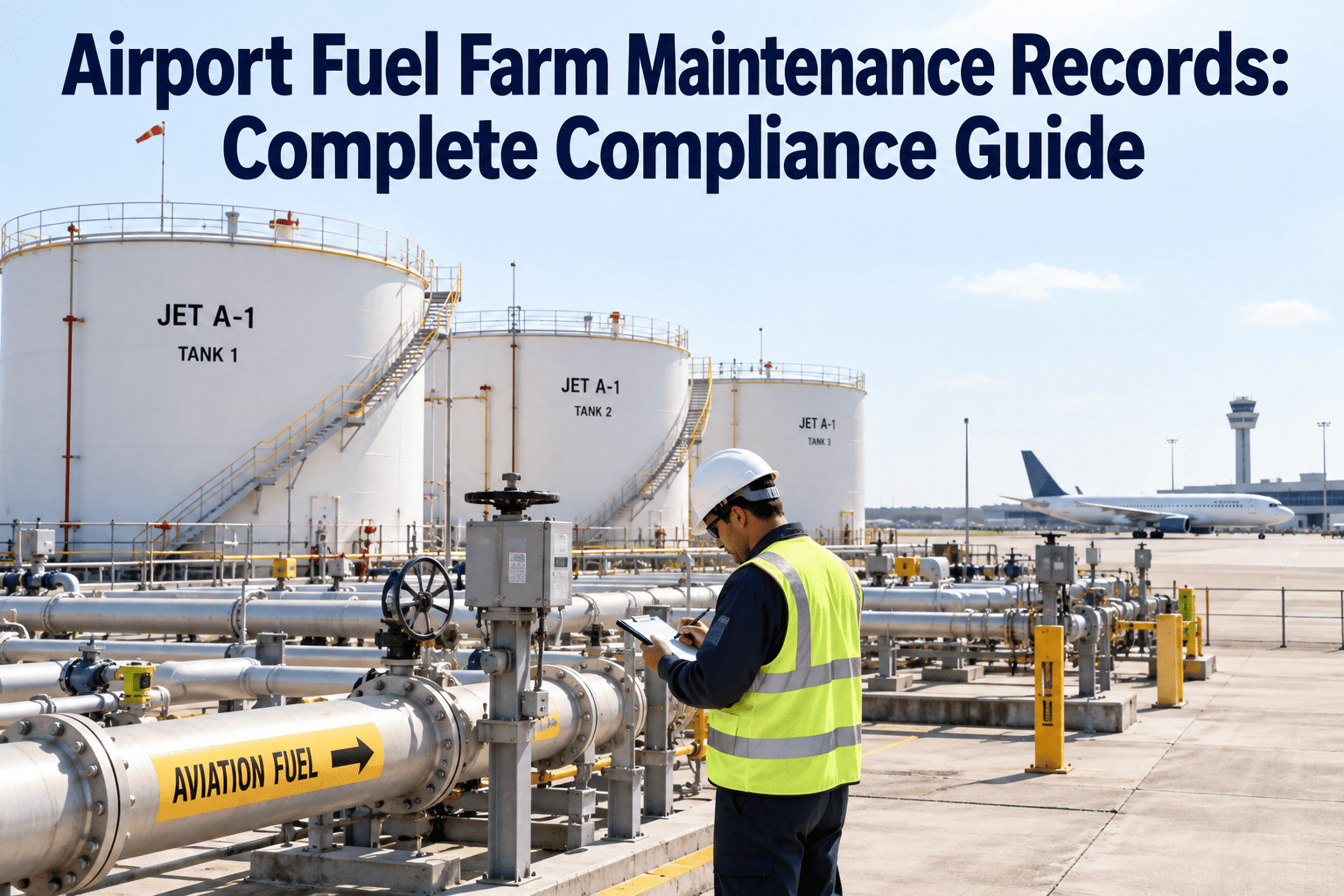
Fuel Storage Tanks
Above-ground and underground storage tanks conforming to NFPA 30 and API 653. Require weekly level gauging, overfill protection testing, water bottom checks, and periodic API integrity assessments. Cathodic protection for underground tanks monitored continuously.
Quality
Filtration Systems
Filter/water separators remove particulate and free water before fuel enters the distribution system. Differential pressure monitored continuously — replacement required when readings reach 15 psi or per OEM intervals. Millipore testing confirms fuel cleanliness.
Distribution
Hydrant Pipeline System
Underground pipeline network delivering fuel from storage to hydrant pits at each gate. Requires periodic pressure testing for integrity verification and cathodic protection monitoring. Hydrant pits must be clean, debris-free, and structurally capable of handling aircraft and vehicle loads.
Safety
Fire Protection Systems
Foam suppression, portable extinguishers, emergency shutoff valves, and bonding/grounding systems. Emergency shutoffs must be inspected at 6-month intervals per NFPA 407. Fire extinguishers maintained per NFPA 10 at all fueling locations.
Close Every Inspection Interval Before the Regulator Asks
Oxmaint tracks every NFPA 407 and FAA Part 139 inspection interval automatically — with digital checklists, reading capture, photo documentation, and timestamped completion records that satisfy auditors from FAA, fire marshals, and environmental agencies.
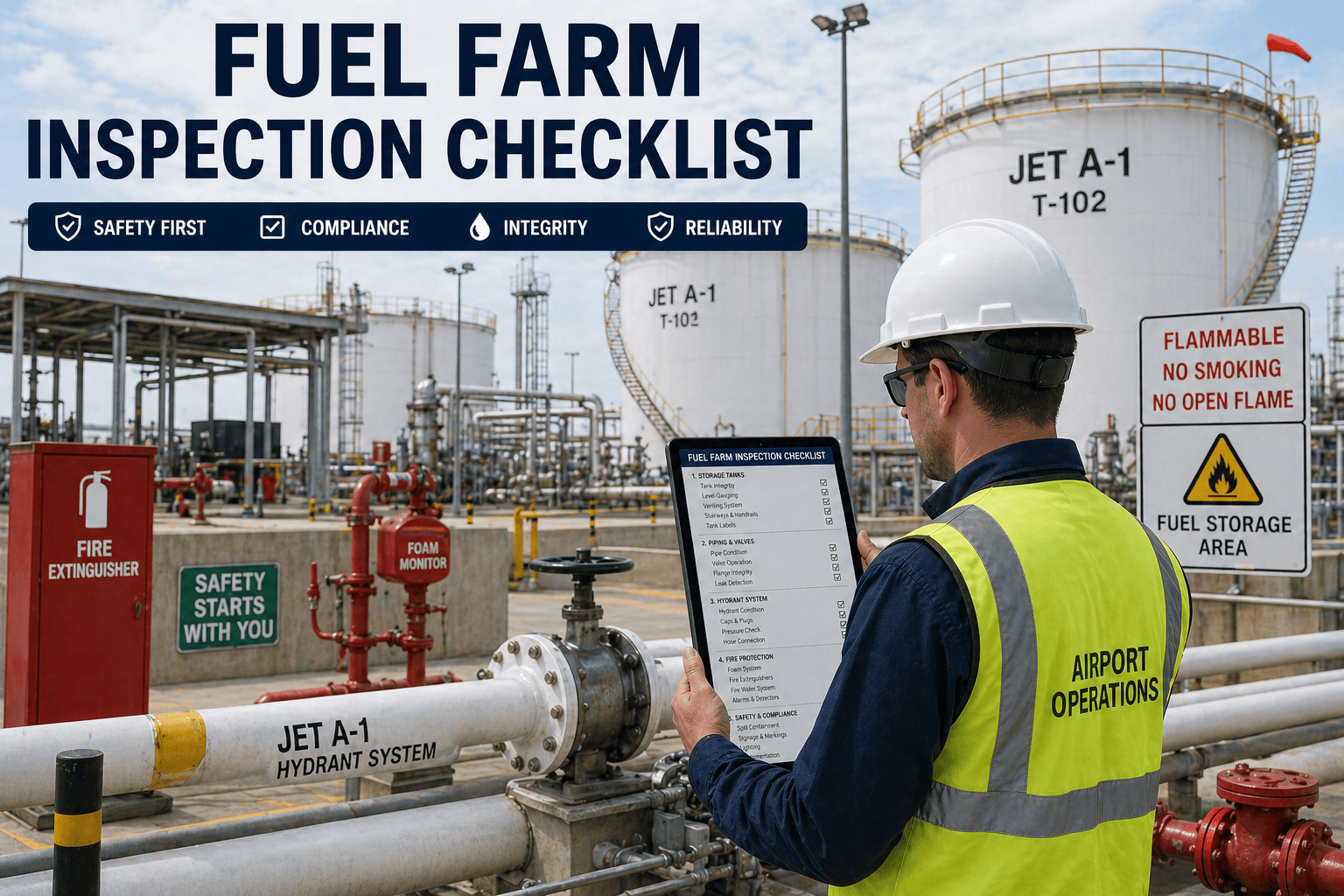
Fuel Farm Inspection Checklist by Frequency
Daily Checks
Visual leak inspection — fuel farm perimeter, tank bases, and pipeline access points
Bonding cable condition — check for damage, proper storage, and clean connection points
Fire extinguisher status — verify seal intact, pressure gauge in green, correct placement
No Smoking signage — verify all regulatory signage is visible and undamaged
Weekly Checks
Tank water bottom check — drain and measure water accumulation, record and trend
Filter differential pressure — read and record, escalate if approaching 15 psi threshold
Hydrant pit condition — clear debris, inspect vapor-sealing traps and covers
Area security and housekeeping — verify access control and clean spill-free environment
Quarterly Checks
Fuel quality sampling — Millipore cleanliness test, water content, and color check
Overfill protection — test high-level alarm and automatic shutoff activation
Cathodic protection reading — record pipe-to-soil potentials per NFPA standard
FAA Part 139 fueling operation inspection — document full compliance assessment
6-Month / Annual Checks
Emergency fuel shutoff — functional test with documented response time per NFPA 407
Hydrant pressure test — system integrity verification, leak detection, flow rate confirmation
Filter element replacement — replace based on differential pressure or OEM schedule
API 653 tank assessment — structural integrity evaluation by qualified inspector
Paper Compliance vs. CMMS-Enforced Fuel Farm Management
| Compliance Area | Paper-Based Approach | With Oxmaint CMMS |
|---|
| Inspection intervals | Calendar reminders, frequently missed | Auto-scheduled with overdue escalation — nothing gaps |
| Differential pressure trending | Individual readings on paper, no trend analysis | Automated trending with threshold alerts before limits hit |
| Emergency shutoff testing | Often deferred — documentation incomplete | Mandatory 6-month schedule with digital test records |
| FAA Part 139 audit prep | Days assembling scattered records | Instant retrieval — complete 12-month history on demand |
| Environmental compliance | EPA SPCC documentation manually maintained | Digital spill response records and containment inspection logs |
| Corrective actions | Verbal follow-up, closure not verified | Work orders generated from deficiency to verified closure |
Compliance and Safety Impact
100%
Interval Coverage
Every NFPA 407 and FAA Part 139 inspection interval tracked and documented — zero gaps in compliance records.
Zero
Undetected Contamination
Scheduled fuel quality sampling and differential pressure trending catch contamination before it reaches aircraft.
60%
Faster Audit Response
Digital records with instant retrieval replace days of manual document assembly during FAA or fire marshal audits.
12 mo+
Guaranteed Retention
All inspection records retained digitally with timestamps — meeting and exceeding FAA minimum retention requirements.
Fuel farm compliance failures do not produce warnings — they produce enforcement actions, environmental liability, and operational shutdowns. The cost of a single regulatory enforcement event at a fuel farm exceeds years of CMMS subscription costs. More critically, the cost of a fueling incident — in lives, operations, and reputation — is incalculable. Protect your operations at every level — book a demo to see fuel farm compliance management in Oxmaint, or start a free trial to deploy structured fuel inspection programs today.
How often must emergency fuel shutoff systems be tested under NFPA 407?
NFPA 407 requires documented inspections of emergency fuel shutoff systems at 6-month and 12-month intervals. The systems must be clearly labeled, accessible, and functionally operational — capable of halting all fuel flow within specified timeframes. Oxmaint schedules these tests automatically and stores the test records with digital signatures.
Start a free trial to set up NFPA 407 inspection schedules.What triggers filter/water separator replacement in a hydrant system?
Replacement is required when the differential pressure reading reaches 15 psi across the filter element, when Millipore testing shows contamination above acceptable limits, or when the OEM-specified interval is reached — whichever occurs first. Oxmaint tracks differential pressure readings over time and alerts technicians when replacement thresholds are approaching.
Book a demo to see differential pressure trending in Oxmaint.What does FAA Part 139 require for fuel farm documentation?
FAA Part 139 requires that all fuel storage and distribution system inspections be documented and retained for a minimum of 12 months. Records must include inspection dates, inspector identification, findings, and corrective actions taken. Quarterly fueling operation inspections are specifically required for certificated airports. Oxmaint satisfies all of these requirements with timestamped digital records.
How does cathodic protection monitoring prevent underground tank failures?
Cathodic protection systems apply a small electrical current to underground steel pipelines and tanks to counteract corrosion. Without functioning protection, corrosion can perforate tank walls and pipelines within 5-10 years, creating undetected fuel leaks with major environmental liability. CMMS schedules regular pipe-to-soil potential readings and tracks protection system integrity over time.
Start a free trial to track cathodic protection monitoring in Oxmaint.
In a Fuel Farm, the Inspection You Missed Is the One That Matters Most.
Oxmaint automates every NFPA 407, FAA Part 139, and API 653 inspection interval — with digital checklists, reading capture, differential pressure trending, emergency shutoff test scheduling, and complete 12-month audit trails that regulatory agencies accept on sight.
NFPA 407 ComplianceAPI 653 Tank TrackingDifferential Pressure TrendingFAA Part 139 Records