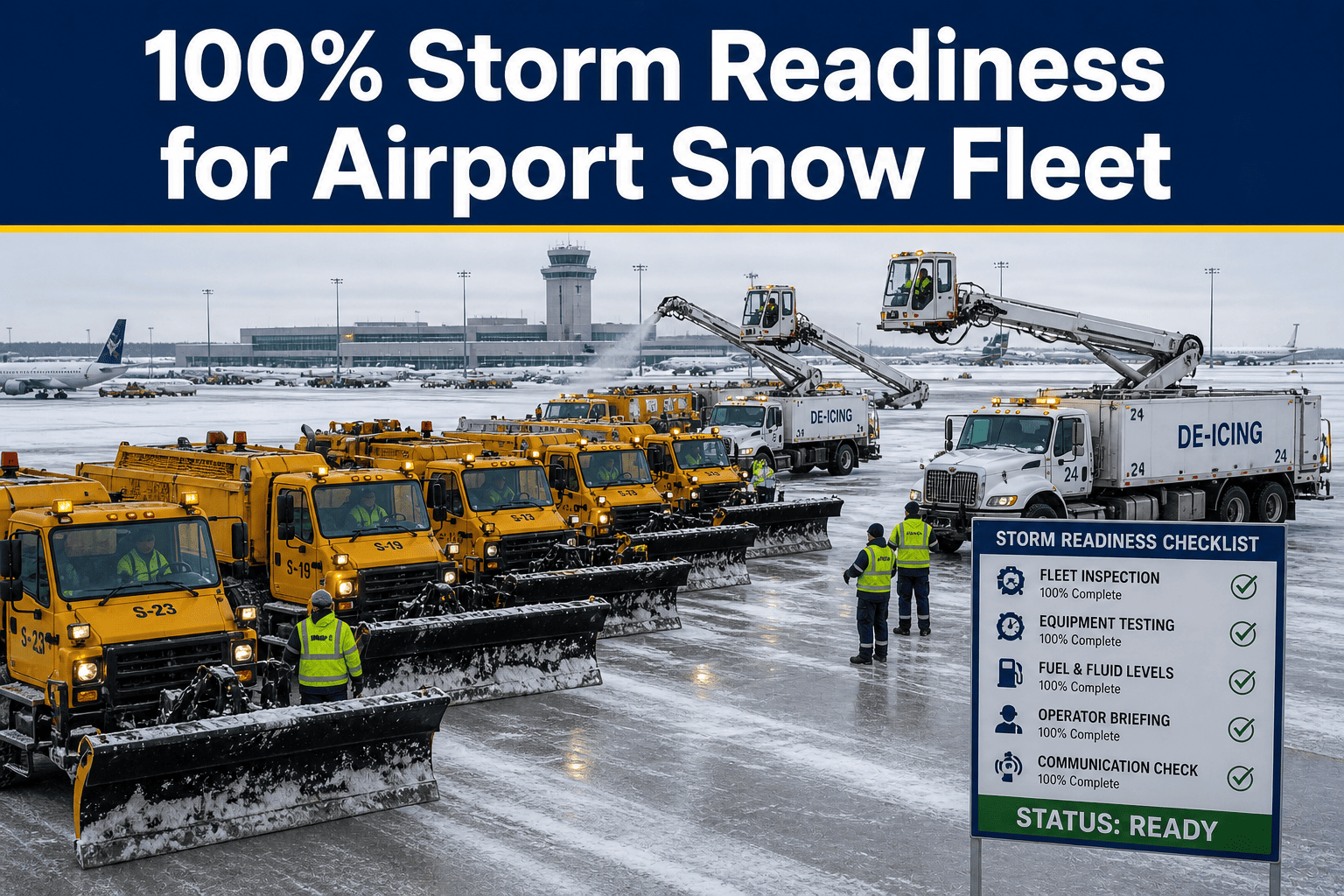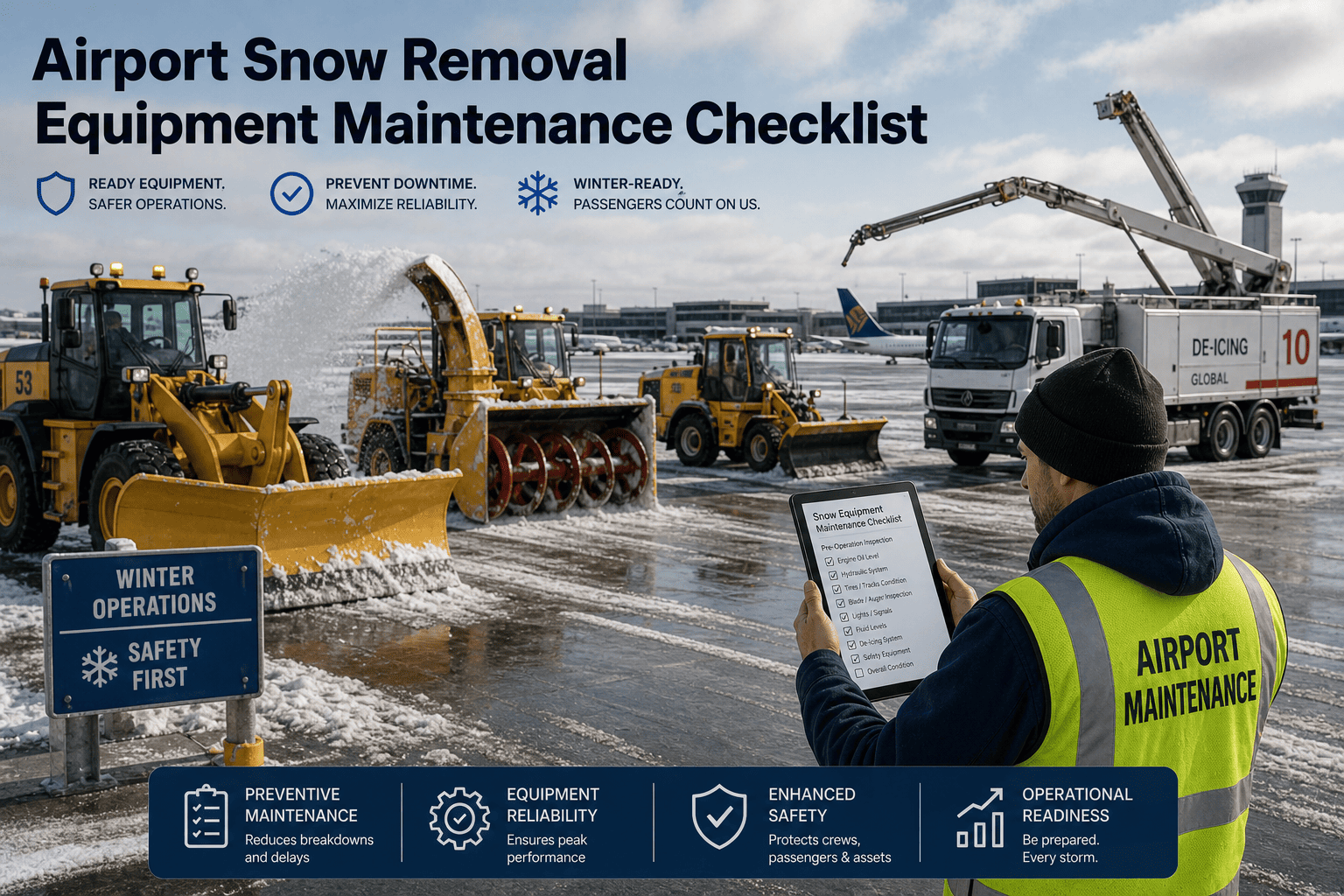
A single unplanned runway closure during a winter storm costs a major hub airport between $150,000 and $400,000 per hour in diverted flights, airline penalties, and ground operation overruns. The equipment that prevents that closure — snowplows, de-icing trucks, runway brooms, glycol applicators, sand spreaders — requires intensive pre-season preparation, storm-by-storm servicing, and meticulous post-season storage to remain operationally reliable when temperatures drop. When maintenance records for that equipment live in paper logbooks or disconnected spreadsheets, readiness is assumed rather than confirmed. Start a free trial for 30 days and book a demo to see how Oxmaint keeps winter operations fleets runway-ready.
Airport Snow and Ice Control: Equipment Maintenance and Operations Planning
FAA mandates runway clearing within 20 minutes of snowfall cessation. That window is only achievable when every piece of winter operations equipment has been maintained, tested, and documented before the season starts.
Every Plow, Every De-Icer, Every Runway Broom — Ready Before First Snowfall
Oxmaint tracks pre-season PM completion, storm-readiness status, glycol consumption, and post-storm servicing across your entire winter operations fleet — with mobile sign-off for every technician.
Airport Winter Operations Equipment: What Needs to Be Maintained
Operate at 40+ mph with multi-blade configurations. Pre-season PM includes hydraulic system inspection, blade wear measurement, and engine servicing. PM window: August–September.
Runway de-icing trucks require spray system calibration, pump pressure testing, and glycol concentration verification before each season. Glycol usage tracked per application event.
Spreader calibration, conveyor belt inspection, and material flow rate testing required pre-season. Spreader malfunctions during operations cause FOD incidents and runway closures.
High-capacity blowers clear 5,000+ tons per hour. Impeller inspection, discharge chute testing, and gearbox oil changes are critical pre-season tasks. Failure mid-storm = immediate runway closure.
Broom wear inspection, hydraulic brush pressure testing, and debris collection system servicing. Worn brooms leave snow residue that refreezes — creating black ice conditions.
Lead vehicles, communication trucks, and glycol transport units require communications system testing, airfield lighting compatibility checks, and winter tire installation before first snow.
Three-Phase Winter Operations Maintenance Cycle
How Oxmaint Manages Airport Winter Operations
Every pre-season task for every unit is tracked in Oxmaint. The readiness dashboard shows percent-complete by equipment category — so you know exactly what is not ready before first snowfall.
Pre-configured storm activation work orders trigger automatically when a weather event is declared. Pre-storm checks, fuel logs, and post-storm wash-down tasks are all pre-loaded and assigned.
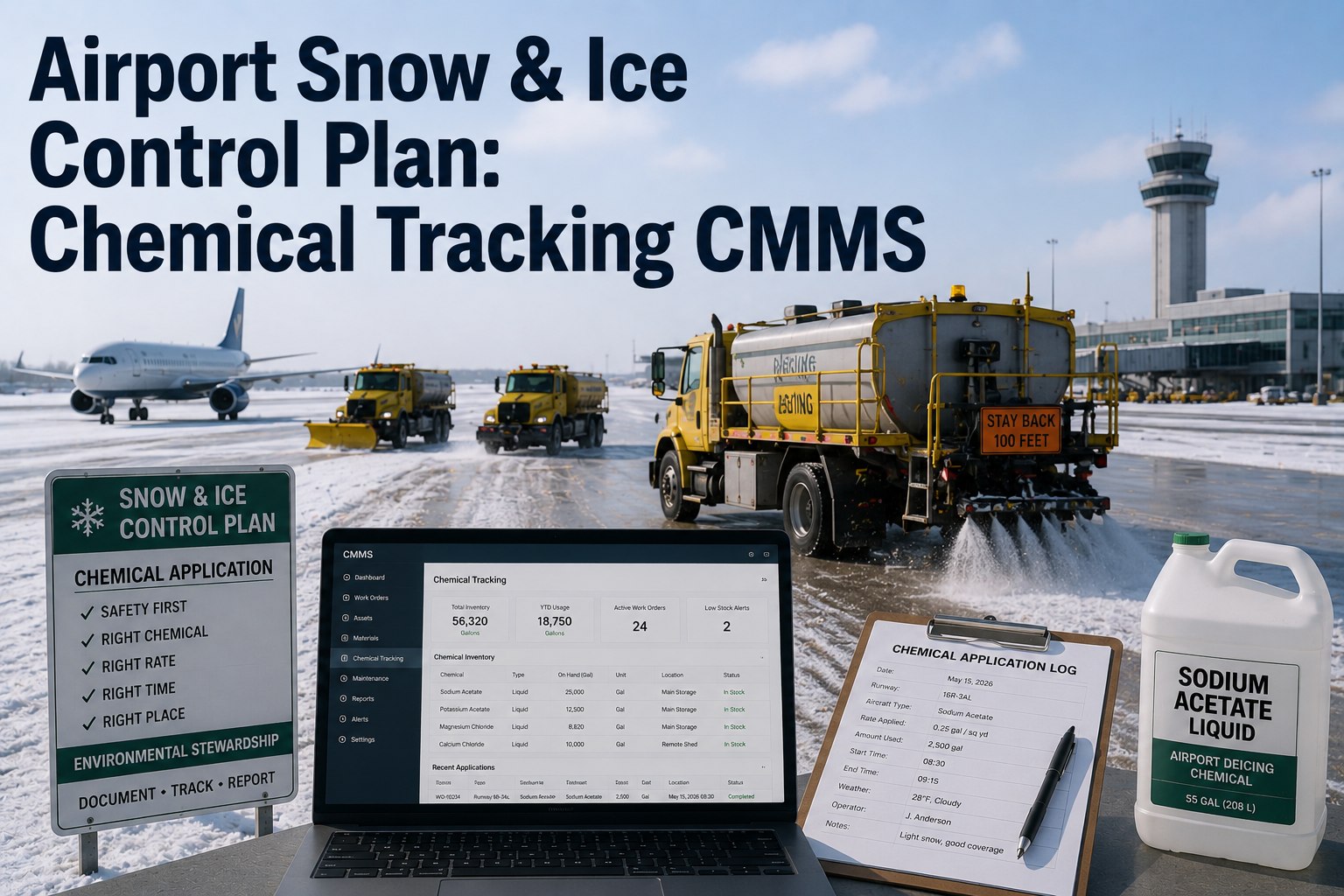
Log glycol application volumes per event per runway. Oxmaint tracks inventory consumption, triggers reorder alerts, and generates environmental glycol usage reports for airport authority compliance.
Technicians complete pre-storm checks and post-storm reports on their phones — no paperwork, no office return required. Every inspection is timestamped and geotagged to the equipment location.
Winter operations readiness is not a December problem — it is an August decision. Airports that confirm fleet readiness through documented PM completion see 38% fewer storm-season equipment failures. Start a free trial and book a demo to build your winter readiness program in Oxmaint before the season starts.
Ad Hoc Winter Operations vs. Structured CMMS Management
| Area | Ad Hoc / Paper-Based | Oxmaint-Managed |
|---|---|---|
| Pre-season readiness confirmation | Walk-down inspection — no documented record | 100% PM completion tracked per unit — dashboard view |
| Storm activation speed | Verbal assignments — 45–90 min mobilization | Pre-loaded work orders — 15–20 min mobilization |
| Equipment fault tracking | Word of mouth — faults often missed | Mobile fault logging — work order created instantly |
| Glycol usage reporting | Estimated — compliance risk | Per-event logging — audit-ready environmental report |
| CapEx planning input | Fleet age only — no condition data | Condition scores + maintenance history per unit |
| Season-over-season improvement | Anecdotal — no baseline comparison | Season performance reports — trend analysis available |
Winter Operations Results with Oxmaint
Frequently Asked Questions
Can Oxmaint track FAA Part 139 winter operations compliance documentation?
How does storm activation work order triggering work in practice?
How does Oxmaint handle glycol environmental reporting requirements?
Can Oxmaint support CapEx forecasting for aging winter operations equipment?
The FAA Does Not Accept "We Thought It Was Ready" as an Answer
Oxmaint gives your winter operations team documented proof that every plow, de-icer, and runway broom was inspected, serviced, and signed off before first snowfall — and every storm activation was executed to protocol.