Commercial aviation runs on margins that disappear the moment an aircraft stops flying. A single AOG event on a narrowbody costs $10,000 to $20,000 per hour in lost revenue, with widebody international routes hitting $40,000 to $80,000 per hour — and Boeing itself estimates that severe AOG situations can reach $150,000 per hour depending on aircraft type and route. Meanwhile, Aviation Week's 2025 MRO survey found that maintenance delays attributed to software limitations cost the industry $8.7 billion annually, and AOG events triggered by poor data visibility increased 23% year-over-year. Most airlines, MROs, and airports still run their maintenance operations on legacy on-premise systems built before the cloud, before mobile, and before AI prognostics — and they are paying for it in unscheduled removals, missed inspections, and audit findings that should never have happened. Modern aviation CMMS software replaces that legacy stack with one cloud platform that handles work orders, airworthiness tracking, FAA/EASA compliance, predictive analytics, and parts inventory across every tail and every line station. Start a free trial to see how OxMaint runs your fleet in one platform, or book a demo and we will map your hangar workflow live.
Aviation Maintenance · Cloud CMMS 2026
Aviation CMMS Software 2026 — Cloud Aircraft Maintenance Management System
A cloud-native CMMS built for airlines, MROs and airports. Cut AOG events 40%, push dispatch reliability above 99%, and stay FAA Part 121/135 and EASA Part-145 audit-ready — all from one mobile-first platform.
annual industry cost of maintenance delays caused by software limitations (Aviation Week 2025 MRO survey)
$150K
peak per-hour cost of a severe AOG event on commercial aircraft, per Boeing estimates
14
average AOG events per US commercial aircraft per year — most preventable with proper tracking
35%
increase in engine shop turnaround time on legacy fleets since pre-pandemic (Bain & Company)
What Is Aviation CMMS Software?
Aviation CMMS software is a computerized maintenance management system purpose-built for the regulatory, technical and operational demands of aircraft maintenance. Unlike a generic facility CMMS, an aviation platform tracks airworthiness directives, service bulletins, life-limited parts, MEL/CDL items, and FAA or EASA inspection intervals down to the flight-hour and cycle — not just calendar time. It connects line maintenance, base maintenance, MRO shop floor, parts inventory, and compliance reporting into one auditable record per tail.
For airlines, the platform controls dispatch reliability. For Part 145 repair stations, it controls work-package throughput and stamp traceability. For airports, it controls runway, ARFF, baggage and GSE asset uptime. The common thread is total visibility — every component, every interval, every signature, every part movement, in real time, from any device. Start a free trial and see your fleet on one screen, or book a demo and walk a real Part 121 workflow with our team.
Core Capabilities of a Modern Aviation CMMS
01
Tail-Level Asset Registry
Every aircraft, engine, APU, landing gear and rotable tracked by serial number with flight hours, cycles and remaining useful life updated after each flight leg.
02
AD & SB Compliance Engine
Airworthiness directives and service bulletins applied automatically to affected tails with effective dates, methods of compliance and recurring intervals tracked to the hour.
03
Digital Logbook & Stamps
Electronic technical log replaces paper. Stamp-and-sign with two-factor authentication. Every entry timestamped, geo-tagged and locked for audit.
04
Predictive Maintenance Engine
ACARS, FDM and IoT sensor data analyzed against component health curves to flag failures 200–400 flight hours in advance of unscheduled removal.
05
Work Package Builder
A-checks, C-checks and heavy maintenance visits assembled from task cards with man-hours, parts kits, tooling and certification requirements pre-allocated.
06
MRO Parts & Rotables
Serialized inventory with 8130-3, EASA Form 1 and CofC documentation linked to each part. Shelf life, batch and traceability fully closed-loop.
Why Legacy Aviation Maintenance Software Is Failing in 2026
No Predictive Visibility
Legacy MRO systems flag a part only after it fails. The first warning is an unscheduled removal — and an aircraft sitting on the ramp burning $10K–$80K per hour in lost revenue.
Paper Logbooks & Spreadsheets
Critical maintenance records still living in paper logbooks and offline Excel files. Audit findings, missed intervals, and re-keying errors that compound across every shift change.
$2M+ Customization Costs
Traditional aviation ERP implementations average 18–24 months with customization budgets above $2M for mid-sized operators — and most still need bolt-on tools for mobile and analytics.
Disconnected Line & Base
Line maintenance, base maintenance and shop floor run on different systems. Deferred defects, MEL items and open work cards do not reconcile — and findings surface during regulatory audits.
No Real-Time Mobile
Technicians on the ramp cannot raise defects, sign off tasks, or access manuals from their device. Every workflow runs through a back-office computer — adding hours to every turn.
Audit Trail Gaps
FAA and EASA inspectors find missing signatures, expired stamps, and tasks closed without verification. Each gap is a finding — and findings escalate to certificate-level action.
Most fleets lose 14 AOG events per aircraft per year — most of them preventable with proper interval tracking.
How OxMaint Solves Aviation Maintenance End-to-End
OxMaint replaces the legacy aviation maintenance stack with one cloud platform that handles every workflow from defect raise to airworthiness sign-off. The system is mobile-first — meaning ramp technicians, line maintenance engineers, and shop-floor mechanics work the same data model the planning team uses. No re-keying. No paper. No version-control failures during audit. Book a demo and we will walk through a real Part 121 dispatch workflow on your fleet structure.
Unified Line, Base & Shop
Line maintenance at outstations, base maintenance in the hangar, and Part 145 component shop floor all share one record per tail. Every deferred defect, MEL item and open task card visible to all roles in real time.
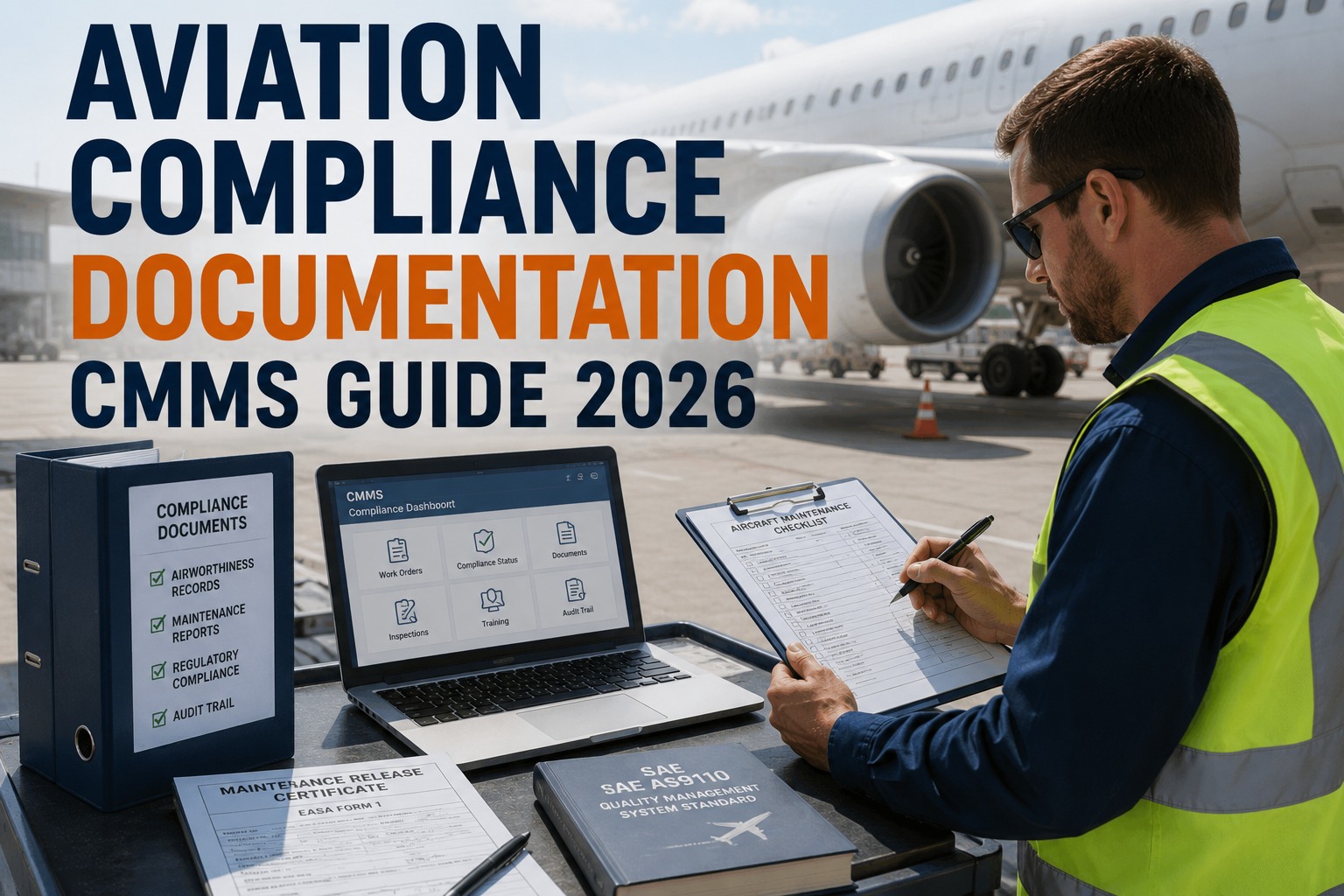
FAA & EASA Audit Mode
One-click audit packs export every signature, stamp, work order, AD compliance record and part trace for any tail across any date range. Inspectors get a complete, indexed dossier in under 60 seconds.
Mobile Tech Workstation
Native iOS and Android apps for ramp, hangar and shop. Raise defects, scan part numbers, sign off task cards and pull up SRM/AMM references — fully offline-capable, syncs the moment a connection returns.
Predictive Health Engine
ACARS, FDM, oil-debris and vibration data analyzed in the cloud against component-specific reliability curves. The system flags components 200–400 flight hours before unscheduled removal probability spikes.
Serialized Parts & Traceability
Every rotable, life-limited part and time-controlled component tracked by serial number with FAA 8130-3, EASA Form 1 and back-to-birth records linked in the asset history. Zero traceability gaps at audit.
Multi-Site Portfolio View
Run multiple base stations, line stations and Part 145 facilities from one dashboard. CapEx forecasting, manpower planning and reliability KPIs roll up across the network without spreadsheet consolidation.
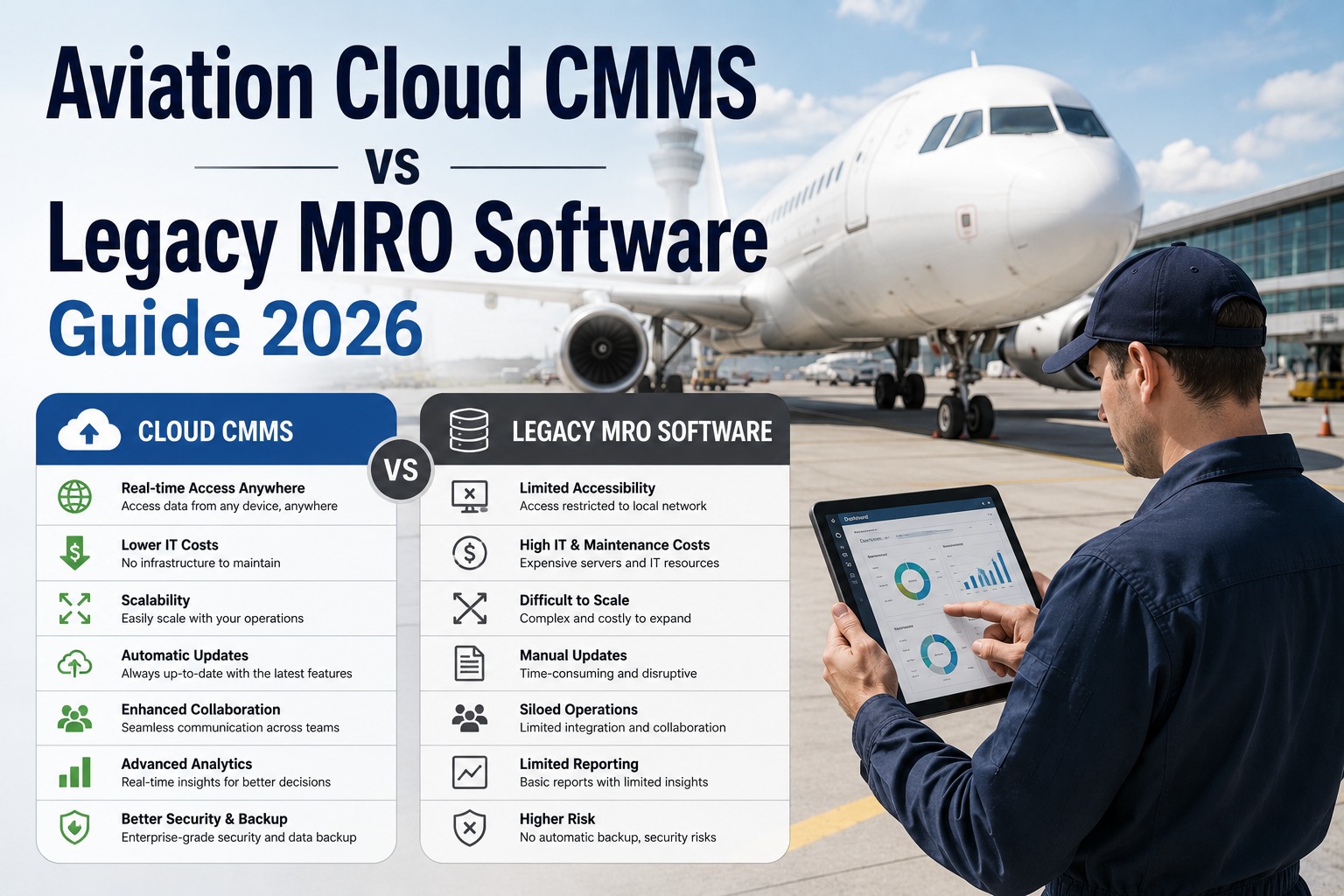
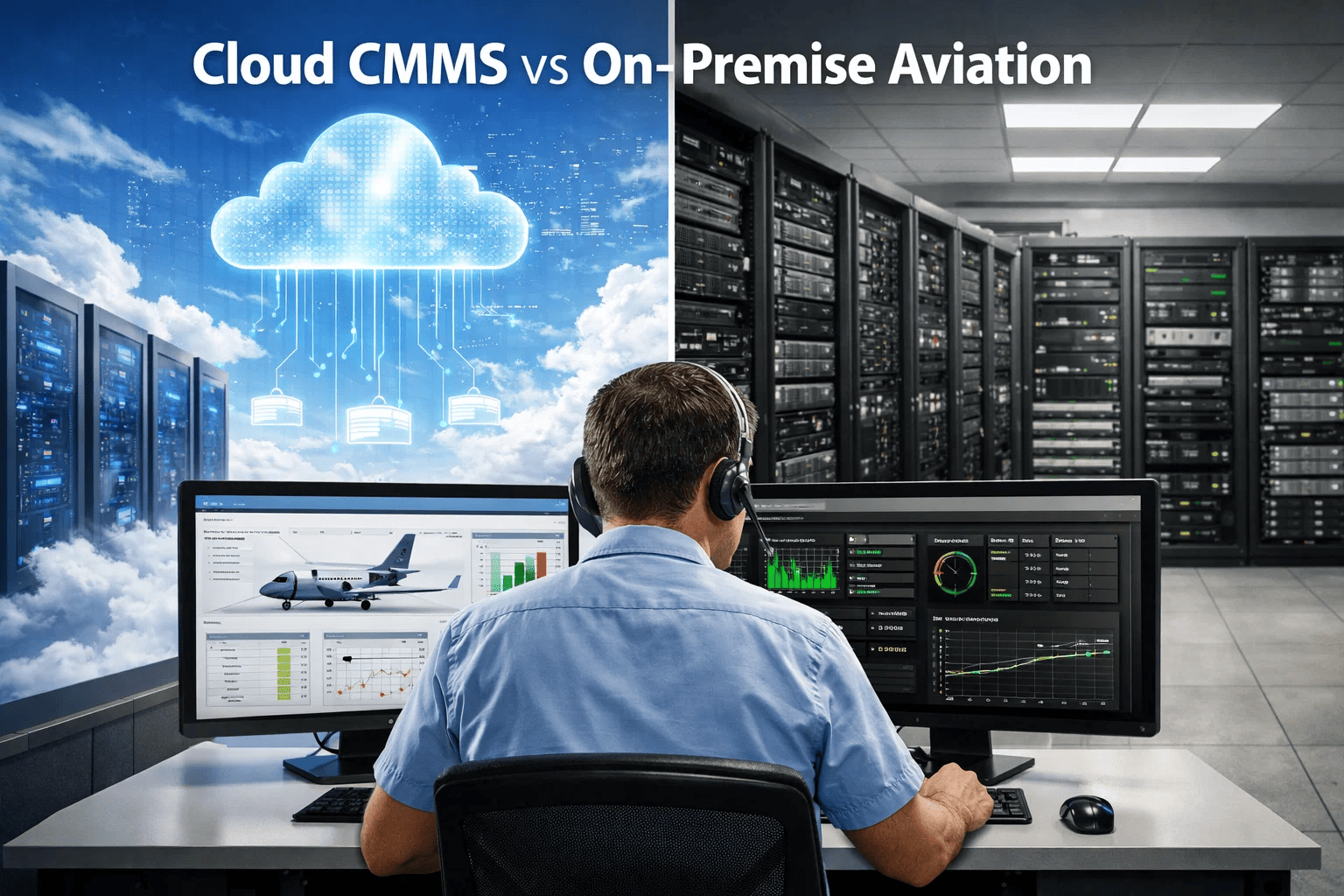
Legacy On-Premise MRO vs. OxMaint Cloud Aviation CMMS
Capability
Legacy On-Premise MRO
OxMaint Cloud Aviation CMMS
Deployment timeline
18–24 months, $2M+ customization
6–12 weeks turnkey, fixed-scope
Mobile technician access
Back-office workstations only
Native iOS/Android, offline-capable
AD & SB compliance
Manual cross-reference against effectivity lists
Auto-applied to affected tails with interval tracking
Predictive maintenance
Not available or expensive bolt-on
Built-in, ACARS & IoT-fed, 200–400 hrs lead time
Audit pack generation
Weeks of manual document assembly
One-click export, indexed by tail and date range
System uptime guarantee
On-prem infrastructure, no SLA
99.9% cloud SLA, SOC 2 Type II certified
Updates & new features
Annual upgrade cycles, customization breaks
Continuous deployment, zero customer downtime
Total 5-year cost
$4M–$8M including infrastructure
Predictable per-tail SaaS — 60% lower TCO
ROI of Switching to a Cloud Aviation CMMS
40%
reduction in AOG events when predictive maintenance and structured PM intervals replace reactive failure response
99%+
dispatch reliability achievable for Part 121 carriers running unified line, base and reliability programs on one platform
35%
cut in unscheduled component removals when sensor data feeds a predictive health engine
60%
lower 5-year total cost of ownership versus legacy on-premise MRO platforms including infrastructure
Frequently Asked Questions
Is OxMaint aviation CMMS suitable for FAA Part 121, 135 and 145 operators?
Yes. OxMaint is built to support the certification, maintenance program, and audit-trail requirements of Part 121 air carriers, Part 135 commuter and on-demand operators, and Part 145 repair stations. The platform also supports EASA Part-145, Part-M and Part-CAMO operations for European and international fleets.
How long does it take to deploy aviation CMMS on a fleet?
Typical deployment runs 6–12 weeks from contract signing to go-live. Week 1–4 covers data migration from legacy systems, fleet structure setup and AD/SB library import. Week 5–8 covers user training, mobile rollout and pilot tail validation. Week 9–12 covers full fleet cutover and reliability program activation.
Does OxMaint integrate with ACARS, FDM and existing flight operations systems?
Yes. OxMaint connects to ACARS data feeds, flight data monitoring systems, and major flight operations platforms via secure APIs. Flight hours, cycles, and exceedance events update component time records automatically after every leg — no manual logbook entry required.
Is the platform secure enough for airline and MRO regulatory data?
OxMaint operates on enterprise cloud infrastructure with SOC 2 Type II controls, encrypted data at rest and in transit, and role-based access tied to certificate holdings. All records are tamper-evident and audit-traceable to meet FAA, EASA and CAA documentation requirements.
Stop Losing Millions to AOG Events
Run Your Entire Fleet on One Cloud Aviation CMMS
From line maintenance defect raise to Part 145 work-package sign-off — OxMaint replaces every spreadsheet, paper logbook and legacy MRO module with one mobile-first cloud platform. Live in weeks, not years. Used by operations teams managing 10,000+ assets across multi-site portfolios.