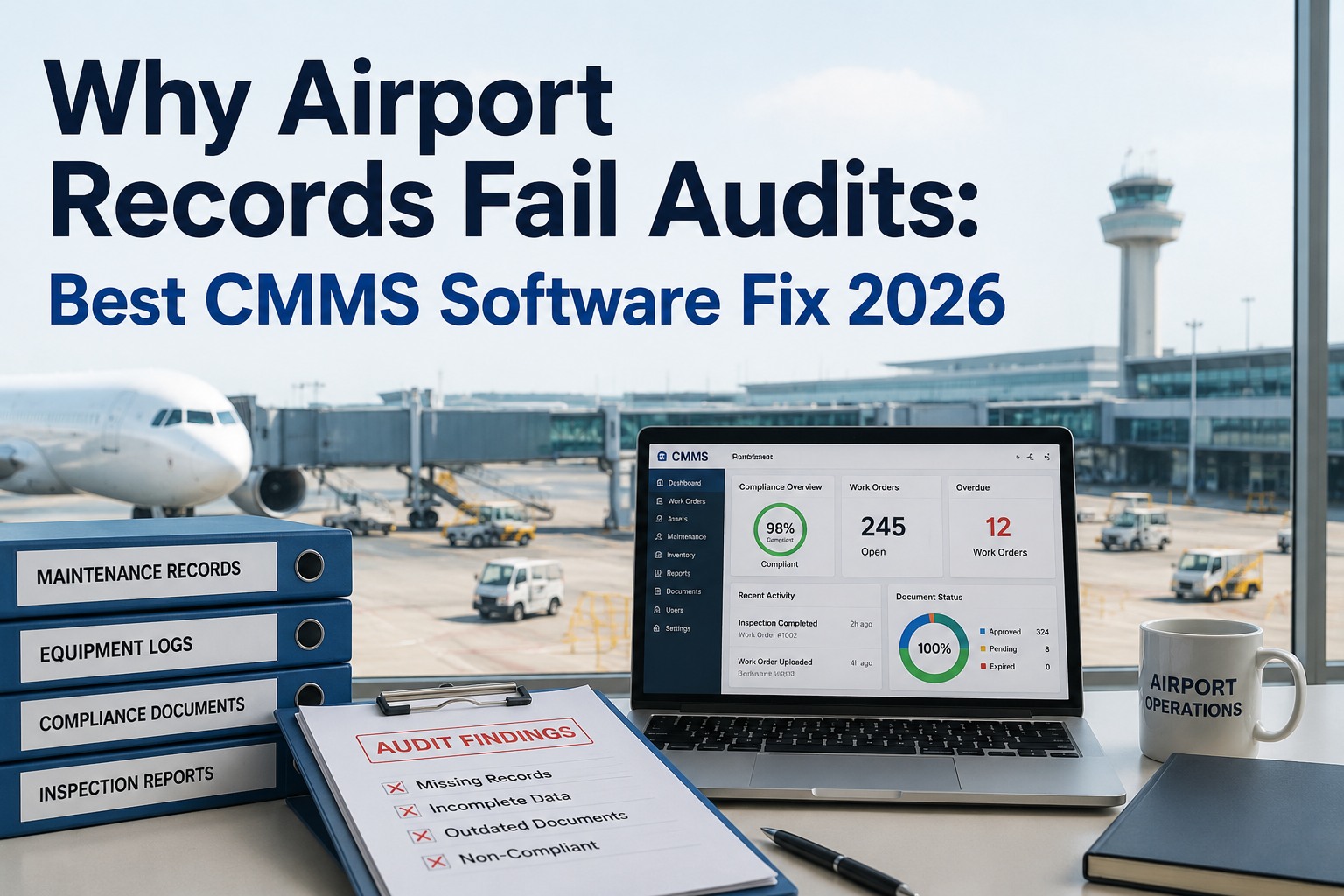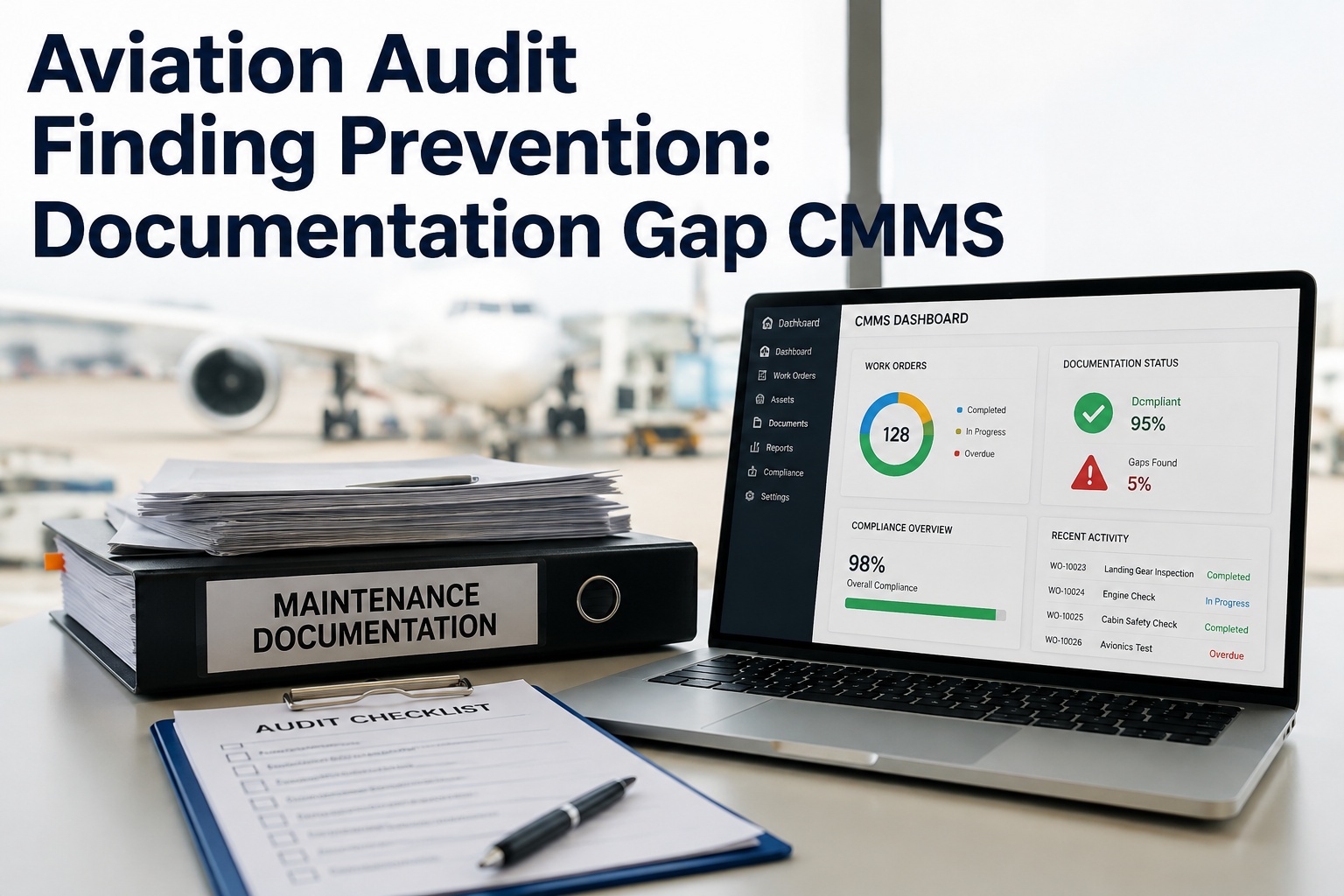
Aviation compliance documentation is the single most scrutinized element of every FAA Part 139 inspection, ICAO safety audit, and TSA security directive review — and the single most common cause of regulatory findings. The problem is not that airports fail to perform required maintenance and inspections; the problem is that they cannot prove they did. Paper logbooks get wet on the airfield, spreadsheets miss update cycles, and maintenance records stored in department-specific filing systems become unavailable when auditors arrive without advance notice. FAA civil penalty assessments for documentation deficiencies at Part 139 airports average $34,000 per finding — independent of whether any actual safety lapse occurred. Digital compliance documentation managed through a CMMS eliminates this gap entirely: every inspection, work order completion, and corrective action generates a timestamped, technician-signed digital record that is auditor-accessible in seconds. Start a free trial to build your aviation compliance documentation system in Oxmaint, or book a demo and see audit-ready documentation workflows in action.
Identify Hidden Documentation Gaps Before Your Next FAA Audit
See how much compliance exposure you can eliminate from your current maintenance documentation system across Part 139, TSA, and ICAO requirements.
- Auto-generated audit trails from daily maintenance operations
- FAA Part 139 inspection records with technician signatures and timestamps
- Instant document retrieval for unannounced regulatory inspections
What Is Aviation Compliance Documentation?
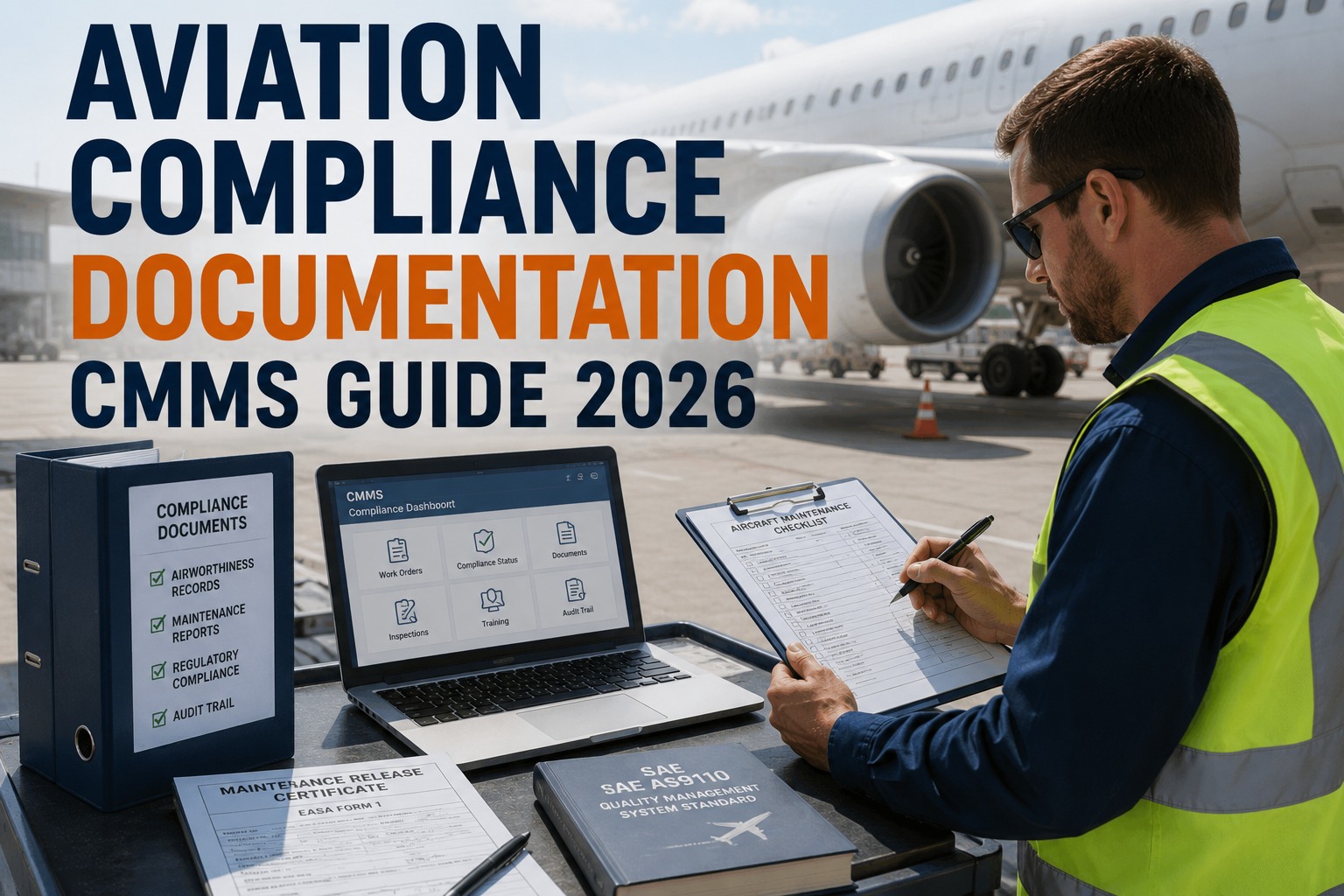
Aviation compliance documentation encompasses every written record an airport must maintain to demonstrate compliance with its operating certificate, regulatory mandates, and safety management commitments. This includes FAA Part 139 self-inspection logs, airfield lighting maintenance records, pavement condition reports, wildlife hazard management records, fueling facility inspection logs, emergency response exercise documentation, TSA security maintenance directives, and ICAO Annex 14 compliance evidence for international operations.
The regulatory framework is layered: federal requirements (FAA, TSA, EPA) set minimum standards, state aviation authority requirements add a second tier, and airport operating certificates specify facility-specific obligations. Each regulatory body maintains its own inspection schedule, record retention requirements, and evidence standards. A typical commercial service airport manages documentation obligations across 6-8 regulatory frameworks simultaneously — a complexity that overwhelms any manual recordkeeping system.
The shift to digital compliance documentation is not optional for airports serious about regulatory positioning. Auditors across FAA, TSA, and ICAO have explicitly noted that digital records with automatic timestamps, technician identification, and search capability represent a higher evidentiary standard than paper logs — directly influencing audit outcomes. Book a demo to see how Oxmaint generates compliant records across all aviation regulatory frameworks automatically.
Key Aviation Compliance Documentation Requirements
Part 139 Self-Inspection Records
Daily, weekly, and condition-triggered airfield self-inspections across 19 certification areas including surface conditions, marking, lighting, REILS, VASI/PAPI systems, and obstacle clearance. Each inspection record must include date, time, inspector ID, findings, and corrective actions.
Airport Certification Manual Updates
Any change to airport procedures, equipment, or facilities must be documented in the Airport Certification Manual with revision dates, approvals, and notification to the FAA Airport District Office. Unrecorded procedural changes are among the most common Part 139 findings.
Security Maintenance Directive Records
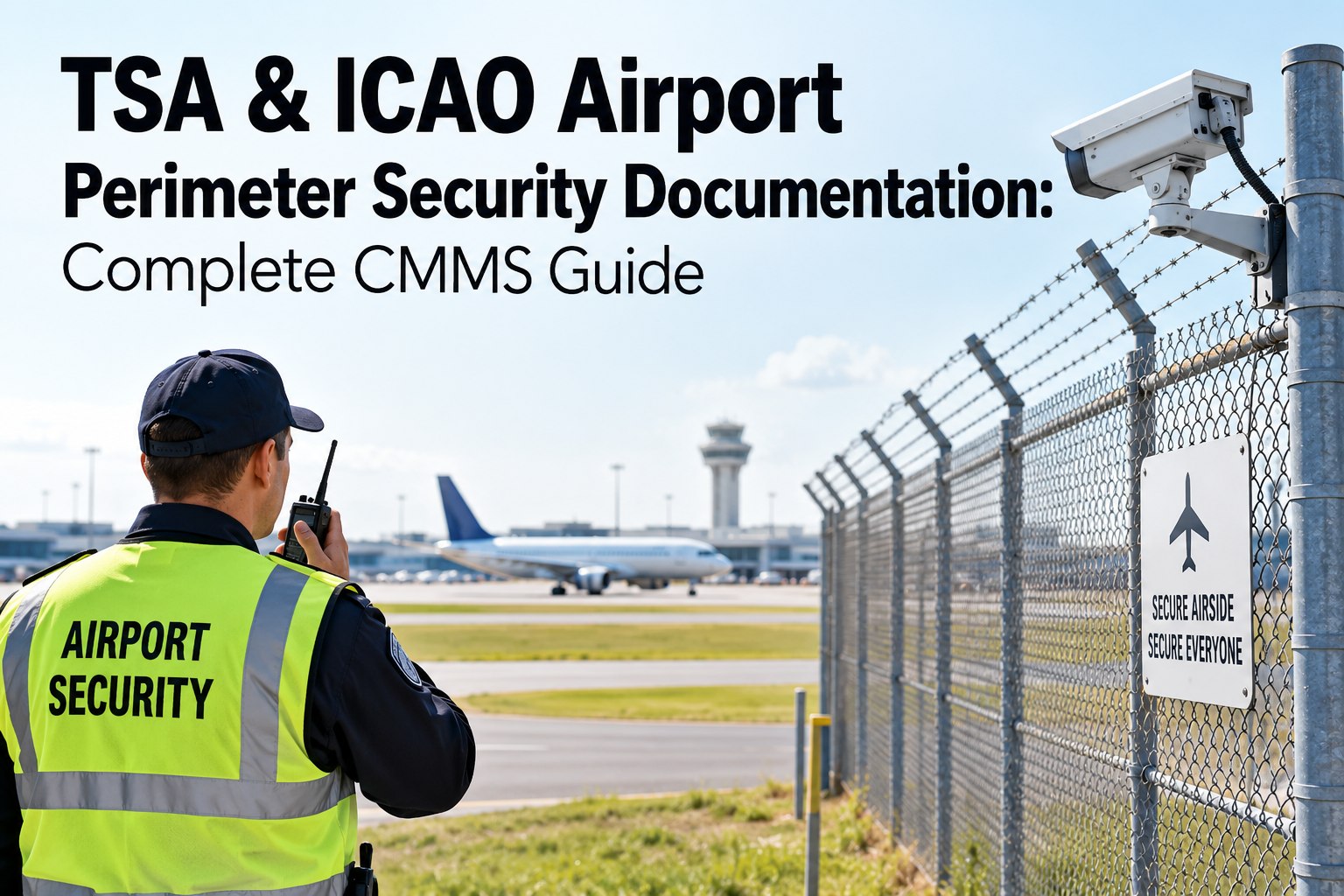
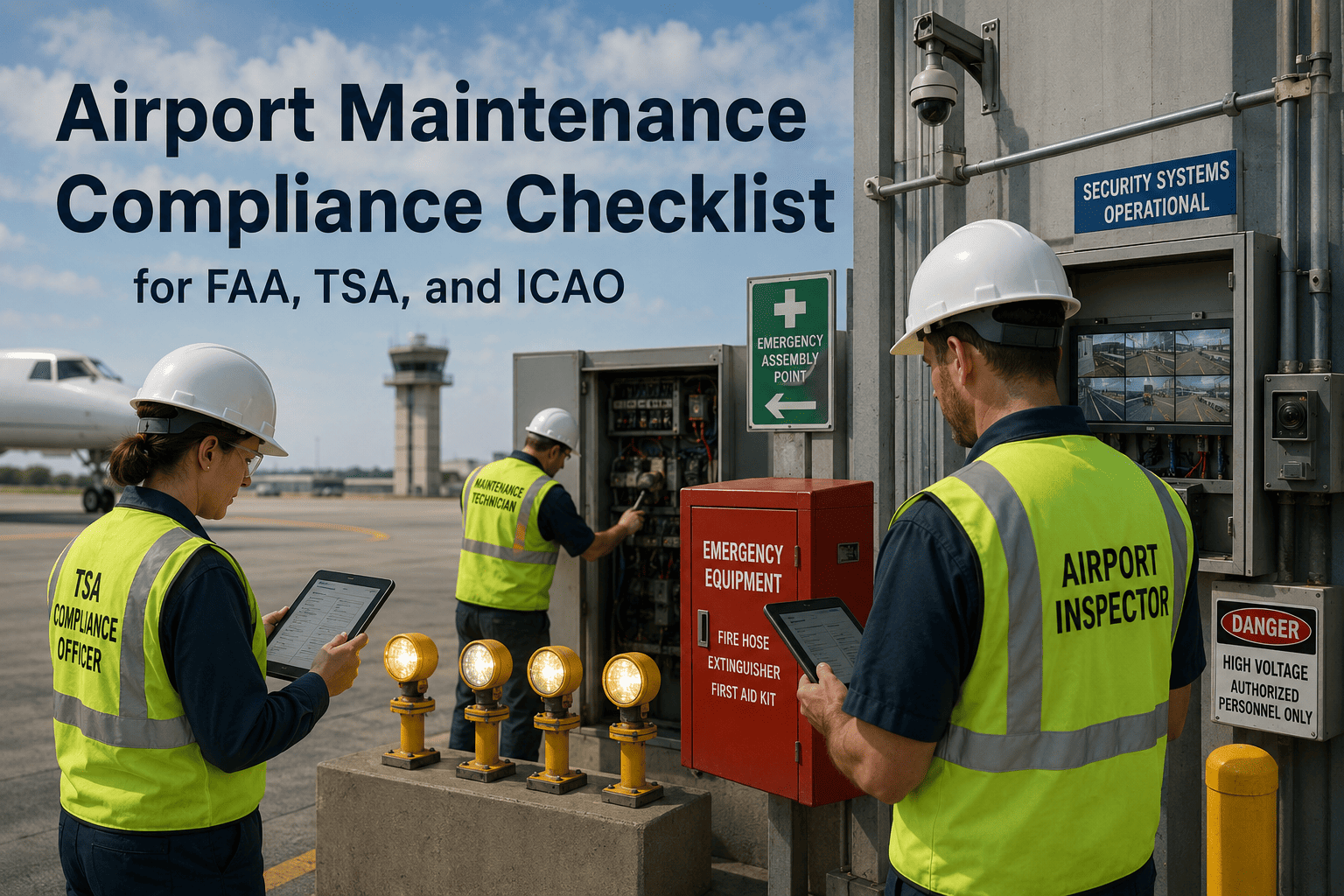
TSA security directives require documented maintenance actions on access control systems, perimeter fencing, CCTV infrastructure, and screening equipment. Compliance windows are defined per directive — typically 24-72 hours — with evidence submission requirements.
Annex 14 Surface Condition Reporting
International airports must maintain runway surface condition assessment records using ICAO GRF methodology, friction testing logs, and contamination management records. These feed directly into NOTAMs and are subject to regulatory review during ICAO USAP audits.
Aircraft Deicing Fluid Management Records
EPA stormwater permits and state environmental regulations require documented aircraft deicing fluid capture, treatment, and disposal records. Failure to maintain these records triggers permit violations independent of actual environmental impact.
Equipment Safety Certification Logs
Maintenance records for elevated work platforms, cranes, pressure vessels, and electrical systems must satisfy OSHA documentation requirements including inspection certifications, operator training records, and equipment deficiency logs with corrective action timelines.
Why Aviation Compliance Documentation Fails
Paper Records Fail in Airfield Environments
Airfield inspection logs on paper clipboards are damaged by weather, difficult to complete in aircraft wake turbulence zones, and frequently incomplete because inspectors prioritize safety over paperwork in time-pressured conditions. Lost or illegible records represent the same regulatory exposure as missed inspections.
Departmental Silos Create Retrieval Failures
Airfield operations, terminal engineering, security, and environmental compliance each maintain separate record systems. When an FAA auditor requests maintenance records for a specific asset or time period, airport staff spend hours locating documents across multiple filing systems — and frequently cannot produce complete records under audit time pressure.
No Alert System for Missed Documentation Cycles
Regulatory inspection schedules have specific frequencies — daily surface inspections, monthly lighting checks, quarterly friction testing. Manual tracking in spreadsheets or wall calendars misses cycles when staff are absent, shift patterns change, or scheduling conflicts arise. Gaps are typically discovered during audits rather than proactively identified.
Corrective Action Loops Are Untracked
FAA and ICAO require not just documentation of findings but evidence that corrective actions were completed within defined timeframes. Paper-based systems document the finding but rarely close the loop — leaving airports unable to demonstrate corrective action completion when auditors follow up on previously noted deficiencies.
Documentation failures carry a compounding cost: the initial penalty for a missing record, the legal exposure from an incomplete corrective action trail, and the reputational impact of repeat findings with the same regulatory agency. Airports that digitize compliance documentation through CMMS eliminate all three risks simultaneously — start a free trial to see how quickly Oxmaint builds your audit-ready documentation foundation, or book a demo for a live walkthrough of the compliance recordkeeping system.
How Oxmaint Simplifies Aviation Compliance Documentation
Auto-Generated Audit Trails
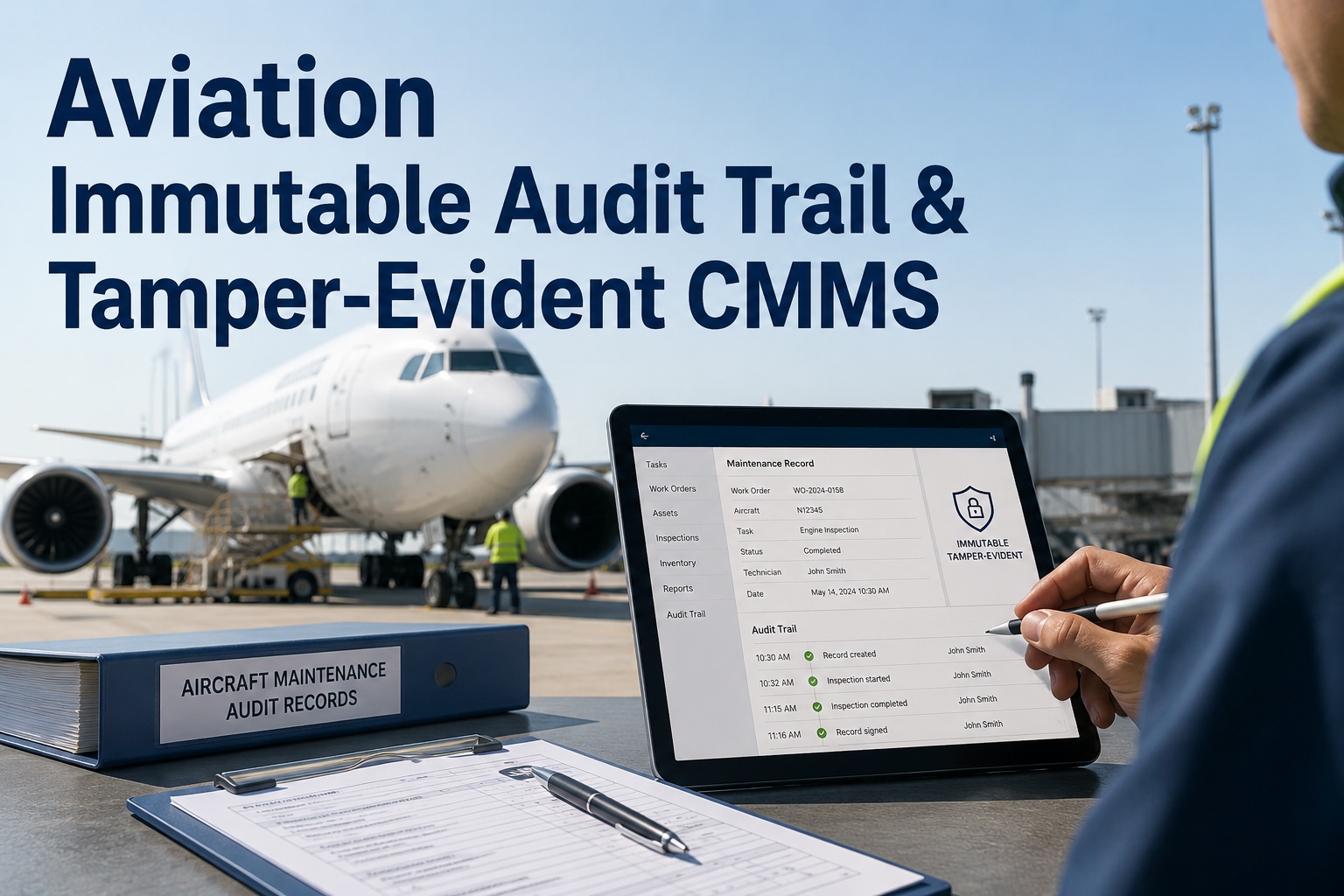
Every work order completion, inspection sign-off, and corrective action generates a timestamped, technician-identified digital record automatically. No separate documentation step — daily maintenance operations produce the compliance evidence as a byproduct of normal workflow.
Inspection Schedule Automation
FAA Part 139 inspection frequencies, TSA directive timelines, and ICAO compliance cycles programmed into Oxmaint scheduling. Missed inspection windows trigger supervisor alerts before the regulatory deadline — converting reactive audit discovery into proactive compliance management.
Centralized Document Repository
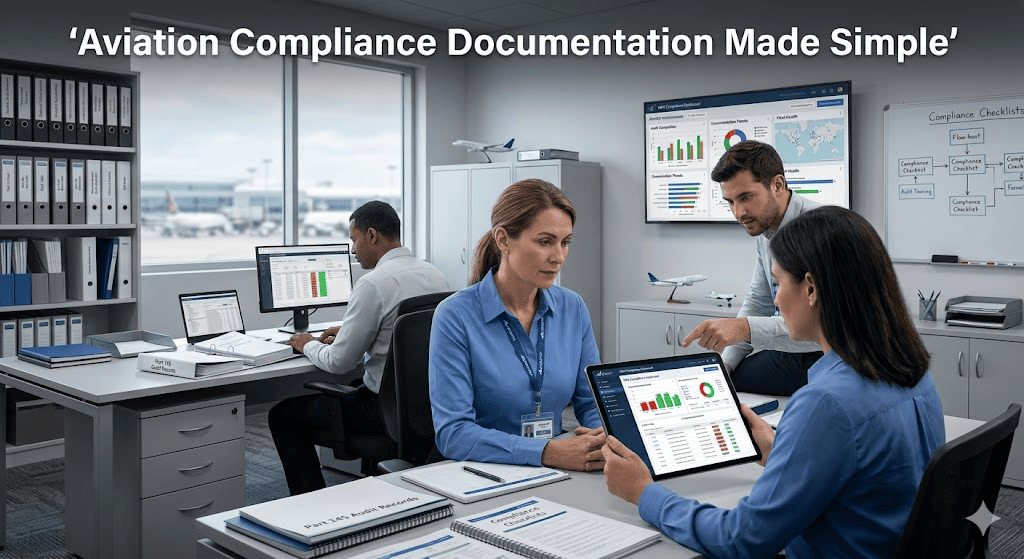
All compliance records — inspection logs, maintenance reports, certification documents, corrective action evidence — searchable in one system by date, asset, inspector, or regulatory category. Auditor-ready reports generated in under 5 minutes for any time period or certification area.
Corrective Action Tracking and Closure
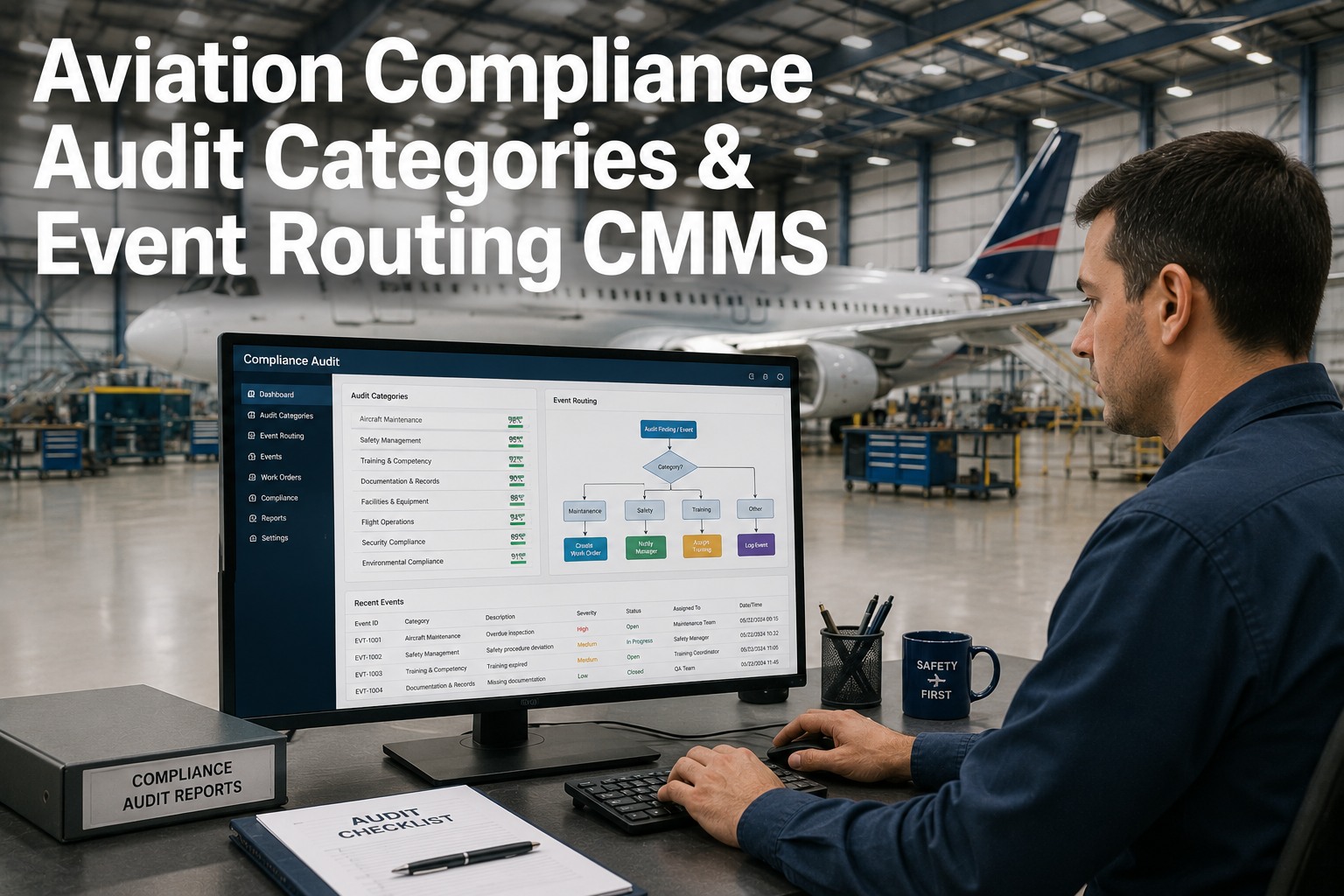
Every finding generates a corrective action work order with defined completion deadline, assigned technician, and sign-off requirement. Regulatory agencies can see not just the finding documentation but the complete corrective action trail — demonstrating systematic compliance management rather than isolated responses.
Paper Records vs. Digital CMMS Documentation
| Documentation Requirement | Paper-Based System | Digital CMMS with Oxmaint |
|---|---|---|
| Record Completeness | Dependent on individual discipline; gaps common in field conditions | Mandatory fields enforced; work orders cannot close without required sign-offs |
| Audit Retrieval Speed | Hours to days — cross-department physical file search | Under 5 minutes — searchable by date, asset, inspector, or regulatory category |
| Missed Inspection Detection | Discovered during audit; retroactive exposure | Real-time alerts before deadline; zero surprise gaps |
| Corrective Action Traceability | Finding noted; closure rarely documented to same standard | Finding-to-closure digital thread with timestamps and technician IDs throughout |
| Multi-Regulatory Support | Separate files per agency; no cross-reference capability | Single record tagged to multiple regulatory frameworks simultaneously |
| Audit Non-Conformance Rate | Industry average 3.2 documentation findings per annual audit | 75% reduction — average 0.8 documentation findings with CMMS implementation |
ROI of Digital Aviation Compliance Documentation
Digital aviation compliance documentation delivers ROI that extends beyond avoided penalties into operational efficiency: less staff time assembling audit packages, fewer corrective action cycles from preventable documentation gaps, and stronger regulatory relationships built on a track record of organized, consistent compliance evidence. Airports using CMMS-managed documentation consistently earn more favorable audit outcomes and faster processing of airport improvement grants that require demonstrated compliance history — book a demo to see what your compliance documentation system would look like fully digitized in Oxmaint, or start a free trial and build your first compliance record in under 10 minutes.
Frequently Asked Questions
What FAA records must airports retain and for how long under Part 139?
FAA Part 139 requires airports to retain self-inspection records for at least 12 consecutive calendar months. Records of training, emergency planning exercises, and airport certification manual revisions must be retained for 24 months. Accident and incident records must be retained until the investigation is closed. Oxmaint stores all records with automatic timestamp and access log — meeting FAA retention requirements for all record categories with retrievable audit trails for every document access event. Start a free trial to configure your FAA record retention framework.
How does ICAO compliance documentation differ from FAA Part 139 requirements?
ICAO Annex 14 compliance documentation requirements apply to airports serving international operations and focus on physical characteristics, obstacle limitation surfaces, visual aids, and rescue and firefighting capability. ICAO USAP (Universal Safety Oversight Audit Programme) audits assess state-level compliance implementation rather than individual airport records, but airports serving as the operational foundation for those state programs must maintain evidence of Annex 14 conformance. Oxmaint supports multi-framework compliance tagging, allowing a single maintenance record to satisfy both FAA Part 139 and ICAO Annex 14 documentation requirements simultaneously.
Can digital maintenance records replace handwritten signatures for FAA compliance?
FAA Advisory Circulars and Part 139 regulations do not require handwritten signatures — they require evidence of inspector or technician identification tied to a specific record. Digital records with user authentication, login credentials, and timestamp data satisfy FAA documentation requirements. Oxmaint captures the authenticated user ID, timestamp, device type, and GPS location for every record completion — providing a stronger evidentiary trail than handwritten logs, which carry no authentication or timestamp integrity verification.
How quickly can an airport audit team produce a full Part 139 compliance package?
With Oxmaint, airports generate complete Part 139 compliance documentation packages in under 30 minutes — including all self-inspection records, maintenance work orders, corrective action evidence, and technician certification logs for any specified time period. Without a CMMS, the same package typically requires 4-8 hours of staff time across multiple departments, with frequent gaps that require explanation or retroactive documentation. The time savings alone typically represent $12,000-$25,000 in annual staff productivity recovered from audit preparation activities.
Stop Paying for Documentation Gaps That Should Not Exist
Turn every maintenance and inspection event into audit-ready compliance evidence automatically. Used by aviation operations teams managing complex multi-regulatory compliance requirements — live in days, no heavy implementation required.
- Auto-generated audit trails from daily maintenance operations
- 75% fewer audit non-conformances versus paper-based documentation
- Complete FAA, TSA, and ICAO records retrievable in under 5 minutes
Works across multi-site airport portfolios. See measurable compliance improvement in the first 30 days.