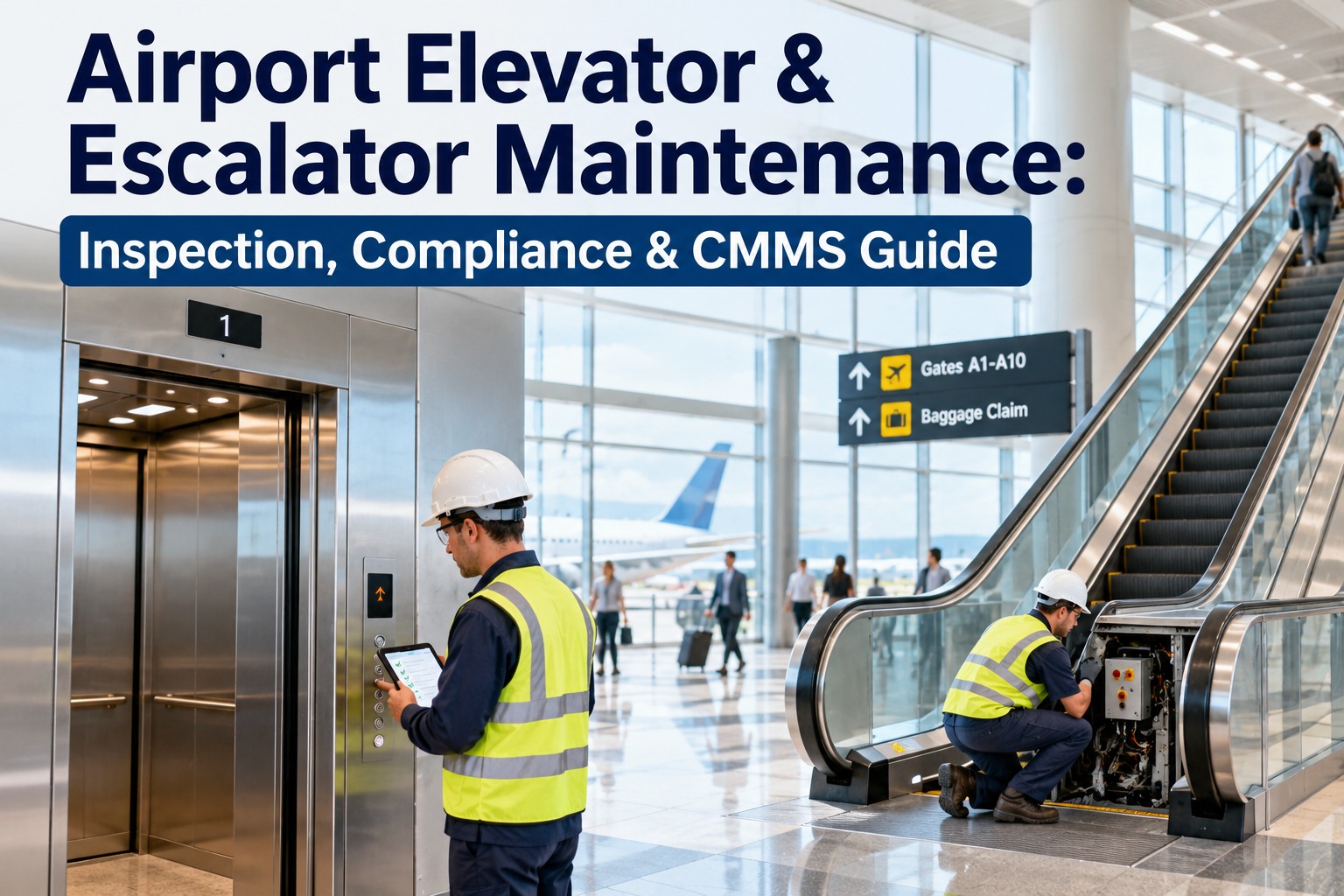
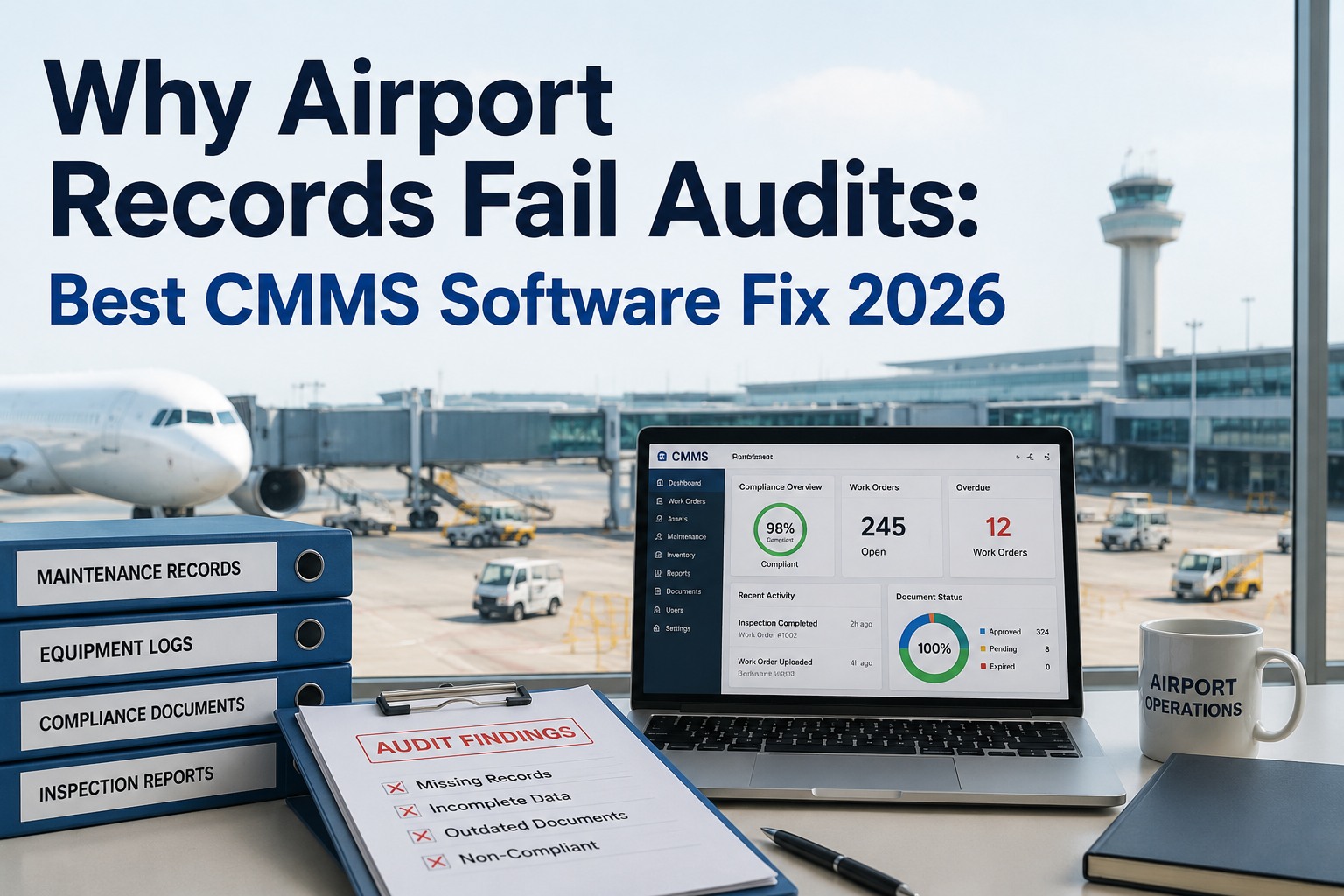
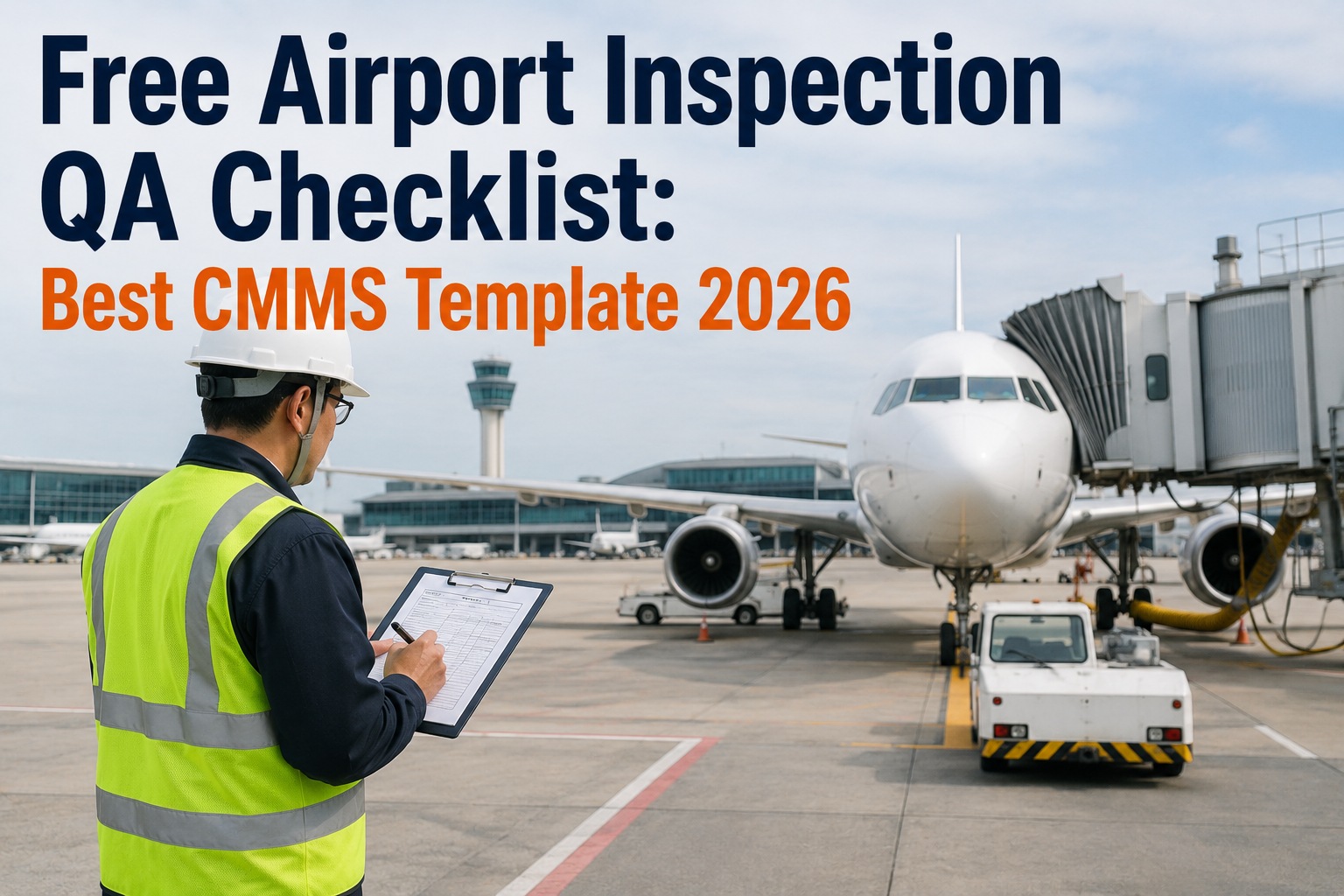
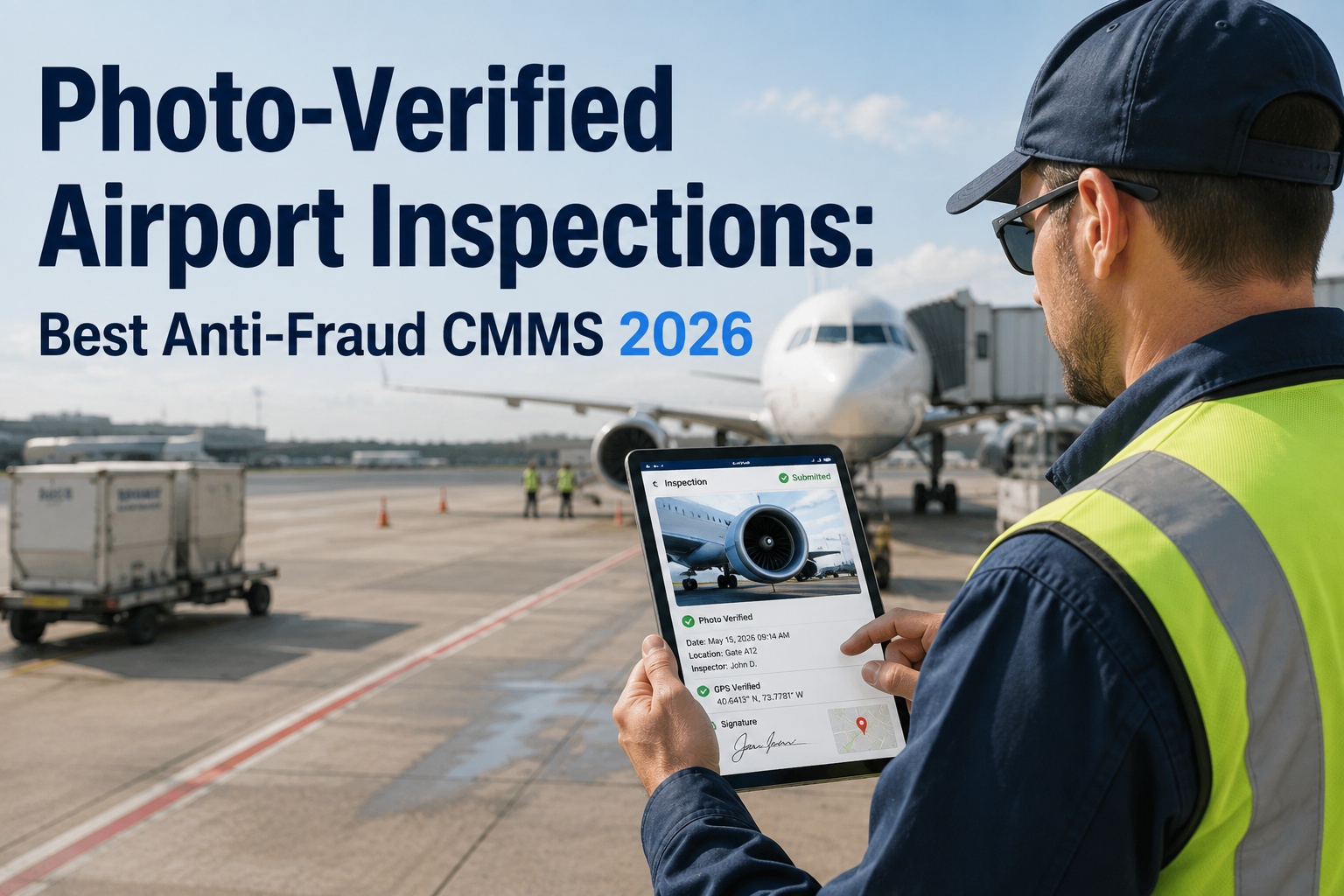
Aviation safety is not a product of good intentions — it is the product of documented, repeatable inspection processes executed on time, every time. From runway edge lighting and jet bridges to baggage conveyors, HVAC systems, and ground support vehicles, every airport asset class has defined inspection intervals mandated by regulators including the FAA, GCAA, CAA, CASA, and OSHA. The problem is not that airports lack inspection programmes — it is that paper-based and spreadsheet-driven inspection systems fail silently: missed rounds go undetected, incomplete forms get filed, and audit trails have gaps that only become visible during regulatory review or after an incident. Start a free trial with Oxmaint to digitise your aviation equipment inspection programme with GMP-compliant checklists, timestamped records, and instant audit export — or book a demo to walk through your specific inspection workflows.
Checklist · Aviation Equipment · Inspection · Compliance
Aviation Equipment Inspection Checklist
A structured inspection reference for airport maintenance teams covering airfield ground lighting, jet bridges, baggage handling systems, HVAC, ground support equipment, and emergency systems — with compliance notes for FAA, GCAA, CAA, and CASA requirements.
73%
Of aviation maintenance incidents involve missed or incomplete inspection records (IATA Safety Report)
4.8×
Higher repair cost when faults found reactively vs during scheduled inspection rounds (U.S. DOE)
97%
PM compliance rate achieved by airports using digital inspection management vs 55–65% paper baseline
30 days
Time to first audit-ready digital inspection records with Oxmaint deployment
73% of aviation maintenance incidents trace back to missed or incomplete inspection records — the gap is not effort, it is the system used to manage inspections.
What Is an Aviation Equipment Inspection Programme?
An aviation equipment inspection programme is a structured, documented system of scheduled checks across all airport asset classes — ensuring that equipment condition is assessed, recorded, and acted upon at intervals defined by manufacturer specifications, regulatory requirements, and operational risk assessment. It spans the full airport asset hierarchy: airfield systems (AGL, ILS, PAPI), terminal building systems (HVAC, lifts, escalators, fire suppression), passenger handling equipment (jet bridges, baggage conveyors, check-in counters), and ground support equipment (GSE vehicles, fuel systems, de-icing equipment).
Effective inspection programmes have three characteristics that distinguish them from compliance-minimum approaches: they are proactive (catching degradation before failure), they are documented (producing timestamped, auditable records for every inspection round), and they are connected (inspection findings trigger work orders, update asset condition scores, and feed into CapEx forecasting models). The gap between a paper inspection checklist and a digital inspection programme is precisely the difference between compliance theatre and genuine asset reliability management.
Regulatory bodies in all major aviation markets require evidence of systematic inspection programmes — not just the inspections themselves. FAA AC 150/5380-6 (Airport Maintenance), GCAA regulations, UK CAA standards, and CASA MOS Part 139 all require documented, retrievable inspection records. When these records live in paper folders or personal spreadsheets, audit preparation costs weeks and gaps are inevitable. Airports shifting to digital inspection management see audit preparation time drop from days to hours — start a free trial to see what audit-ready looks like from day one, or book a demo to review your current inspection programme structure with our team.
The 8 Aviation Equipment Inspection Categories
01
Airfield Ground Lighting (AGL)
Runway edge lights, threshold lights, PAPI, VASI, taxiway centreline, stop bars, and approach lighting systems. Daily operational checks; monthly intensity and alignment verification; annual circuit testing.
02
Jet Bridges and Boarding Gates
Passenger boarding bridges including drive systems, docking heads, canopy seals, emergency egress, and electrical systems. Weekly mechanical checks; monthly drive and brake system inspection; annual load testing.
03
Baggage Handling Systems
Conveyor belts, sorters, make-up carousels, EDS screening equipment, and baggage claim units. Daily belt and roller inspection; weekly drive motor checks; monthly sensor and control system verification.
04
HVAC and Terminal Building Systems
Air handling units, chillers, cooling towers, terminal HVAC, and building management system integration. Monthly filter and coil inspections; quarterly refrigerant and refrigeration system checks; annual performance testing.
05
Emergency and Life Safety Systems
Fire detection and suppression, emergency lighting, PA systems, evacuation equipment, and standby power systems. Weekly test activations; monthly battery and backup power verification; annual full system commissioning tests.
06
Ground Support Equipment (GSE)
Aircraft tugs, baggage tractors, catering vehicles, GPU units, de-icing trucks, and fuel bowsers. Pre-shift safety checks; weekly mechanical inspection; monthly brake, tyre, and hydraulic system verification.
07
Electrical and Power Distribution
MV switchgear, transformers, UPS systems, standby generators, and airfield constant current regulators (CCR). Monthly load and insulation testing; quarterly thermographic scanning; annual switchgear service.
08
Lifts, Escalators, and Moving Walkways
Passenger lifts, escalators, moving walkways, and service elevators throughout terminal and airside buildings. Weekly safety device checks; monthly drive and braking system inspection; annual statutory load and safety testing.
The 6 Critical Failures in Airport Inspection Programmes
Missed Inspection Rounds
Paper and spreadsheet systems have no enforcement mechanism. When a technician is pulled to a reactive job, scheduled inspection rounds are skipped with no automatic escalation — and the gap goes unrecorded until the next audit or failure event.
Incomplete Record Quality
Paper inspection forms are completed to varying standards — missing readings, illegible entries, unsigned sections, and missing photographic evidence. Incomplete records fail regulatory audit requirements and provide no useful data for reliability analysis.
No Link to Work Orders
When an inspection identifies a defect, the paper record and the work order system are separate. Defects noted on inspection sheets are frequently not actioned — or are actioned without reference to the inspection finding, breaking the reliability improvement cycle.
Audit Preparation Cost
Assembling inspection evidence for a GCAA, CAA, or FAA audit from paper archives takes maintenance managers days or weeks. Records are frequently incomplete, misfiled, or missing entirely — exposing airports to regulatory penalties and insurance disputes after incidents.
No Trend Data for Reliability
Paper inspection records cannot be aggregated into trend data. An asset that scores deteriorating readings across six consecutive inspections will never trigger an alert in a paper system — that pattern only becomes visible after failure.
Knowledge Trapped in Individuals
Senior technicians carry airport-specific inspection knowledge — what to look for, which readings are normal for a specific asset, which seasonal variations are expected. Without digital capture, this knowledge is lost at retirement and inspection quality deteriorates within 12 months.
These failures compound: missed rounds create gaps, gaps produce incomplete records, incomplete records fail audits, and failed audits expose airports to regulatory consequences. Digital inspection management closes every gap simultaneously — start a free trial with Oxmaint to see your inspection compliance rate in real time, or book a demo to identify the specific gaps in your current programme.
Airports that shift from paper to digital inspection management reduce audit preparation time by up to 80% and achieve 97% PM compliance — versus a 55–65% paper-based baseline.
How Oxmaint Digitises Aviation Equipment Inspections
Structured Digital Inspection Forms
Build inspection checklists with mandatory fields, numeric readings, pass/fail criteria, and photo capture requirements. Forms cannot be submitted incomplete — ensuring every inspection produces a usable, audit-ready record.
Automated Inspection Scheduling
Set inspection frequencies by asset class, regulatory requirement, or manufacturer interval. Oxmaint auto-generates and assigns inspection tasks — with escalation alerts when rounds approach overdue status, ensuring no window is missed.
Defect-to-Work-Order Integration
Inspection defects automatically generate linked work orders with asset ID, defect description, photo evidence, and priority level. Every finding is actioned and closed in the same system — closing the loop between inspection and repair.
GMP-Compliant Audit Trails
Every inspection record is timestamped, geo-tagged, and digitally signed. Audit exports for FAA, GCAA, CAA, or CASA requirements are generated in minutes — not the days or weeks required to assemble paper archives.
Asset Condition Score Tracking
Inspection readings update asset condition scores continuously. Trend deterioration triggers automatic alerts — identifying assets approaching intervention thresholds before failure, weeks in advance of reactive discovery.
Mobile-First Field Operations
Technicians complete inspections on mobile devices with photo capture, barcode/QR asset scanning, and offline capability for airside and remote locations. No paper, no transcription, no data entry lag between field and system.
Oxmaint inspection management works across multi-site airport portfolios — maintaining consistent inspection standards across every terminal, concourse, and airside location from a single platform. Live in days, not months — start a free trial and run your first digital inspection round within the week, or book a demo to see the full inspection workflow on your asset types.
Paper Inspections vs Digital Inspections: The Comparison
| Inspection Dimension |
Paper / Spreadsheet System |
Digital CMMS (Oxmaint) |
| Schedule Enforcement |
No automatic escalation; missed rounds undetected |
Automated reminders; escalation before overdue; 97% compliance rate |
| Record Completeness |
Incomplete forms accepted; quality varies by technician |
Mandatory fields enforced; form cannot submit incomplete |
| Photographic Evidence |
Optional; photos rarely stored with inspection record |
Photo capture integrated; images linked directly to asset record |
| Defect-to-Repair Link |
Separate systems; defects frequently not actioned |
Inspection defect auto-generates linked work order; loop closed |
| Audit Preparation |
Days to weeks; gaps and missing records common |
Audit export generated in minutes; complete timestamped records |
| Trend and Reliability Analysis |
Not possible from paper records; no aggregated data |
Condition score trending; deterioration alerts; MTBF analysis |
| Regulatory Compliance |
Gaps in evidence; audit exposure; paper trail disputes |
GMP-compliant timestamped records; instant FAA/GCAA/CAA export |
| Multi-Site Visibility |
No portfolio view; each site manages independently |
Portfolio dashboard: compliance rates across all sites simultaneously |
Inspection ROI: What Digital Programmes Deliver
97%
Inspection Compliance Rate
Average Oxmaint customer result vs 55–65% paper baseline; automated scheduling eliminates missed rounds
80%
Reduction in Audit Prep Time
Digital record export replaces weeks of paper archive assembly; instant regulatory report generation
4.8×
Cost Avoided Per Inspection-Caught Fault
Defects found during inspections cost 4.8× less to repair than the same fault found reactively after failure (U.S. DOE)
73%
Fewer Incident-Linked Record Gaps
Airports with digital inspection management report 73% fewer documentation gaps during post-incident regulatory reviews
30 days
To First Audit-Ready Records
Oxmaint digital inspection deployment produces complete, timestamped, exportable records from the first inspection round
25%
CapEx Deferral on Inspected Assets
Condition-based inspection data identifies assets with remaining useful life beyond age-based replacement schedules — freeing capital
Every inspection round that finds a fault before it causes an operational disruption pays for the inspection programme many times over. Teams switching to Oxmaint digital inspections see the first measurable compliance improvements within the first 30 days — start a free trial to track your inspection compliance in real time, or book a demo to see how your specific inspection requirements map to Oxmaint workflows.
Frequently Asked Questions
What regulatory standards govern airport equipment inspection records in the USA, UK, UAE, and Australia?
In the USA, FAA Advisory Circular AC 150/5380-6 sets out airport maintenance programme requirements including documented inspection records for airfield systems. OSHA standards apply to workplace equipment inspections. In the UK, CAA CAP 168 (Licensing of Aerodromes) requires documented maintenance and inspection records meeting British Standards. In the UAE, GCAA regulations mandate structured maintenance programmes with retrievable inspection evidence for all airport operational systems. In Australia, CASA MOS Part 139 requires aerodrome operators to maintain documented maintenance and inspection programmes for all aerodrome facilities. All four regulatory frameworks share a common requirement: inspection records must be timestamped, attributable to named inspectors, and retrievable on demand. Oxmaint's GMP-compliant inspection records meet all four frameworks simultaneously.
How frequently should different airport equipment categories be inspected?
Inspection frequencies vary by asset class and regulatory requirement. Airfield ground lighting (AGL) systems require daily operational checks and monthly intensity/alignment verification under FAA AC 150/5340-30. Jet bridges require weekly safety checks and annual load testing. Baggage handling systems need daily belt and roller inspection and monthly drive system verification. Life safety systems (fire detection, emergency lighting, standby power) require weekly test activations and monthly full system checks. GSE vehicles require pre-shift safety inspections and weekly mechanical checks. HVAC systems follow monthly filter and coil inspection cycles with annual performance testing. Oxmaint's inspection scheduling engine accommodates all frequency patterns simultaneously — daily, weekly, monthly, quarterly, annual, and usage-triggered — with automatic reminders and escalation before overdue status.
What should an aviation equipment inspection checklist include to be audit-ready?
An audit-ready aviation equipment inspection record must include: the specific asset inspected (identified by tag or asset ID), the inspection date and time, the name and qualification of the inspector, the specific items checked with individual pass/fail or numeric readings, photographic evidence of any defects found, the signature or digital sign-off of the inspector and a supervisor where required, and the reference to the inspection standard or procedure followed. Where defects are found, the record must also reference the work order raised to address the defect. Paper systems routinely fail on photographic evidence, supervisor sign-off, and defect-to-work-order linkage. Oxmaint's digital inspection forms enforce all mandatory fields and link directly to work order management — producing records that meet all four regulatory frameworks without additional formatting or assembly.
How does digital inspection management integrate with existing airport maintenance workflows?
Oxmaint is designed to replace paper-based inspection rounds without disrupting existing maintenance team structures. Technicians receive inspection assignments on mobile devices — the same way they would receive a paper round sheet — but with structured digital forms, photo capture, barcode/QR scanning for asset identification, and offline capability for airside areas with limited connectivity. Completed inspections update asset condition scores automatically and generate defect work orders without requiring separate system entry. Supervisors see real-time completion status across all inspection rounds from a single dashboard. For airports with existing CMMS or CAFM systems, Oxmaint integrates via API for work order synchronisation. Most airport maintenance teams complete their first digital inspection round within 24–48 hours of setup. No dedicated IT project, no custom development, no extended training programme required.
OXMAINT AIRPORT INSPECTION MANAGEMENT · DIGITAL COMPLIANCE
Stop Hoping Your Inspection Records Will Pass Audit — Know They Will
Turn every aviation equipment inspection into a timestamped, photographic, audit-ready digital record that meets FAA, GCAA, CAA, and CASA requirements — automatically. See measurable compliance improvements in your first 30 days.
- ✔ GMP-compliant digital inspection records from day one
- ✔ Defect-to-work-order automation — no finding goes unactioned
- ✔ Instant audit export for any regulatory framework
Works across multi-site airport portfolios · Live in days, not months · No heavy implementation required