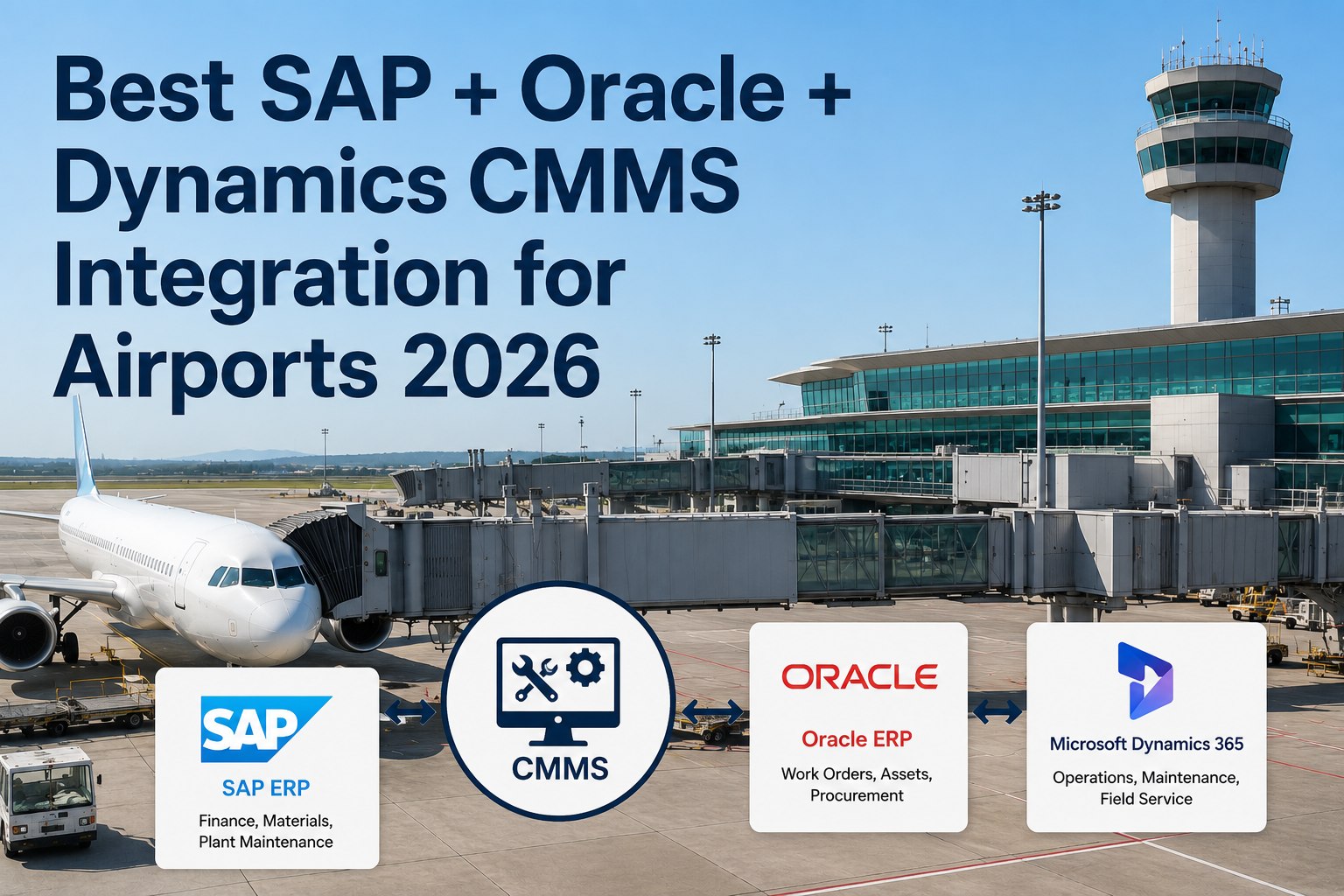
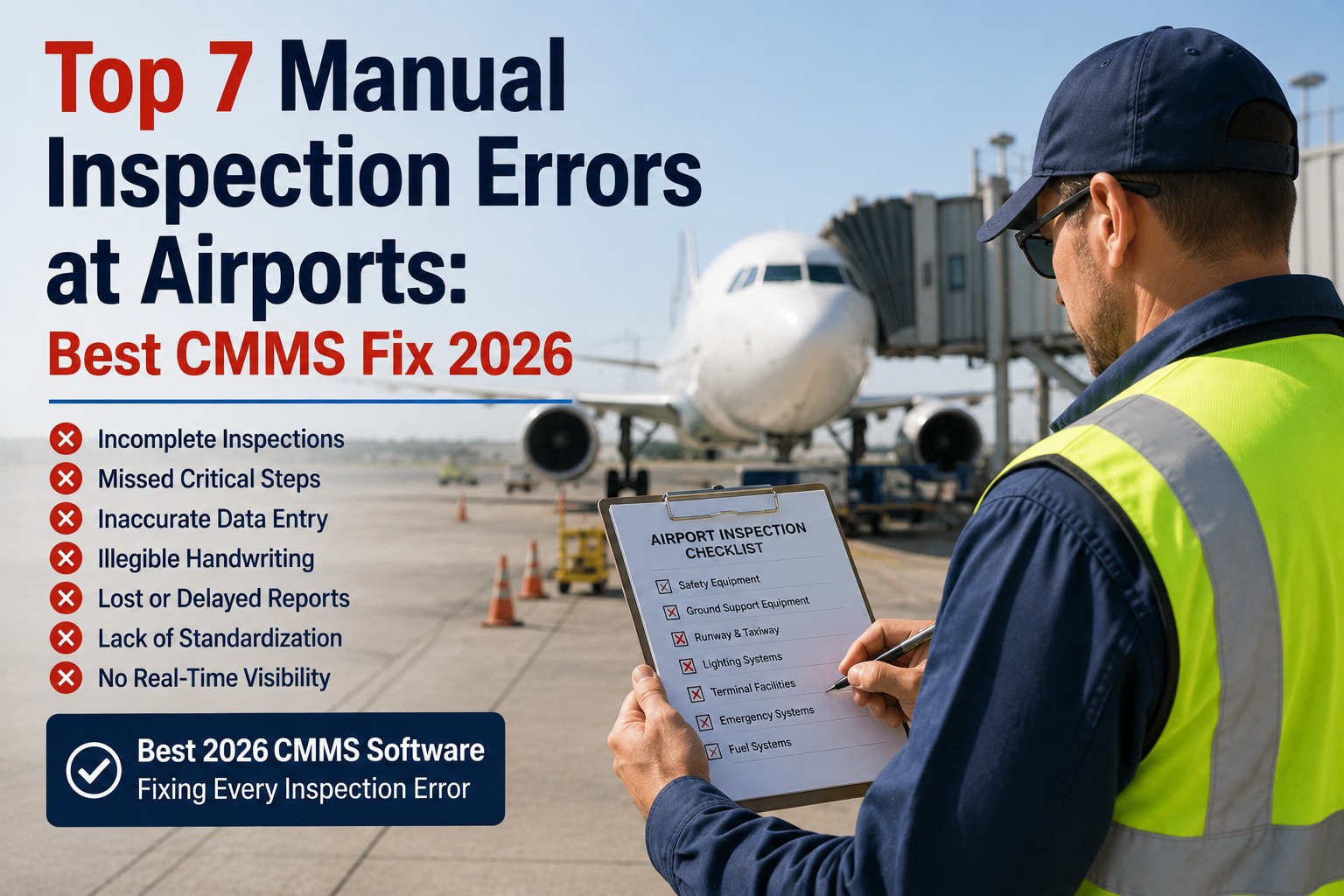
Every time a technician finishes a jet bridge repair, someone has to enter the work order into SAP. Then again into the CMMS. Then reconcile both systems at month-end. Across a busy international airport processing 500+ maintenance activities daily, this repetitive data entry creates a staggering opportunity for errors—and each mistake cascades through procurement, finance, and compliance. Industry research consistently shows that manual data entry carries an inherent 1-4% error rate. For airports processing thousands of SAP transactions monthly, that translates to hundreds of costly mistakes hiding in your systems right now.
The math is sobering: at $50-$150 per error correction, airports lose hundreds of thousands annually just fixing preventable data mistakes. But the real cost isn't the corrections—it's the delayed maintenance decisions, misordered parts, and compliance gaps that errors create downstream. Forward-thinking airports are eliminating this risk entirely through automated SAP-CMMS synchronization. Want to see what 99%+ data accuracy looks like for your facility? Book a free SAP automation demo and discover how leading airports have eliminated manual entry errors.
DATA ACCURACY CRISIS
Eliminate SAP Data Entry Errors in Airport Operations
Automated CMMS-SAP Synchronization for 99%+ Data Accuracy
Manual Entry Error Rate
1-4%
Human Data Entry
100-400 errors per 10,000 entries
vs
0.01%
Automated Sync
1-4 errors per 10,000 entries
The Hidden Cost of Manual SAP Entry
International airports running SAP S/4HANA face a unique challenge: maintenance data must flow accurately between field operations and enterprise systems. When technicians complete work orders, parts consumption, labor hours, and equipment status all need updating in SAP. Most airports still rely on manual re-entry—and the numbers reveal why this approach is failing.
$1
At Entry
Cost to prevent or catch error during initial data entry
$10
Mid-Workflow
Cost to fix error after it enters downstream systems
$100
At Impact
Cost when error affects operations, compliance, or customers
Where Airport SAP Errors Originate
Understanding where errors enter your systems is the first step to eliminating them. Our analysis of airport maintenance operations reveals five primary error injection points.
Work Order Transcription
Technicians record completion data on paper or tablets, then staff re-enters into SAP. Double-entry doubles error probability.
40% of two-phase entries contain errors
Parts Consumption Recording
Spare parts used during maintenance require material movement postings. Wrong part numbers, quantities, or cost centers cascade through inventory.
Inventory mismatches cost 30% more to correct
Labor Hour Allocation
Technician time entries must map to correct cost centers and work orders. Misallocations distort maintenance cost analytics.
Finance reconciliation takes 3+ days monthly
Asset Master Updates
Equipment installations, relocations, and retirements require synchronized updates across CMMS and SAP Asset Management.
Duplicate assets create audit findings
Compliance Documentation
FAA, EASA, and ICAO requirements demand precise records. Manual entry gaps create compliance exposure during audits.
Missing records = regulatory risk
Calculate Your Error Cost
See how much manual SAP entry errors cost your airport annually with our ROI assessment.
How Automated Synchronization Eliminates Errors
OxMaint's SAP S/4HANA integration replaces manual data entry with intelligent, bidirectional synchronization. Here's how automation achieves 99%+ accuracy rates.
Step 1
Single Point of Entry
Technicians enter data once in OxMaint's mobile app. No paper forms, no re-keying, no transcription errors.
Step 2
Validation at Source
Real-time validation checks part numbers, cost centers, and asset IDs against SAP master data before submission.
Step 3
Automatic SAP Posting
Validated data posts directly to SAP S/4HANA via secure APIs. Labor, materials, and completion status sync in seconds.
Step 4
Exception Handling
Intelligent retry logic handles transient failures. Flagged exceptions route to supervisors with full context for resolution.
Accuracy Comparison: Manual vs. Automated
The difference between human data entry and automated synchronization is dramatic. For airports processing high transaction volumes, automation delivers transformational improvements.
Error Rate
1-4%
0.01-0.04%
Errors per 10,000 Transactions
100-400
1-4
Data Entry Time
15-20 min/work order
Instant sync
Monthly Reconciliation
3-5 days
Real-time
Audit Preparation
Weeks of document gathering
Instant reports
100x
Automated systems produce up to 100 times fewer errors than manual human data entry
Integration Architecture for Error-Free Operations
OxMaint connects to SAP S/4HANA through enterprise-grade APIs designed for aviation-scale transaction volumes. The architecture ensures data integrity at every handoff point.
Field Operations Layer
Mobile Work Orders
Digital Checklists
Parts Scanning
Time Capture
OxMaint Integration Engine
Data Transformation
Validation Rules
Retry Logic
Audit Logging
SAP S/4HANA
EAM
MM
FI/CO
PM
What Airports Achieve with Automated SAP Sync
70%
Reduction in Manual Data Entry
Staff reallocated from data entry to value-added maintenance planning activities
99%+
Data Accuracy Rate
Validation at entry point catches errors before they propagate through systems
Zero
Reconciliation Delays
Real-time sync eliminates month-end data matching exercises entirely
Frequently Asked Questions
What SAP modules does OxMaint integrate with?
OxMaint integrates with SAP S/4HANA Enterprise Asset Management (EAM), Materials Management (MM), Financial Accounting (FI), Controlling (CO), and Plant Maintenance (PM). Both cloud and on-premise SAP deployments are supported.
How does the integration handle failed transactions?
The integration includes intelligent retry logic for transient failures like network timeouts. Persistent failures are flagged with full error context and routed to designated supervisors. Complete transaction logs ensure nothing is lost.
What validation checks run before SAP posting?
Entries are validated against SAP master data including: valid equipment/functional location IDs, active cost centers, correct material numbers, authorized personnel IDs, and proper date/time formats. Invalid entries are rejected with specific guidance for correction.
How long does SAP integration implementation take?
Standard implementations take 8-12 weeks including discovery, configuration, testing, and go-live. Complex environments with heavy customizations may require 12-16 weeks. We provide detailed timelines during the assessment phase.
Stop Losing Money to Data Entry Errors
See how automated SAP synchronization eliminates manual entry errors and transforms your airport's maintenance operations.