How to Reduce Airport Maintenance Costs by 35% with CMMS Automation
By Lewis Abbott on May 9, 2026
Maintenance is one of the largest controllable cost lines on an airport P&L — typically 8 to 15% of total operating expense at major international hubs, and even higher at regional airports running aging infrastructure. Yet most of that spend is invisible at the executive level: it sits in scattered work orders, contractor invoices, parts purchases, and emergency callouts that never roll up into a single accountable number. When airports finally automate maintenance with a modern CMMS, the cost reduction is immediate and measurable. Across documented multi-site deployments, total maintenance spend drops by 30 to 35% within 12 months — driven by automated work orders, condition-based PM, contractor SLA enforcement, and elimination of duplicate emergency callouts. Start a free trial to see where your airport is leaking maintenance budget today, or book a demo for a tailored ROI walkthrough.
total maintenance cost reduction documented within 12 months of CMMS automation rollout
4.8x
cost premium of emergency repairs versus planned work — the largest single source of avoidable spend
23%
of contractor invoices contain billing errors or out-of-scope charges that go unchallenged without a CMMS
12
months — typical payback period for a multi-terminal CMMS automation program at a mid-size airport
The Anatomy of Airport Maintenance Cost
Before you can cut maintenance spend, you have to see where it goes. At most airports the structure is consistent: in-house labor (35–45%), contractor labor (20–30%), parts and consumables (15–25%), emergency callouts and overtime (10–15%), and a tail of administrative cost — supervisor time, paperwork, audit preparation — that no one tracks because it does not appear on a single invoice line.
CMMS automation reduces every category, but the largest gains concentrate in two places: emergency callouts (down 60–80%) and contractor overspend (down 18–25%). Together they account for the bulk of the documented 35% total reduction. Start a free trial to map your own cost structure against this benchmark.
The 8 Cost Levers CMMS Automation Activates
01
Work Order Automation
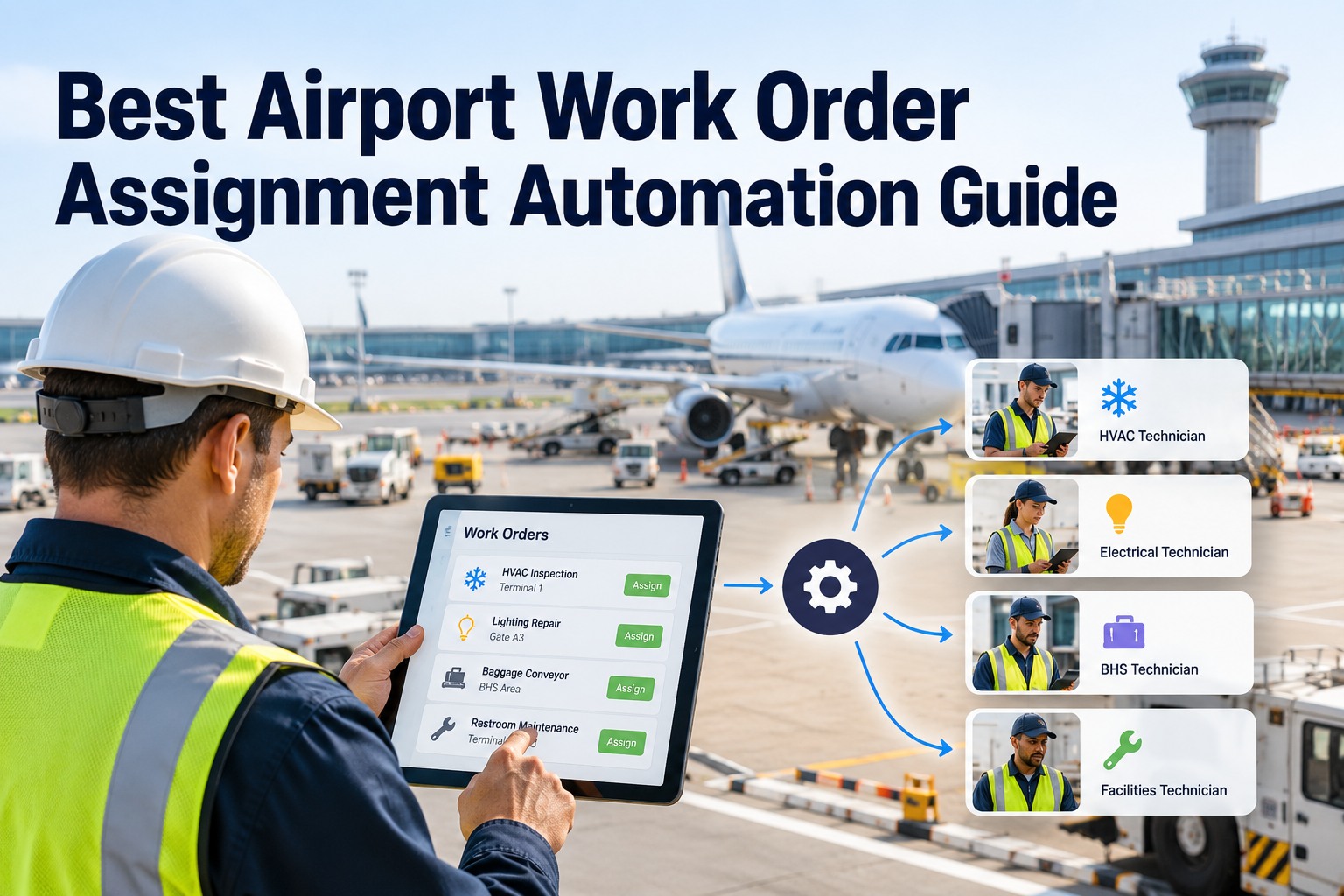
Auto-routing, auto-assignment, and mobile dispatch eliminate 40 to 60% of administrative time previously spent on manual job creation and supervisor coordination.
02
Condition-Based PM
Replacing calendar PMs with condition-driven schedules cuts wasted preventive labor by 20 to 30% — without sacrificing reliability or compliance.
03
Emergency Callout Reduction
Predictive flags catch failures days or weeks ahead — converting 60 to 80% of emergency events into planned work at standard labor rates.
04
Contractor SLA Enforcement
Documented SLA compliance and invoice-to-work-order matching surface 18 to 25% of contractor overspend that goes silent without a CMMS.
05
Spare Parts Optimization
Demand forecasting from work order history reduces inventory carrying cost by 15 to 25% — without increasing stockout risk on critical assets.
06
Mobile Field Productivity
Technicians completing 20 to 35% more jobs per shift when work orders, schematics, and sign-off all live on a single mobile device.
07
CapEx Forecasting Accuracy
Condition-scored asset registry prevents premature replacement and absorbs surprise CapEx — typically saving 8 to 12% of multi-year capital budget.
08
Compliance Audit Preparation
Audit prep time cut from days to hours — freeing supervisor and engineering capacity for value-adding reliability work.
The single largest cost lever in airport maintenance is converting reactive emergencies into planned work — that one shift typically delivers 40 to 50% of the total saving.
Case Study: A Mid-Size International Airport
A representative deployment scenario based on documented multi-site CMMS rollouts: a regional international airport handling 8 million passengers per year, two terminals, three runways, and roughly 12,000 maintainable assets across airfield, terminal, and ground transport. Pre-deployment maintenance spend ran USD 18.4M annually. The breakdown of the documented 12-month savings shows where automation actually creates the value. Book a demo to map this against your own airport.
Cost Category
Pre-CMMS Annual Spend
Post-CMMS Annual Spend
Reduction
In-house labor & overtime
$7.4M
$5.6M
24%
Contractor / outsourced services
$5.2M
$4.0M
23%
Emergency callouts & expedited parts
$2.4M
$0.6M
75%
Spare parts & consumables inventory
$2.6M
$1.9M
27%
Compliance & audit preparation
$0.8M
$0.3M
62%
Total annual maintenance spend
$18.4M
$12.4M
33%
Where Airports Lose Money Without Automation
Emergency Premium
Emergency callouts cost 4 to 5 times planned work — overtime labor, expedited parts shipping, and rushed repairs that often need redoing within 90 days.
Silent Contractor Overspend
Without invoice-to-work-order matching, 23% of contractor invoices contain errors or out-of-scope charges. Most are paid because nobody can prove the discrepancy.
Calendar PM Waste
Time-based PMs over-service healthy assets and under-service degrading ones. Up to 30% of preventive labor delivers no measurable reliability gain.
Inventory Bloat
Without demand forecasting, parts rooms carry 20 to 40% more stock than needed — capital tied up in shelves that never turn over.
Audit Drag
Compliance audit prep eats supervisor and engineering hours for weeks at a time — paid out of operations budget but invisible on any cost line.
CapEx Surprises
Age-based forecasts get replacement timing wrong — driving either premature CapEx or sudden multi-million-dollar emergency replacements that bypass governance.
See your cost baseline in 30 days
Oxmaint's cost-leak analysis maps your maintenance spend by category and surfaces the largest savings opportunities — most airports identify USD 1.5M+ within the first month.
Oxmaint is built specifically for the cost structure airports actually have — multi-site, contractor-heavy, compliance-bound, and asset-dense. The platform attacks every cost lever simultaneously rather than picking one. Book a demo to see the platform on your terminal asset register.
Automated Work Order Engine
Auto-routes jobs by skill, location, and priority — eliminating supervisor coordination overhead and cutting administrative time by 40 to 60%.
Condition-Based PM Scheduling
PM intervals tuned per asset using runtime, sensor data, and failure history — replacing one-size-fits-all calendar schedules with optimized maintenance.
Contractor Portal & SLA Tracking
Vendors receive jobs, log progress, and submit invoices through a portal — with SLA tracking, photo verification, and automated invoice-to-work-order matching.
Mobile Technician App
Technicians complete jobs across the airfield with full asset history, schematics, and digital sign-off — adding 20 to 35% throughput per shift.
Spare Parts & MRO Forecasting
Demand forecasting from work order history right-sizes parts inventory — cutting carrying cost without increasing stockout risk on critical assets.
Investor-Grade CapEx Reporting
Condition-scored 5–10 year CapEx model produced from the same asset registry — replacing age-based estimates with data-driven replacement timing.
A USD 1M reduction in annual maintenance spend at a mid-size airport equates to roughly 0.3 to 0.5% added to the operating margin — visible to the finance committee within one quarter.
Manual Operations vs. Oxmaint Automation
Operational Metric
Pre-CMMS Manual Operations
Oxmaint Automation
Average work order turnaround
3.5 days from creation to closure
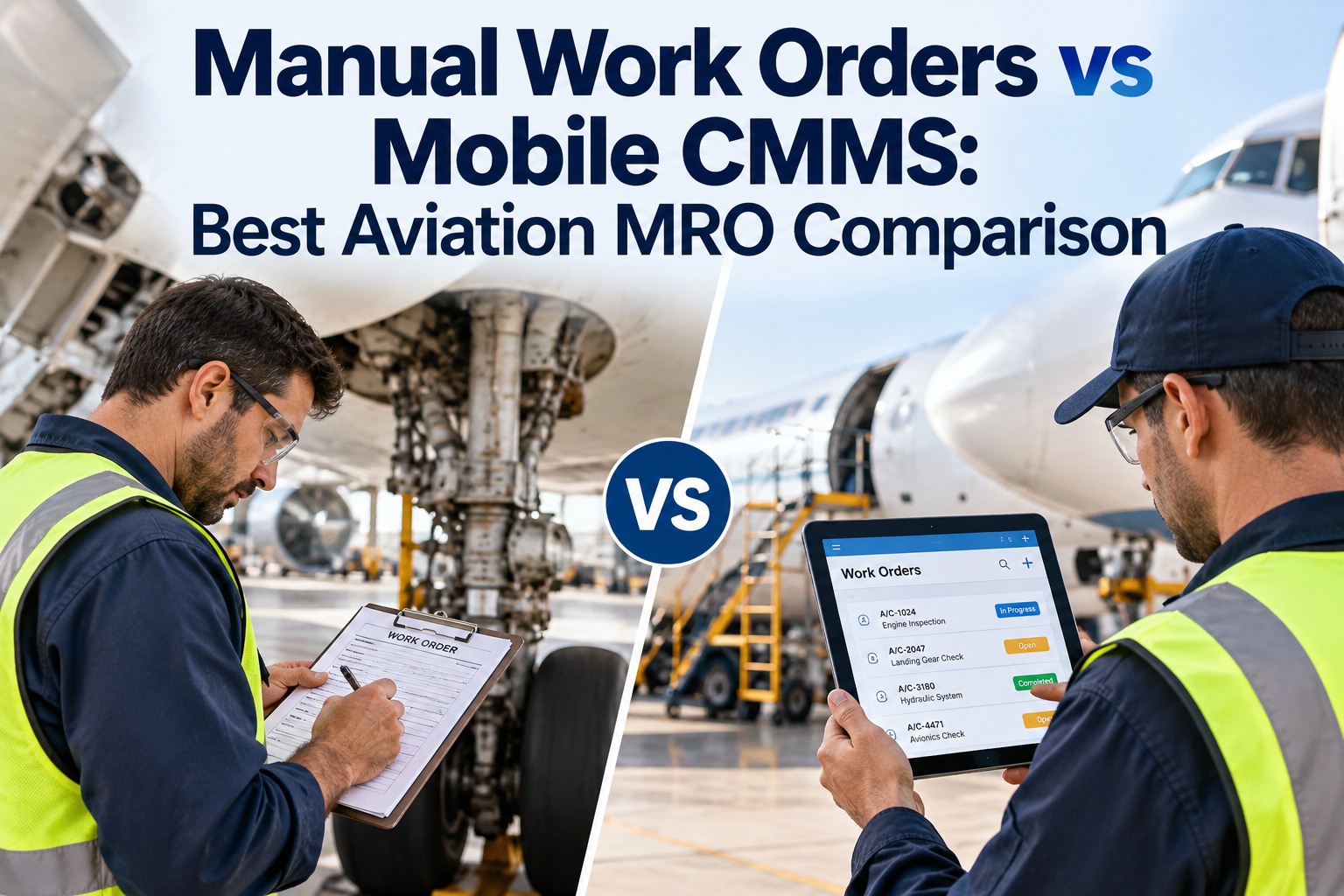
1.1 days with auto-routing & mobile sign-off
Emergency callouts per month
180–220 across multi-terminal estate
40–60 with predictive flags & condition-based PM
Contractor invoice accuracy
~77% — 23% contain errors or out-of-scope charges
~95% with automated invoice-to-WO matching
PM completion rate
62–78% on time
94–98% with auto-scheduling & mobile dispatch
Audit prep time
2–3 weeks per regulatory audit
Hours — evidence exported from one platform
Spare parts inventory turnover
1.8–2.4 turns per year
3.2–4.0 turns with demand forecasting
Annual maintenance spend
Baseline USD 18.4M
USD 12.4M — 33% reduction documented
12-Month ROI Snapshot
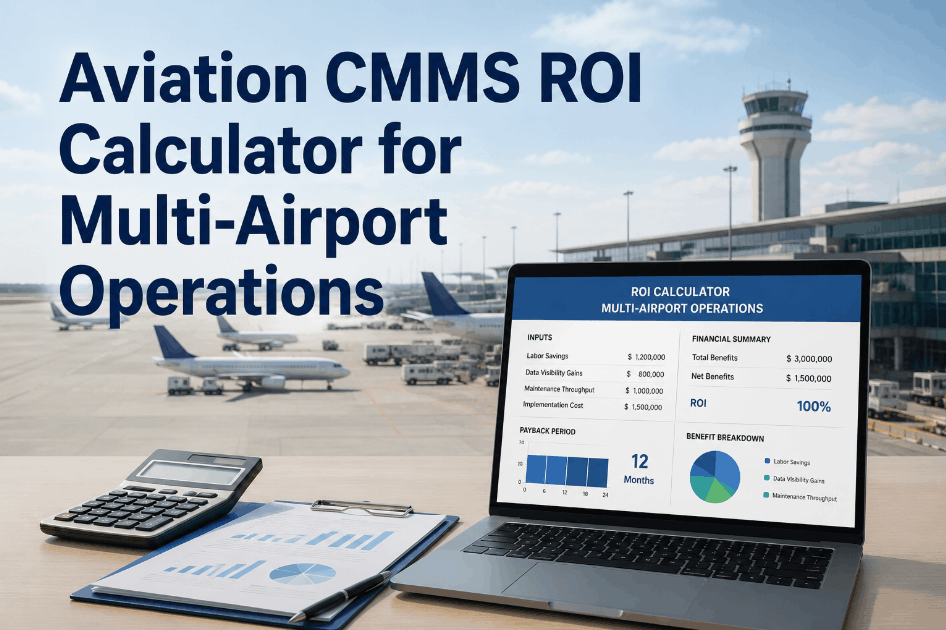
The numbers below reflect the documented case-study deployment. Smaller airports see proportionally similar reductions; larger hubs typically see absolute savings of USD 8–20M+ in year one. Start a free trial to model the same outcome on your own asset base.
$6.0M
total documented annual maintenance saving in year one of CMMS deployment
75%
reduction in emergency callouts and expedited parts spend within 12 months
94%
PM completion rate, up from 62–78% pre-deployment baseline
8 mo
payback period — first-year savings exceed total platform investment by 4 months
Frequently Asked Questions
Is the 35% maintenance cost reduction realistic for every airport?
The 30 to 35% range is documented across multi-site CMMS deployments at airports running predominantly reactive maintenance models. Airports already operating mature reliability programs see smaller percentage gains — typically 12 to 18% — but on a much larger absolute base. Either way, the cost reduction is measurable within the first 12 months of deployment.
How quickly can a multi-terminal airport go live on Oxmaint?
A pilot terminal can be live in 4 to 8 weeks — covering asset registry import, contractor onboarding, and mobile rollout. Full multi-terminal deployment typically completes within 3 to 6 months. Heavy implementation services are not required; Oxmaint is built for operations teams to self-configure their hierarchy and dashboards.
What is the largest single source of cost reduction?
Conversion of emergency callouts into planned work — typically 40 to 50% of the total saving. Emergencies cost 4 to 5x planned work in labor, parts, and disruption. Predictive flags and condition-based PM together reduce emergency volume by 60 to 80%, which alone justifies most CMMS investments at any airport.
Does Oxmaint integrate with existing finance and ERP systems?
Yes. Oxmaint provides standard APIs and connectors for SAP, Oracle, Microsoft Dynamics, NetSuite, and other ERP and finance platforms — pushing approved invoices, parts orders, and CapEx forecasts directly into the systems airport finance teams already use. No replacement of finance infrastructure is required.
Stop Paying the Emergency Premium
Cut Airport Maintenance Spend by 35% in 12 Months
Used by operations teams managing 10,000+ assets. Documented USD 6M+ annual savings at mid-size airports. Live in days, not months — no heavy implementation required.
Automated work orders eliminate administrative drag
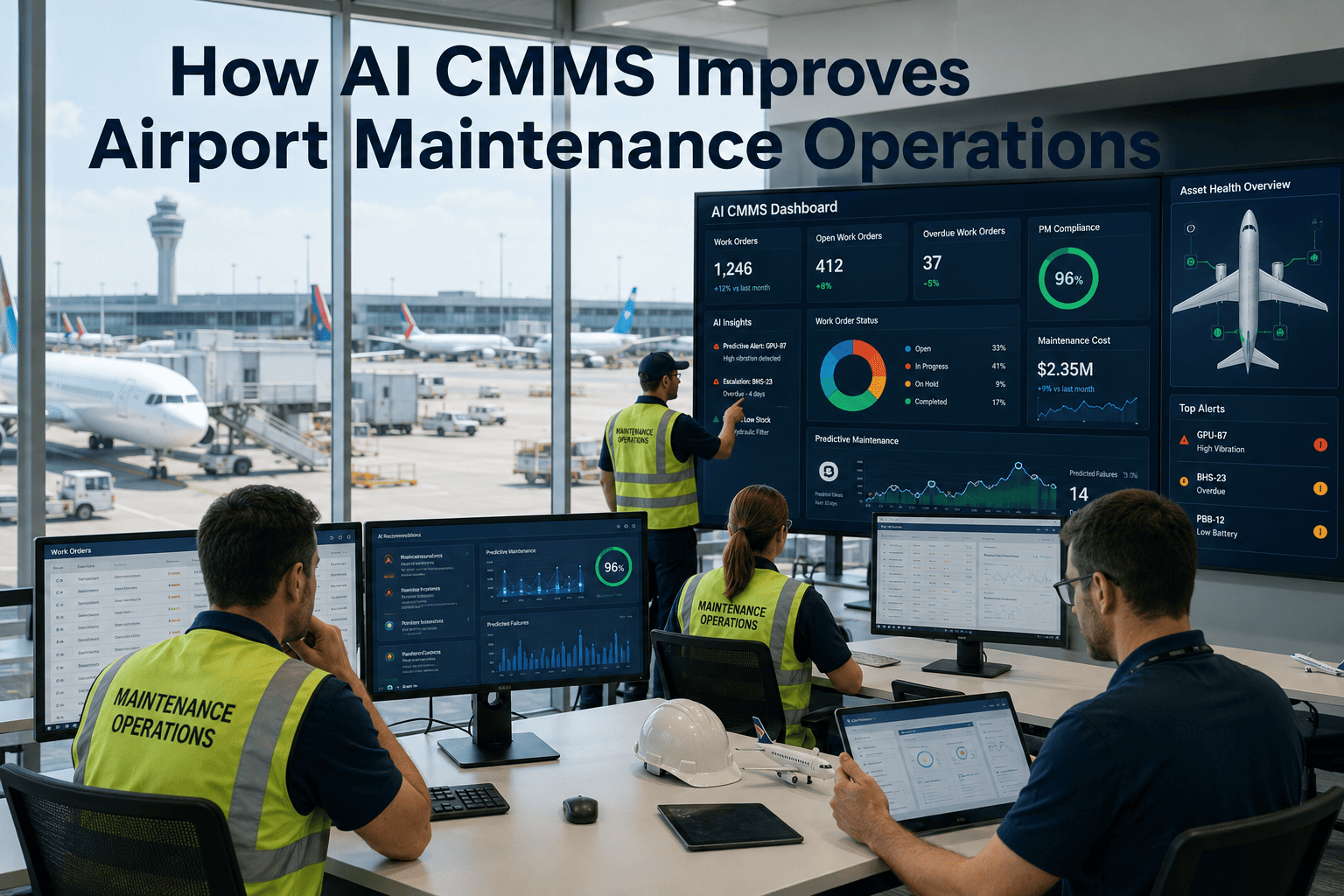
Predictive flags convert emergencies into planned jobs