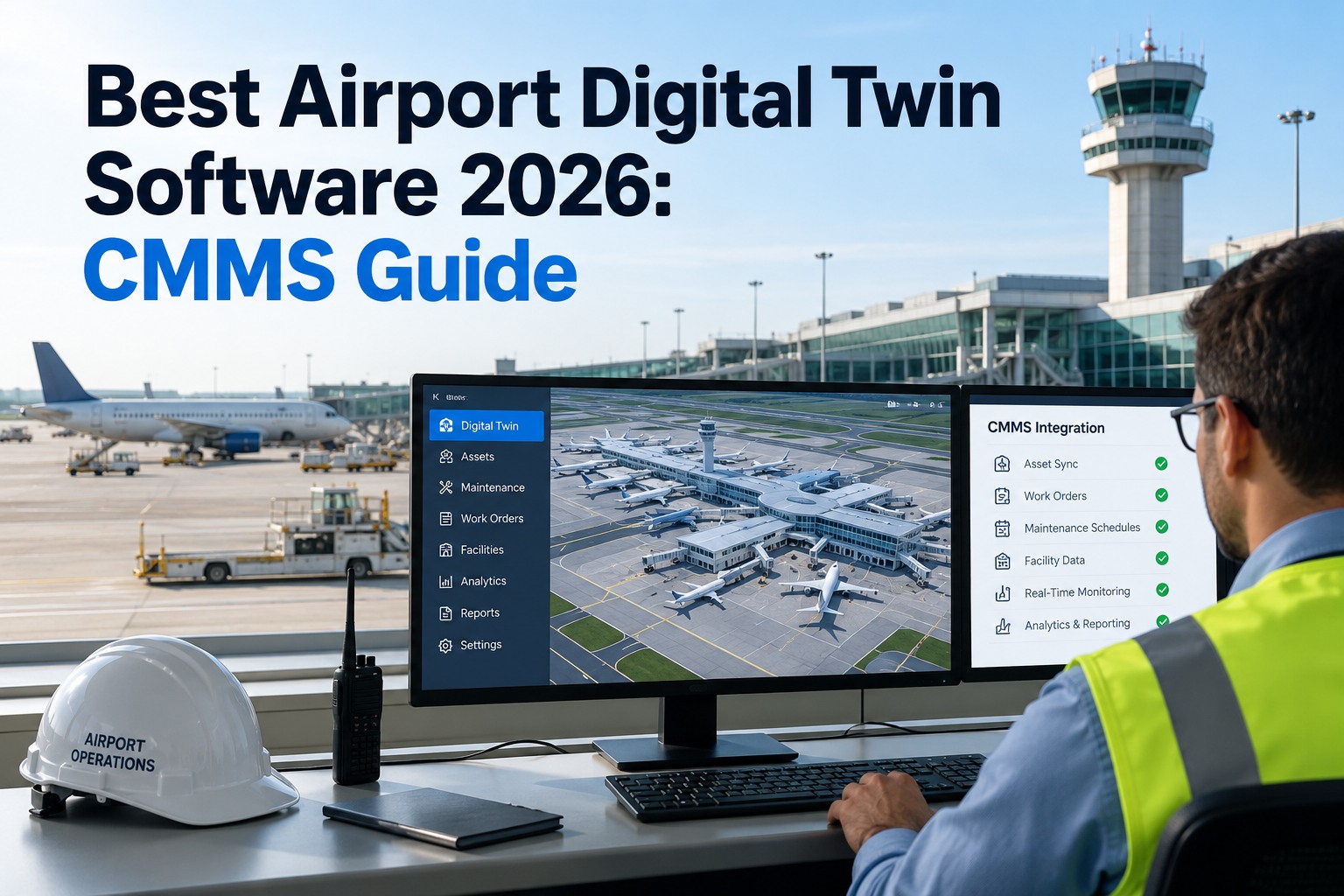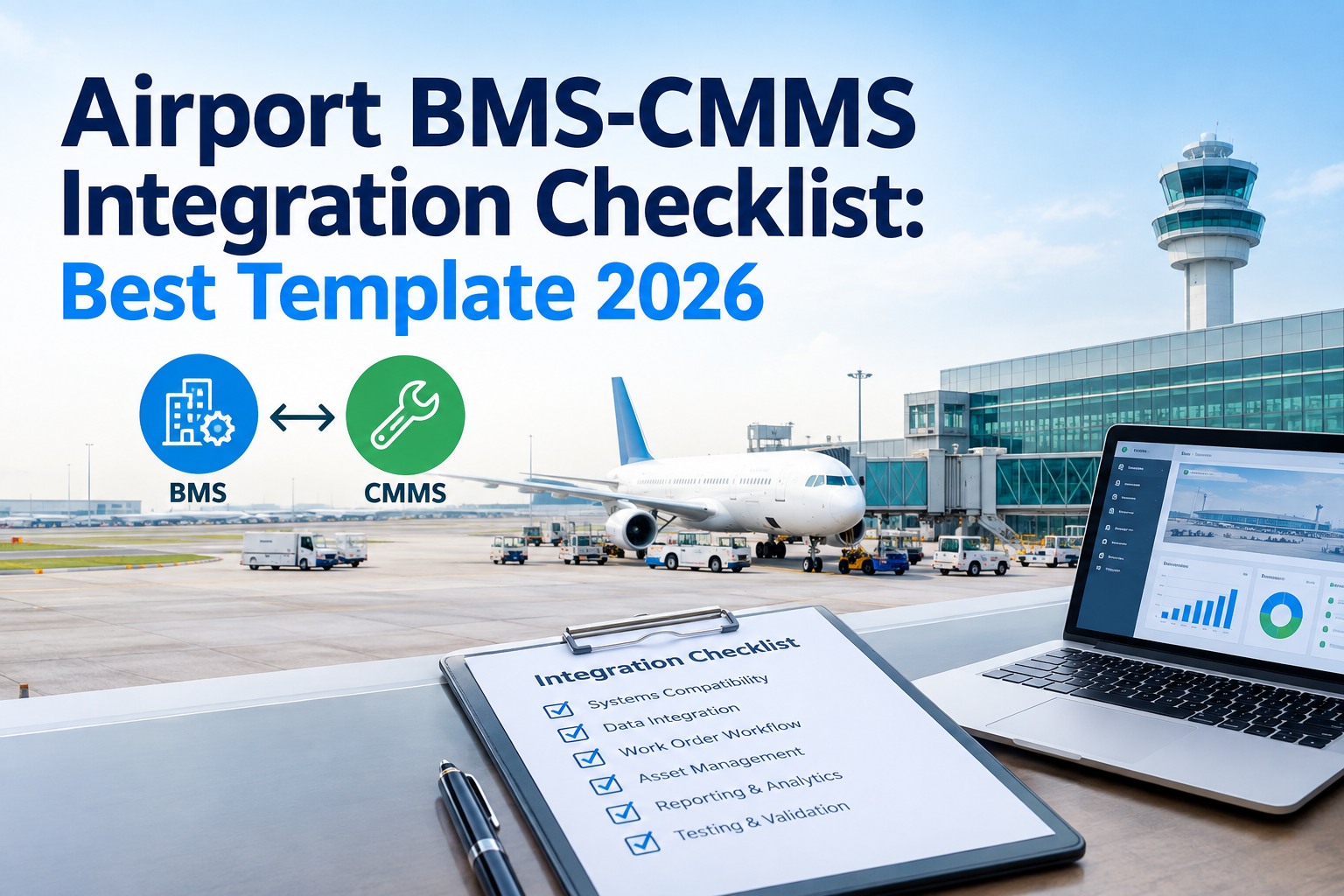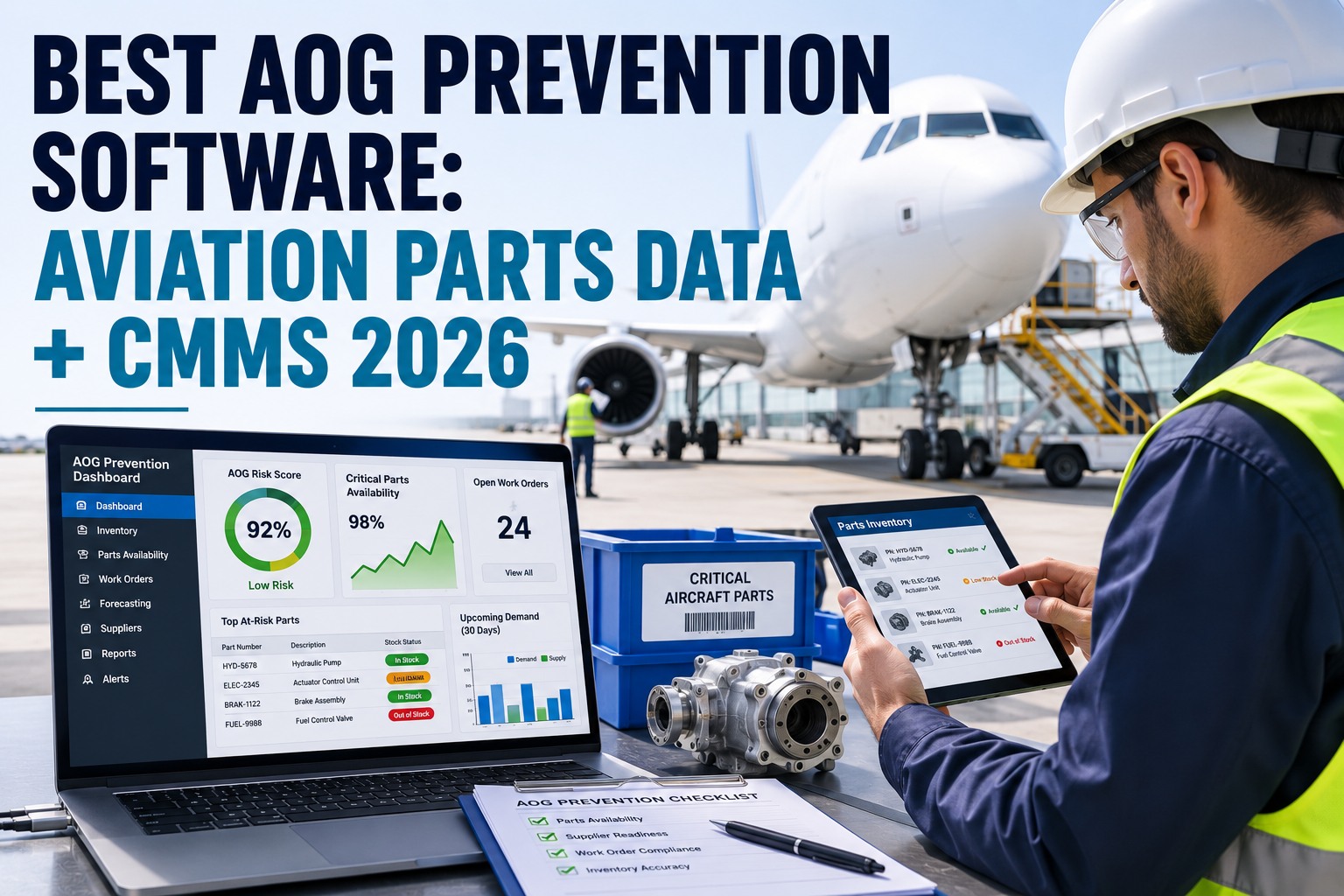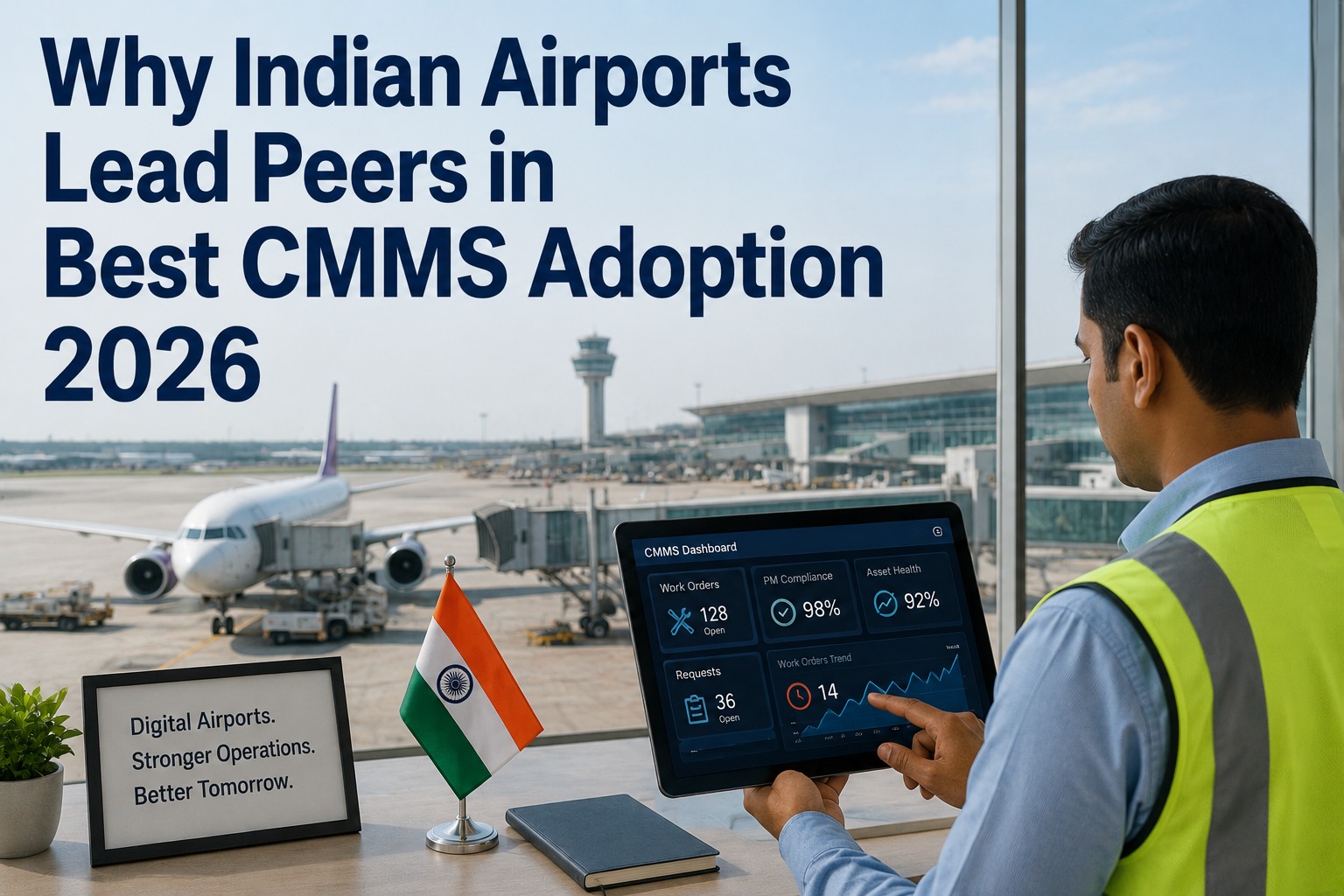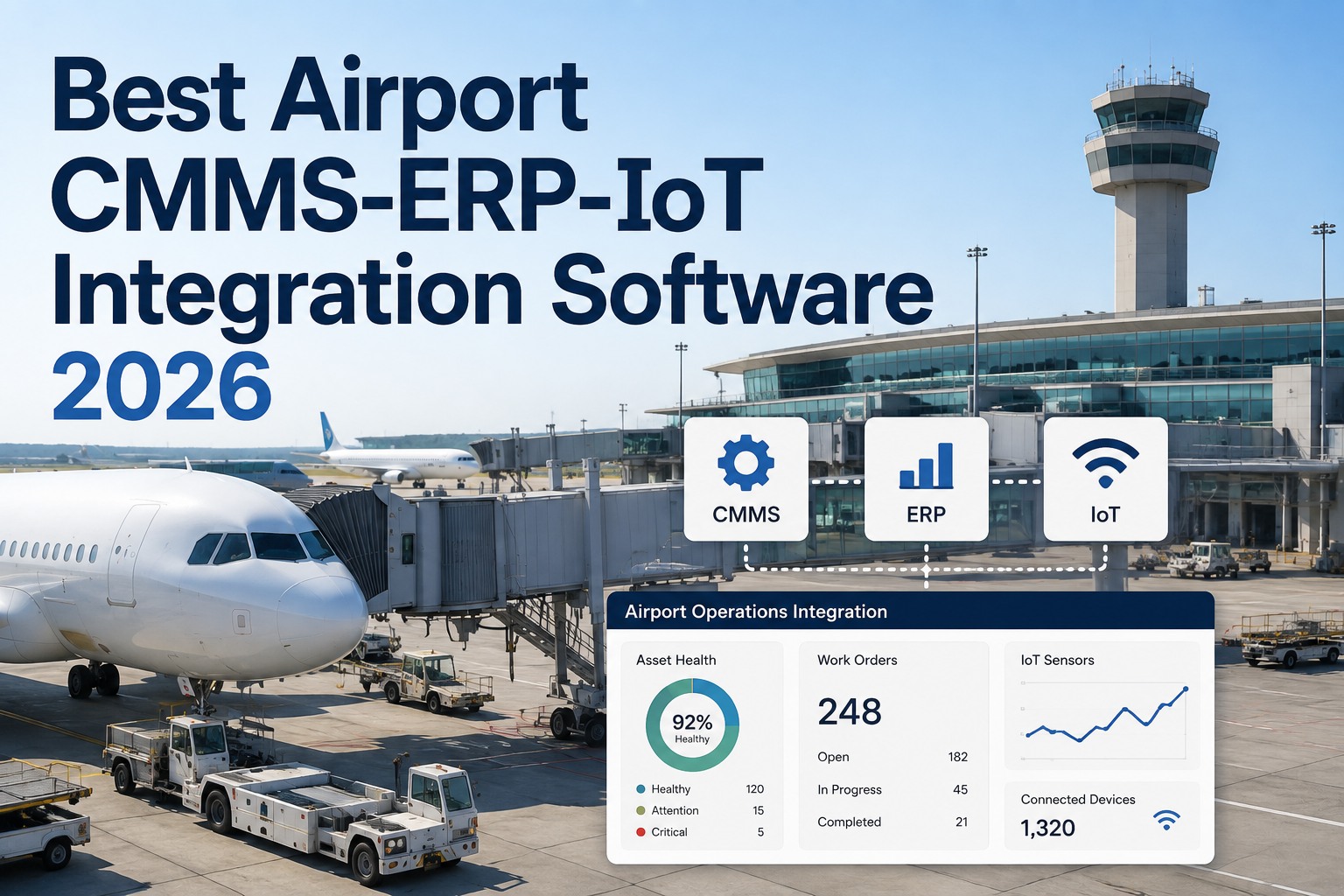
Hub airports run maintenance operations at a scale most industries never reach — 24/7/365 uptime, thousands of assets across airfield lighting, jet bridges, ARFF vehicles, terminal HVAC, baggage handling, and ground support equipment, and financial governance that flows back to SAP PM, Oracle EAM, or Microsoft Dynamics 365 for cost centre postings, procurement, and month-end close. The gap is well-documented: SAP or Oracle holds the enterprise financial truth, but asking a technician on the apron at 03:00 to close a work order through a complex ERP transaction screen is how data quality dies. Re-keying work order data between systems costs maintenance teams an average of 11% of productive labour hours every month — time that could have gone to actual uptime instead of typing the same information twice. Overnight batch jobs between ERP and CMMS fail silently, and the data gap is rarely discovered during normal operations — it surfaces during a NOTAM event, a Part 139 audit, or a financial close that will not reconcile. The 2026 answer is not to replace SAP, Oracle, or Dynamics — those systems stay the enterprise system of record. The answer is a modern airport CMMS running as the mobile-first execution layer, syncing bidirectionally with the ERP in real time across five key entities: asset master, work order, parts, labour, and cost posting. Below is the working integration guide — per-platform connector approach for SAP, Oracle, and Dynamics; the sync architecture that eliminates re-keying and reconciliation; and the two-to-four-week deployment path that produces a live integration without paralleling the ERP roadmap. Start free and connect your airport ERP sandbox to Oxmaint this week, or book a demo to see the ERP-CMMS sync mapped to your specific SAP, Oracle, or Dynamics environment.
Aviation · Hub Airports · SAP PM / Oracle EAM / Dynamics 365 · 2026
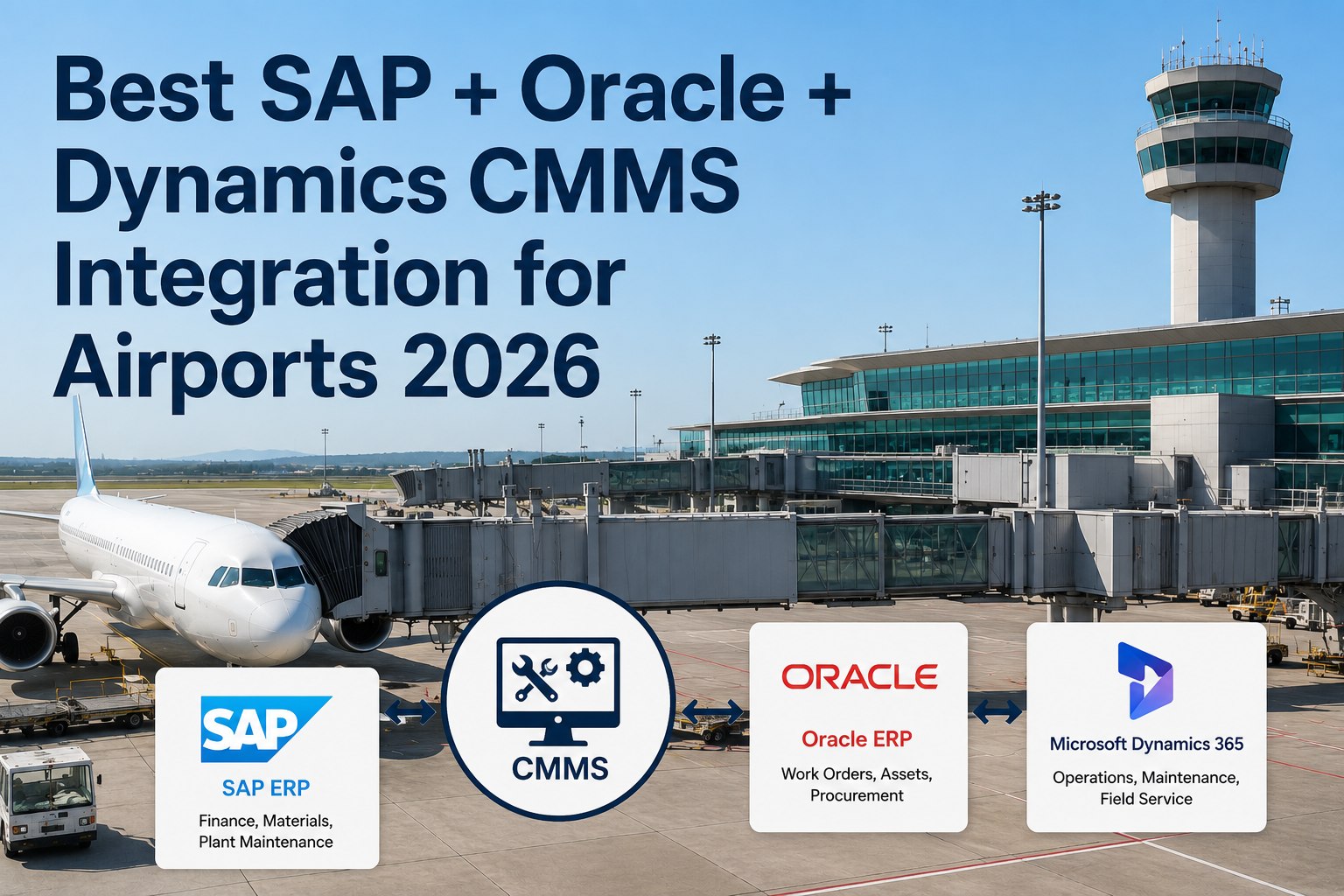
Best SAP + Oracle + Dynamics CMMS Integration for Airports 2026
The per-platform connector approach for SAP PM, Oracle EAM, and Microsoft Dynamics 365; the five-entity bidirectional sync architecture; and the two-to-four-week deployment path that turns "we have ERP and CMMS" into a real-time integrated operation — without paralleling your ERP roadmap or replacing the enterprise system of record.
-
11%
of productive maintenance labour lost monthly to ERP-CMMS re-keying
-
3
enterprise ERPs supported — SAP PM, Oracle EAM, Dynamics 365
-
5
bidirectional sync entities: asset, WO, parts, labour, cost
-
2–4 wk
from sandbox connection to live production integration
The Architecture
CMMS as Execution Layer, ERP as System of Record
The working architecture is settled across hub-airport reliability programmes. SAP, Oracle, or Dynamics remains the enterprise system of record — cost centres, procurement, financial close, capital planning. Oxmaint runs as the mobile-first execution layer that technicians and inspectors actually use in the field. Between them, real-time bidirectional sync across the five entities that matter. Below is the working data-flow shape.
Airport Operations
Technicians, inspectors, planners working on airfield lighting, jet bridges, ARFF, terminal HVAC, GSE, baggage — 24/7/365 mobile execution.
Oxmaint CMMS (Execution)
Mobile work orders, PM auto-generation, condition triggers, e-signature sign-off, photo evidence, FAA Part 139 compliance workflows.
SAP / Oracle / Dynamics (Record)
Cost centres, procurement, financial close, capital planning, multi-site governance, month-end reconciliation. Enterprise system of record.
Per-Platform Integration
SAP, Oracle, Dynamics — Side by Side
Every ERP has its own preferred integration mechanism — SAP through IDocs and OData, Oracle through REST APIs with OAuth 2.0, Dynamics 365 through Power Automate and Azure Logic Apps. The Oxmaint connector approach is different per platform but delivers the same result: real-time bidirectional sync with the ERP staying the financial system of record. Below is the working side-by-side.
SAP PM / EAM
S/4HANA + ECC 6.0
SAP stays financial spine; Oxmaint replaces technician-facing SAP GUI workflows.
Oracle EAM / Fusion
EBS + Fusion Cloud
Cleaner cloud-to-cloud architecture than legacy SAP; native REST throughout.
Dynamics 365 F&O
Finance & Operations + Field Service
Native to Microsoft stack — Azure AD, Power BI, Teams integration built in.
The Data Gap Cost
Overnight Batches Fail Silently. The Data Gap Surfaces During a NOTAM, an Audit, or a Financial Close.
Batch-mode integration between ERP and CMMS looks like it works — until it does not. Overnight jobs fail without alerting, and the data divergence is discovered the next day when a spare part is not where both systems said it would be, or during the quarterly close when the maintenance cost postings do not reconcile against the WO count. Real-time bidirectional sync eliminates the failure mode. Oxmaint's ERP connector runs in near-real-time on all three platforms — SAP IDoc/OData/REST, Oracle REST with OAuth 2.0, and Dynamics via Power Automate. The next NOTAM event, Part 139 audit, or month-end close finds a reconciled operation, not a silent data gap.
The Sync Matrix
Five Entities. Both Directions. Real Time.
The integration itself is defined by five sync entities that flow bidirectionally between Oxmaint and the ERP. Get these five right and 90% of the ERP-CMMS integration problem is solved. Below is the working sync matrix — what flows which direction, and why.
| Entity | CMMS to ERP | ERP to CMMS | Frequency | Purpose |
|---|---|---|---|---|
| Asset Master | Field-observed updates | Capital additions, dispositions | Real time | Single source of truth on asset register |
| Work Order | Creation, close, sign-off | Planning approvals, budget flags | Real time | Every WO reconciled to ERP for costing |
| Parts / Inventory | Consumption, transfers | Stock levels, replenishment status | Real time | Storeroom always matches CMMS view |
| Labour | Hours by technician, WO, cost centre | Rate cards, cost centre structure | Real time | Feeds payroll and cost-per-WO reporting |
| Cost Posting | WO cost roll-up to ERP cost centre | Budget consumption, variance | Near real time | Month-end close reconciles automatically |
Deployment Path
Sandbox to Production in Two to Four Weeks
Airport ERP integrations do not need to be multi-quarter projects. The working deployment path — proven across aviation and industrial deployments — moves from sandbox connection to live production integration in two to four weeks by starting narrow (one asset class), validating each sync entity, and then extending airport-wide.
-
Wk 1
Sandbox Connection & Asset Master Sync
ERP sandbox credentials configured, connector activated for chosen platform (SAP OData, Oracle REST + OAuth, or Dynamics via Power Automate). Asset master sync validated for one asset class — typically airfield lighting or GSE. Field IDs, cost centres, and functional locations mapped.
-
Wk 2
Work Order & Parts Bidirectional Flow
WO creation flowing CMMS to ERP; ERP planning approvals flowing back. Parts consumption from WO close driving inventory transactions in ERP. Storeroom stock levels visible in mobile app during WO planning.
-
Wk 3
Labour & Cost Posting Validation
Technician hours flowing from WO close to ERP cost centre. Cost roll-up on completed WOs validated against sample ERP cost centre report. Month-end close simulation run on prior-month data to prove reconciliation.
-
Wk 4
Production Cutover & Airport-Wide Extension
Sandbox promoted to production. Additional asset classes onboarded — jet bridges, ARFF, HVAC, baggage handling. Monitoring dashboards live for integration health, sync latency, and reconciliation gaps. FAA Part 139 documentation workflow live.
Built for Hub Airport Operations
How Oxmaint Runs Airport ERP Integration End to End
-
Pre-Built Connectors
SAP S/4HANA, Oracle Fusion, Dynamics 365
Pre-built native connectors for the three major enterprise ERPs — SAP ECC 6.0 and S/4HANA 2020+, Oracle EBS and Fusion Cloud, Microsoft Dynamics 365 F&O. No custom middleware required for standard deployments.
-
Bidirectional Sync
Five Entities, Real-Time, Both Directions
Asset master, work order, parts inventory, labour hours, and cost posting flow real-time in both directions. No overnight batch failing silently; no next-day reconciliation surprises.
-
Mobile Execution
Technicians Never Touch SAP GUI
Technicians work exclusively in Oxmaint mobile — creating, updating, and closing work orders with photo evidence and e-signature. All data flows to SAP/Oracle/Dynamics automatically. Data quality preserved by design.
-
FAA Part 139 Overlay
Compliance Workflow on Top of ERP
Part 139 self-inspection, ARFF readiness, wildlife management, and pavement condition workflows live on the CMMS layer with immutable audit trail — while the ERP still owns cost centres and procurement.
-
Integration Health Monitoring
Sync Latency, Reconciliation Gaps Live
Integration health dashboard shows sync latency per entity, failed transaction retries, and reconciliation gap alerts. Silent batch failure becomes a live-monitored operating metric.
-
Free Forever Plan
Sandbox Trial Before Production
Cloud-based, mobile-first. Connect your ERP sandbox on the free forever plan, validate the sync on one asset class, and prove the integration before committing to production cutover.
Measured Outcomes
What Airports Running ERP-CMMS Integration Report
-
-11%
Re-Keying Labour Recovered
Maintenance teams recover the 11% of productive labour previously lost monthly to duplicate data entry between CMMS and ERP — hours redeployed to actual uptime work.
-
2–4 wk
Sandbox to Production Timeline
Standard deployment moves from ERP sandbox connection to live production integration in two to four weeks — not the multi-quarter timeline traditional custom integrations require.
-
0
Silent Batch Failures
Real-time sync eliminates the overnight batch failure mode. Integration health monitored live, silent reconciliation drift becomes an alerted operating metric.
-
$0
Free Forever Plan to Start
Cloud-based, mobile-first. Connect your SAP, Oracle, or Dynamics sandbox, prove the sync on one asset class, and scale to airport-wide production when validated.
Frequently Asked
Airport ERP Integration Questions
Does integrating Oxmaint require modifications to our SAP/Oracle/Dynamics configuration?
No. The integration is additive — SAP, Oracle, or Dynamics stays the enterprise system of record with zero modifications to the core ERP. Oxmaint runs alongside as the mobile-first execution layer with bidirectional sync via the ERP's standard integration endpoints (SAP IDoc/OData, Oracle REST with OAuth 2.0, Dynamics Power Automate). Your ERP roadmap is unaffected. Start free and connect your ERP sandbox today.
Can we integrate with more than one ERP if we run different systems per site?
Yes. Multi-airport operators commonly run SAP at hubs and Dynamics at regional sites, or Oracle at legacy properties. Oxmaint supports concurrent integration with multiple ERP instances — each site's assets syncing to its designated ERP while consolidated reporting rolls up in Oxmaint for cross-site reliability analysis.
Why five entities specifically — why not more?
Asset master, work order, parts, labour, and cost posting cover 90%+ of the ERP-CMMS integration surface area for a typical airport operation. Additional entities (BOMs, contract labour, meter readings, capital projects) are supported when needed but are lower-priority for initial deployment. Getting the five core right delivers the reconciliation and re-keying gains; extension is incremental. Book a demo to see the sync matrix mapped to your operation.
Is real-time sync actually necessary, or is nightly batch enough?
Nightly batch fails silently. The data divergence is discovered the next day — the spare part is not where both systems said it would be, or the WO cost posting misses the month-end close. Airport operations run 24/7/365 with narrow overnight maintenance windows; a next-day reconciliation cycle is the wrong operating tempo. Real-time (or near-real-time) sync catches transaction failures immediately and preserves reconciliation across every close.
Is there a free plan to connect our ERP sandbox first?
Yes. Oxmaint offers a free forever plan — enough to connect one ERP sandbox (SAP, Oracle, or Dynamics), validate bidirectional sync on one asset class, and prove the integration before scaling to production. Cloud-based, mobile-first — no server procurement or infrastructure commitment. Sign up for the free plan and connect your first ERP today.
SAP · Oracle · Dynamics · Real-Time · Bidirectional
Do Not Replace the ERP. Add the Execution Layer.
SAP, Oracle, and Dynamics stay the enterprise system of record — where they belong. Oxmaint runs as the mobile-first execution layer airport technicians actually use, syncing bidirectionally across asset master, work order, parts, labour, and cost posting in real time. Live in two to four weeks, no ERP modifications required, and the 11% of labour previously lost to re-keying redeployed to actual uptime work.