Aviation maintenance teams carry an impossible burden: diagnosing complex multi-system faults under time pressure, with access to documentation libraries that would fill a small library. A single Boeing 737-800 has over 40,000 pages of maintenance manuals. A technician facing an EICAS alert at 03:00 with a 06:30 departure window cannot afford a 45-minute manual search. Generative AI eliminates that gap entirely — delivering ranked probable causes, AMM task references, compliance checks, and parts availability in under 10 seconds, in plain language, specific to your aircraft configuration. MRO operations deploying AI-guided troubleshooting are recovering 35 percent of previously lost documentation time and cutting diagnosis cycles by up to 67 percent. If you want to see this working on your own fleet, start a free trial for 30 days or book a demo with our aviation specialists.
═══ STAT STRIP — circuit-board dark panel ═══
$9.4B
GenAI MRO market projected by 2030
MarketsandMarkets, 2025
67%
Faster fault diagnosis with AI-guided troubleshooting
Deloitte Aviation Report
35%
Of technician shift time lost to manual documentation search
IATA MRO Industry Survey
4.8x
Higher cost of unscheduled vs. planned maintenance events
ATA e-Business Program
What Is Generative AI for Aviation Maintenance Troubleshooting?

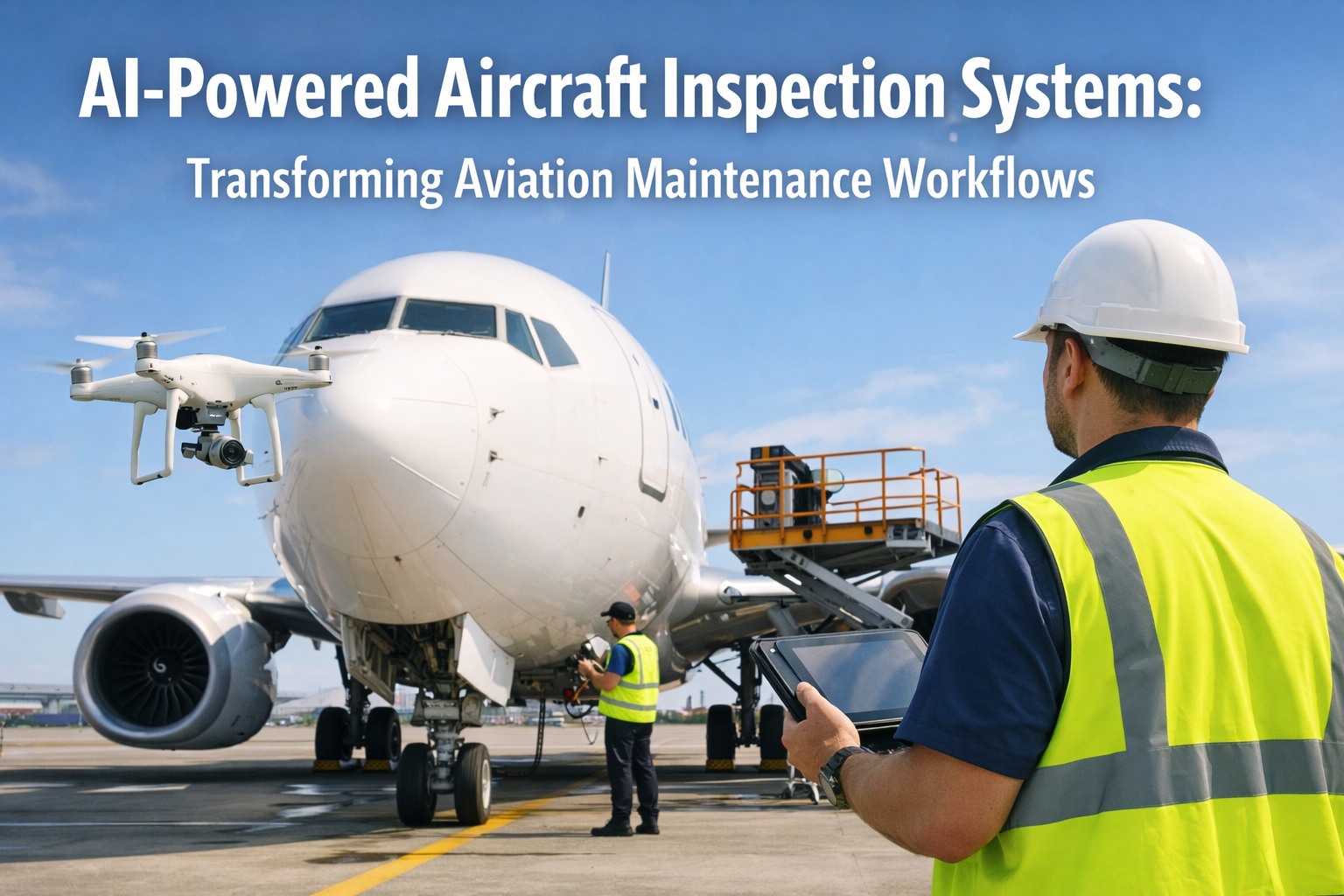
Generative AI for aviation maintenance is not a smarter search engine. It is a large language model system trained on aviation-grade technical documentation — Airworthiness Manuals, Component Maintenance Manuals, Service Bulletins, Airworthiness Directives, Illustrated Parts Catalogues, and Wiring Diagram Manuals — that responds to natural-language fault descriptions with structured, AMM-referenced, compliance-verified diagnostic output. A technician inputs a symptom in plain language. The system returns ranked probable causes with probability scores, precise AMM task references, estimated job time, required part numbers, live inventory status, and applicable AD cross-checks — all in under 10 seconds. OxMaint's AI Maintenance Copilot embeds this capability directly into your work order and asset management workflow, so every diagnostic output immediately connects to a completable task. To experience this working on your specific fleet, start a free trial for 30 days and book a demo with our aviation team to walk through a live fault scenario.
═══ PULLQUOTE — classified brief style ═══
INDUSTRY INTELLIGENCE
//
By 2027, 60% of Tier-1 MRO providers will have deployed AI-assisted diagnostic tools as a standard technician capability — not an optional add-on.
Oliver Wyman MRO Outlook 2025
═══ CTA BLOCK 1 — diagonal accent slab ═══
AI Maintenance Copilot
Your Fleet-Aware Diagnostic Intelligence. Live in Days.
OxMaint's AI Copilot connects your asset records, fault history, documentation library, and parts inventory. Every technician gets instant, compliance-verified troubleshooting guidance — tailored to your exact aircraft configuration. No six-month implementation. No heavy onboarding costs.
The Four Critical Pain Points Driving Demand for AI Troubleshooting
═══ PAIN CARDS — incident-report horizontal split ═══
The 40,000-Page Problem
A single aircraft type's documentation library averages 40,000+ pages across AMMs, CMMs, SBs, and ADs. A fault that could be resolved in 12 minutes takes 55 minutes when technicians must manually navigate that volume. That gap compounds across every technician, every shift, every day.
The Expertise Retirement Crisis
By 2030, over 40% of the current licensed AME and A&P workforce will reach retirement age. The institutional knowledge leaving with them — fault pattern recognition built over decades — cannot be recovered through traditional training timelines. AI encodes that expertise permanently.
No-Fault-Found Rate at 30%
Industry-wide, 25 to 30% of component removals result in No Fault Found — costing $3,000 to $35,000 per event depending on component type. AI-guided diagnostics cut NFF rates by 62% through probabilistic fault isolation before any component is removed.
AD Compliance Blind Spots
With thousands of active Airworthiness Directives across a mixed fleet, manually cross-referencing ADs during fault diagnosis is unreliable. A missed compliance requirement during troubleshooting creates regulatory exposure that no MRO can afford. AI flags it automatically on every diagnosis.
Four Core Capabilities of the OxMaint AI Maintenance Copilot
═══ CAPABILITY CARDS — technical spec-sheet style ═══
Natural Language Fault Queries
Technicians describe faults exactly as they observe them — "left main gear door won't fully retract on approach, intermittent, no ECAM advisory" — and receive structured diagnostic guidance referenced to specific AMM tasks. No code lookup. No Boolean search. Plain language in, actionable guidance out.
Fleet-Specific Configuration Context
The AI reasons against your specific tail number's configuration, modification status, SB incorporation record, and maintenance history — not generic aircraft-type answers. An answer for MSN 2847 accounts for all modifications that MSN 2848 has not yet incorporated.
Documentation Intelligence Layer
The system ingests and stays current with AMMs, CMMs, TSMs, SBs, SILs, and operator MRB reports. When a service bulletin modifies a troubleshooting procedure, the AI references the updated version automatically. Documentation currency is not dependent on manual library management.
Compliance-Verified Guidance
Every diagnostic output is cross-referenced against the applicable AD list, current MEL entries, and deferred defect records. If a troubleshooting path intersects with an open AD requirement or a MEL item requiring closure, the system flags it before the technician begins the task.
Live AI Diagnostic Demonstration — B737-800 ELEC BUS FAULT
═══ TERMINAL — dark diagnostic console ═══
OxMaint AI Maintenance Copilot — Fault Diagnostic Session
● LIVE AI
TECHNICIAN — B737-800 / MSN 3941 / REG: G-OXMA
EICAS message ELEC BUS FAULT appeared during engine start sequence on Stand 14. AC BUS 2 showing fault. Aircraft had overnight cold soak at -12C. Previous MEL item DEF-2024-119 for AC BUS 2 was cleared 6 days ago. No repeated fault in last 30 flight cycles. What are the likely causes and where do I start?
OXMAINT AI COPILOT — Analysing fault pattern, configuration, and maintenance history
Ranked Probable Causes — AC BUS 2 FAULT (Cold Soak Context)
78%
GCU cold-temperature relay contact resistance fault
Cold soak at below -10C commonly causes intermittent contact resistance in GCU relay contacts on CFM56-7B installations. Check GCU relay contacts per AMM 24-22-00, Task 802. Prior MEL closure DEF-2024-119 suggests recurrent GCU intermittent — recommend GCU bench test before flight release.
14%
AC BUS 2 contactor coil insulation degradation
Contactor coil insulation failures present with increased frequency during cold-soak recovery. Check BUS 2 contactor per AMM 24-34-00, Task 401. Measure coil resistance — out-of-tolerance range indicates contactor replacement per IPC 24-34-01.
8%
IDG output voltage transient during cold-temperature start
IDG oil viscosity in sub-zero conditions can cause output voltage transients during initial engine acceleration. Monitor IDG output voltage on ground power-up after warm-up. Cross-reference against SB 737-24A1253 applicability for MSN 3941.
How the AI Troubleshooting Workflow Operates — End to End
═══ WORKFLOW — true arrow-connected pipeline ═══
01
Input
Technician Describes the Fault
Free-text description of observed symptoms, system behaviour, and any ECAM or EICAS messages. No structured code lookup required. Under 60 seconds to input a complete fault description.
60 sec
▶
02
Analysis
AI Reasons Against Fleet Data
Cross-references the fault against your aircraft configuration, maintenance history, open deferrals, applicable ADs, and the full documentation library in parallel. Completes in under 10 seconds.
< 10 sec
▶
03
Diagnosis
Ranked Causes With AMM References
Probable causes ranked by probability, each linked to AMM task numbers, estimated job times, required tooling, part numbers, live inventory availability, and compliance flags where ADs or MEL items are relevant.
Structured output
▶
04
Work Order
One-Click Work Order Creation
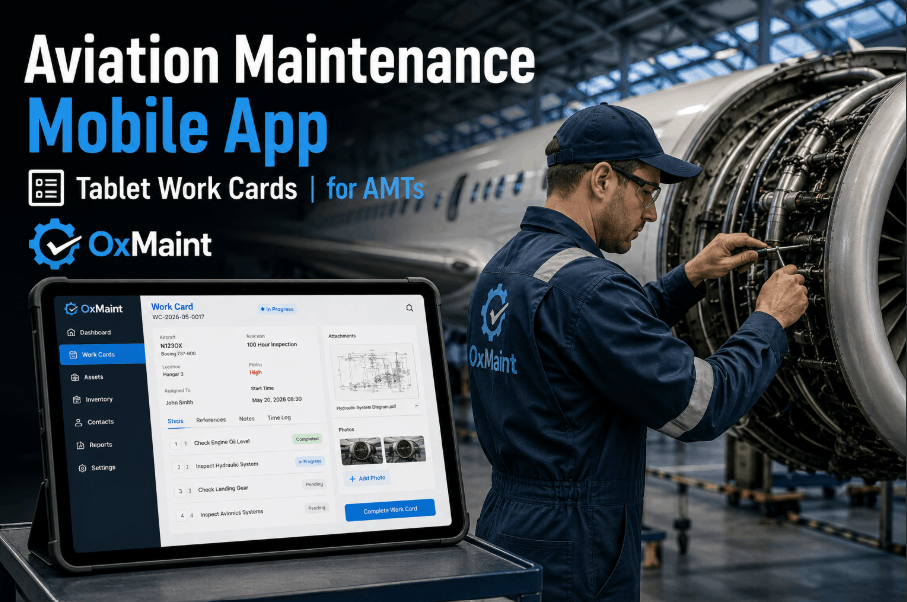
The technician selects the approved diagnostic path and converts it to a structured work order in OxMaint — with task steps, parts requests, crew assignment, and completion time pre-populated from the AI output.
< 8 min total

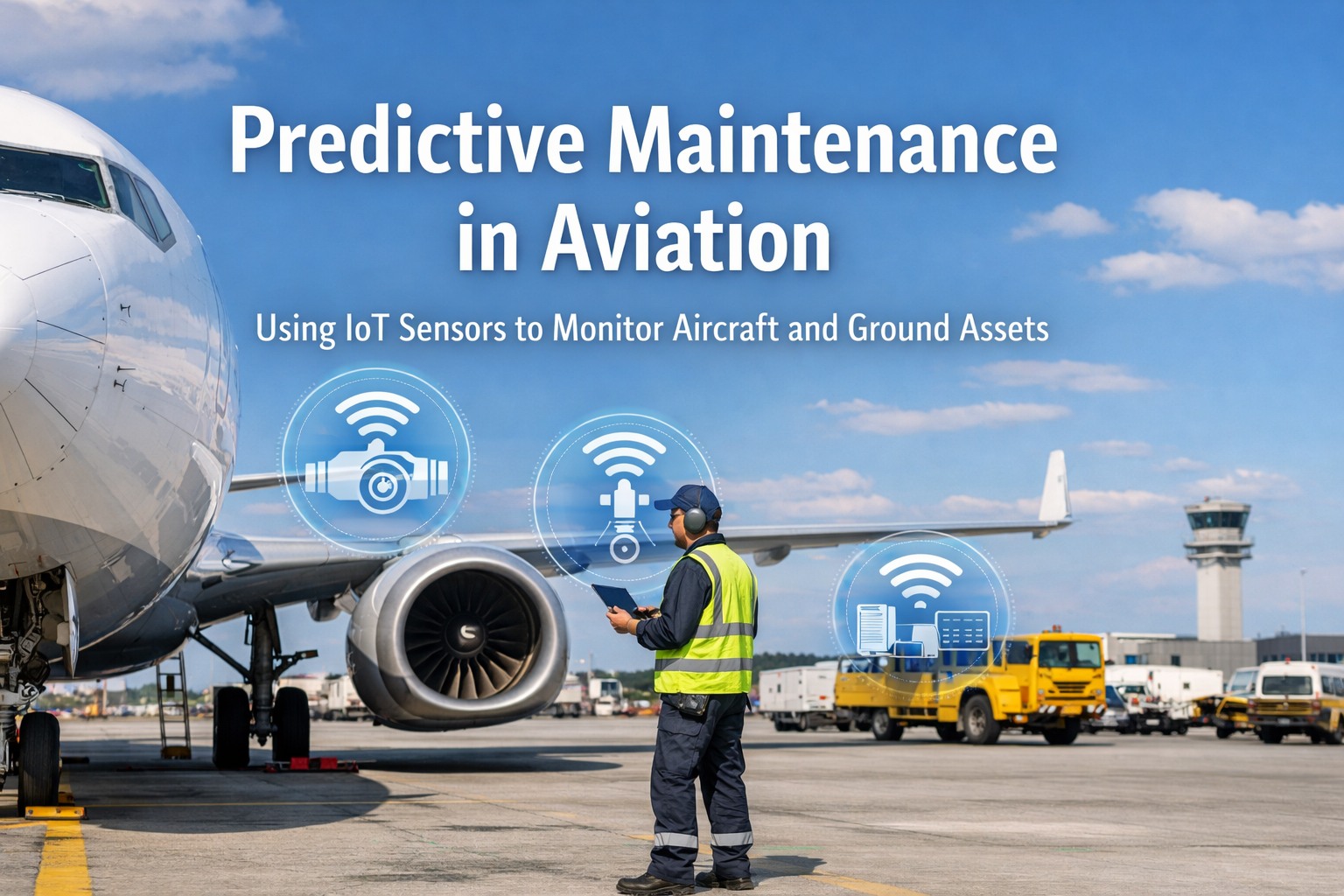
When IoT sensor data feeds directly into the diagnostic layer, troubleshooting gains a critical advantage: the AI can correlate real-time parameter trends with fault symptoms before the technician begins the investigation. Vibration anomalies, temperature exceedances, pressure differentials, and actuator response times captured by on-aircraft sensors are automatically surfaced in the diagnostic context — narrowing the probable cause list from eight items to two in many cases. OxMaint's SCADA and IoT integration layer connects sensor data streams from engine monitoring systems, landing gear sensors, ECS monitors, and hydraulic pressure sensors to the AI diagnostic engine in real time. To see how this sensor-to-diagnosis loop works for your fleet, start a free trial for 30 days and explore the full diagnostic capability — or book a demo to walk through an IoT-integrated fault scenario live with our team.
Before vs. After: Manual Troubleshooting vs. AI-Guided Diagnosis
| Diagnostic Metric |
⚠ Manual Troubleshooting |
✓ AI-Guided (OxMaint Copilot) |
| Average fault diagnosis time |
45 to 90 minutes |
12 to 20 minutes — 67% reduction |
| Documentation search time per fault |
20 to 35 minutes of manual search |
Under 10 seconds — AI-retrieved with AMM references |
| No Fault Found (NFF) rate |
25 to 30% of component removals |
Under 12% — AI isolates fault before removal |
| AD compliance verification |
Manual — frequently skipped under time pressure |
Automatic on every diagnostic output |
| New technician ramp-up time |
12 to 18 months to independent competency |
3 to 4 months with AI-guided task scaffolding |
| Work order generation from diagnosis |
15 to 25 minutes manual data entry |
One-click — pre-populated from AI output |
| Parts availability check |
Separate system lookup — adds 10 to 15 minutes |
Live inventory check embedded in diagnostic output |
| Knowledge retention on expert departure |
Lost with the individual — unrecoverable |
Encoded in model — available to all technicians permanently |
Measurable ROI From AI-Guided Troubleshooting
═══ ROI — dark inverted dashboard with fill bars ═══
Faster Diagnosis
67%
Average reduction in total fault-to-resolution time across MRO operations deploying AI-guided troubleshooting in commercial aviation.
AOG Cost Avoidance
$2.3M
Estimated annual AOG event cost avoidance for a 40-aircraft operator by reducing average AOG resolution time from 6.2 to 2.1 hours.
NFF Rate Reduction
62%
Reduction in No Fault Found component removals when AI probability-ranked diagnostics guide fault isolation before any component is removed.
Faster Technician Onboarding
3.2x
Acceleration in new technician diagnostic competency — from an industry average of 15 months to 4 to 5 months with AI-scaffolded guidance.
The return on AI-guided troubleshooting is not primarily a technology cost-benefit calculation. It is an operational resilience argument: MRO operations that deploy AI diagnostic tools are building the ability to maintain diagnostic quality and throughput independent of their workforce's seniority profile. As the retirement wave accelerates through 2027 to 2030, operations without AI-assisted tools will face compounding pressure on output quality and turnaround time. Those with it will absorb the same workforce disruption without losing diagnostic accuracy. If this aligns with where your MRO operation is heading, start a free trial for 30 days or book a demo to see how the Copilot performs against your current fault resolution benchmarks.
Frequently Asked Questions
═══ FAQ — open document style with Q prefix ═══
Q. What types of faults and aircraft systems does the AI Copilot cover?
OxMaint's AI Maintenance Copilot covers the full range of aircraft systems documented in standard maintenance manuals — avionics, electrical, hydraulics, pneumatics, landing gear, flight controls, powerplant, fuel systems, and environmental control systems. The system handles symptom-based inputs, component-based queries, and compliance-based requests. Coverage expands proportionally with the documentation libraries integrated into your platform configuration.
Q. How does the AI stay current with new Service Bulletins and Airworthiness Directives?
OxMaint integrates with major technical publication distribution channels, enabling automated ingestion of new Service Bulletins, Airworthiness Directives, Service Information Letters, and manufacturer revisions as they are released. When a new AD changes a troubleshooting procedure or introduces a mandatory inspection requirement, the platform updates the AI reference base and alerts affected fleet managers within the same business day. The system maintains a live AD applicability matrix per tail number, so every diagnostic session reflects current regulatory requirements.
Q. Is AI diagnostic output acceptable under FAA, EASA, and GCAA regulatory frameworks?
AI-generated diagnostic guidance is used as a troubleshooting support tool — it does not replace the Licensed Aircraft Maintenance Engineer or A&P mechanic's judgment, and it does not constitute a maintenance record entry by itself. The technician reviews the AI output, selects the appropriate task path, and the resulting work order created in OxMaint enters the maintenance record — signed by the licensed certifying staff as required by FAA, EASA, GCAA, or CASA regulations. Human certification authority remains with licensed personnel throughout.
Q. How long does implementation take for a fleet-integrated deployment?
Most operators are live with AI-guided troubleshooting within 2 to 3 weeks of beginning deployment. Week one covers fleet data migration — aircraft configuration records, tail numbers, modification status, and maintenance history. Week two integrates the technical documentation library and configures the compliance reference matrix. By week three, technicians are using AI-guided diagnostics on live fault events. There are no heavy implementation fees and no long onboarding contracts.
═══ FINAL CTA — full-bleed angled slab ═══
AI Maintenance Copilot — OxMaint
Every Technician. Expert-Level Diagnostics. Every Shift.
Stop losing hours to documentation searches. Stop accepting 30% NFF rates. Stop watching institutional knowledge walk out the door when senior technicians retire. OxMaint's AI Maintenance Copilot gives every technician on your team access to fleet-specific, compliance-verified, AMM-referenced diagnostic intelligence — in under 10 seconds per fault.