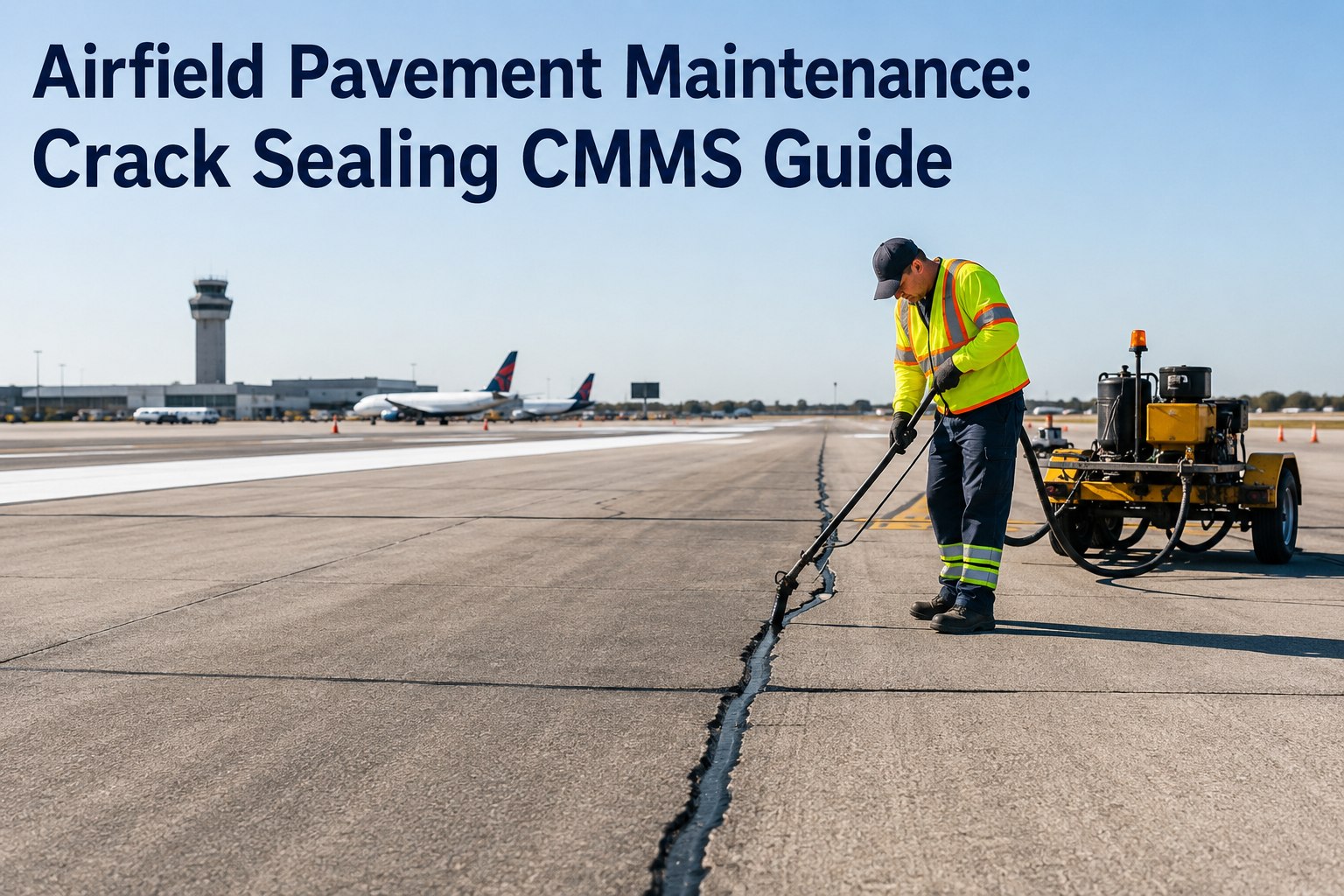
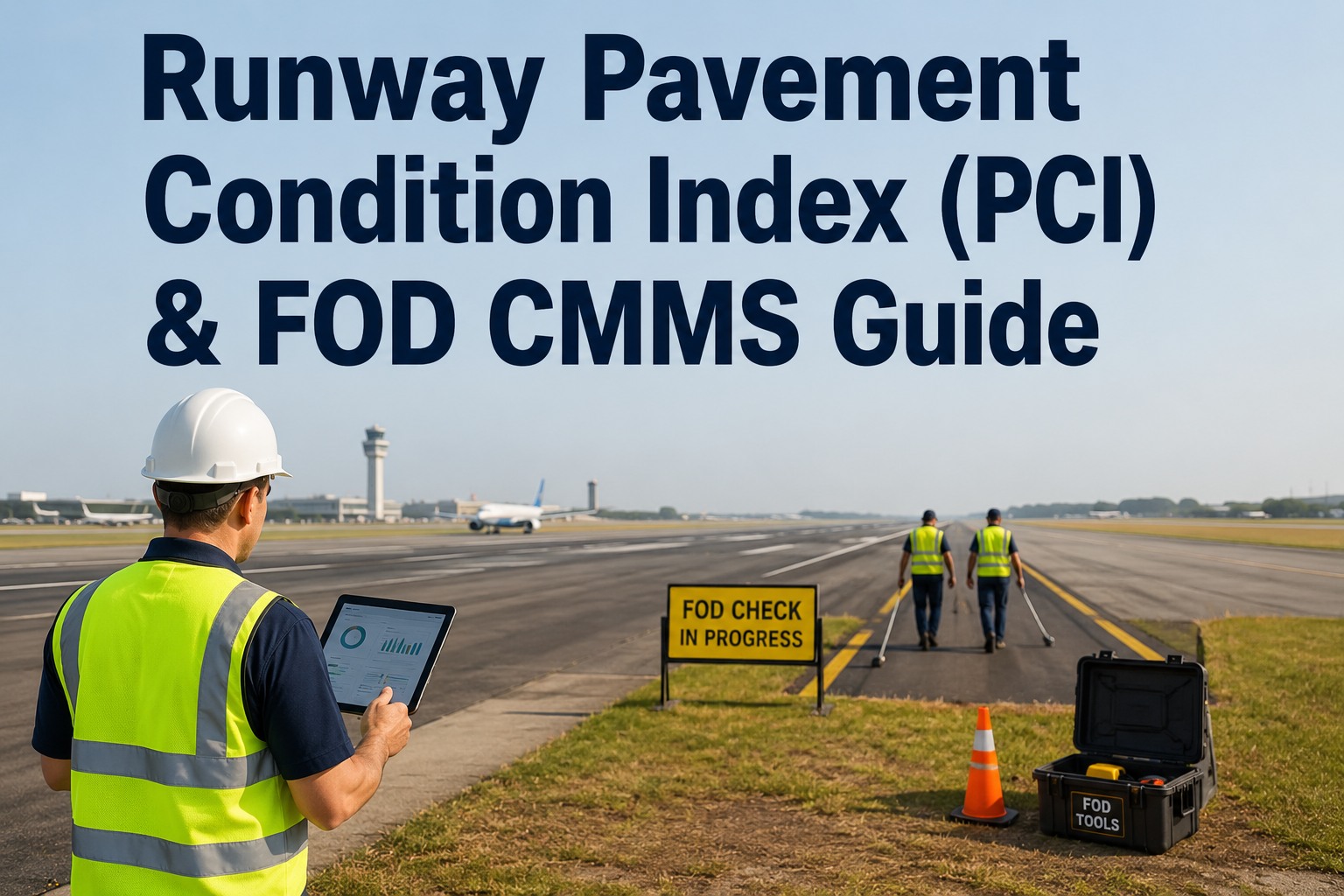
Pavement condition scoring in airside environments requires more than visual inspection — crack progression, surface friction loss, and repair urgency all interact to create risk windows that widen without a structured scoring and documentation system. High-traffic taxiways, apron edges, and runway shoulder zones degrade at different rates, and prioritizing repair without comparative condition data means spending maintenance budgets reactively rather than where pavement risk is highest. Sign Up Free to build structured pavement condition inspection workflows in OxMaint and start scoring defect severity, tracking crack progression, and linking surface findings to repair work orders before minor pavement issues compound into airside safety events. OxMaint's inspection checklists, asset condition tracking, and maintenance planning tools give airport operations and airside maintenance teams the structured audit capability to compare pavement zones, document deterioration trends, and schedule surface repairs based on scored condition data rather than reactive complaint cycles. Book a Demo to see how OxMaint structures pavement condition programs across airport airside, apron, and ground movement environments.
Airside Operations · Pavement Management · 2026
Pavement Condition Scoring for Airside Repair Planning
Compare pavement defects, crack progression, and repair urgency to prioritize airside work before minor issues spread to runway and taxiway safety surfaces.
40%Of airside pavement repairs escalate from minor cracks to structural defects without condition scoring and trend tracking
−30%Repair cost reduction in facilities using structured pavement condition scoring versus reactive surface repair programs
3× fasterRepair prioritization when scored condition data replaces verbal inspection reports and informal round notes
96%Inspection closure compliance with OxMaint's mandatory checklist documentation and work order linkage
6 Pavement Scoring Gaps That Delay Airside Repair Planning
Airside pavement deterioration progresses through scoring gaps — defects that aren't rated, crack boundaries that aren't mapped, and friction loss that isn't trended — until the repair window closes and the intervention becomes structural rather than surface-level. The six gaps below represent the most common failures in airside pavement condition programs, and where OxMaint's structured inspection and work order workflows provide the documentation that maintenance planners and airside safety teams need to act before scores deteriorate. Sign Up Free to configure OxMaint's airside pavement inspection workflow for your airport maintenance program.
01
No Baseline Condition Score Per Zone
Gap Type: Missing comparison reference
Highest Impact
Without a documented baseline pavement condition score per zone, inspection findings have no reference point for deterioration rate. Scores recorded in isolation cannot drive repair urgency decisions because the rate of change — not the absolute condition — determines intervention timing.
02
Crack Progression Not Mapped Between Visits
Gap Type: Trend data absence
Operational Risk
Crack boundaries recorded at one inspection but not compared to the prior visit eliminate the trend data that distinguishes stable surface cracking from progressive structural failure. Repair urgency cannot be reliably prioritized without mapped crack progression across inspection cycles.
03
Friction Testing Not Linked to Surface Condition Records
Gap Type: Data silo
Equipment Fault
Friction testing data held in a separate system from surface defect inspection records loses its value as a repair trigger. When friction decline is not correlated with documented cracking or surface degradation, the combined risk picture that drives immediate repair scheduling is never assembled.
04
Drainage Channel Condition Not Scored With Pavement
Gap Type: Incomplete scope
High Impact
Drainage channel deterioration directly accelerates pavement edge failure and surface water retention. Inspecting pavement surfaces without scoring adjacent drainage condition produces an incomplete repair priority list — repairs made without addressing drainage root causes fail faster.
05
Pavement Marking Condition Separated From Surface Scoring
Gap Type: Safety documentation gap
Structural Gap
Pavement marking condition — retroreflectivity, edge integrity, and fading rate — intersects with surface condition for regulatory compliance and safety marking validity. Scoring markings separately from the surface condition record creates a documentation gap that compounds at audit time.
06
Repair Work Orders Not Closed With Condition Re-Score
Gap Type: PM loop failure
Prevention Input
Work orders closed without a post-repair condition score break the improvement loop that validates repair effectiveness and resets the baseline for the next inspection cycle. OxMaint requires condition re-score at work order closure — keeping the pavement condition record current and the next PM schedule accurate.
Airside Pavement Audit — Without vs. With OxMaint
The difference between informal pavement rounds and a CMMS-supported condition scoring program is visible in repair prioritization accuracy, budget predictability, and the compliance documentation that aviation safety audits require. Book a Demo to walk through your airside pavement program and identify where OxMaint's scoring workflows close the documentation gaps.
Pavement Condition Management Maturity — Where Does Your Facility Score?
Pavement condition management capability in airside operations ranges from entirely reactive — defects identified through incident reports or safety walkdowns — to fully structured CMMS-supported programs with zone-level scoring, trend tracking, and compliance-ready documentation. Book a Demo to assess your airside pavement program maturity with an OxMaint solutions engineer.
Airside Pavement Condition Management Maturity
Score 5 = structured CMMS-supported scoring program · Score 1 = reactive defect response only
5
Full Scoring Structure · CMMS-Integrated · Compliance-Ready
All pavement zones scored against baseline on a structured schedule. Crack progression, friction correlation, drainage, and marking condition logged per zone per visit. Repair work orders linked to condition records and closed with re-score.
Profile: Pavement repair is a managed, budget-predictable program. Condition trends drive repair timing — not safety incidents.
4
Structured Inspections · Partial Trend Tracking
Inspection rounds scheduled and logged. Condition scores documented but trend comparison not systematic. Friction data not consistently linked to surface condition records.
Action: Add baseline comparison and friction linkage to inspection forms. Trend data is the next capability that separates condition management from condition recording.
3
Work Order Logging · Reactive Repair Scheduling
Defects logged in CMMS after discovery. Repairs scheduled reactively — triggered by visible damage rather than condition score threshold. Drainage and marking condition informally assessed.
Gap: Reactive repair scheduling consistently trails actual deterioration rate. Condition-triggered inspection thresholds are the highest-impact next step.
2
Informal Rounds · Complaint-Driven Repair
Pavement maintenance driven by reported defects or safety walkdowns. No structured scoring schedule. Condition assessed only when a problem has become visible or operationally disruptive.
Risk: Defect accumulation between complaint cycles creates repair cost spikes and compliance exposure at audit.
1
No Pavement Condition Audit Structure
Airside pavement serviced only at visible failure or regulatory inspection. No documentation of condition scores, crack mapping, or drainage assessment between service events.
Risk: Surface deterioration is invisible until it becomes a safety event or regulatory citation. No prevention pathway without structured condition records.
Score Every Pavement Zone Before Crack Progression Becomes a Structural Repair.
OxMaint structures airside pavement condition scoring, crack progression tracking, and repair work order documentation in one CMMS platform built for airport maintenance teams.
How OxMaint Structures Airside Pavement Condition Scoring
OxMaint connects structured inspection checklists, condition-triggered repair tasks, and friction-to-surface linkage into a single workflow for airside pavement management teams. Every inspection visit produces a scored condition record — defect rated, crack boundary documented, drainage assessed — with findings below threshold converted into structured repair work orders and post-repair re-scores that keep the baseline current. Sign Up Free to build your airside pavement scoring program in OxMaint. Book a Demo to see how OxMaint adapts to your airport's compliance requirements and pavement zone structure.
Zone-Level Scoring
Per Zone, Per Visit
Condition scores with baseline comparison fields
OxMaint inspection checklists capture pavement condition rating, crack extent, drainage score, and marking integrity — logged per zone per visit and compared to the prior inspection baseline with photo evidence at point of observation.
Condition-Triggered Repair
Before Failure, Not After
Repair tasks generated from scored findings
When condition scores fall below set thresholds — crack progression rate, friction correlation flag, drainage blockage — OxMaint generates a structured repair work order before the condition reaches safety-critical levels.
Trend and Benchmark Reporting
Zone vs. Zone · Visit vs. Visit
Deterioration rate visible across pavement inventory
OxMaint compiles scored condition records into zone-level trend reports — showing deterioration rate per area, comparing zones for budget prioritization, and providing audit-ready condition history for compliance programs.
Post-Repair Validation
Every Work Order
Re-score required at maintenance close
CMMS closure requires post-repair condition re-score on all pavement work orders. Completion updates the zone baseline and resets the PM inspection interval — ensuring repaired surfaces are tracked from a validated post-intervention state.
"
We managed airside pavement across twelve apron zones and two taxiway shoulders with informal walk-round records and verbal reporting to the maintenance planner. After building zone-level condition scoring checklists in OxMaint with crack progression fields and drainage scores, we identified three zones with deterioration rates that were doubling between inspection visits without triggering a repair work order under our previous process. Intervening at score threshold rather than visible failure reduced our per-zone repair cost by 28% and cleared two findings from our regulatory inspection record.
Airside Maintenance Manager — Regional Airport Operations, 14 airside zones, South Australia
Frequently Asked Questions
What is airside pavement condition scoring?
Pavement condition scoring is a structured inspection process that rates surface defect severity, crack extent, drainage condition, and marking integrity per zone per visit — producing a comparable data record that drives repair urgency and budget prioritization decisions.
How does crack progression tracking improve repair planning?
Tracking crack boundary changes between inspection visits converts static defect observations into rate-of-change data — the input that distinguishes surface cracking from structural deterioration and sets repair urgency before the intervention window closes.
Can OxMaint link friction test data to pavement condition records?
Yes. OxMaint inspection workflows can capture friction test results alongside surface condition scores — linking both data points to the same zone record and generating repair work orders when combined risk exceeds defined thresholds.
How often should airside pavement condition scoring be conducted?
High-traffic apron and taxiway zones typically warrant monthly structured scoring; lower-traffic shoulder zones quarterly. OxMaint supports different inspection frequencies per zone within the same facility program.
Does OxMaint support compliance documentation for aviation safety audits?
Yes. OxMaint's scored condition records, work order history, and photo evidence provide the structured audit trail that aviation safety authorities and airport certification programs require for pavement management compliance evidence.
Turn Every Airside Inspection Into a Scored Condition Record — Not Just a Surface Walkdown.
OxMaint structures zone-level pavement scoring, crack progression tracking, and repair work order documentation for airport airside maintenance teams — giving operations the audit trail to protect safety surfaces, prioritize budgets, and satisfy compliance requirements.