Gate hold time in short-haul network operations is a systemic performance problem — boarding friction, service sequencing gaps, and crew coordination misalignment each add minutes to a turnaround budget that short-haul rotation schedules have no capacity to absorb. Pinpointing the specific hold time drivers at each gate and rotation window gives short-haul network operations and ground handling teams the structured data to distinguish process-inherent timing from avoidable coordination delay and to intervene at the sequence points where hold time reduction has the highest schedule reliability return. Sign Up Free to build structured gate hold time tracking workflows in OxMaint and start logging boarding friction, service sequencing adherence, and coordination gap observations by gate and rotation before hold time variance compounds across the network's daily schedule. OxMaint's inspection checklists, asset monitoring workflows, and maintenance planning tools give short-haul network teams the structured audit capability to identify hold time drivers per gate, document sequencing gaps over time, and link departure hold events to specific process or coordination failures rather than absorbing delay into schedule buffer. Book a Demo to see how OxMaint supports gate hold time management programs across short-haul network, ground handling, and point-to-point airport operations environments.
Short-Haul Network Operations · Gate Performance · 2026
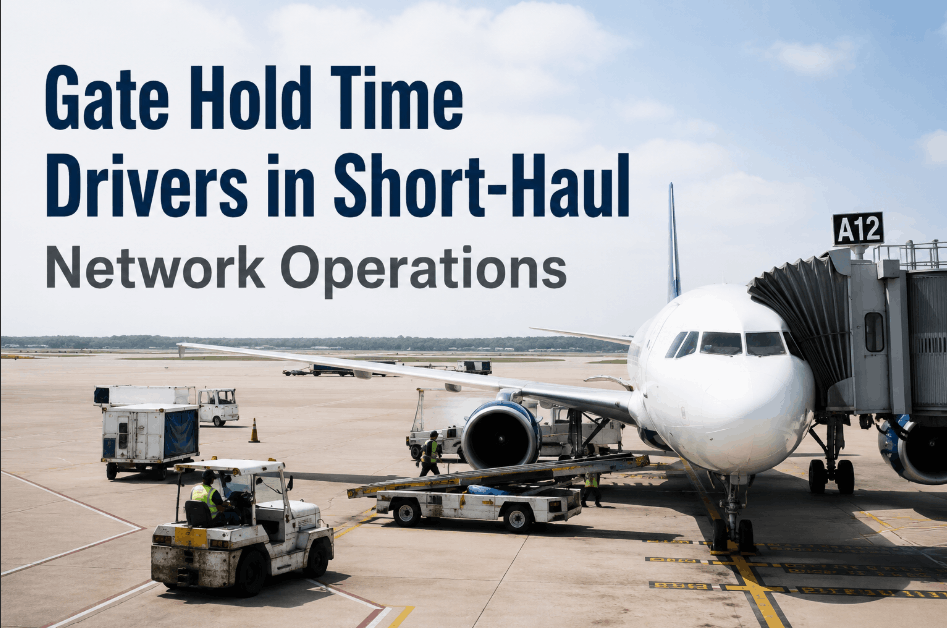
Gate Hold Time Drivers in Short-Haul Network Operations
Pinpoint boarding friction, service sequencing gaps, and coordination failures that stretch gate hold time in short-haul schedules and keep daily rotation windows on target.
42%Of short-haul departure delays originate in gate hold time variance rather than network-level schedule or ATC factors
−22%Hold time reduction in short-haul networks with structured boarding friction and service sequencing analytics programs
5× fasterProcess gap identification when per-rotation gate hold data replaces end-of-day delay reporting and supervisor recall
96%Documentation compliance with OxMaint's structured gate hold logging and mandatory work order closure workflows
6 Gate Hold Time Drivers That Accumulate in Short-Haul Network Schedules
Gate hold time in short-haul networks accumulates from small coordination gaps that individually appear manageable but collectively exceed the tight rotation margins that point-to-point schedules are built on. The six drivers below represent the most common documentation gaps in short-haul gate performance programs, and where OxMaint's structured inspection and workflow tools give operations teams the per-rotation data to act on hold time sources before they become a network schedule reliability problem. Sign Up Free to configure OxMaint's gate hold time tracking workflow for your short-haul network operations program.
01
Boarding Friction Not Logged Per Rotation
Driver Type: Process adherence gap
Highest Impact
Boarding friction — late passenger arrivals, gate agent sequencing delays, and jet bridge access timing — extends hold time at the point where the rotation schedule has the least recovery capacity. Without per-rotation boarding friction logging, the delay source remains a supervisor impression rather than a structured data point driving protocol adjustment.
02
Service Sequencing Gaps Not Attributed by Rotation
Driver Type: Coordination attribution gap
Operational Driver
Catering, cleaning, and cabin reset services that run out of sequence create holding queues that extend gate hold time beyond the minimum achievable turnaround window. Without per-rotation sequencing attribution, the specific service overlap or reset delay that produced the hold is absorbed into a total hold duration and not investigated.
03
Pushback Window Not Correlated With Service Completion
Driver Type: Dependency timing gap
Coordination Fault
Pushback windows that open before service completion create either a hold extension waiting for clearance or a service interruption that delays departure-ready status. Without correlating pushback window timing to service completion records per rotation, the scheduling mismatch that drives this hold remains invisible in aggregate delay reports.
04
Cab-In Reset Time Not Benchmarked Per Gate
Driver Type: Benchmark gap
High Impact
Cabin reset time varies significantly by gate, aircraft type, and crew configuration. Without benchmarking cabin reset completion per gate per rotation, operations teams cannot distinguish normal variance from process adherence failures — and cannot set the realistic rotation buffer that short-haul network scheduling requires.
05
Refuel Coordination Not Integrated With Boarding Timeline
Driver Type: Parallel process gap
Structural Gap
Refuelling that runs concurrently with boarding but is not coordinated to complete before door close extends the boarding-to-pushback window beyond schedule. Without integrating refuel completion records with boarding timeline logs per rotation, this parallel process gap recurs in every rotation window where the two sequences overlap.
06
Root Cause Not Captured at Gate Hold Close
Driver Type: Prevention loop failure
Prevention Input
Gate hold events resolved without a structured root cause entry lose their analytical value immediately. The same boarding friction or sequencing gap recurs in the next rotation because no corrective action was documented, validated, or reflected in the gate protocol. OxMaint requires root cause entry at work order closure — closing the prevention loop at every gate hold event.
Gate Hold Performance — Without vs. With OxMaint
The difference between end-of-day delay reporting and a CMMS-supported gate hold analytics program is visible in rotation schedule adherence, protocol accuracy, and the operational documentation that airline network performance reviews require. Book a Demo to walk through your short-haul gate program and identify where OxMaint's hold time tracking workflows close the performance documentation gaps.
Gate Hold Time Management Maturity — Where Does Your Network Score?
Gate hold time management capability in short-haul network operations ranges from entirely reactive — delays absorbed into schedule buffer until airline performance flags accumulate — to fully structured CMMS-supported programs with per-rotation baseline logging, process attribution, and compliance-ready documentation. Book a Demo to assess your short-haul gate performance program maturity with an OxMaint solutions engineer.
Short-Haul Gate Hold Time Management Maturity
Score 5 = structured CMMS-supported analytics program · Score 1 = reactive delay absorption only
5
Full Hold Analytics · CMMS-Integrated · Attribution-Level Reporting
Boarding friction, service sequencing adherence, pushback correlation, and cabin reset benchmarks logged per gate per rotation. Root cause captured at work order close and reflected in next gate protocol update.
Profile: Gate hold time is a managed, network-visible metric. Hold variance drives protocol updates — not schedule buffer expansion.
4
Structured Logging · Partial Attribution
Hold durations logged per rotation with gate reference. Boarding friction and sequencing gaps not consistently attributed by source. Root cause captured informally but not structured into work order close requirement.
Action: Add source attribution and work order closure root cause requirements. Per-driver hold data is the next capability that separates gate performance management from gate performance recording.
3
Work Order Logging · Reactive Protocol Response
Significant holds logged in CMMS after debrief. Protocol adjustments reactive — triggered by airline performance flags rather than structured hold threshold. Sequencing adherence not logged per rotation.
Gap: Reactive protocol response consistently follows rather than prevents hold recurrence. Per-rotation baseline logging is the highest-impact next step.
2
Informal Debrief · Flag-Driven Action
Gate hold management driven by airline delay reports or gate supervisor escalation. No structured hold logging per rotation. Hold variance absorbed into schedule buffer rather than investigated per driver.
Risk: Hold time accumulates across rotation windows without a structured detection pathway. Schedule buffer erosion is the first visible signal of a systemic gate performance problem.
1
No Gate Hold Analytics Structure
Short-haul gate performance managed through schedule system delay codes and verbal debrief only. No documentation of boarding friction, sequencing adherence, or pushback correlation between reporting periods.
Risk: Hold time drivers are invisible until they accumulate to network performance threshold. No prevention pathway without structured per-rotation gate hold documentation.
Pinpoint Every Gate Hold Driver Before It Compounds Across the Network's Daily Schedule.
OxMaint structures boarding friction logging, service sequencing attribution, and gate hold documentation in one CMMS platform built for short-haul network operations and ground handling teams.
How OxMaint Structures Short-Haul Gate Hold Time Management
OxMaint connects structured gate hold logging checklists, condition-triggered coordination tasks, and hold time attribution documentation into a single workflow for short-haul network operations teams. Every rotation produces a baseline hold record — boarding friction noted, sequencing adherence logged, pushback correlation captured — with findings exceeding threshold converted into structured protocol tasks and root cause entries that update gate schedules automatically. Sign Up Free to build your short-haul gate hold analytics program in OxMaint. Book a Demo to see how OxMaint adapts to your network's rotation frequency, gate structure, and airline performance reporting requirements.
Per-Rotation Hold Logging
Per Gate, Per Rotation
Hold time with boarding friction and sequencing fields
OxMaint inspection checklists capture gate hold duration, boarding friction source, service sequencing adherence, and pushback correlation — logged per gate per rotation and compared to baseline with deviation flagged at threshold.
Hold Driver Attribution
Cause-Level Visibility
Boarding vs. sequencing vs. coordination hold separated
OxMaint hold records attribute gate time to specific drivers — boarding friction, service sequence gap, pushback window mismatch, or cabin reset variance — giving network teams the cause-level data that drives protocol adjustment to the right intervention point.
Network Variance Reporting
Gate vs. Gate · Period vs. Period
Hold variance visible across the rotation network
OxMaint compiles per-rotation hold records into gate-level variance trend reports — showing hold accumulation by period, comparing gates for protocol prioritization, and providing the documentation that airline network performance reviews require.
Root Cause Closure
Every Work Order
Prevention trigger captured at gate hold close
CMMS closure requires root cause entry on all gate hold work orders. Completion triggers gate protocol review — ensuring the same boarding friction or sequencing gap doesn't recur through the next rotation window without a documented schedule adjustment.
"
We managed gate operations across a ten-gate short-haul terminal with morning and afternoon peak windows consistently running 8–14 minutes over target gate hold times. Before OxMaint, our delay analysis relied on airline delay codes and shift supervisor recall — useful for reporting but never granular enough to drive protocol change. After logging per-rotation gate hold data in OxMaint with boarding friction and sequencing attribution fields, we identified that 65% of our morning hold variance came from cabin reset timing at three specific gates where the cleaning sequence was competing with refuel completion. Adjusting the service sequence protocol for those three gates brought morning hold variance within target in six weeks and cleared four consecutive airline performance warning thresholds.
Terminal Operations Manager — Short-Haul Network Airport, 10-gate terminal, Western Australia
Frequently Asked Questions
What drives gate hold time in short-haul network operations?
Gate hold time in short-haul networks is driven by boarding friction, service sequencing gaps, pushback window misalignment, cabin reset variance, and crew coordination delays — each adding minutes to a rotation budget that short-haul schedules have minimal capacity to absorb without network delay propagation.
How does per-rotation gate hold logging improve schedule performance?
Per-rotation logging converts individual hold events into comparable trend data — identifying which gates, periods, and process sequences are consistently producing hold variance and enabling protocol-level intervention before delay accumulates to airline reporting threshold.
Can OxMaint attribute gate hold time to specific service sequence gaps?
Yes. OxMaint gate hold checklists include source attribution fields that separate boarding friction from sequencing gaps, pushback misalignment, and cabin reset variance — directing corrective action to the specific process driver rather than the aggregate hold duration.
How does OxMaint support airline network performance reporting?
OxMaint's per-rotation hold records, attribution logs, and work order history compile into structured reports that provide the documentation airlines and ground handlers need for network performance reviews and SLA compliance evidence.
How often should gate hold analytics be reviewed for protocol adjustment?
High-rotation short-haul gates warrant weekly trend review during peak schedule periods; lower-frequency gates monthly. OxMaint supports configurable review intervals and hold threshold alerts per gate within the same network operations program.
Turn Every Gate Hold Into a Structured Performance Record — Not Just a Schedule Delay Code.
OxMaint structures boarding friction logging, service sequencing attribution, and gate hold documentation for short-haul network operations teams — giving ground handling management the analytics to cut hold variance, protect rotation schedules, and satisfy airline network performance reporting requirements.