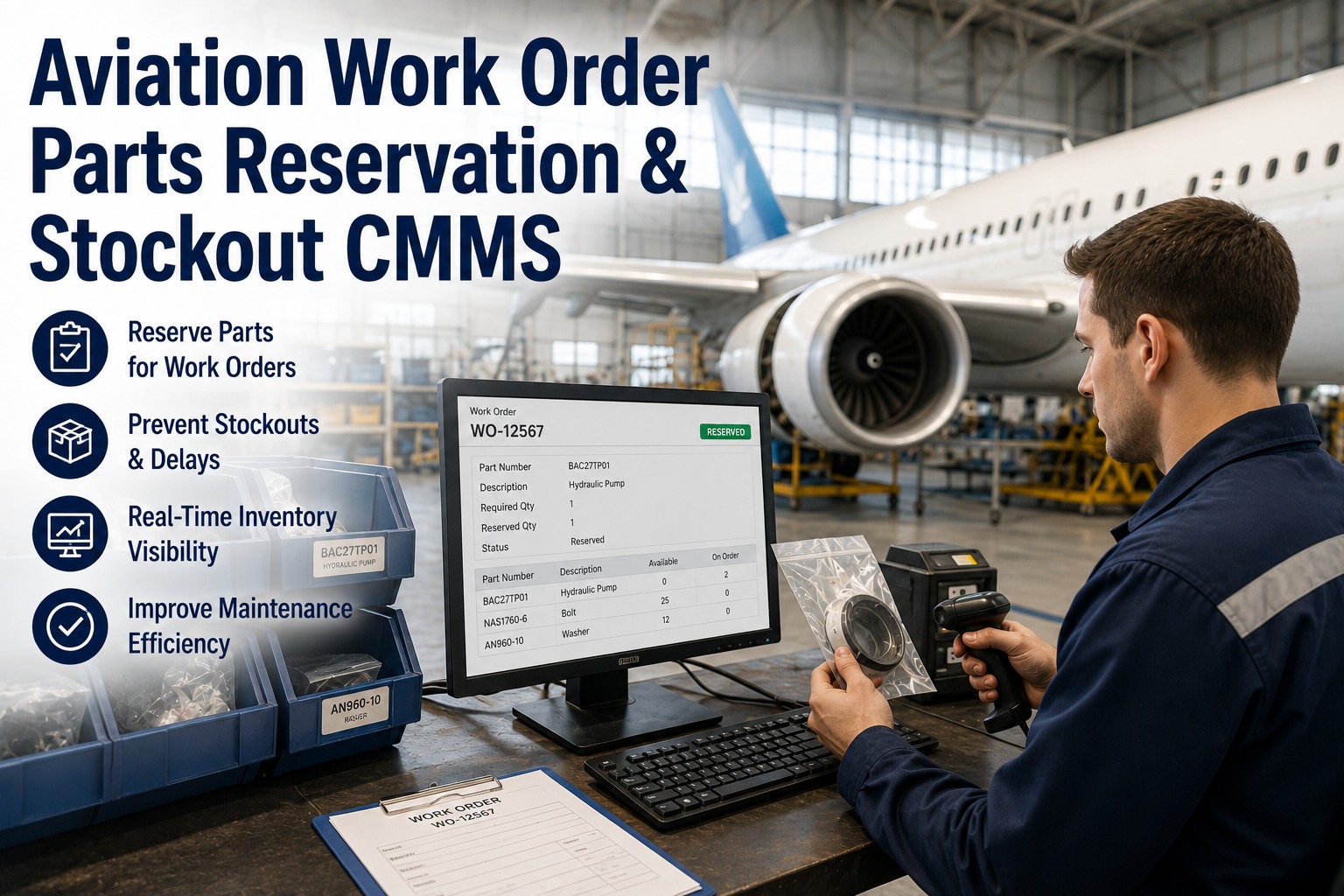
Cargo operators running tight maintenance cycles rarely overspend on parts from a single large purchase gone wrong — they overspend incrementally, through expedited shipping fees on parts that should have already been on the shelf, emergency orders triggered because reorder points were never updated to reflect actual consumption, and repair delays caused by a part that was theoretically in inventory but couldn't be located when the technician needed it. A cargo aircraft maintenance operation managing parts across two facilities found that its procurement cycle was consistently reactive: reorder planning was done manually from memory rather than from demand curves, shelf-life tracking depended on individual technician awareness, and part traceability in the inventory system didn't match what was physically in the bins. Sign Up Free to see how Oxmaint structures parts reorder planning and traceability for cargo maintenance operations — or Book a Demo with an aviation parts management specialist.
Reorder Planning · Stock Rotation · Part Traceability
Stop Paying Expediting Premiums for Parts That Should Already Be on the Shelf
Demand-driven reorder planning, shelf-life tracking, bin accuracy, and full part traceability from receipt to installation — Oxmaint helps cargo maintenance teams cut expediting costs and repair delays.
Operation Profile
The Operation: A Cargo Maintenance Team Managing Parts Inventory Without Demand-Based Reorder Rules
Operation Overview
IndustryCargo aviation maintenance — line and heavy maintenance at two operating facilities
Scope2 facilities, 1,840 active part numbers, 14 aircraft in fleet with mixed airframe types
Team3 stores technicians, 2 procurement coordinators, 1 maintenance planning manager
Prior SystemSpreadsheet-based inventory, manual reorder decisions, paper shelf-life logs, physical bin counts
Oxmaint FeaturesAsset Management · Work Orders · Preventive Maintenance · Inspection Management · Analytics & Reporting
Baseline Inventory Issues
34%
Of parts procurement in the prior year involved expedited shipping due to unexpected stockouts
18%
Of shelf-life-controlled parts found expired or untracked during the last physical audit
2.8 days
Average repair delay attributable to parts location or availability issues per maintenance event
Root Cause Analysis
Why Expediting Costs Kept Rising Despite Adequate Overall Inventory Spend
A structured review of procurement records, inventory audits, and maintenance delay reports across both facilities identified four systemic gaps in how parts demand was planned, tracked, and controlled. The total parts budget was not insufficient — the problem was that the right parts were not available at the right time in the right location. Sign Up Free to bring demand-based reorder rules and traceability to your cargo parts operation — or Book a Demo to see inventory planning live.
39%
Reorder Points Set From Memory, Not Consumption Data
Procurement coordinators relied on historical knowledge rather than actual demand curves to set reorder triggers, consistently over-stocking slow-moving parts and under-stocking high-consumption items.
28%
Shelf-Life Tracking Depended on Individual Technician Awareness
No system surfaced approaching shelf-life expiry dates, so expired parts were only discovered during physical audits rather than before they reached the point of being unusable and requiring emergency replacement.
21%
Bin Accuracy Didn't Reflect What Technicians Actually Found on the Shelf
Inventory records showed quantities that diverged from physical bin counts because part movements through work orders and returns were not consistently logged, making stock-level data unreliable for reorder decisions.
12%
No Traceability From Part Receipt Through Installation
Parts could not be reliably traced from receipt to specific work order installation, making warranty claims difficult to support and airworthiness documentation incomplete for audit and regulatory review.
The Solution
How Oxmaint Brought Demand Planning and Traceability to Cargo Spare Parts Management
The cargo maintenance team deployed Oxmaint to connect parts consumption from work orders directly to reorder planning, automate shelf-life expiry alerts, and create a traceable record from part receipt through installation. Book a Demo to walk through cargo parts inventory configuration on a live Oxmaint system.
01
Reorder Points Generated From Actual Work Order Consumption Data
Oxmaint tracks part usage through work order completion records and uses actual consumption rates to calculate and update reorder points automatically, replacing memory-based procurement decisions with data-driven triggers.
02
Automated Shelf-Life Expiry Alerts Before Parts Become Unusable
Shelf-life expiry dates are tracked per part number in Oxmaint, with automated alerts generated when parts are approaching their limit — giving stores enough lead time to pull, replace, or plan usage before expiry rather than discovering it during an audit.
03
Work Order Part Issue Records Maintain Real-Time Bin Accuracy
Every part movement in Oxmaint — issue to work order, return to stock, cross-facility transfer — updates the inventory record in real time, keeping bin quantities accurate and eliminating the discrepancy between system records and physical stock.
04
End-to-End Traceability From Receipt to Work Order Installation
Oxmaint records the complete lifecycle of each part from goods receipt through installation on a specific work order and aircraft, creating a traceable history that supports warranty claims, airworthiness documentation, and regulatory audit requirements.
Results at 90 Days
Expediting Cost Reduction, Inventory Accuracy, and Repair Continuity After Deployment
52%
Reduction in parts procurement events requiring expedited shipping fees
97%
Bin accuracy rate for active part numbers — up from approximately 74% at baseline
0
Expired shelf-life-controlled parts discovered in the post-deployment audit cycle
71%
Reduction in average repair delay time attributable to parts location or availability
100%
Of part movements now traceable from receipt through work order installation
2.9×
ROI on Oxmaint platform cost within 90 days from reduced expediting spend and delay costs
| Metric | Before Oxmaint | 90 Days After | Change |
|---|
| Expedited procurement events | 34% of orders | 52% reduction | -52% |
| Bin accuracy rate | ~74% | 97% | +23% |
| Expired shelf-life parts at audit | 18% of controlled parts | 0 found | -100% |
| Repair delay from parts issues | 2.8 days average | 71% reduction | -71% |
| Part movement traceability | Inconsistent | 100% traceable | Unified |
| Platform ROI | Not measured | 2.9× within 90 days | 2.9× |
Key Business Impact
What Demand-Driven Parts Planning Means for Cargo Maintenance Cost Control
Cargo maintenance operations don't overspend on parts because procurement is careless — they overspend because the reorder system is disconnected from the actual consumption data sitting in the work orders. When reorder points are calculated from demand curves rather than memory, and every part movement updates the bin record in real time, the stockout events that drive expediting costs stop happening. Shelf-life expiry stops being an audit discovery and starts being managed weeks in advance. Oxmaint gives parts planning teams that connection without replacing their stores processes or procurement workflows.
Adaeze Nwosu, Aviation Parts Planning and Maintenance Supply Chain Specialist
13 years cargo aviation maintenance supply chain · Former stores manager, international cargo carrier MRO · Specialist in parts demand planning, shelf-life control, and expediting cost reduction programs
Demand Planning · Shelf-Life Control · Full Traceability
Give Your Cargo Parts Operation the Reorder Discipline Your Repair Schedule Depends On
Consumption-based reorder planning, automated shelf-life alerts, real-time bin accuracy, and end-to-end part traceability — Oxmaint helps cargo MRO teams cut expediting costs and maintain repair continuity.
FAQs
Frequently Asked Questions
How does Oxmaint calculate reorder points for aviation spare parts?
Oxmaint uses actual part consumption recorded through work order completions to calculate and update reorder points dynamically, replacing manual estimates with demand-driven triggers.
Can Oxmaint track shelf-life expiry dates for aviation controlled parts?
Yes. Shelf-life expiry dates are recorded per part in Oxmaint, with automated alerts generated before expiry so stores teams can act ahead of time rather than discovering expired parts at audit.
How does Oxmaint maintain bin accuracy for aircraft spare parts inventory?
Every part movement — issue to work order, return to stock, transfer — updates inventory records in real time in Oxmaint, keeping bin quantities accurate and aligned with physical stock.
Does Oxmaint support traceability requirements for airworthiness documentation?
Yes. Oxmaint records each part's lifecycle from receipt through work order installation on a specific aircraft, creating the traceable history needed for airworthiness, warranty, and regulatory audit purposes.
How long does it take to set up inventory and reorder rules in Oxmaint for a cargo operation?
Most cargo maintenance teams have their active part catalog, reorder rules, and shelf-life controls configured in Oxmaint within three to four weeks of initial deployment.
Every Part, One Traceability Standard
Bring Demand Planning and Parts Discipline to Your Cargo Maintenance Operation
Oxmaint brings consumption-based reorder planning, automated shelf-life alerts, real-time bin accuracy, and full part traceability to cargo aviation maintenance teams.