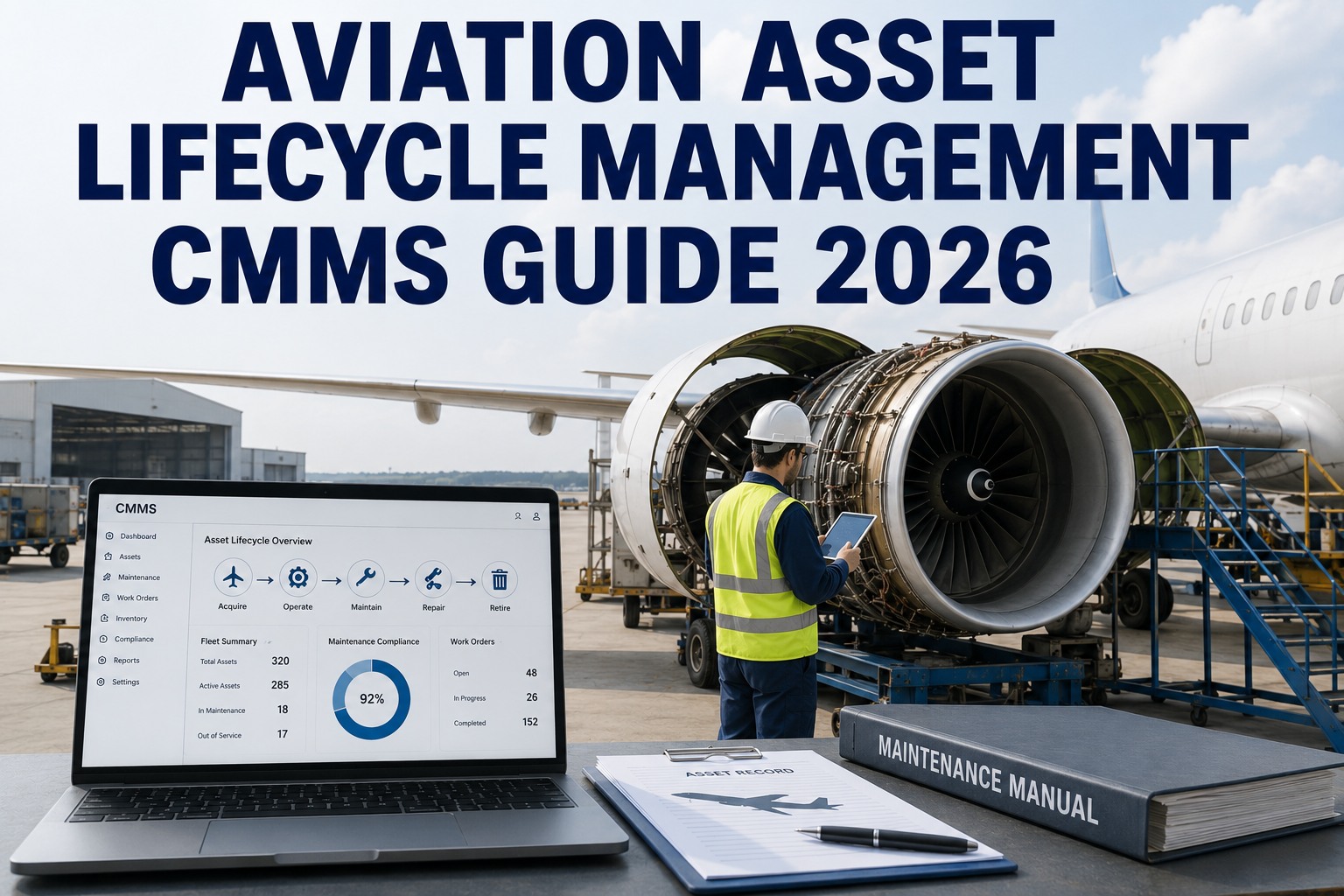
Aviation asset lifecycle planning is one of the most capital-intensive decisions in fleet and ground operations management — not because teams lack data, but because age profiles, overhaul intervals, and upgrade path signals are tracked in disconnected systems that never produce a unified renewal picture. When every asset moves through the same fixed replacement cycle regardless of actual condition trend or risk score, capital committee decisions get made on schedule logic rather than operational evidence. The structural gap is consistent: no documented age profile by asset class, no link between condition trend and renewal trigger, no salvage value analysis connected to capex ranking decisions. This checklist helps aviation maintenance managers, reliability engineers, and asset planning leads confirm that every asset in the portfolio has a defensible lifecycle position — so replacement and extension decisions are driven by performance data, not default overhaul intervals. Oxmaint's Sign Up Free platform gives aviation teams digital asset lifecycle tracking, condition-based renewal triggers, and end-of-life risk scoring by asset class, service life position, and operational consequence — so capital planning reflects actual fleet condition rather than calendar assumptions. From age profile documentation to upgrade path alignment, unstructured lifecycle decisions are one of the most correctable sources of misallocated capital in aviation asset management. Book a Demo to see how Oxmaint connects asset condition trends to renewal decisions, capex ranking, and capital committee submissions — so the highest-risk assets reach the planning queue before unplanned failure forces the decision. Use this checklist before your next capital planning cycle to confirm that every aviation asset has a documented lifecycle position, a current condition assessment, and a clear path to renewal or extension.
1. Age Profile Documentation & Service Life Position
Lifecycle planning begins with knowing where every asset sits relative to its designed service life. Before scoring renewal triggers or comparing upgrade paths, confirm that each asset's age profile is documented, current, and accessible to both maintenance and capital planning teams.
2. Condition Trend Assessment & Renewal Trigger Criteria
Age alone does not determine when an asset should be renewed. Confirm that condition trend data — repair frequency, defect escalation rate, and performance degradation — is captured and scored against defined renewal trigger thresholds before lifecycle decisions reach capital planning.
3. Upgrade Path Evaluation & Technology Alignment
Lifecycle decisions are not binary between extend and replace. Confirm that upgrade path options — avionics refresh, engine performance package, structural life extension — are evaluated against replacement cost before the capital committee receives a recommendation.
4. Salvage Value Assessment & Disposal Planning
Salvage value at end-of-life directly affects the net cost of asset renewal and the timing of the replacement decision. Confirm that salvage recovery estimates are current, sourced from market data, and integrated into capex ranking before capital budget submission.
5. Renewal Plan Governance & Capital Planning Cadence
A renewal plan without a defined review cadence, an assigned owner, and a capital committee submission process is a document rather than a planning tool. Confirm that aviation asset lifecycle decisions move through a structured governance process with defined triggers and documented outcomes.