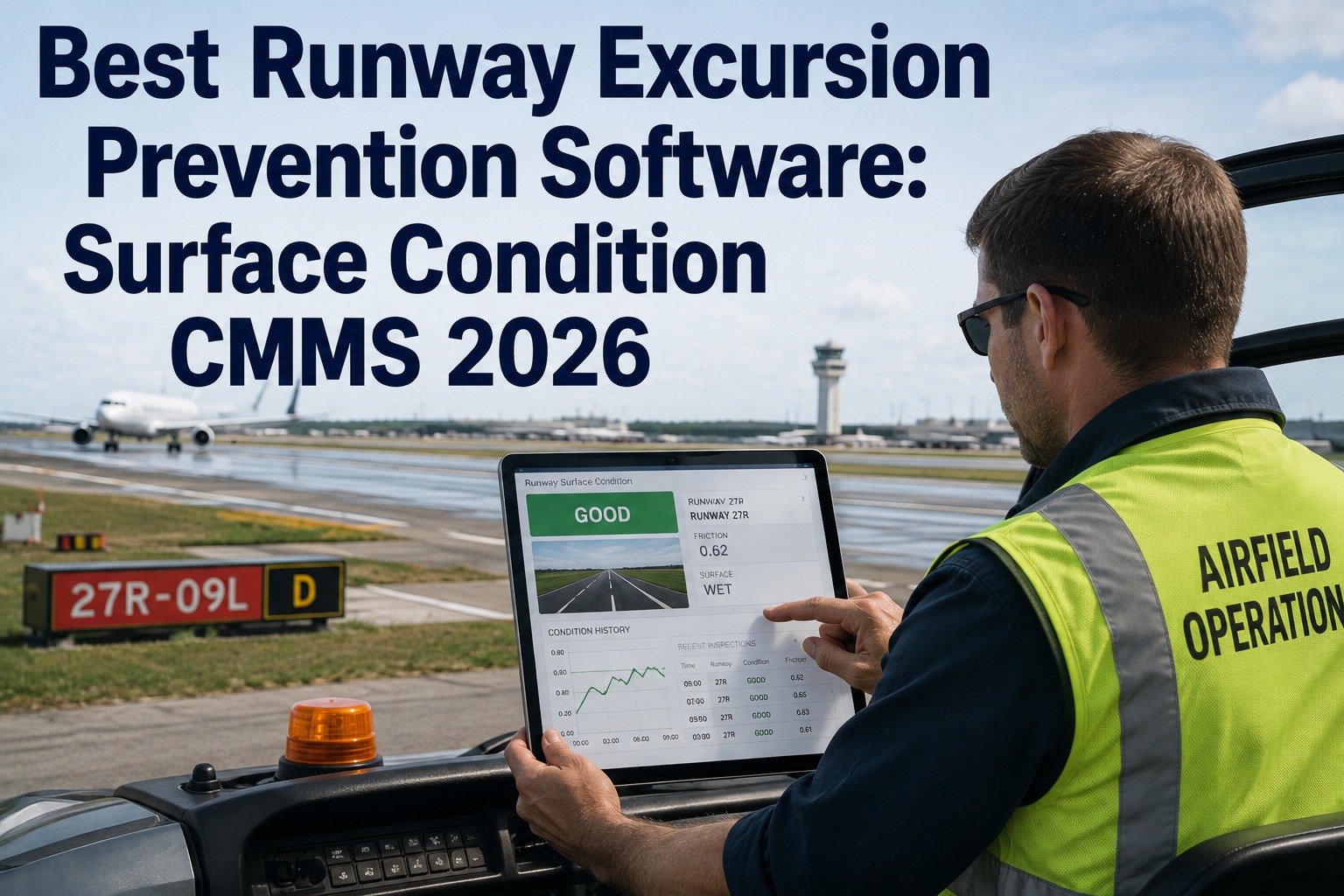
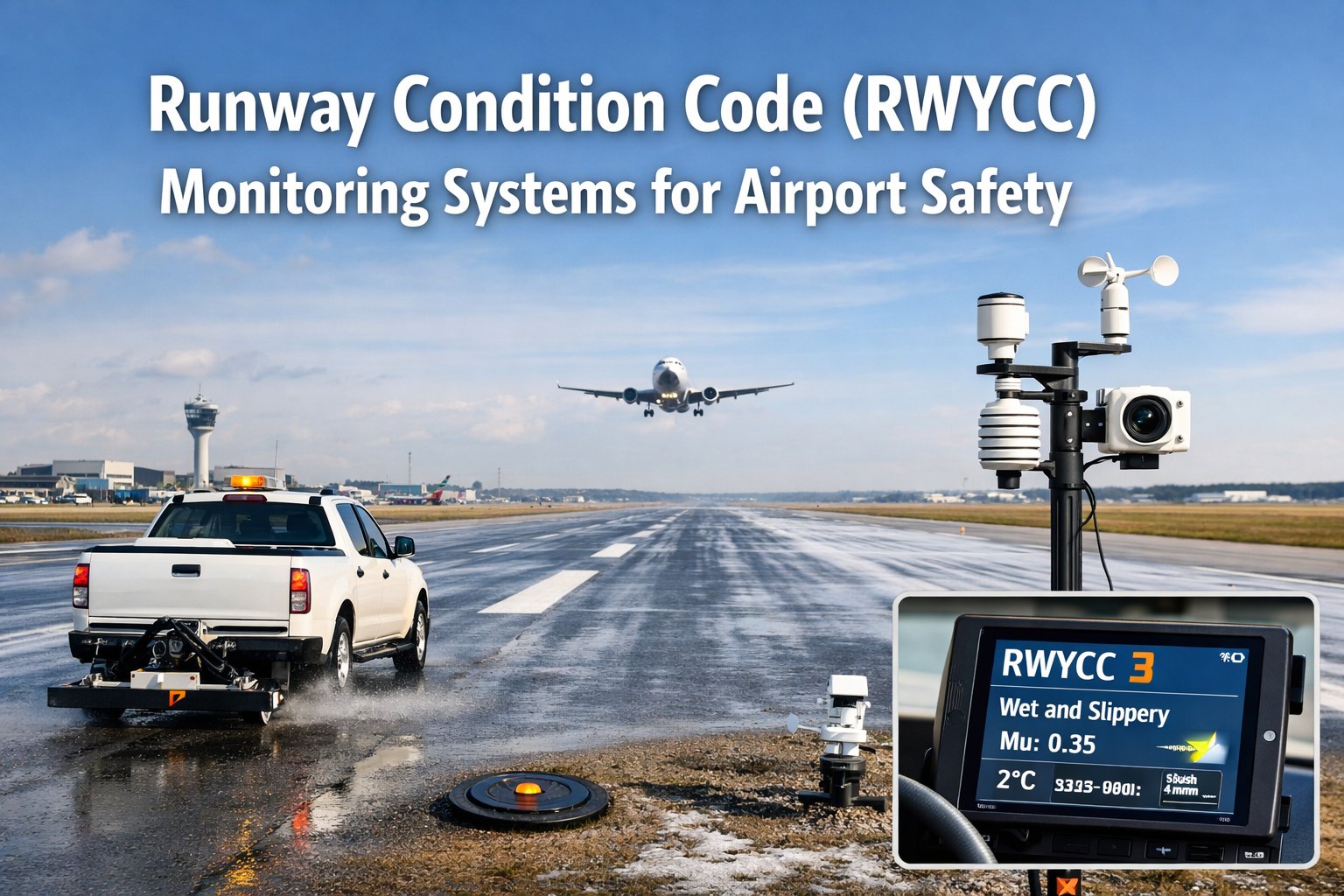
A contaminated runway you cannot see is a runway you cannot trust. Every year, runway excursions account for 21% of all serious commercial aviation accidents — and poor surface conditions are a leading trigger. OXmaint's IoT-powered runway condition monitoring gives your airfield operations team real-time visibility into temperature, moisture, friction, and ice risk across every meter of pavement — 24 hours a day, 365 days a year. Book a demo to see how continuous monitoring replaces guesswork with data.
Why Runway Surface Conditions Are Aviation's Silent Threat
Runway excursions — aircraft veering off or overrunning the runway — remain one of ICAO's top five global high-risk categories. Between 2018 and 2024, they caused 189 serious accidents and 88 fatalities worldwide. The root cause in most cases is deceptively simple: the operations team did not know the exact surface condition at the moment it mattered most.
21%
of serious aviation accidents globally are runway excursions (2018–2024)
12%
of all scheduled aircraft accidents between 2017–2023 involved runway excursions
96%
of all runway accidents are attributed to runway excursions specifically
The Chain Reaction of Unmonitored Runway Conditions
Temperature drops below freezing
Moisture forms invisible ice film
Friction drops below safe threshold
Aircraft cannot stop within runway length
What OXmaint Monitors — And How Sensors Replace Guesswork
OXmaint connects to embedded pavement sensors, vehicle-mounted friction testers, and weather observation systems to create a unified, real-time picture of your runway surface. Every data point feeds into a centralized dashboard that updates continuously — not once per inspection cycle.
Three sensor layers. One unified dashboard. OXmaint correlates pavement, vehicle, and weather data so your team sees the complete picture — not fragments from separate systems.
Start Free
From Sensor Data to ICAO GRF Compliance — Automatically
The ICAO Global Reporting Format (GRF), applicable worldwide since November 2021, requires airports to assess and report runway surface conditions using standardized Runway Condition Codes (RWYCC 0–6). OXmaint automates the entire assessment-to-reporting workflow so your team spends less time on paperwork and more time on safety decisions.
1
Continuous Data Capture
Embedded sensors and mobile units capture surface temperature, water film, friction, and contamination data across all runway thirds
2
AI Correlation with RCAM
System correlates sensor readings with the Runway Condition Assessment Matrix to suggest preliminary RWYCC for each runway third
3
Inspector Validation
Trained inspector reviews sensor data and visual observations to confirm, upgrade, or downgrade the preliminary RWYCC assessment
4
Automated Report Distribution
Validated Runway Condition Report is auto-formatted for SNOWTAM, ATIS broadcast, and ATC coordination — complete audit trail included
The RWYCC Scale — What Your Sensors Are Telling You
Understanding how sensor readings map to Runway Condition Codes helps your operations team make faster, more accurate assessments. Here is the complete RWYCC scale that OXmaint uses to classify runway conditions automatically.
6
DRY
Full braking performance available
5
WET / Frost
Good braking action expected
4
Compacted Snow / Slush
Medium-good braking action
3
Wet Snow / Dry Snow >3mm
Medium braking action
2
Standing Water / Slush >3mm
Medium-poor braking action
0
WET ICE / Wet over Compacted Snow
Unreliable braking — consider closure
Manual Inspections vs. IoT Monitoring — The Gap That Costs Lives
Manual runway inspections remain essential under GRF — but relying on them alone creates dangerous blind spots. Here is how sensor-augmented monitoring compares to traditional inspection-only approaches across the metrics that matter most.
Monitoring frequency
Every 30–60 minutes
Continuous (every second)
Ice detection speed
Next scheduled inspection
Within 30 seconds of formation
Coverage per assessment
Visual spot checks
Full runway, all three thirds
GRF report generation
Manual form entry (10–15 min)
Auto-generated in seconds
Night / low-visibility accuracy
Significantly reduced
Unaffected by visibility
Predictive capability
None — reactive only
AI alerts before conditions form
80%
Fewer unexpected runway closures with predictive monitoring
60%
Faster audit preparation with automated compliance documentation
25–40%
Reduction in de-icing chemical costs through data-driven application
What Gets Monitored Across Your Airfield
Runway condition monitoring is just the starting point. OXmaint extends the same sensor intelligence to every paved surface and critical infrastructure system on your airfield — from taxiway lighting to apron drainage.
Runway Surfaces
Surface temperature monitoring
Ice and frost detection
Standing water measurement
Friction coefficient tracking
Rubber buildup assessment
Taxiways & Aprons
Pavement condition index
Crack and spalling detection
Drainage system performance
Surface contamination alerts
Load stress monitoring
Airfield Lighting & Systems
Approach and runway lighting
Taxiway edge light status
Navigation aid performance
Wind direction indicators
Emergency power systems
What Airfield Operations Leaders Are Saying
Airport safety directors, airfield operations managers, and infrastructure teams across major hubs are replacing reactive inspections with sensor-driven monitoring. Here is what they report after implementing IoT runway condition systems.
KN
Karen Novak
Director of Airfield Safety, Major Northern U.S. Hub Airport
We used to lose 90 minutes every storm event just generating condition reports and coordinating SNOWTAM updates. Now the system pre-populates RWYCC codes the moment sensor thresholds change, and our inspectors validate in under two minutes. During last winter's polar vortex, we kept both runways operational while three neighboring airports went to single-runway ops because they could not assess conditions fast enough.
92%
Reduction in GRF reporting time
0
Undetected ice events in first winter season
$340K
Saved in avoided runway closure delays
TA
Thomas Achterberg
Airfield Infrastructure Manager, European International Airport
The embedded pavement sensors changed how we think about de-icing. Instead of treating the entire runway on a fixed schedule, we now apply chemicals only where and when sensor data shows freezing point depression. Our chemical consumption dropped 35% in the first season — and our friction readings actually improved because we were not over-treating surfaces.
PS
Priya Sharma
Airport Safety Director, Asia-Pacific Regional Airport Authority
Monsoon season was our compliance nightmare — conditions change every few minutes and manual inspections simply could not keep up. With continuous moisture and friction monitoring, our RWYCC updates now happen in real time. Our ICAO audit last quarter was the cleanest we have ever had. The inspector specifically cited our automated audit trail as a model for other airports in the region.
MR
Michael Reeves
VP of Operations, Mid-Size U.S. Regional Airport
We are a smaller airport with a 12-person airfield crew. We could not justify a 24/7 inspection team during winter. The IoT sensors gave us continuous monitoring without adding headcount. When a freezing rain event hit at 3 AM last January, the system flagged a RWYCC drop from 5 to 2 within minutes and auto-generated the SNOWTAM. Our on-call supervisor confirmed and published — all before the first morning arrival.
Frequently Asked Questions
Does IoT monitoring replace the need for human runway inspectors?
No. ICAO GRF still requires trained human inspectors to validate runway condition assessments. OXmaint augments inspectors with continuous sensor data, making their assessments faster, more accurate, and better documented. The system suggests preliminary RWYCC codes based on sensor readings, which inspectors then confirm or adjust.
What types of sensors does OXmaint integrate with?
OXmaint supports embedded pavement sensors (surface temperature, water film depth, freezing point, ice percentage), vehicle-mounted friction testers that capture 100 measurements per second, and airport weather observation systems. The platform uses REST and SQL integrations to connect with your existing sensor infrastructure.
Book a demo to discuss your specific sensor setup.
How does OXmaint help with ICAO GRF compliance?
OXmaint automates RWYCC assessment using the Runway Condition Assessment Matrix (RCAM), generates standardized Runway Condition Reports (RCR), and formats them for SNOWTAM and ATIS distribution. Every assessment, validation, and report is logged with timestamps for complete audit trail compliance.
Can we start without embedded sensors already installed?
Yes. OXmaint works with manual inspection inputs, weather station data, and vehicle-mounted sensor data. You can start with your current infrastructure and add embedded pavement sensors over time. The platform delivers value at every level of sensor deployment.
Start your free trial to see how.
Your Runway Conditions Are Changing Right Now. Are You Watching?
Connect OXmaint to your airfield sensors and see real-time surface conditions, automated GRF reporting, and predictive safety alerts — before conditions become incidents.