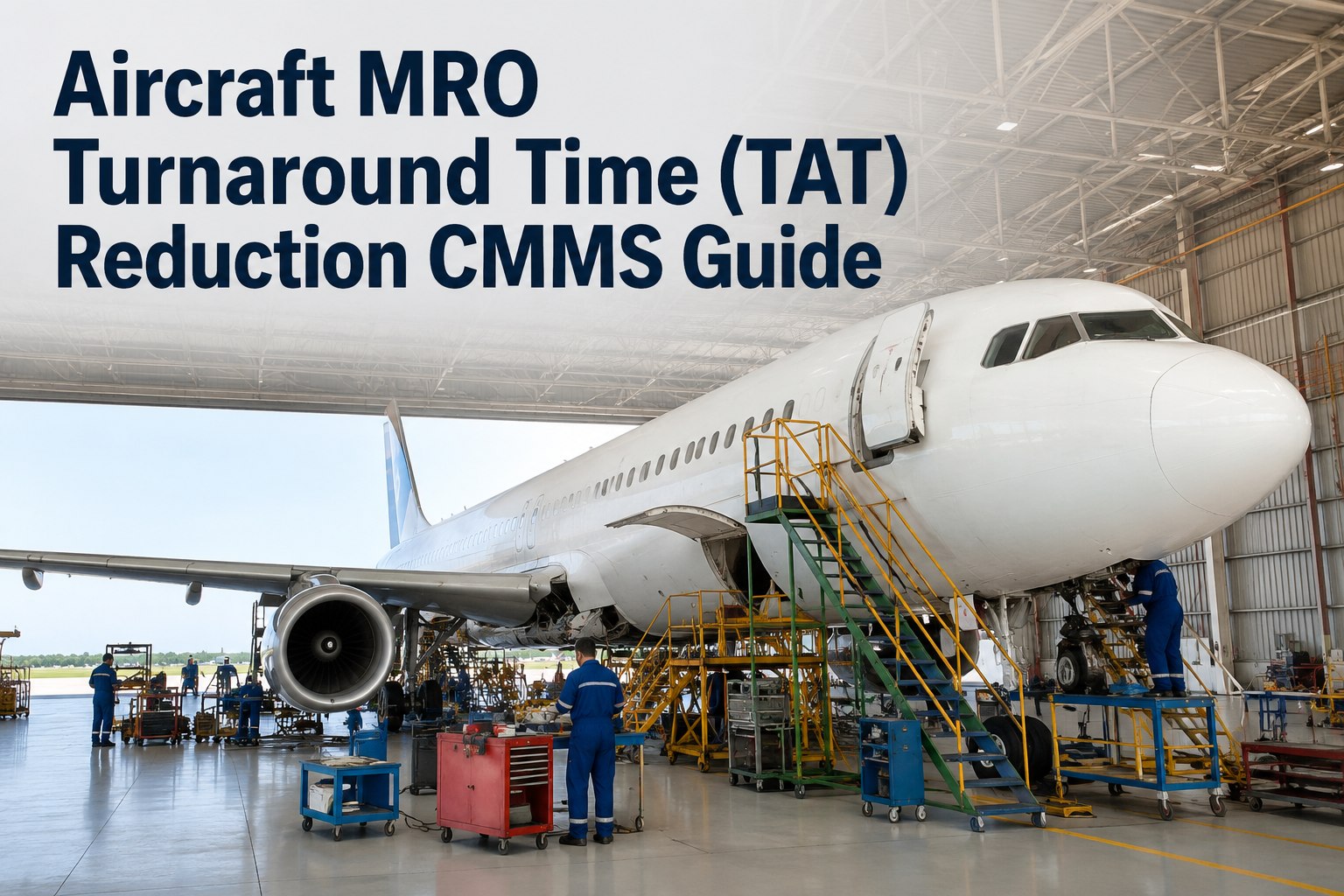
Every hour an aircraft spends on the ground instead of in the air is revenue that never returns. Across global aviation, ground time accumulates into billions of dollars in lost productivity each year — not because of bad weather or air traffic control, but because of fixable maintenance inefficiencies. Airlines and MRO operators that have cracked the TAT code share one common trait: they replaced reactive maintenance workflows with structured, data-driven turnaround systems. If you are still running on clipboards, email chains, and end-of-shift verbal handoffs, this is where the gap starts. Start a free trial and see how smarter scheduling changes your ground time numbers from day one.
MRO OPERATIONS INTELLIGENCE
How to Reduce Aircraft Turnaround Time (TAT): Proven MRO Strategies
Ground time is your most controllable cost. These are the maintenance strategies that actually compress it — backed by real operational data from airlines, MRO providers, and ground operations teams worldwide.
47 min
Average narrow-body TAT target for low-cost carriers
$18K
Estimated cost per hour of unplanned ground delay
35%
TAT reduction achievable with structured MRO planning
4.8x
Higher cost of emergency repairs vs. preventive maintenance
UNDERSTANDING TAT
What Is Aircraft Turnaround Time — And Why Does It Define Your Operation?
Aircraft Turnaround Time (TAT) is the elapsed period between an aircraft's arrival at the gate and its departure on the next scheduled flight. It is the single most compressed, high-stakes window in commercial aviation — a race against the clock that involves fuel trucks, cabin crews, baggage handlers, engineers, catering vehicles, and maintenance technicians, all operating simultaneously in a space the size of a basketball court.
For MRO operations and maintenance teams specifically, TAT refers to how long a maintenance task — whether a line check, scheduled inspection, or component replacement — occupies an aircraft out of service. A poorly planned maintenance TAT doesn't just cost time. It pulls aircraft from revenue service, forces airline operations teams to juggle fleets, and cascades into delays that affect hundreds of passengers. Want to take back control of your maintenance windows? Start a free trial and run your first optimized maintenance schedule today.
01
Line Maintenance TAT
Routine between-flight checks, minor defect rectification, and pre-flight inspections. Typically targeted at 30–90 minutes depending on aircraft type and check scope.
02
Base Maintenance TAT
Heavy checks (A, C, D checks) conducted in hangars. TAT ranges from overnight to several weeks. Planning efficiency here directly determines fleet availability.
03
Component MRO TAT
Time taken to repair or overhaul removed components — APUs, landing gear, avionics, engines. Spares pooling and workshop scheduling drive this metric significantly.
04
AOG Resolution TAT
The critical-path scenario: Aircraft on Ground due to unscheduled defects. Every minute here compounds operational and financial damage. Preparation is the only effective strategy.
ROOT CAUSES
Why TAT Overruns Keep Happening
Most TAT overruns are not caused by technical complexity. They are caused by process failures that repeat themselves shift after shift because no one has built a system to prevent them. Recognizing these patterns is the first step toward structural improvement.
PARTS & MATERIALS
Spares Not Ready at Job Card Time
Technicians arrive at an aircraft to perform a task, only to discover the required part is in stores across the facility, awaiting kitting, or on back-order. Industry data shows parts delays account for up to 30% of unplanned maintenance time loss.
INFORMATION FLOW
Incomplete or Late Shift Handoffs
When the outgoing shift documents work incompletely, the incoming team loses 15–45 minutes reconstructing task status. Across a 24-hour operation, this is a structural productivity drain that compounds daily.
SCHEDULING
Task Bunching and Resource Conflicts
When multiple aircraft arrive simultaneously for overnight checks and technician allocation hasn't been pre-planned, work stalls. A single scheduling conflict can push a 6-hour check into a 10-hour event.
DISCOVERED DEFECTS
Unexpected Findings During Inspections
While not fully preventable, undocumented asset history and lack of condition-based tracking means teams are regularly surprised by corrosion, wear, or component degradation that could have been anticipated weeks earlier.
TOOLING
Special Tools Unavailable or Unaccounted For
Specialist tooling shared across multiple work bays, with no tracking system, causes delays that look small on paper — 20 minutes here, 30 minutes there — but aggregate into significant TAT extensions over a week of operations.
COMPLIANCE
Documentation Bottlenecks at Sign-Off
In regulated maintenance environments, incomplete paperwork can ground an aircraft even when the physical work is done. Manual documentation processes create sign-off queues that hold aircraft beyond their planned return-to-service time.
CORE FRAMEWORK
The 8 Proven MRO Strategies to Reduce Aircraft TAT
These are not theoretical frameworks. They are the operational levers used by high-performing MRO providers and airline maintenance teams to consistently deliver aircraft faster, cleaner, and with fewer downstream issues. Ready to implement these across your operation? Book a demo and see the OxMaint TAT Optimization Module in action.
01
Pre-Task Kitting and Materials Staging
All parts, fluids, consumables, and tooling required for a planned task should be staged and verified before the aircraft arrives. Implementing a kitting workflow tied to your work order system eliminates the single largest cause of TAT extension. MRO operators using pre-task kitting report 20–28% reduction in active maintenance time per check.
02
Parallel Task Execution Planning
Sequential task execution is the enemy of a compressed TAT. Every check should be analyzed for tasks that can be performed simultaneously on different zones of the aircraft — fuselage, undercarriage, avionics bays. Structured parallel planning can compress a base check by 30–40% without adding resources.
03
Condition-Based Maintenance Triggers
Moving from calendar-based to condition-based maintenance means tasks are triggered by actual asset wear, not arbitrary intervals. This eliminates unnecessary work on components with remaining service life, while ensuring genuine deterioration is caught early. OxMaint tracks asset condition scores in real time, generating maintenance triggers based on hours, cycles, and sensor data.
04
Digital Work Order and Sign-Off Workflows
Paper-based job cards and manual sign-off processes are compliance risks and productivity drains. Digital work orders with mobile sign-off capability allow technicians to complete documentation at the aircraft, eliminating end-of-shift paperwork queues. Teams using digital workflows report 40–60% reduction in documentation time per work package.
05
Structured Shift Handoff Protocols
Every shift handoff should follow a standardized format: task status, open deferred defects, parts on order, next critical path item, and any safety or compliance flags. Building this into a digital system means incoming engineers are briefed in under 3 minutes with full task history, not verbal summaries that lose information with every retelling.
06
Predictive Spares Inventory Management
Running out of a part mid-task is not bad luck — it is a failure of inventory planning. Predictive MRO systems analyse historical consumption rates, fleet age, and upcoming scheduled tasks to forecast parts demand with 85–92% accuracy, ensuring critical items are stocked before they are needed.
07
Real-Time TAT Monitoring and Variance Alerts
You cannot manage what you cannot see. A live TAT dashboard that shows every work package against planned time, with automated alerts when a task is trending beyond its allocated window, gives supervisors the ability to intervene before a minor delay becomes a flight-impacting overrun. This is the difference between reactive management and operational control.
08
Post-Event TAT Analysis and Feedback Loops
The highest-performing MRO organisations treat every TAT overrun as data, not just an incident. A structured post-event review process — cataloguing the root cause, contributing factors, and corrective action — builds institutional knowledge that systematically reduces repeat failures. Teams with formal TAT review cycles improve average check time by 12–18% year-over-year.
BEFORE vs. AFTER
Reactive Maintenance vs. TAT-Optimized Operations
The gap between a reactive maintenance operation and a TAT-optimized one is not about technology alone — it is about systems, culture, and data. Here is what that gap looks like in practice across every key dimension of MRO performance.
Parts Availability
Parts sourced after task begins. 30% of tasks delayed by missing materials.
Pre-task kitting confirmed 24h before aircraft arrival. Zero mid-task parts searches.
Task Scheduling
Sequential execution. Technicians idle while waiting for access or preceding task.
Parallel task planning built into work package. Multiple zones worked simultaneously.
Shift Handoffs
Verbal or paper-based. Information loss common. 15–45 min reconstruction each shift.
Digital task status, full history, next action pre-loaded. Handoff under 3 minutes.
Defect Discovery
Defects found mid-check. No prior indication. Unplanned scope extension.
Condition scoring identifies likely findings before check begins. Scope planned in advance.
Documentation
Paper job cards. End-of-shift paperwork queue. Sign-off delays of 30–90 min.
Mobile digital sign-off at point of work. Audit trail automatic. Zero paperwork queue.
TAT Visibility
No live view of task progress. Overruns discovered at end of check window.
Real-time TAT dashboard. Automated alerts at 80% of planned window. Early intervention.
Continuous Improvement
Post-event review informal or absent. Same root causes recur indefinitely.
Structured TAT variance analysis. Root cause library. 12–18% annual check time improvement.
HOW OXMAINT SOLVES IT
OxMaint TAT Optimization Module: Built for MRO Speed
OxMaint is not a generic CMMS retrofitted for aviation. The TAT Optimization Module is purpose-built around the operational realities of line maintenance, base checks, and component MRO — with every feature designed to compress ground time and return aircraft to service faster.
ASSET INTELLIGENCE
Full Asset Registry with Condition Scoring
Every aircraft, component, and system tracked with live condition scores. Maintenance teams see exactly what is likely to be found at next check, enabling scope pre-planning that eliminates surprises.
WORK ORDER MANAGEMENT
Digital Work Packages with Parallel Planning
Build work packages with parallel task allocation across technicians and zones. See critical path in real time. Shift handoffs captured digitally with full task history automatically preserved.
PREVENTIVE SCHEDULING
Production-Based Maintenance Triggers
Maintenance scheduled by cycles, flight hours, landings, and calendar time — not just calendar alone. Tasks triggered at the optimal point to prevent unscheduled findings without over-maintaining.
PARTS AND MRO
Spare Parts Inventory with Pre-Task Kitting
Predictive inventory management ensures parts are available before they are needed. Pre-task kitting workflows confirmed at work order creation, not when the aircraft is already on stand.
COMPLIANCE AND AUDIT
Digital Signatures and Audit-Ready Documentation
Every task sign-off captured digitally at point of work. Regulatory documentation generated automatically. No paperwork queues, no missing sign-offs, no compliance risk at return-to-service.
REAL-TIME ANALYTICS
TAT Dashboard and Variance Intelligence
Live visibility into every open work package against planned TAT. Automated alerts before overruns become flight-impacting. Post-event analysis built in for continuous improvement cycles.
IoT AND SCADA
Real-Time Sensor Integration
Connect GSE, ground power units, hangar equipment, and facility systems to the same platform. Condition alerts generated from live sensor data before equipment failures impact turnaround operations.
MULTI-SITE CAPABLE
Portfolio-Level Visibility Across All Bases
Whether you operate at one base or twelve, OxMaint gives operations managers a single view across all maintenance activity, fleet status, and TAT performance — with role-based access for each team.
ROI AND RESULTS
What TAT Optimization Delivers in Numbers
These metrics represent outcomes reported by MRO operators and airline maintenance teams using structured TAT management systems. They reflect what is achievable when maintenance is planned, not reacted to.
35%
Reduction in Average TAT
Achieved by high-performing MRO operators after implementing parallel task planning and digital work orders
28%
Decrease in Unplanned Maintenance Events
Preventive and condition-based maintenance replacing reactive repair cycles across fleet operations
40%
Lower Emergency Repair Costs
Eliminating AOG and mid-check defect surprises through proactive asset condition monitoring
22%
Improvement in Aircraft Availability
More aircraft in revenue service as maintenance windows compress and unscheduled removals decline
TAKE ACTION NOW
Your Next Turnaround Window Is Already Being Planned — Is Your Team Ready?
Operations that wait until the aircraft is on stand to discover what is missing will always lose time. OxMaint gives your maintenance team the information, scheduling structure, and digital tools to execute every turnaround at the top of its performance window. Start compressing your TAT from the first shift.
FREQUENTLY ASKED QUESTIONS
TAT Optimization: Common Questions Answered
What is a realistic target for aircraft turnaround time on narrow-body routes?
Target TAT varies significantly by aircraft type, route length, and carrier model. Low-cost carriers operating narrow-bodies (A320, B737 family) typically target 25–55 minutes for a quick turnaround. Full-service carriers on the same aircraft type allow 60–90 minutes to accommodate premium cabin servicing and connections. Wide-body turnarounds typically range from 90 minutes to 3 hours. The key metric is not the absolute number but the variance — consistently hitting your planned TAT window is the operational goal. A carrier hitting 52 minutes every time outperforms one averaging 48 minutes with a 30-minute standard deviation.
How does preventive maintenance scheduling reduce aircraft ground time?
Preventive maintenance directly reduces ground time in two ways. First, by eliminating unscheduled defects — the single largest driver of TAT extension. When asset condition is monitored continuously and maintenance is triggered at optimal intervals, the rate of unexpected findings during scheduled checks drops significantly. Industry data shows well-structured preventive programs reduce mid-check scope extensions by 25–35%. Second, planned maintenance allows pre-task preparation: parts kitted, technicians allocated, documentation pre-populated. Unscheduled work arrives with none of this preparation, meaning every hour of actual work is preceded by 20–40 minutes of organization. Preventive maintenance eliminates that wasted setup time.
What data should MRO teams track to measure TAT performance accurately?
Effective TAT measurement requires tracking at multiple levels. At the work package level: planned vs. actual time for each task, cause codes for any variance, and technician allocation efficiency. At the check level: total elapsed time from aircraft arrival to departure, parts delay time, documentation delay time, and scope change events. At the fleet level: average TAT by check type, TAT trend over rolling periods, and percentage of checks completed within planned window. The most important metric is TAT variance, not average — consistent execution at a slightly higher average is operationally superior to a low average with high unpredictability. OxMaint's TAT dashboard captures all these dimensions in real time with built-in variance analysis.
Can a CMMS system genuinely impact aircraft turnaround time, or is it primarily a record-keeping tool?
A basic CMMS used only for record-keeping has minimal impact on TAT. The operational value comes from how the system is used to plan and execute maintenance in real time. A modern maintenance platform like OxMaint actively compresses TAT by enabling parallel task planning, triggering pre-task kitting workflows, delivering shift handoff briefings digitally, alerting supervisors when tasks fall behind schedule, and generating predictive spares demand before aircraft arrive. When the system is integrated into daily operations — not just used for post-event documentation — MRO teams typically see 20–35% reduction in average check time within the first two quarters of structured deployment.
Stop Losing Ground Time You Can Control
The airlines and MRO providers pulling ahead on TAT performance are not doing it with more technicians or bigger hangars. They are doing it with better systems, cleaner data, and structured operational discipline. OxMaint gives you the platform to build that discipline into every shift, every check, and every turnaround — without months of implementation or heavy consulting fees. Take the 30-day free trial and measure the difference yourself, or book a demo to see exactly how it maps to your operation.