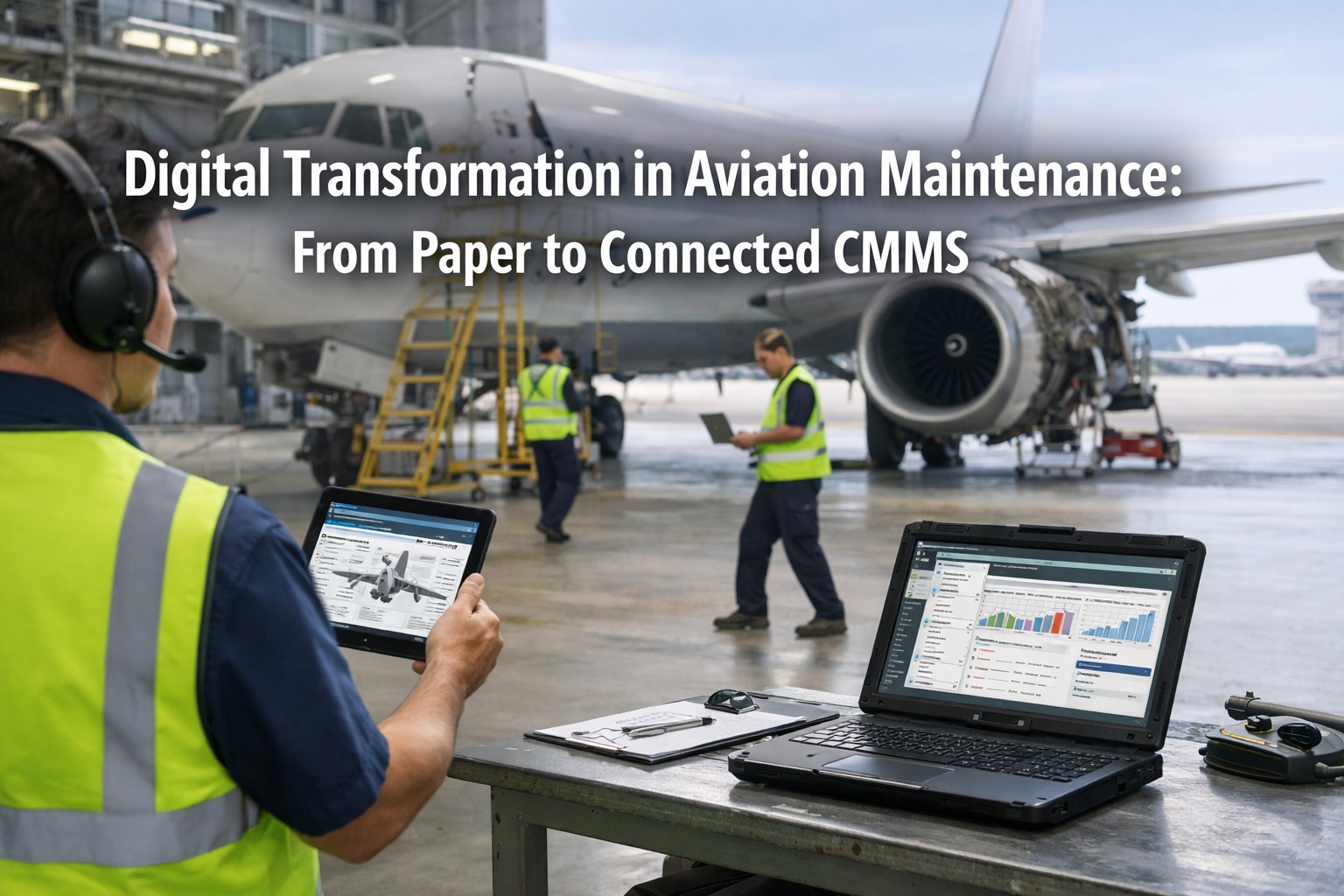
Artificial intelligence is no longer a horizon concept in aviation maintenance — it is operational today, measurable this quarter, and delivering real competitive separation for the MRO operations that have committed to it. Organisations integrating AI into their maintenance workflows are reporting 30–40% reductions in unplanned downtime, 20% drops in parts spend, and AOG events averted months before they become crises. The performance gap between AI-enabled and reactive MRO widens every quarter. This page breaks down the 10 highest-impact AI applications actively transforming aviation MRO in 2026 — with the data behind each one and a clear picture of how OxMaint delivers every capability without a multi-year implementation or enterprise price tag.
$74B
Global MRO market size by 2026
Oliver Wyman Aviation Forecast
40%
Reduction in AOG events with AI predictive maintenance
Deloitte Aviation AI Study
4.8x
Cost of emergency repair vs. planned maintenance
IATA MRO Cost Benchmarks
68%
MRO leaders prioritising AI adoption in 2026
AeroDynamic Advisory 2025
Stop Reacting. Start Predicting.
OxMaint delivers every AI capability on this page — predictive scheduling, automated work orders, intelligent parts forecasting, and compliance automation — within your first 30 days. No heavy implementation. No enterprise price tag. Just results your team can measure on day one.
What Is AI in Aviation MRO?
Aviation MRO — Maintenance, Repair, and Overhaul — is the ecosystem of activities that keeps aircraft airworthy, airports operational, and ground support equipment reliable. AI in MRO means machine learning models, computer vision, natural language processing, and predictive analytics applied to maintenance data streams to shift teams from reactive postures to data-driven, preventive ones. The shift is not incremental — it is structural. AI-enabled MRO teams make decisions in minutes that used to take days, catch faults before they become failures, and allocate capital with a precision that manual processes simply cannot match. Want to see what this looks like in a live platform? Start a free trial for 30 days and connect your first asset feed in under 15 minutes, or book a demo and let our team walk you through what AI-powered MRO looks like at your scale.
01
Predictive Intelligence
ML models trained on sensor data and failure history to predict component degradation well before a fault occurs.
02
Computer Vision
Automated defect detection in turbine blades, fuselage panels, and landing gear using image recognition at 96%+ accuracy.
03
Workflow Automation
AI-generated work orders, parts requests, and maintenance schedules eliminating manual entry and coordination lag across every shift.
04
Demand Forecasting
Parts and labour forecasting models analysing flight cycles, MRO trends, and supplier lead times to eliminate costly stockouts.
The MRO Pain Points AI Was Built to Eliminate
AOG Risk
Unplanned Aircraft-on-Ground Events
An AOG event costs $10,000–$150,000 per hour in lost revenue plus emergency MRO premiums. Manual maintenance systems cannot predict or prevent them at fleet scale.
Parts Waste
Inventory Misalignment
MRO providers carry 15–25% excess inventory on slow-moving parts while running short on critical components. Without AI demand signals, procurement is pure guesswork.
Compliance
Documentation and Audit Burden
FAA, EASA, and GCAA compliance requires complete traceability. Manual record-keeping creates audit gaps that cost MRO providers certifications and contracted work.
Labour Gap
Technician Shortage Crisis
Aviation needs 690,000 new maintenance technicians by 2041 (Boeing). AI amplifies existing team capacity — the only viable path when headcount growth will not materialise.
Top 10 AI Use Cases in Aviation MRO — 2026
These are not pilot programmes or vendor promises. Each use case below is in active production across leading MRO operations globally in 2026, delivering measurable and auditable ROI. OxMaint's platform delivers all 10 within your first 30 days. To see how each capability maps to your specific operation, book a demo with our aviation team, or start a free trial and explore the platform yourself.
01
Predictive Analytics
AI-Powered Predictive Maintenance Scheduling
AI ingests sensor data, flight hours, cycle counts, and environmental factors to calculate Remaining Useful Life (RUL) for every component. Fault flags emerge 200–400 flight hours before failure — enabling planned interventions instead of emergency AOGs. Airlines report 35% fewer unscheduled component removals.
35% fewer unscheduled removals
02
Computer Vision
Automated Visual Inspection
AI computer vision models inspect turbine blades, fuselage skins, landing gear assemblies, and composite panels at 96%+ accuracy. Drone-based inspection paired with AI completes a full exterior aircraft check in under 90 minutes — versus 8–12 hours manually and with zero fatigue-related misses.
96% defect detection accuracy
03
Inventory Intelligence
Intelligent Parts Demand Forecasting
AI forecasting models analyse fleet age profiles, historical consumption rates, and supplier lead times to predict parts requirements 90–180 days out at 85%+ accuracy. Eliminates the reactive procurement cycle and the 30–60% premium paid for emergency-sourced critical parts.
22% average parts spend reduction
04
Work Order Automation
AI-Generated Work Orders
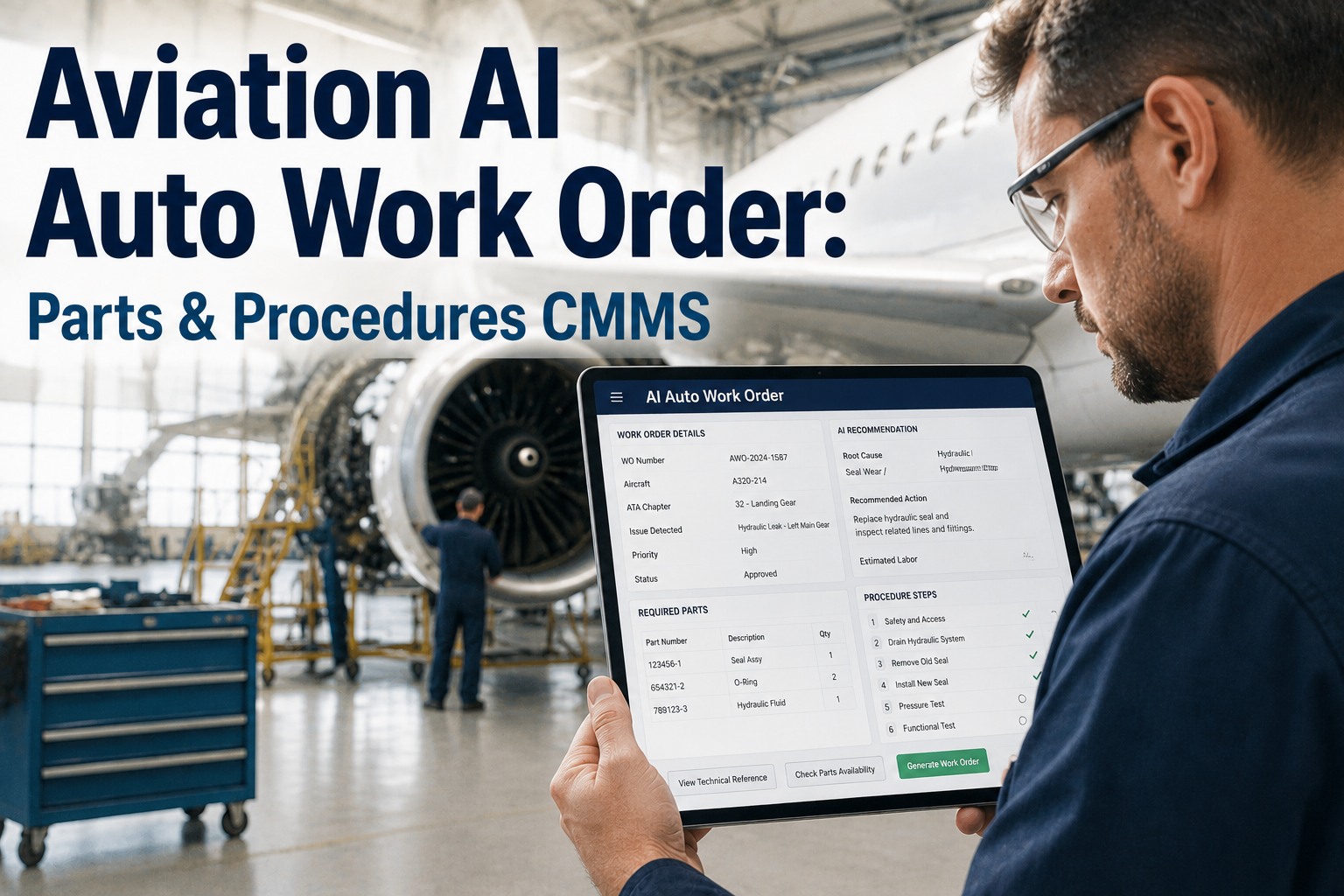
When a fault triggers — from sensor alert, inspection finding, or pilot report — AI analyses the fault code, cross-references the maintenance manual, checks certifications and parts availability, and generates a fully-populated work order. 2–6 hours of manual administration collapses to under 5 minutes.
60% reduction in admin labour
05
Fleet Health
Real-Time Fleet Health Monitoring
Integrating with ACARS data streams, QAR downloads, and ground IoT networks, AI builds a continuous picture of each aircraft's engines, APU, hydraulics, landing gear, and avionics — updating condition scores after every single flight. Airlines using this capability report 28% better on-time dispatch reliability.
28% improvement in dispatch reliability
06
Natural Language AI
AI-Assisted Technical Documentation
Technicians spend 15–25% of working time searching 200,000+ AMM pages for the right procedure. AI document intelligence answers natural language queries with precise procedure references in under 30 seconds — reducing search time by 70% and cutting errors from outdated or incorrect procedures.
70% faster procedure lookup
07
Anomaly Detection
IoT Anomaly Detection and Early Warning
AI anomaly detection flags deviations from baseline performance curves invisible to crews reviewing individual fault codes. Vibration signatures, temperature trends, and pressure differentials preceding failure are detected 300+ hours earlier than traditional threshold-based alert systems, giving maintenance teams time to act.
300+ hrs earlier fault detection
08
Compliance AI
Regulatory Compliance Automation
AI compliance engines monitor every active Airworthiness Directive, Service Bulletin, and inspection requirement against your fleet — calculating due dates dynamically as utilisation changes. Organisations using AI compliance monitoring report 87% fewer AD and SB tracking errors ahead of CAA audits.
87% fewer compliance tracking errors
09
Resource Optimisation
AI-Optimised Technician Scheduling
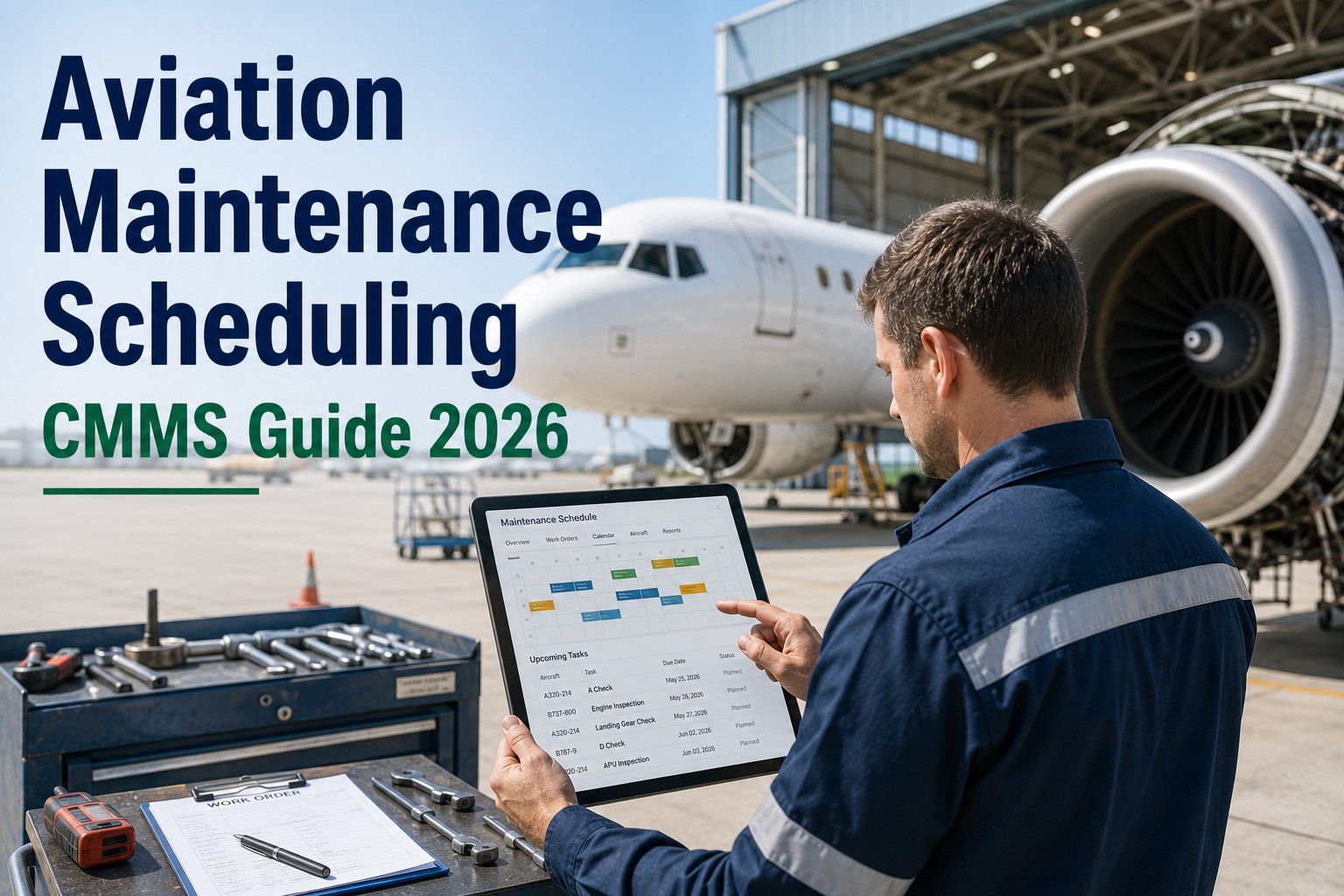
AI scheduling models analyse task duration history, certification matrices, parts availability timelines, and aircraft induction sequences to produce optimised hangar plans. MRO providers using AI planning report 19% TAT efficiency gains and 12% overtime reduction — with exactly the same headcount.
19% faster TAT, 12% less overtime
10
CapEx Intelligence
AI Asset Lifecycle and CapEx Forecasting
AI lifecycle models ingest utilisation data, condition scores, maintenance cost trajectories, OEM life limits, and residual value curves to generate rolling 5–10 year CapEx forecasts at individual asset level. MRO providers report 18% better capital allocation efficiency — replacing assets at the optimal lifecycle point.
18% better capital allocation
How OxMaint Delivers Every Use Case
OxMaint is a modern CMMS and asset management platform built specifically for aviation MRO complexity — multi-site, multi-fleet, and fully connected to the data sources that make AI decision-making possible. Unlike legacy systems requiring 12–18 month implementations, OxMaint is live within days. No heavy onboarding fees. No consultants required. Every AI capability listed below is active and available in your first 30-day trial. To get a live walkthrough tailored to your operation's setup, book a demo today, or start your free trial and explore the platform yourself.
Predictive Engine
Condition-Based Maintenance Scheduling
Maintenance triggers tied to actual asset condition — not just calendar intervals. Production-based triggers on units, cycles, and flight hours keep every schedule live.
Asset Intelligence
Full Asset Registry with Condition Scoring
Complete asset hierarchy from portfolio to component. Real-time condition scores updated by sensor data, inspection findings, and maintenance history at every level.
Work Orders
AI-Assisted Work Order Management
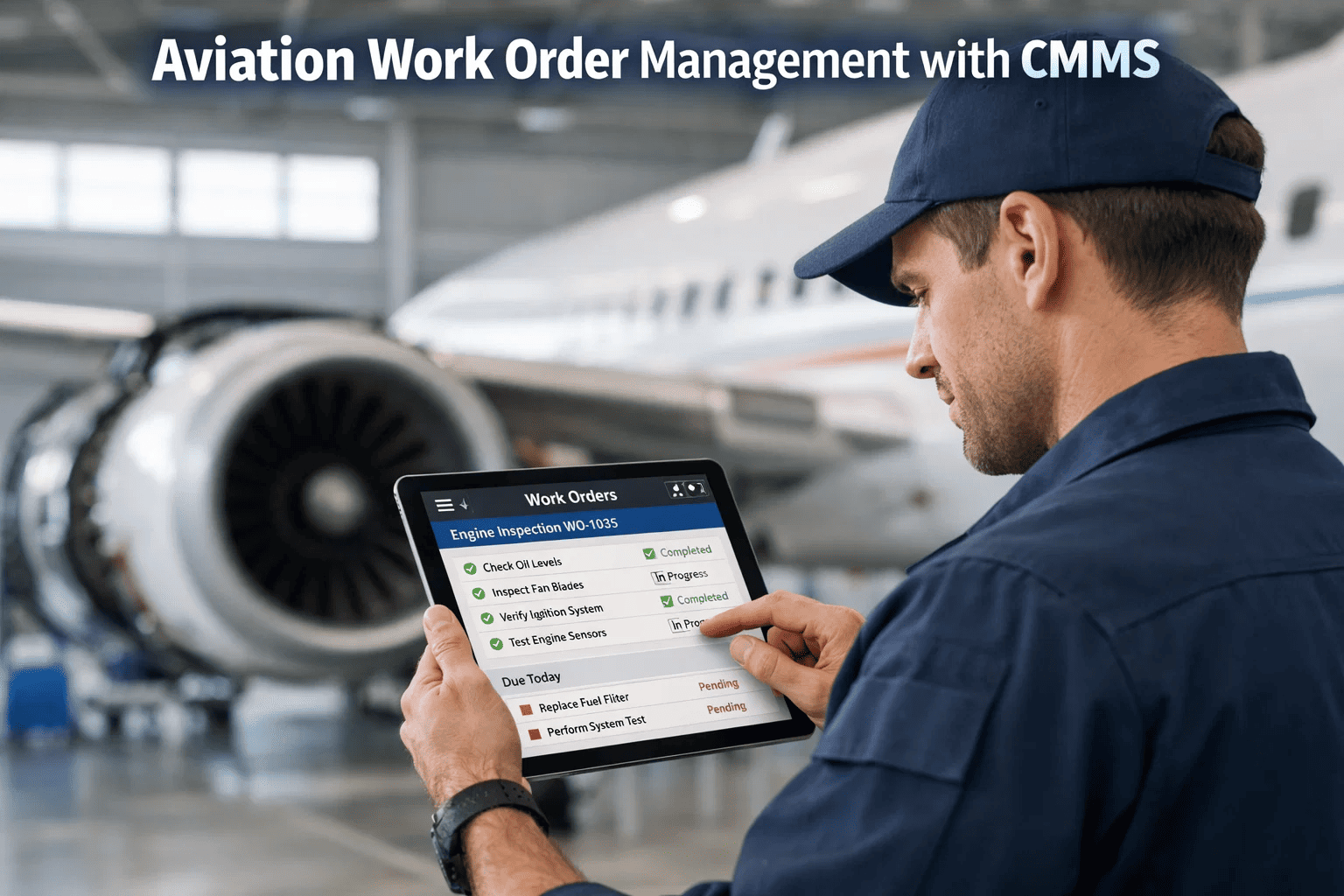
Automated work order creation from sensor alerts, inspection findings, or fault codes. Full technician history, certification tracking, and completion records in one view.
IoT Integration
Real-Time IoT and SCADA Data Feeds
Live sensor data ingestion from aircraft systems, GSE telemetry, and airport infrastructure. Anomaly detection and escalation triggered in real time — not on the next shift.
Compliance
Audit-Ready Compliance Documentation
Digital signatures, complete maintenance trails, and automated regulatory tracking for EASA, FAA, and GCAA requirements. Every audit becomes a non-event.
Financial Forecasting
Rolling 5–10 Year CapEx Models
Asset lifecycle modelling with investor-grade CapEx forecasting. Portfolio-level reporting that gives finance teams and ownership groups real data to make decisions.
Inventory
AI Parts Inventory and MRO Procurement
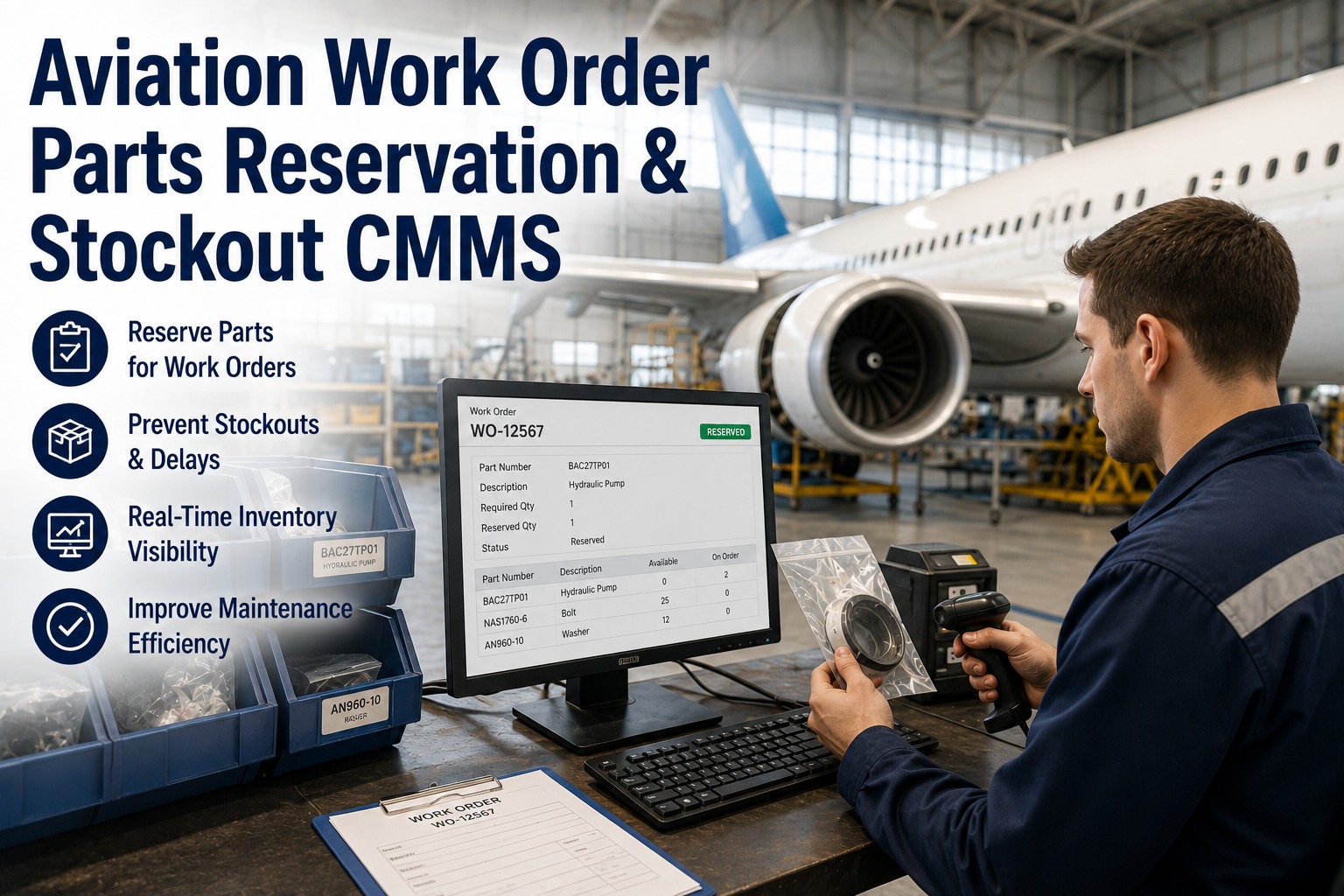
Demand-driven inventory with AI forecasting. Spare parts registry, reorder automation, and supplier integration that eliminates the stockout risk that grounds aircraft.
Inspections
Digital Equipment Inspections
Mobile inspection checklists with photo capture, GPS tagging, and instant fault escalation. Every inspection generates a complete, searchable audit record automatically.
Reactive MRO vs. AI-Powered MRO — The Performance Gap
The difference between reactive and AI-powered MRO is measurable across every KPI that matters to operations leadership. The data below reflects outcomes from organisations that have made the transition — and the compounding cost of staying reactive. Every row in this table represents a decision that happens dozens of times per week in your operation.
ROI of AI in Aviation MRO
40%
Reduction in unplanned downtime
Industry average for AI predictive maintenance across fleet operations
22%
Decrease in total MRO parts spend
Average within first 6 months using AI-driven inventory forecasting
19%
Faster aircraft TAT through hangar
Achieved with AI-optimised scheduling and real-time resource planning
3.2x
Average ROI within 18 months
Mid-size MRO operations deploying AI maintenance platforms
Frequently Asked Questions
How quickly can an MRO operation go live with AI-powered maintenance using OxMaint?
Most MRO operations are live with core AI maintenance features within 2–4 weeks. The platform connects to existing data sources — sensor feeds, ERP systems, flight data recorders — without requiring a full data migration. Basic predictive scheduling and AI work order automation can be operational within the first week for teams using the standard asset registry setup. There is no heavy implementation fee and no consulting dependency.
What data does AI need to deliver meaningful predictive maintenance results in aviation MRO?
AI predictive models perform best with a combination of sensor data (vibration, temperature, pressure readings from aircraft systems or GSE telemetry), historical maintenance records (failure events, component removal histories, work order completion data), and utilisation metrics (flight hours, cycles, operational load). OxMaint works with whatever data your operation currently generates — improving model accuracy progressively as data volume grows. Teams with 6–12 months of historical data can start generating actionable predictions immediately.
Does AI in MRO replace maintenance technicians?
No — AI amplifies technician capability rather than replacing it. Aviation faces a projected shortage of 690,000 technicians by 2041 (Boeing). AI tools reduce the time technicians spend on administrative tasks — work order creation, documentation, parts searching — by 40–60%, allowing existing teams to handle higher workloads without adding headcount. AI also improves inspection accuracy, catching defects that fatigued inspectors might miss, making every technician measurably more effective in their core technical role.
How does OxMaint handle multi-site operations across different regulatory frameworks?
OxMaint is built specifically for multi-site, multi-regulatory environments. The platform supports EASA Part 145, FAA 14 CFR Part 43, and GCAA CAR M compliance frameworks at the site level — while providing a unified portfolio-level view for operations leadership. Each site maintains its own compliance documentation and audit trail, with group-level reporting consolidating asset health, CapEx forecasts, and maintenance performance across the entire portfolio. This architecture suits international MRO providers and airline technical operations teams managing bases across multiple jurisdictions.
READY TO TRANSFORM YOUR MRO OPERATION?
Join MRO Teams Using AI to Prevent Failures Before They Happen
OxMaint is live in MRO operations across the USA, UAE, UK, and Australia. No six-month implementation. No enterprise price tag. A platform that connects to your data, automates your workflows, and gives your team the AI intelligence to stay ahead of every fault, every compliance deadline, and every CapEx decision that matters.
.png)