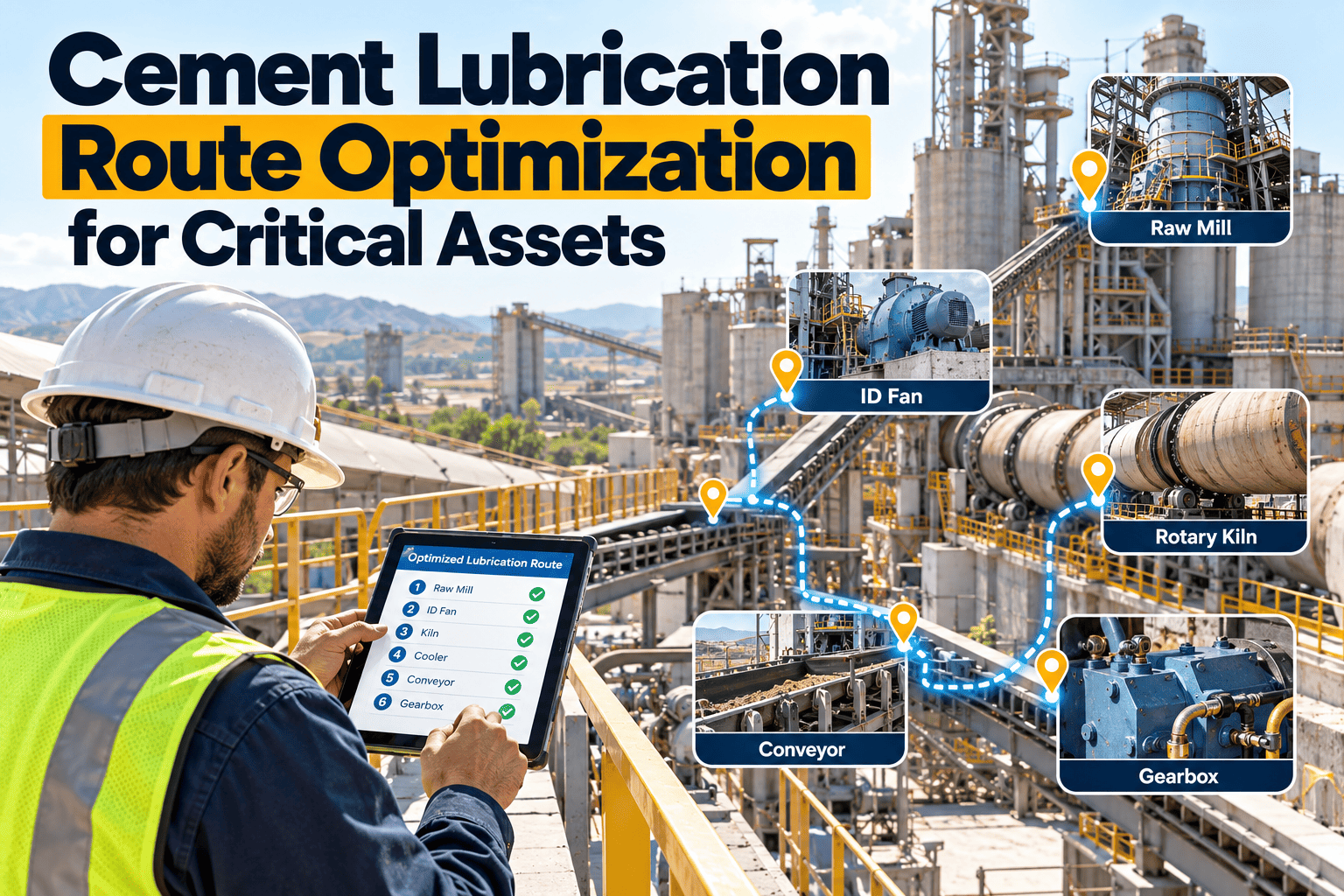
Most cement plants have a lubrication route. Fewer have one that matches asset criticality, plant layout, and actual condition. Routes grow by accident: a point is added after a failure, a grease gun is shared, and the walking order no longer makes sense. The result is over-greased motors, starved gearboxes, and critical mill and kiln points visited no more often than a spare conveyor. This guide shows how to rebuild lubrication routes around critical assets, and you can set up your first optimized route in Oxmaint to put the plan into practice.
Cement Lubrication Route Optimization for Critical Assets
Redesign grease and oil routes so the assets that stop the kiln and mills get the right lubricant, in the right amount, at the right interval.
Why Cement Lubrication Routes Drift Out of Shape
A route is a living plan, yet most plants treat it as a fixed printout. Four problems show up again and again.
Rank Assets by Criticality Before You Touch the Route
Criticality decides how much lubrication attention an asset earns. Score each asset on production impact, redundancy, repair lead time, safety exposure, and failure history, then group them into tiers.
| Tier | Typical Cement Assets | Lubrication Approach | Route Treatment |
|---|---|---|---|
| Tier 1 Critical | Kiln drive, support rollers, mill main bearings, main gearboxes | Condition-based, oil sampling, controlled volumes | Short interval, senior technician, dedicated inspection step |
| Tier 2 Important | ID fans, cooler drives, separator drives, large motors | Interval with condition checks | Standard interval, trended temperature |
| Tier 3 Supporting | Belt conveyors, bucket elevators, packing machines | Interval based on duty and dust | Combined route, adjust by findings |
| Tier 4 Low impact | Redundant or non-process equipment | Run-to-failure or extended interval | Visit only when inspected for other reasons |
A Route That Follows Criticality Pays for Itself in Fewer Surprises
Oxmaint lets you attach lubrication tasks to each asset, set intervals by tier, and track every completed point.
Build the Route in Seven Steps
Follow the same order every time you redesign. Each step feeds the next.
Zone-Based Routing Across a Cement Plant
Grouping by process zone keeps technicians moving in one direction and makes it easier to schedule around shutdown windows.
Over-Lubrication vs. Under-Lubrication
Both errors shorten bearing life. Route design should define the correct quantity, not just the frequency.
What Every Route Card Should Contain
Connect Lubrication Data to Condition Monitoring
Intervals should move when condition data says they should. Oil analysis, temperature, and vibration readings tell you whether a point needs more attention or can safely wait.
- A rising bearing temperature after grease top-up may signal over-greasing, not a defect.
- Repeated oil contamination results often trace back to a failed breather or seal.
- A point that never shows a finding across several cycles may qualify for a longer interval.
KPIs for a Lubrication Program
| KPI | What It Tells You | Watch For |
|---|---|---|
| Route completion rate | Whether planned points are actually reached | Tier 1 points skipped during busy periods |
| Overdue lubrication tasks | Backlog by criticality tier | Overdue critical points hidden in the average |
| Findings per route | Quality of inspection at each stop | Zero findings for long periods may mean no one is looking |
| Lubricant-related failures | Whether the program prevents bearing loss | Repeat failures on the same asset |
| Lubricant consumption | Waste and over-application | Sudden increases without a cause |
How Oxmaint Supports Lubrication Route Optimization
Oxmaint maintenance management software keeps the route, the asset, and the follow-up in one place.
Frequently Asked Questions
How often should critical cement assets be lubricated?
Follow OEM guidance, then adjust by load, heat, dust, and condition data. Book a demo to see interval setup.
Should we use one route or several?
Most plants split by zone and criticality, so Tier 1 assets get their own tighter route.
How do we prevent over-greasing?
Define a quantity per point, use calibrated tools, and record temperature after application.
Can route findings create work orders directly?
Yes, abnormal findings can be raised as corrective tasks. Get started to test it.
Where should we begin?
Start with Tier 1 assets, fix their intervals and quantities, then expand outward.
Put Your Critical Assets at the Front of Every Lubrication Round
Build tiered routes, capture findings, and turn them into scheduled work with Oxmaint.