Packing and dispatch is where a cement plant turns production into revenue, and it is also where small equipment faults show up fastest as queued trucks, rejected bags and lost loading time. Rotary packers, bag applicators, weighing systems, conveyors, dust collectors and truck loaders all fail in different ways, so a single maintenance routine rarely fits. This guide lays out a framework that moves from criticality to failure modes to tasks to KPI review, supported by preventive maintenance software that keeps the cycle running.
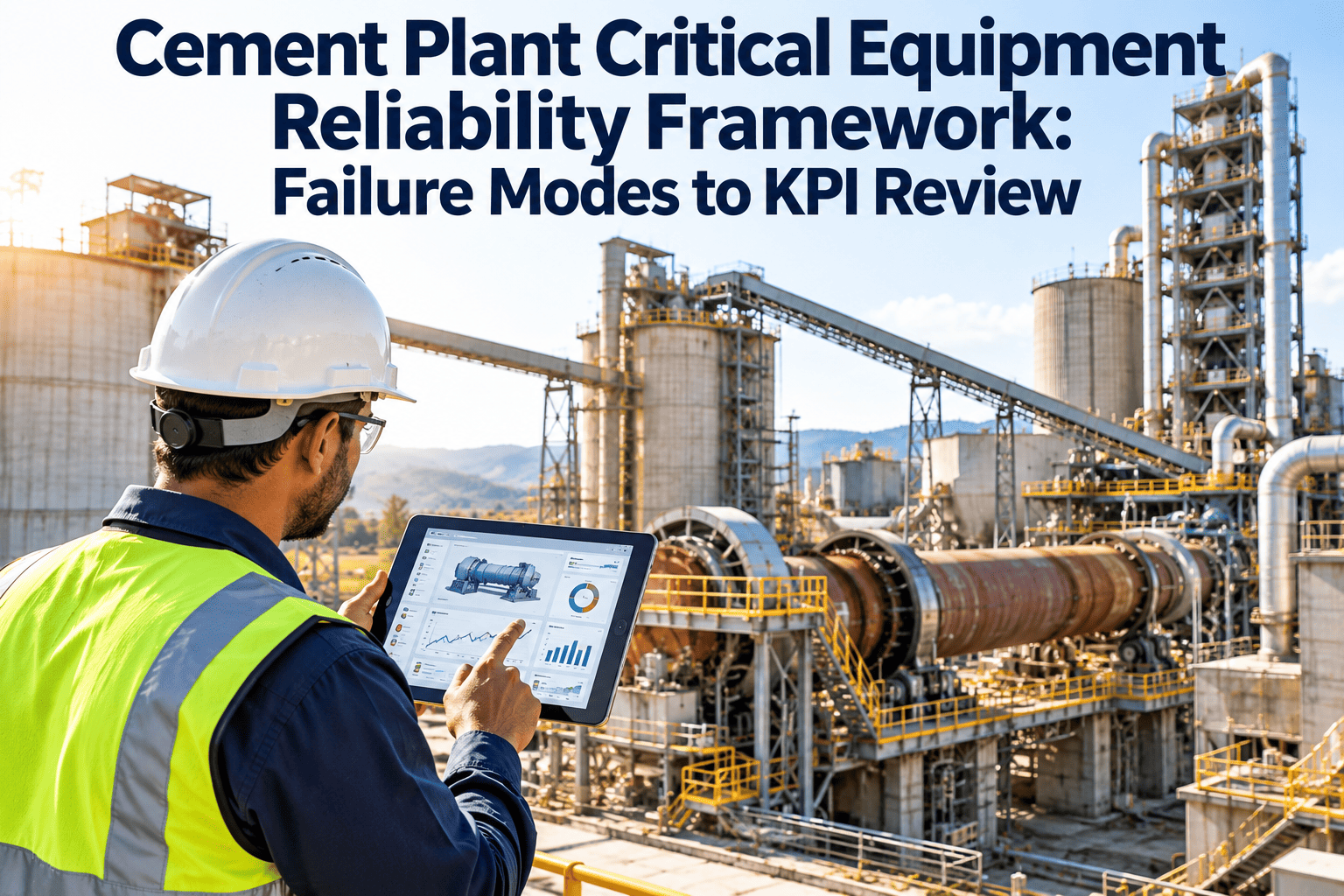
Cement Plant Critical Equipment Reliability Framework: Failure Modes to KPI Review
A five-stage reliability loop for packing lines, from ranking critical assets and mapping failure modes to scheduled tasks and monthly performance review.
The Packing Line at a Glance
Stage 1: Rank the Critical Equipment
Score each asset against these factors and group them into critical, important and standard. Detailed plans go first to the critical group.
Stage 2: Map Failure Modes
| Equipment | Common failure mode | Likely effect | Detection method |
|---|---|---|---|
| Rotary packer | Spout or valve blockage and wear | Slow filling, bag spillage | Fill rate check, visual inspection |
| Weighing system | Load cell drift or contamination | Underweight or overweight bags | Calibration checks, weight trend |
| Bag applicator | Misfeed, sensor or gripper fault | Line stoppage | Stop count by cause |
| Air slide and fluidising | Fabric blockage, blower fault | Poor material flow | Pressure and flow checks |
| Bag and belt conveyors | Mistracking, roller seizure, belt wear | Bag damage, jams | Roller and belt inspection |
| Dust collection | Filter bag blockage, fan fault | Dust emission, poor suction | Differential pressure trend |
| Compressed air supply | Leaks, moisture, low pressure | Slow or failed actuators | Pressure and leak surveys |
| Truck loader | Chute wear, level sensor faults | Spillage, loading delays | Operator checks, inspection |
Stage 3: Choose the Right Task Type
Turn Your Failure Mode Map Into Scheduled Work
Build packing line tasks by asset, assign them to crews and see what is overdue across every shift.
Stage 4: Execute With Discipline
- Visual check of spouts, bag placement and spillage
- Weight check samples recorded
- Dust collector and air pressure readings
- Conveyor roller and belt tracking inspection
- Lubrication of chains, bearings and drives
- Sensor and photocell cleaning
- Load cell calibration and verification
- Spout, seal and valve replacement
- Filter bag replacement and fan inspection
Spares That Should Never Be Missing
- Packer spouts, valves and seals
- Load cells and weighing electronics
- Photocells, proximity sensors and relays
- Belt rollers, chains and gearbox seals
- Dust collector filter bags and solenoid valves
- Pneumatic cylinders and air line fittings
Stage 5: Review the KPIs Monthly
What a Monthly Review Should Cover
Reactive Packing Line Versus Framework-Based
Reactive
- Fix after the line stops
- All equipment treated the same
- Downtime causes unrecorded
- Reviews rely on opinion
Framework-based
- Tasks target known failure modes
- Critical assets get priority attention
- Stops logged with a cause
- Reviews use recorded KPI data
How Oxmaint Supports Each Stage
Starting Without Overloading the Team
- Pick the three most critical assets on the line first
- List only the failure modes that have actually occurred or are credible
- Build short task lists operators will complete
- Run the monthly review for three cycles before expanding
Frequently Asked Questions
Keep Dispatch Moving With a Reliability Loop That Runs Itself
Rank assets, schedule tasks, record failures and review results in one maintenance system for the packing line.