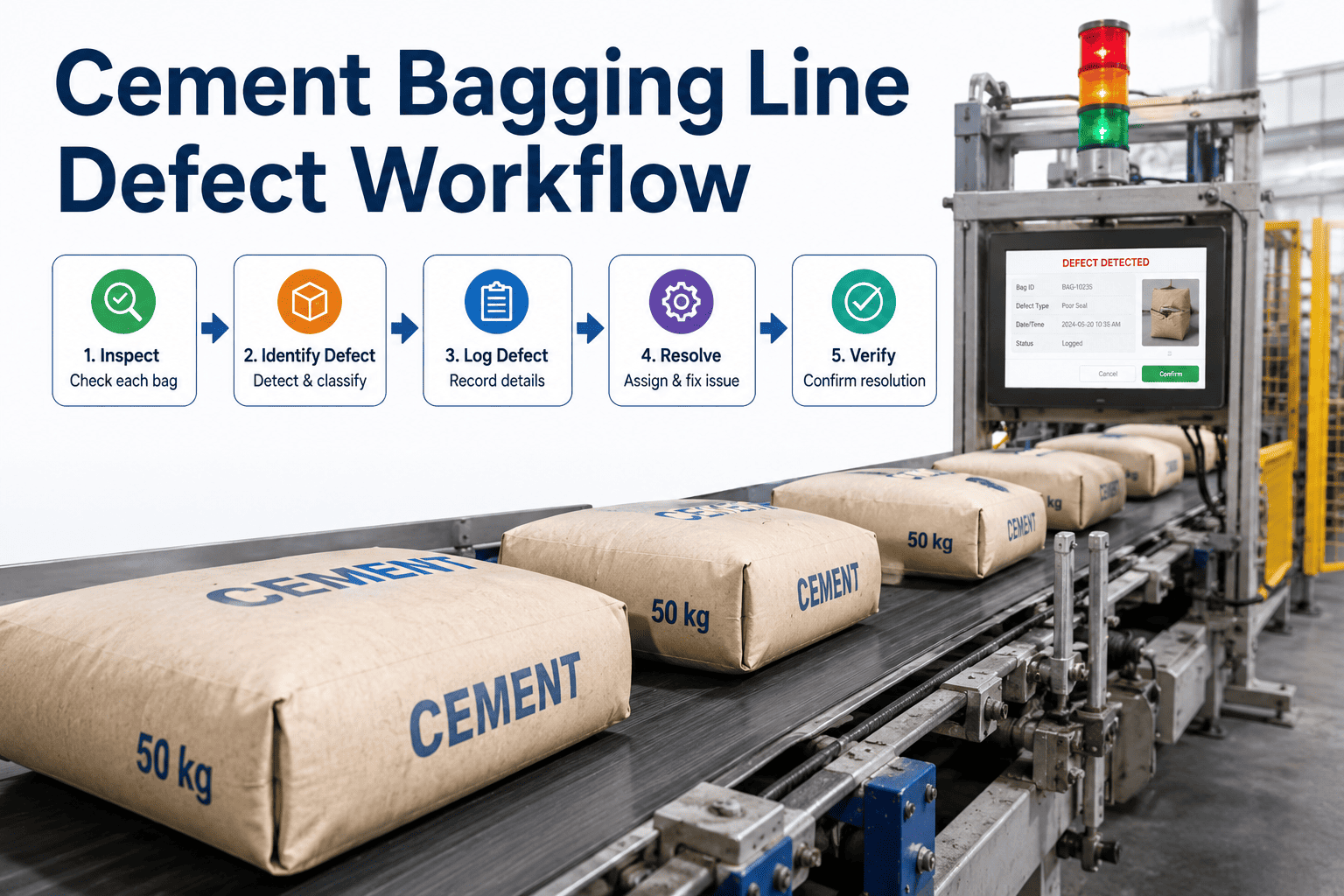
Dispatch trucks queue at the gate while a packing line sits jammed for the third time that shift, and nobody on the floor can say with certainty whether this is the valve bag spout, the bag tension setting, or worn rollers acting up again. Packing jams rarely have one cause — they have a pattern, and that pattern only becomes visible once someone starts recording every stoppage against the machine instead of clearing it and moving on. This is how one cement plant used OxMaint to turn scattered packing line stoppages into a tracked, reducible problem — book a 15-minute demo to see the same approach applied to your packing line.
How a Cement Plant Cut Packing Line Jams Without Buying New Equipment
Packing machine jams were eating into dispatch windows, and every stoppage was being cleared and forgotten rather than logged. By routing every jam through OxMaint as a tracked work order, the plant's reliability team finally saw the root causes clearly enough to fix them — not just clear them.
Jams Were Constant — and Invisible as a Pattern
The plant's packing hall was stopping multiple times per shift for jams, spout misalignments, and bag tears. Operators cleared each one quickly and got the line moving again, which felt productive in the moment but meant nobody was building a picture of why the jams kept happening.
What Logging Every Jam Actually Revealed
Once every stoppage was logged as a work order against the packing machine asset, three root causes emerged clearly within a few weeks of data.
A worn locating pin was letting the filling spout drift slightly out of position on certain bag types, causing repeated jams during high-volume runs.
A subset of jams traced back to a tension setting that hadn't been recalibrated since a bag supplier switch months earlier.
Logged photos showed visible wear on discharge rollers that had been replaced reactively before, but never on a planned schedule.
See how OxMaint turns packing line stoppages into a searchable record your team can act on, using your own dispatch data as the example.
How the Fix Was Sequenced
With root causes identified instead of guessed at, the plant moved through a focused, sequenced response rather than a single big intervention.
Operators began recording stoppage time, cause, and photos for every jam directly against the packing machine asset record.
The most frequent cause, identified from the accumulating data, was addressed first as a targeted repair rather than a guess.
Tension checks were added as a recurring preventive maintenance task rather than left to be discovered again after a supplier change.
Roller replacement moved from reactive to a planned interval based on the wear pattern visible in logged photos.
A Packing Line the Team Could Finally Trust
The outcome wasn't a single dramatic fix — it was a packing line that stopped surprising the dispatch team, because the causes behind its stoppages were finally on record.
Stoppages traced to the three identified causes dropped sharply once each was addressed at the source.
More consistent line uptime during peak loading hours reduced truck wait times at the gate.
New stoppages can now be checked against past patterns instead of being treated as one-off surprises every time.
What the Reliability Team Took Away
Beyond the immediate fixes, the exercise changed how the team approached recurring stoppages across the rest of the plant, not just the packing line.
A jam that costs two minutes but happens twenty times a shift turned out to matter more than the occasional long stoppage everyone already knew about.
Logged photos of worn rollers and misaligned spouts made the case for repair budget far faster than a verbal description ever did.
The bag tension fix alone took under an hour to apply but had been overlooked for months simply because nobody had flagged it as a pattern.
Where the Same Approach Is Being Applied Next
With the packing line stabilized, the plant extended the same log-every-stoppage method to other recurring problem areas across the site.
Frequent minor jams at belt transfer points are now logged the same way, ahead of a planned chute redesign review.
Stitch quality issues are tracked by machine and shift to separate equipment wear from operator handling variance.
Loading arm faults are now logged against dispatch records to correlate equipment condition with queue length at the gate.
Frequently Asked Questions
OxMaint turns every packing stoppage into a logged, searchable record — so your team fixes root causes instead of clearing the same jam again next shift.