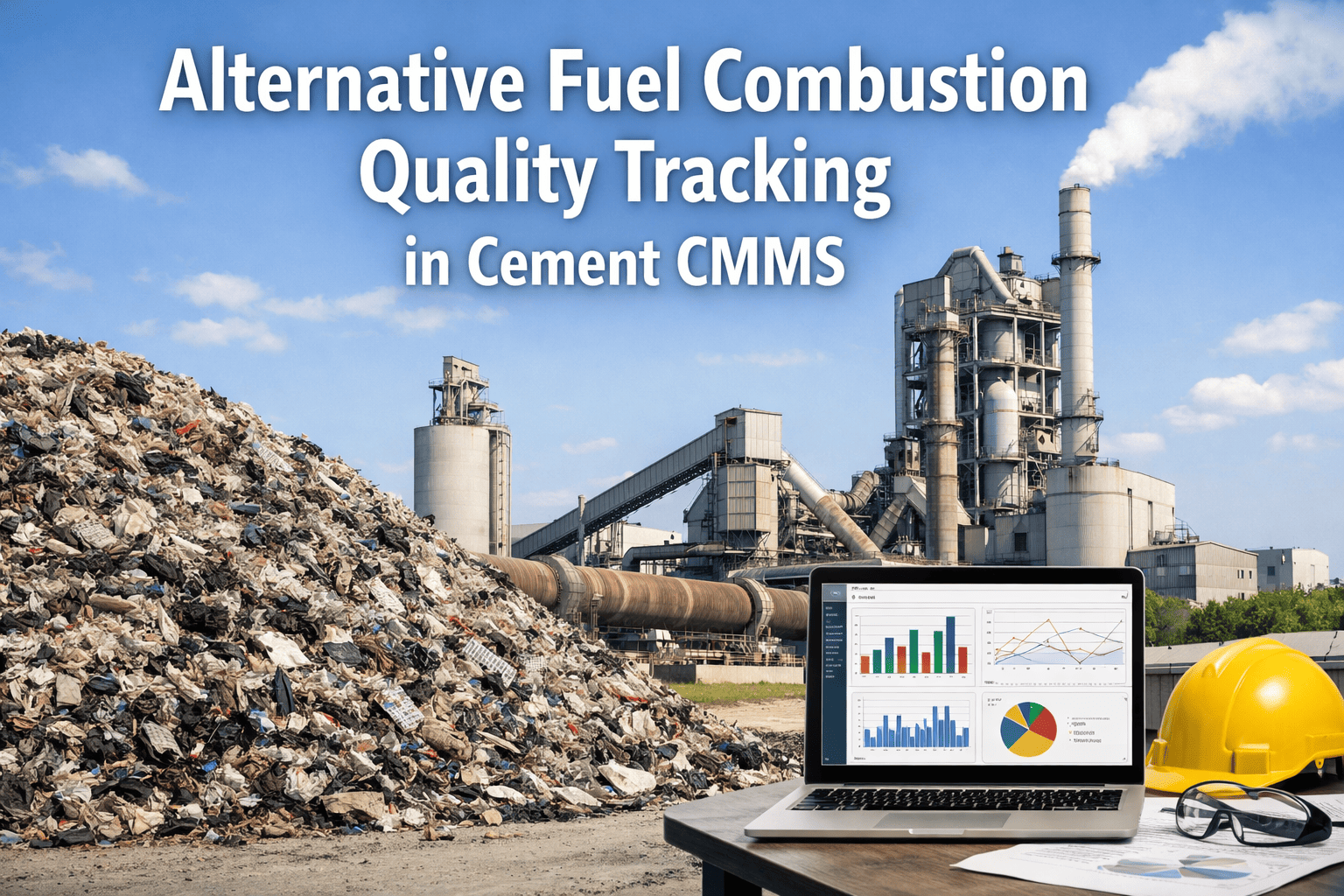
A cement plant consuming 120–180 kg of coal or petcoke per tonne of clinker cannot afford an unplanned fuel stockout. A kiln forced into unscheduled shutdown due to fuel supply failure costs $50,000–$300,000 per day in lost production — and restarting a cold kiln burns an additional 15–25% of daily fuel consumption just returning to operating temperature. Yet the majority of cement plants manage fuel procurement on spreadsheets, coal yard inventory on physical dip measurements, and reorder decisions on informal experience rather than consumption analytics. Overstocking ties up $200,000–$800,000 in working capital per excess week of fuel inventory. Understocking risks kiln shutdowns. The difference between the two is structured fuel inventory management built on consumption tracking, demand forecasting, and automated procurement triggers. Book a demo to see how Oxmaint structures fuel inventory tracking, consumption analytics, and procurement management across cement plant operations.
The Financial Stakes of Cement Plant Fuel Management
Compliance Standards by Region: Fuel Storage and Environmental Reporting
Cement plant fuel storage and combustion is governed by environmental emission standards, fuel storage safety regulations, and combustion reporting frameworks that vary significantly by region. Oxmaint automates fuel stock documentation, consumption reporting, emission-linked inventory records, and regulatory audit trail generation — keeping every plant's fuel compliance programme current without manual administration overhead.
| Region | Key Frameworks | Oxmaint Coverage |
|---|---|---|
| USA | EPA NESHAP 40 CFR Part 63 Subpart LLL, EPA Tier IV fuel standards, SPCC fuel storage plans, OSHA flammable storage 1910.106 | Fuel consumption records for emission reporting, storage inspection scheduling, SPCC inspection tracking, digital audit trail exports |
| UAE | UAE Federal Law No. 24 environment, Civil Defence fuel storage codes, ADNOC fuel quality standards, Ministry of Climate Change reporting | Fuel inventory documentation, multi-site consumption dashboards, storage facility inspection records, emission-linked inventory reports |
| India | CPCB emission norms for cement kilns, Environment Protection Act fuel standards, Bureau of Energy Efficiency coal consumption reporting | Specific heat consumption tracking per tonne of clinker, coal yard inspection scheduling, BEE annual reporting data, CPCB compliance records |
| Germany | 17th BImSchV combustion plant ordinance, EU ETS carbon reporting, TA Luft air quality standards, WHG water hazard fuel storage | EU ETS fuel consumption reporting, emission factor documentation, storage area inspection scheduling, WHG compliance records |
| UK | Environment Agency IED permits, UK ETS carbon reporting, COMAH regulations for fuel storage, EA combustion reporting | Fuel consumption data for UK ETS submissions, COMAH inspection scheduling, digital IED permit compliance records, combustion reporting support |
| Canada | ECCC Greenhouse Gas Reporting Programme, Provincial environmental fuel storage regulations, CSA Z662 petroleum storage | Greenhouse gas emission inventory from fuel data, provincial storage inspection scheduling, multi-site fuel compliance dashboards |
Oxmaint delivers fuel inventory tracking, consumption reporting, storage inspection scheduling, and emission-linked compliance documentation for cement plant fuel management programmes across every region above — accurate records available at every regulatory audit, without manual data assembly.
What Is Structured Cement Plant Fuel Inventory and Procurement Management?
Structured fuel inventory management is the systematic approach to tracking, forecasting, and replenishing every fuel type consumed in cement production — primary fuels such as coal and petcoke, secondary fuels such as natural gas, and alternative fuels including waste-derived fuels, biomass, and refuse-derived fuel — based on actual consumption rates, production schedules, and supplier lead times rather than on informal practice and manual stocktaking. Procurement management is the structured process for scheduling purchases, managing supplier contracts, comparing delivered calorific value against specification, and triggering reorders before safety stock thresholds are breached. Book a demo to see how Oxmaint manages fuel inventory records and procurement workflows in a live cement plant environment.
Fuel Inventory Tracking
Real-time or periodic measurement of fuel stock levels across coal yards, petcoke silos, liquid fuel tanks, and alternative fuel storage areas — registered as maintained assets with volume measurement schedules, calibration records, and consumption draw-down history. Inventory data integrated with production run rates to calculate days-of-stock remaining and generate automated reorder alerts before safety stock thresholds are breached.
Consumption Monitoring and Analytics
Specific fuel consumption tracked per tonne of clinker produced — the primary operational KPI for kiln fuel efficiency. Consumption trends segmented by fuel type, shift, and production rate to identify process deviations causing fuel waste. Alternative fuel substitution rates tracked against targets, with calorific value-weighted blending calculations ensuring total heat input remains within kiln process control requirements at all times.
Procurement Planning and Supplier Management
Structured procurement scheduling based on consumption forecasts, supplier lead times, and contract delivery windows — eliminating the emergency spot purchases that carry 15–35% cost premiums over contract pricing. Supplier performance tracked against delivered calorific value, moisture content, and ash specification — enabling evidence-based supplier selection and contract renegotiation with real delivery performance data.
Alternative Fuel Programme Management
Alternative fuel substitution rates, calorific value specifications, waste fuel permit conditions, and regulatory reporting obligations managed through the same CMMS platform as primary fuel inventory — ensuring that waste-derived fuel blending decisions are documented against actual stock levels, permit limits are not breached, and substitution savings are measured against primary fuel cost displaced.
See Oxmaint Managing Cement Plant Fuel Inventory and Procurement
Our team will walk you through a live demo with fuel inventory tracking, consumption analytics, procurement scheduling, and reorder alert management built for cement manufacturing operations — in under 30 minutes.
Four Fuel Management Failures Creating Cost and Production Risk in Cement Plants
These four operational failures account for the majority of avoidable fuel cost exposure, procurement inefficiency, and kiln production disruption in cement plants worldwide — regardless of plant size, geography, or fuel type.
No Real-Time Stock Visibility — Reorders Driven by Physical Inspection
The majority of cement plants determine coal yard inventory by physical walking surveys and visual estimation — conducted once per shift by the same production personnel responsible for kiln operation. Volume estimates carry 10–20% accuracy variance, leading to either premature procurement orders that inflate working capital, or delayed orders that expose the plant to supplier lead time risk during peak demand periods. When monthly stock reconciliation is conducted against consumption records, the cumulative estimation error frequently exceeds 200–400 tonnes per week across a medium-sized plant.
Emergency Spot Purchases at Premium Pricing
Cement plants that lack automated reorder triggers consistently fall into emergency procurement cycles — discovering low fuel stock only when days-of-stock remaining falls below safe lead time margins. Emergency spot purchases in coal and petcoke markets carry 15–35% cost premiums over contract pricing — and in constrained supply environments, the premium can exceed 50%. A single emergency coal purchase of 5,000 tonnes at a 25% premium over a $120 per tonne contract price represents $150,000 of entirely avoidable cost. Multiplied across multiple emergency events per year, this is a material procurement efficiency gap.
Delivered Fuel Quality Not Tracked Against Specification
Coal and petcoke procurement contracts specify calorific value, moisture content, ash content, and sulphur content ranges that directly affect kiln fuel consumption rates and emission compliance. Most cement plants receive fuel without systematic quality verification against contract specification — accepting deliveries without recording actual versus specified calorific value. A systematic 2% calorific value shortfall on 100,000 tonnes of annual coal supply represents $240,000–$480,000 in displaced calorific value that the plant pays for but does not receive. Without delivery records, contract claims cannot be made and supplier accountability cannot be enforced.
Alternative Fuel Substitution Undermanaged and Unreported
Alternative fuel programmes in cement plants — substituting waste-derived fuels, biomass, or refuse-derived fuel for coal — can reduce primary fuel costs by 8–20% per tonne of clinker when optimally managed. Most plants track alternative fuel receipts on paper delivery notes and calculate substitution rates at monthly management meetings rather than in real time. Without real-time substitution rate data, kiln operators cannot optimise the blend to maximise substitution while maintaining process stability — and regulatory permit compliance for alternative fuel use cannot be demonstrated without the daily consumption records that waste fuel permits require.
How Oxmaint Structures Cement Plant Fuel Inventory and Procurement Management
Oxmaint connects fuel stock measurement, consumption monitoring, procurement scheduling, and alternative fuel programme management into a single operational platform — giving cement plants the systematic structure to manage fuel as a strategic production input rather than a consumable tracked informally. Book a demo to walk through the full fuel management framework with your plant's fuel mix and production throughput.
Ready to Take Control of Your Cement Plant Fuel Procurement?
Oxmaint deploys across a cement plant's fuel inventory and procurement workflows in 60–90 days. Start with the fuel storage asset register, activate consumption tracking, and build the procurement records that eliminate emergency spot purchases. Book a personalised 30-minute demo — your fuel data, our platform, zero obligation.
Oxmaint Platform: Purpose-Built for Cement Plant Fuel and Energy Management
Each module addresses a specific failure point in cement plant fuel management — from real-time stock visibility to procurement scheduling and alternative fuel compliance. Together they form a closed operational loop where every consumption reading drives reorder timing, every delivery record builds supplier accountability, and every alternative fuel receipt supports permit compliance documentation. Book a demo to walk through each module with real cement plant fuel and energy data.
Reactive Fuel Management vs. Oxmaint: The Cost and Operational Gap
| Factor | With Oxmaint | Manual Management |
|---|---|---|
| Stock Visibility | Real-time days-of-stock from IoT integration or logged measurements. Reorder alerts triggered automatically before safety stock breach. Zero unplanned stockouts. | Physical estimation once per shift. 10–20% accuracy variance per measurement. Reorder discovered only when stock reaches critical level and lead time is already insufficient. |
| Procurement Cost | Reorders placed at contract pricing within planned lead time windows. Emergency spot purchases eliminated. 8–15% reduction in blended fuel procurement cost within 12 months. | Repeated emergency spot purchases at 15–35% premium over contract pricing. $150,000+ in avoidable procurement cost per unplanned emergency purchase event. |
| Delivery Quality Tracking | Every delivery logged against contract specification. Calorific value, moisture, and ash variance tracked per delivery and per supplier. Contract claims made with documented evidence. | Delivery certificates filed without analysis. Systematic under-specification deliveries undetected. $240,000–$480,000 in unrecovered calorific value shortfall per year across a large plant. |
| Alternative Fuel Substitution | Real-time substitution rate and calorific value data. Permit compliance documented daily. Primary fuel cost displacement quantified per tonne of clinker for finance reporting. | Substitution rate calculated monthly from delivery notes. Permit compliance records assembled manually. Financial benefit of alternative fuel programme unquantified in real time. |
| Consumption Benchmarking | Specific fuel consumption per tonne of clinker tracked by shift, day, and month. Deviations above baseline trigger immediate process investigations linked to asset records. | Monthly fuel consumption divided by clinker production gives a lagging monthly average. Process deviations causing fuel waste go undetected for weeks until monthly reconciliation. |
| Regulatory Reporting | Fuel consumption data structured for EPA, EU ETS, BEE, and CPCB submissions. Reports generated in under 30 minutes from live platform data. Zero manual data assembly required. | Regulatory submissions assembled manually from scattered spreadsheets, paper delivery notes, and shift logs. Preparation takes days. Reconciliation errors create compliance risk. |
Cement Plant Fuel Management Programme Performance Benchmarks
These performance improvements represent average results from cement plants that transitioned from reactive fuel management to structured Oxmaint-driven programmes within 18 months of deployment.
Your Fuel Procurement Efficiency Starts Here
Oxmaint delivers measurable fuel management improvements within 60–90 days of deployment. Book a 30-minute demo to map your current fuel procurement process against best practice — and build a deployment roadmap for your procurement and operations teams.
Cement Plant Fuel Profiles: Management and Monitoring by Fuel Type
Inventory management, measurement technology, procurement lead times, and quality tracking requirements differ significantly across the fuel types consumed in cement manufacturing. Understanding the operational characteristics and CMMS tracking approach for each fuel class is the foundation of an effective fuel management programme. Book a demo to see how Oxmaint tracks inventory, procurement, and consumption for your plant's specific fuel mix.
Coal — Thermal and Coking Grades
Coal yard stock measured by survey grid and cross-checked against belt weigher totals for each delivery. Measurement calibration verified monthly — variance above 3% triggers recalibration work order. Reorder alert configured at 10 days-of-stock remaining. Each delivery logged against sampling certificate with calorific value, moisture, and ash — variance from contract triggers supplier performance flag requiring procurement response within 48 hours.
Petroleum Coke (Petcoke)
Petcoke silo level sensor calibrated quarterly — high calorific value makes inventory accuracy critical for heat input calculations and emission permit compliance. Sulphur content of each delivery logged against site emission permit limit — deliveries above sulphur specification trigger immediate procurement substitution work order before the material is fed to the kiln mill. Blend ratio with coal or alternative fuels tracked daily against kiln emission compliance thresholds.
Alternative and Waste-Derived Fuels
Each alternative fuel stream tracked as a separate inventory asset with its own receipt log, calorific value record, and permit-linked consumption limit. Daily use quantities recorded against permit maximum rates — automated alert generated when cumulative use approaches permit threshold before period end. Substitution savings calculated against displaced coal at current contract pricing — monthly report available for finance teams and sustainability reporting without manual calculation.
Natural Gas and Liquid Fuels
Gas supply pressure and liquid fuel tank level monitored with automated low-level alerts calibrated to ensure minimum relight fuel volume is always available. Pressure vessel inspection scheduled on statutory cycle with certification records stored against each vessel asset. Fuel usage during kiln relight events logged separately from normal consumption — isolating start-up fuel cost from process consumption for accurate specific heat consumption calculations.
ROI From Structured Cement Plant Fuel Inventory and Procurement Management
Frequently Asked Questions: Cement Plant Fuel Inventory and Procurement Management
QWhat is the standard safety stock level for coal and petcoke in cement plant operations?
QHow is alternative fuel substitution rate tracked and reported for permit compliance?
QWhich regional regulations govern fuel consumption reporting for cement plants?
QHow does Oxmaint handle fuel quality tracking and supplier contract management?
QHow long does Oxmaint take to deploy a fuel inventory and procurement management system in a cement plant?
QCan fuel consumption data from Oxmaint integrate with SAP or ERP procurement systems?
Continue Reading: Cement Plant Supply Chain and Inventory Resources
Explore these in-depth guides to build a complete picture of supply chain management, logistics optimisation, and procurement efficiency across cement manufacturing operations.
Start Digitalising Your Cement Plant Fuel Management Today
Oxmaint deploys across your cement plant's fuel inventory and procurement workflows in 60–90 days — no heavy implementation fees and no long onboarding. Start with the fuel storage asset register, activate automated reorder alerts, and build the consumption and delivery quality records that eliminate emergency procurement costs and support every regulatory fuel submission. Book a 30-minute demo — your fuel data, our platform, zero obligation.