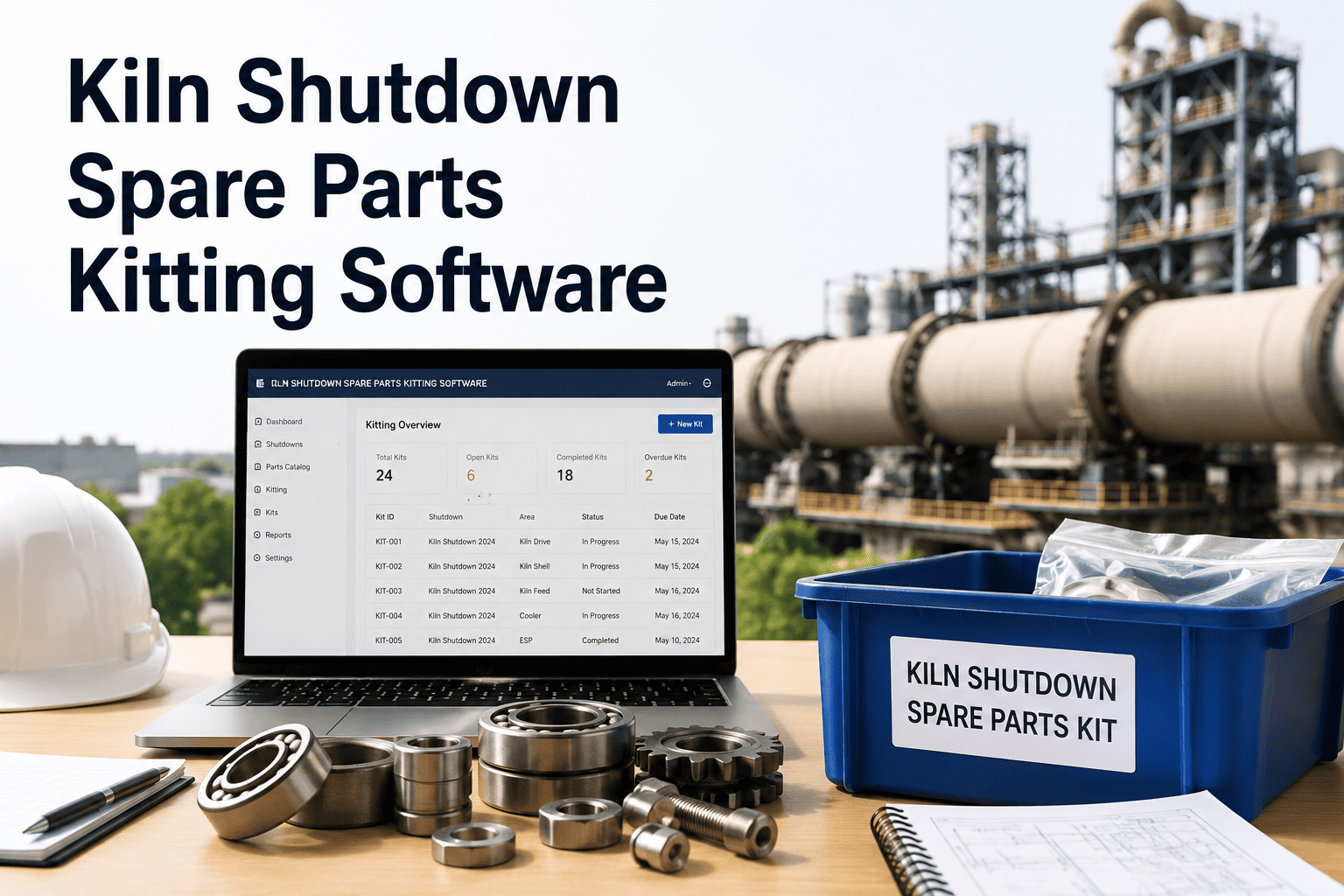
A kiln shutdown that runs one day over schedule costs a cement plant between $350,000 and $500,000 in lost clinker output — and the most common cause of overruns is not scope creep or crew shortages. It is the missing part. A refractory brick pallet short by 200 pieces. A thrust bearing seal that was pulled from the wrong kit. A torque wrench that no one brought to bay four. OxMaint Shutdown Spare Parts Kitting closes this gap by pre-assembling everything a shutdown crew needs — refractory, bearings, seals, tools, and consumables — into digital kits tied directly to the work orders they support. When your crew walks in on Day One, every part is staged, every kit is complete, and the clock runs on schedule. Start a free trial and build your first shutdown kit today.
SHUTDOWN PLANNING — CEMENT PLANTS
Stop Losing Shutdown Days to Missing Parts
OxMaint Kitting Software pre-stages every refractory brick, bearing, seal and tool your kiln crew needs — linked to work orders, checked before Day One, and ready at the job site.
Why Shutdown Overruns Keep Happening
Without Kitting
Refractory bricks counted two weeks before shutdown — wrong quantity discovered Day 2
Bearings pulled from general stock, wrong spec identified during installation
Technicians searching storerooms at 2 AM for a seal that was in the wrong bin
Emergency freight ordered at 3–4x standard part cost to recover the schedule
Shutdown extends 2–4 days — $700K–$2M in avoidable production loss
With OxMaint Kitting
Every work order has a pre-built parts kit — quantities confirmed 6 weeks out
Bearings and seals reserved against specific job numbers, not general stock
Physical kit staged at the work location before the kiln even cools down
Zero emergency freight — procurement triggered at lead time, not crisis time
Shutdown finishes on schedule, crew demobilises on Day 14 not Day 18
What Goes Into a Shutdown Kit
Refractory Kit
Basic brick (standard zone)Qty per shell length, staggered by zone temperature
High-alumina bricks (burning zone)Ordered 12–16 weeks ahead; zero tolerance for shortfall
Castable refractoriesNose ring, inlet chamber, kiln hood sections
Anchor bolts and support hardwareKitted per zone section, pre-counted
Mortar and bonding compoundsShelf-life checked, quantities matched to brick count
Rotating Equipment Kit
Thrust roller bearingsMatched to kiln tyre position, not generic stock
Tyre pads and filler barsMeasured against last shell survey, pre-cut to size
Main drive coupling elementsSplined couplings, shims, and lock hardware
Girth gear and pinion sealsAll elastomer seals replaced as a set per shutdown
Lubrication fittings and linesGrease lines, fittings, and spray nozzles
Tools and Consumables Kit
Hydraulic torque wrenches (size set)Reserved by job, not pooled — no mid-shift hunting
Alignment shim assortmentsSized from last alignment report, pre-staged at pier
PPE and respiratory protectionPer-crew kits, refractory-dust rated
Inspection gauges and measuring toolsShell distortion gauges, ovality templates, dial indicators
Sealants, thread compounds, lubricantsHigh-temp rated, kitted to each work order
EVERY PART. EVERY JOB. STAGED BEFORE DAY ONE.
Your Next Shutdown Starts Faster When the Kit Is Already Built
OxMaint Kitting Software links parts to work orders, checks quantities against stock, flags long-lead items 8–12 weeks out, and stages physical kits at the job location — so your crew never waits for a part that should have been there.
How OxMaint Kitting Works — From Planning to Execution
01
Scope to Work Order
Every shutdown task is entered as a work order in OxMaint — refractory reline by zone, bearing replacement by station, drive inspection by position. Each work order becomes the anchor for its parts kit.
▼
02
Kit Build and Reservation
Parts are added to each work order kit from the asset-linked parts catalogue. OxMaint reserves quantities against each job number — removing them from general available stock so another job cannot consume what this shutdown needs.
▼
03
Long-Lead Procurement Trigger
OxMaint checks kit requirements against current stock and supplier lead times. High-alumina bricks, large-bore bearings, and custom castables that need 8–16 weeks are flagged automatically — purchase requisitions raised at the right time, not the last minute.
▼
04
Physical Staging and Verification
As the shutdown window approaches, OxMaint generates a staging checklist for the storeroom team. Each kit is physically assembled, labelled with its work order number, and staged at the job location. Technicians scan the kit QR code to confirm receipt — before the kiln stops.
▼
05
Consumption Tracking and Reconciliation
Parts used during execution are consumed against the work order in OxMaint. At shutdown close, actual vs planned consumption is reported — feeding the next shutdown's kit quantities with real data, not estimates.
The Cost of Not Kitting — By the Numbers
$350K
Average cost per additional unplanned shutdown day (mid-size cement plant)
3.2×
Premium paid on emergency parts procurement vs planned purchase
68%
Of shutdown delays trace back to parts availability failures
25%
Reduction in shutdown duration achieved by plants using structured kitting
Frequently Asked Questions
Can I build kits from our existing spare parts catalogue?
Yes. OxMaint imports your existing parts data — including part numbers, descriptions, supplier info, and stock locations — and links each part to the equipment assets it supports. Kit building draws directly from this catalogue so there is no parallel data entry.
Set up your parts catalogue in a free trial.
How far in advance should kitting planning begin for a kiln shutdown?
OxMaint recommends starting kit scoping 10–12 weeks before the planned shutdown date. High-alumina refractories and main drive components can carry 12–16 week supplier lead times — kitting surfaces these gaps early enough to order without premium freight.
Book a shutdown planning demo to map your lead times.
Does OxMaint kitting integrate with SAP or other ERP systems?
Yes. Kit-driven procurement demand flows to SAP MM as purchase requisitions with full asset and work order reference. Goods receipts post back to OxMaint automatically, updating kit availability status in real time without manual reconciliation.
What happens if we discover additional scope during the shutdown?
Scope additions are created as new work orders in OxMaint with their own parts requirements. The system checks stock availability immediately and flags any shortfalls — so the planning team knows within minutes whether the added scope can be executed or requires procurement action.
How does kitting improve future shutdowns, not just the current one?
Every OxMaint shutdown generates a consumption record — actual parts used vs kitted quantities, by work order. This data is used to refine the next shutdown's kit specifications automatically, compounding accuracy shutdown over shutdown.
Start building your shutdown history in OxMaint today.
OXMAINT — KILN SHUTDOWN KITTING
Build Every Kit Before the Kiln Stops. Finish Every Shutdown On Time.
OxMaint Shutdown Kitting ties every part to every work order — refractory, bearings, seals, and tools — staged at the job site before Day One. Stop losing production days to parts that should have been there.