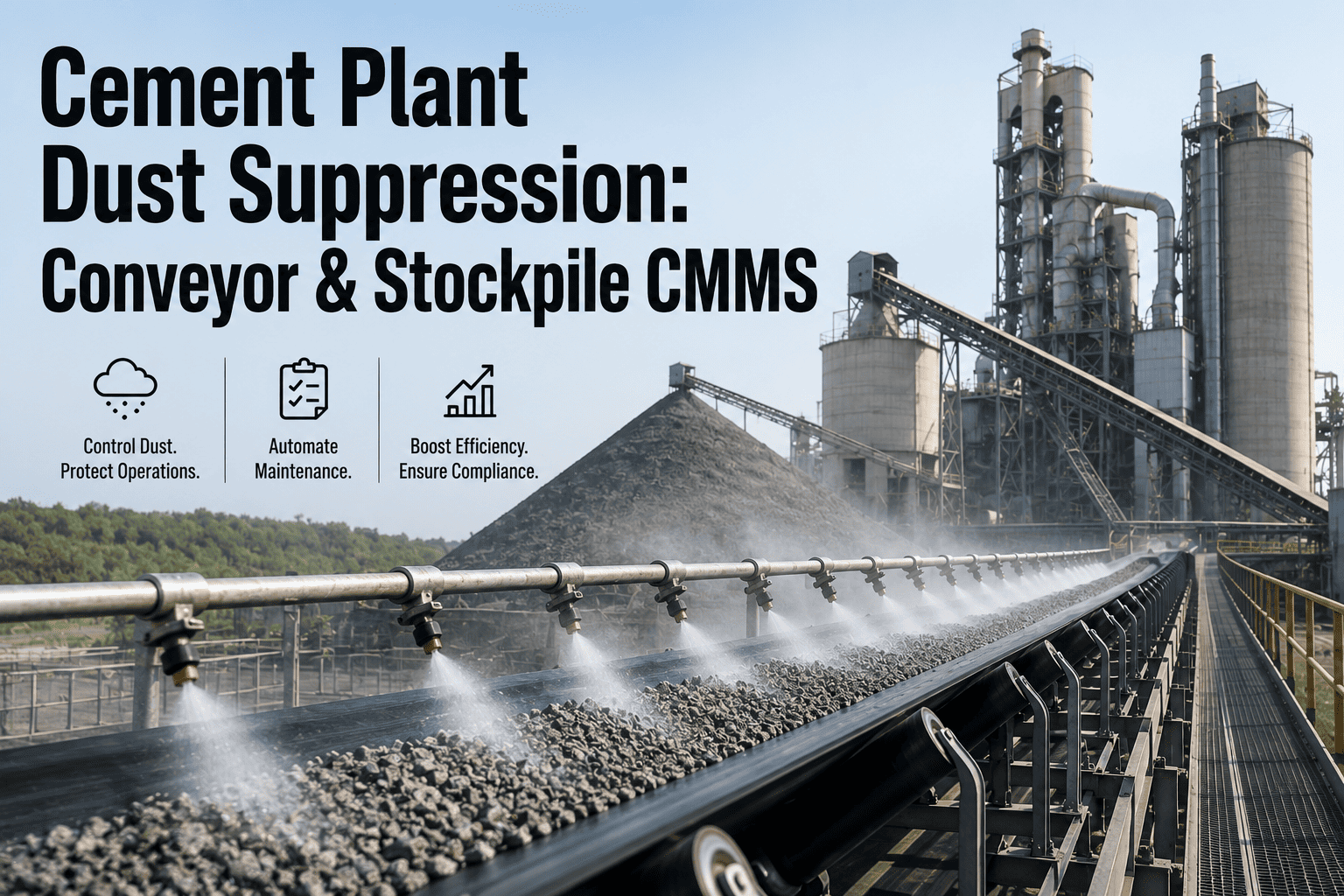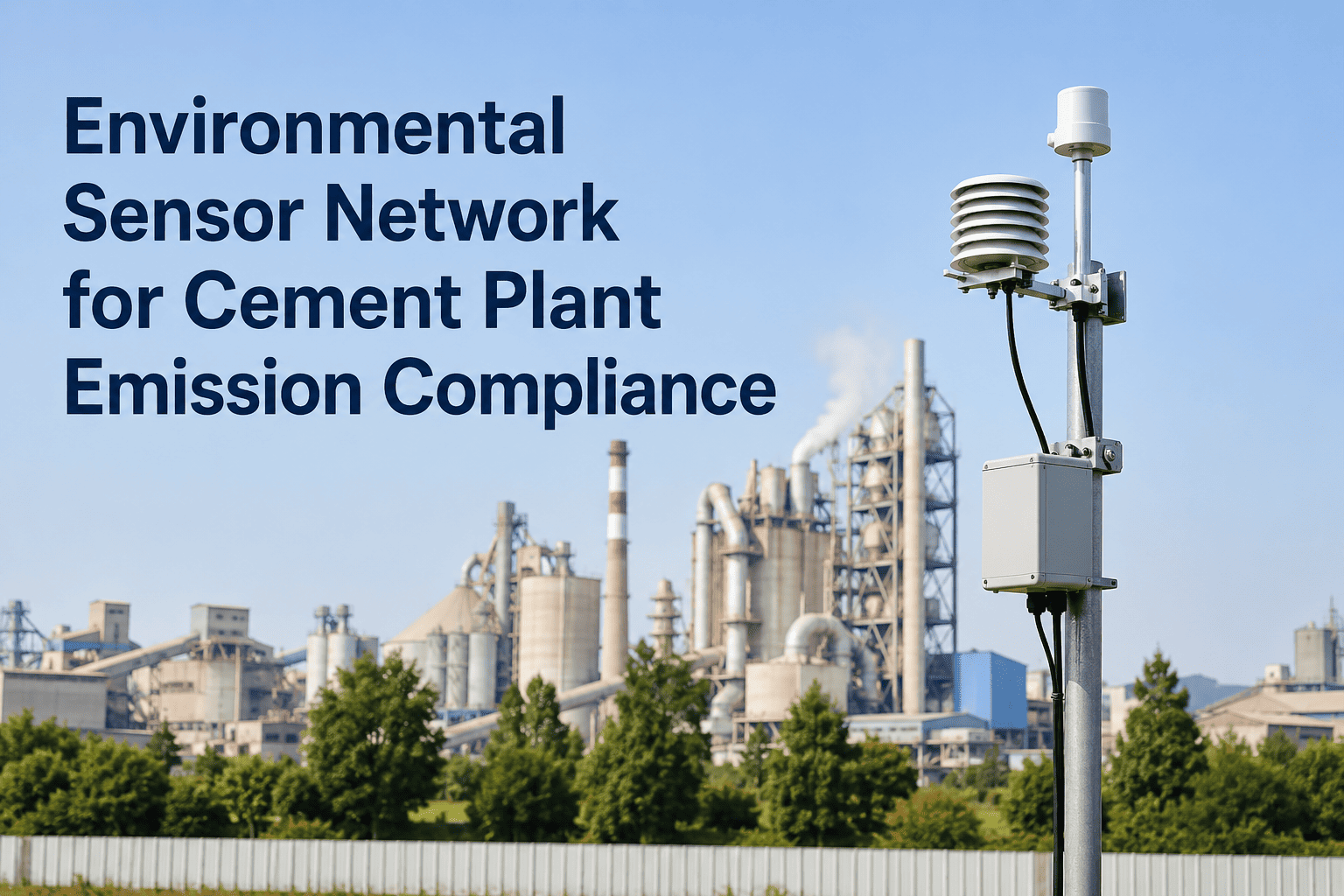
A limestone yard is one of the highest-volume dust sources on a cement plant site — crushing, stockpiling, and truck traffic all generate fugitive particulate that OSHA, EPA, and MSHA each regulate independently, with a single missed inspection or an undocumented suppression failure capable of triggering fines exceeding $70,000 per day under Clean Air Act provisions. Most yards run water sprinklers, road stabilizers, and covered conveyors as their control layer, but the maintenance program behind that equipment is frequently the weakest link in an otherwise well-designed compliance plan. Oxmaint's compliance tracking module turns the yard's dust suppression equipment into an auditable, scheduled maintenance program instead of a set-and-forget installation.
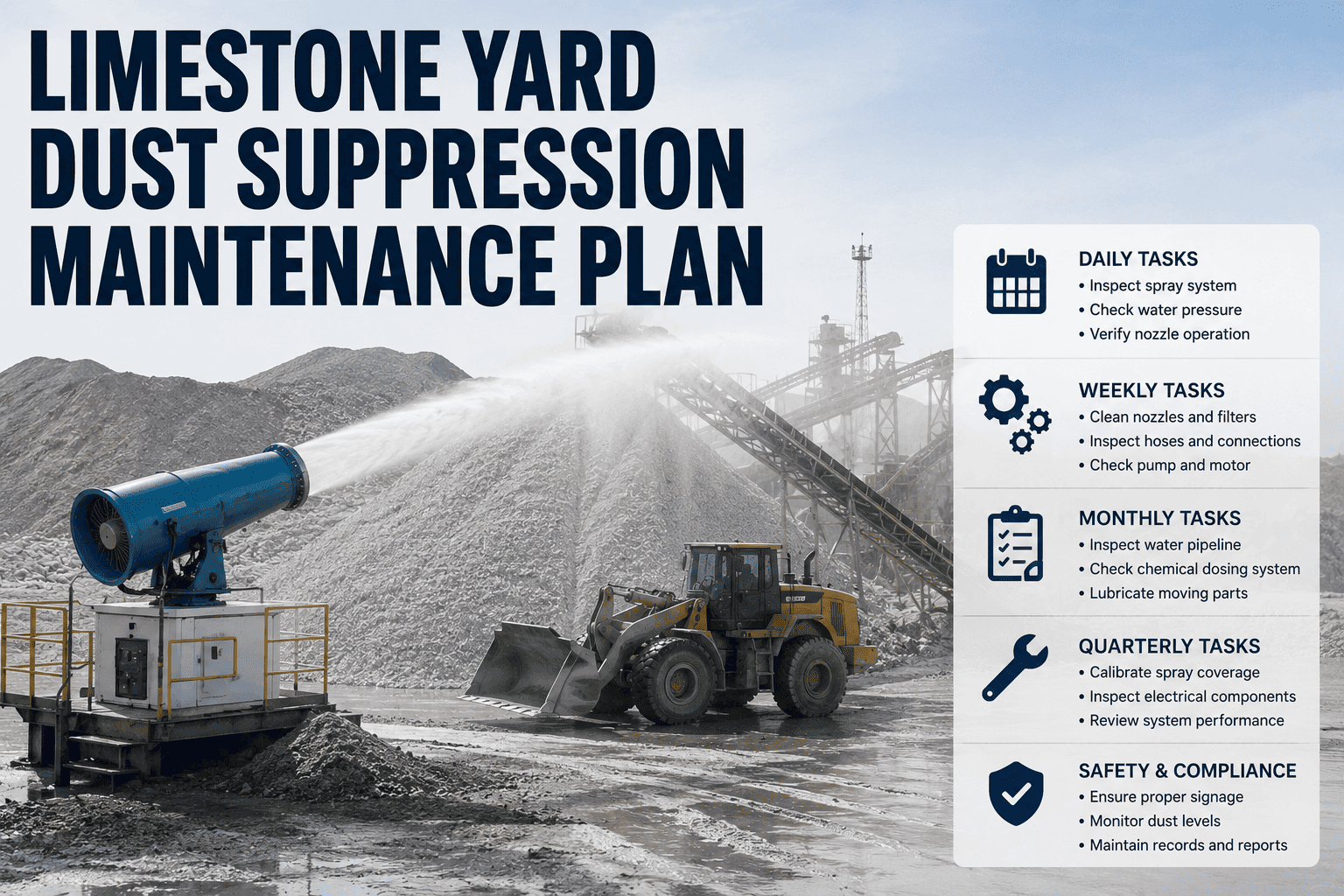
Limestone Yard Dust Suppression Maintenance Plan
Sprinklers, road stabilizers, and covered stockpiles only control dust when they are actually working. This is the maintenance checklist structure that keeps a limestone yard inspection-ready every day, not just during a scheduled audit.
Why the Equipment Working on Day One Is Not the Same as Compliant on Day 300
Dust suppression systems degrade quietly. A sprinkler nozzle clogs, a stabilized road section washes out after heavy rain, or a stockpile cover tears — and none of these failures are visible from the plant office. CMMS-driven inventory management ensures replacement nozzles and cover material are on hand the moment an inspection flags a gap.
Clogged or Misaligned Sprinklers
Mineral buildup and debris block nozzles gradually, reducing effective coverage on active stockpile faces without shutting the system off entirely.
Expired Road Stabilizer Coverage
Stabilizer applications typically last three to four months. Past that window, effectiveness declines steadily even though the road surface looks unchanged.
Torn or Displaced Stockpile Covers
Wind and equipment contact damage covers over time, and a torn section can go unnoticed for weeks unless a scheduled inspection specifically checks for it.
Water Supply and Pump Failures
A suppression system is only as reliable as its water supply — pump wear, line freezing, and pressure drops can silence a sprinkler zone entirely.
A Missed Suppression Failure Can Cost More in One Fine Than a Year of Structured PM
Oxmaint schedules every yard dust control inspection automatically and builds the timestamped, photo-evidenced audit trail regulators actually ask for — ready in minutes, not days.
Daily Yard Dust Suppression Checklist
This is the daily inspection card Oxmaint pushes to the yard operator's mobile device — designed to be completed in minutes at shift start, with every item timestamped and photo-evidenced for the compliance record.
Weekly and Monthly Yard Compliance Checklist
From Paper Log to Audit-Ready Record in Four Steps
Frequently Asked Questions
How often should limestone yard dust suppression equipment be inspected?
Sprinkler coverage and visible dust conditions should be checked daily as part of the yard operator's shift routine, since blockages and equipment issues can develop within a single day of heavy truck traffic. Road stabilizer coverage and stockpile cover integrity are better suited to a weekly walkdown, with a full compliance package review completed monthly. Start free in Oxmaint to schedule automated inspection intervals for your yard.
What regulatory bodies actually enforce limestone yard dust standards in the US?
Cement plants face simultaneous dust obligations from OSHA, which governs worker exposure limits under the respirable crystalline silica and total dust standards, EPA, which enforces fugitive emission and Clean Air Act provisions at the fence line, and MSHA where mining operations apply. Each agency maintains independent monitoring requirements and penalty structures, which is why a single unified compliance record matters more than three separate paper trails.
How long does a road stabilizer application actually last before it needs reapplication?
Most calcium chloride and similar road stabilizer treatments last approximately three to four months under normal traffic conditions, with performance gradually declining rather than failing abruptly. Heavy rainfall and high truck traffic volume can shorten this window, which is why tracking the actual application date against a maintenance schedule is more reliable than judging road condition by appearance alone. CMMS-driven inventory management keeps stabilizer application history tied to the specific yard zone treated.
Can digital inspection records actually replace paper-based compliance logs for an audit?
Yes, and digital records generally hold up better under regulatory review because they carry timestamp, GPS location, and photo evidence that paper logs cannot reliably provide. Auditors reviewing environmental compliance programs specifically look for systemic consistency across the reporting period, which a digital, automatically time-stamped inspection trail demonstrates far more convincingly than a binder of handwritten forms. Book a demo to see an audit-ready compliance export.
What happens if a dust suppression failure is caught during an inspection but not fixed immediately?
An inspection finding that is logged but not resolved is often viewed by regulators as worse than no inspection at all, since it demonstrates the plant was aware of a compliance gap and did not act on it. This is why every flagged inspection item should automatically generate a tracked corrective work order with an assigned owner and deadline, rather than remaining as a note in a log that nobody follows up on.
Turn Your Limestone Yard Into an Always-Audit-Ready Zone
Daily mobile checklists, automatic corrective work orders, and a compliance package that assembles itself — for OSHA, EPA, and ISO 14001 all at once.