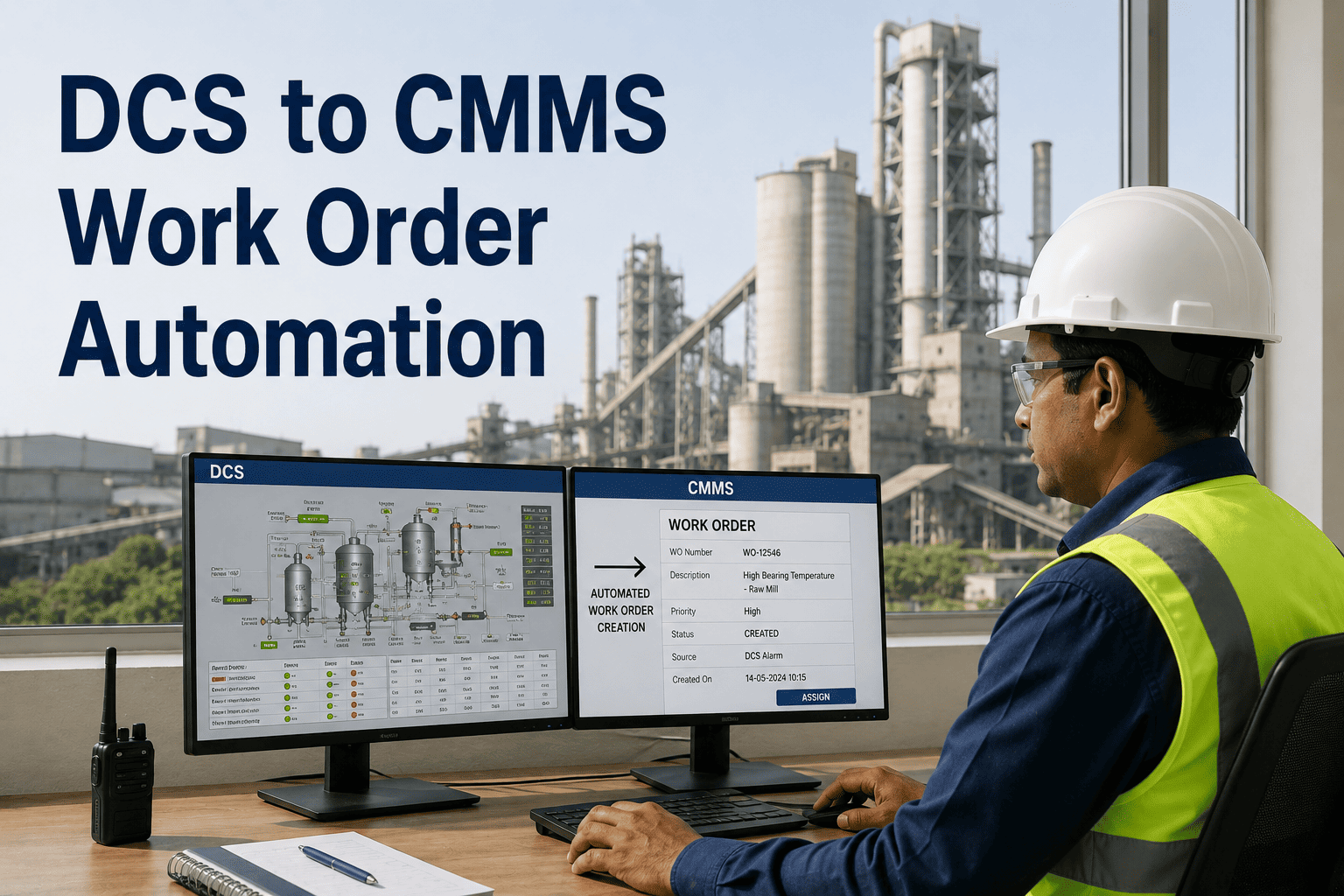
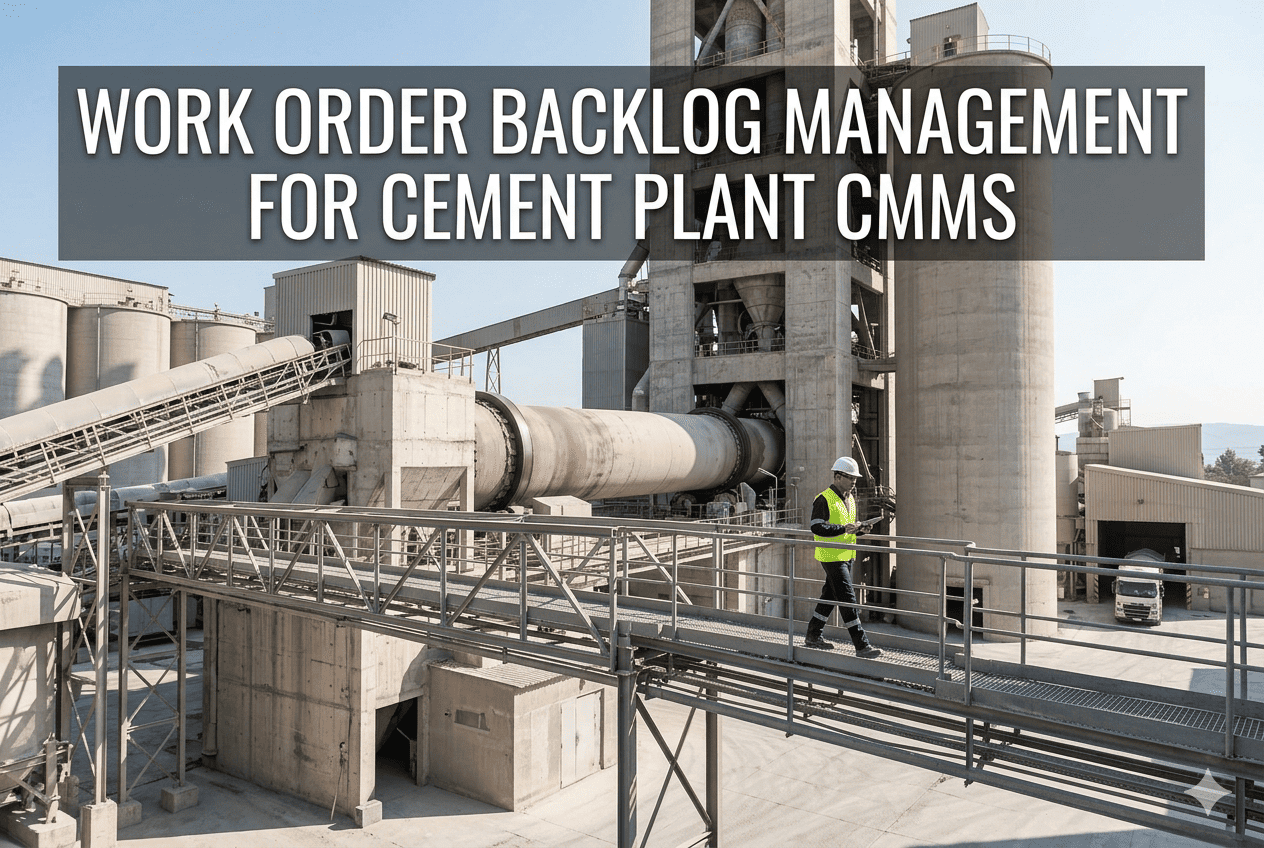
The kiln gave nineteen days of warning. Bearing temperature trended up for 19 days, shell differential widened for 12, girth-gear lubrication pressure dropped for 8 — every data point logged, none of it connected to a work order. When it finally stopped, the clock that mattered was MTTR, and that clock barely ticked on the actual repair. The technician spent forty minutes finding the asset ID, an hour diagnosing from scratch, half a shift waiting on a part nobody staged. At $150,000 to $400,000 per day of lost clinker, every hour the kiln stays dark is worth $6,000 to $17,000 — and only about 11% of that recovery time is anyone turning a wrench. This playbook shows cement teams where the other 89% hides, and how OxMaint work order management cuts it. Book a demo to map your plant's MTTR stage by stage.
Work Order Management · Benchmarking & ROI
Your MTTR Isn't a Wrench Problem. It's a Process Problem.
In a cement plant, the repair itself is the smallest slice of recovery time. OxMaint compresses detection, dispatch, and diagnosis — the 89% of MTTR that is pure waste — with mobile work orders, QR-scanned asset history, and live parts visibility.
The other 89% of MTTR is detection, dispatch, diagnosis, and waiting on parts — process waste, not wrench time.
Anatomy of a Cement Plant Repair: Where the Hours Actually Go
MTTR is not one number — it is a chain of four delays that compound from the moment a fault occurs to the moment the kiln is making clinker again. Attack only the repair and you attack the smallest link. Here is the full chain and what OxMaint does to each.
Detection
The fault sits unreported for hours. Operators are unsure of the process; a verbal handover misses it across a shift change while the kiln drifts.
OxMaint: mobile fault reporting in under 60 seconds, QR asset scanning so there's no hunt for the ID, auto-routing to the right technician.
Saves 40–75 min per event
Dispatch
Finding an available technician means radio calls and walking the plant. The fault report never reaches the right skill set the first time.
OxMaint: fault reports auto-route by skill and area, so the kiln drive specialist is notified directly instead of whoever answers the radio.
Removes the radio-and-walk gap
Diagnosis
The technician arrives with nothing — no asset history, no prior failure pattern, no record. They diagnose from scratch every time, even on a recurring girth-gear fault.
OxMaint: full asset history on mobile — prior failures, repair procedures, parts used last time, failure-mode frequency at the point of repair.
Diagnosis drops 50–60% on recurring faults
Repair & Parts Wait
A two-hour pump-bearing repair becomes a 72-hour outage because the part wasn't staged. The wrench time was never the bottleneck — the parts hunt was.
OxMaint: live parts visibility tied to the work order, with multi-site stock check, so the technician knows the part is staged before walking to the asset.
Turns a 72-hr wait into a planned slot
The Cement Reality
A bearing replaced during a scheduled PM takes 30 minutes. The same bearing left to fail catastrophically cascades into the connected components and takes 6 to 8 hours — and on a rotary kiln running above 1,400°C, every unplanned stop is also a thermal shock to the refractory and a spike in specific energy consumption during reheat. The plant that cuts MTTR is not the one with faster hands. It is the one that closed the gap between the warning sign in the data and the work order on the technician's phone, so the repair is small, staged, and scheduled instead of catastrophic, improvised, and at 2 AM.
The MTTR Reduction Playbook: Five Plays That Move the Number
Cutting MTTR in a cement plant is not one big project — it is five connected plays, each attacking a specific source of lost recovery time. Run them in OxMaint and the gains compound.
Play 1
Digitize Every Work Order
Move off spreadsheets and radios. Automated digital work orders alone deliver a 25–40% MTTR reduction in cement plants by timestamping every stage and eliminating the verbal handovers that lose faults across shifts.
Play 2
Put Asset History in Every Pocket
QR-scan any kiln, mill, or crusher to surface its full failure and repair history on mobile. When the technician sees the last three failure modes before touching a tool, diagnosis on recurring faults drops by half.
Play 3
Hunt the Bad Actors
In most cement plants, 20% of the equipment causes 80% of the failures. OxMaint's downtime classification surfaces those bad actors by hours lost, so reliability investment lands where it actually moves MTTR and MTBF.
Play 4
Stage Parts Before the Failure
Tie spare parts to the work order and the asset. When a critical component nears end of life, the part is pre-positioned — converting the 72-hour parts wait that dominates MTTR into a planned Saturday slot.
Play 5
Shift PM From Calendar to Usage
Cement equipment wears with throughput, not days. Usage-based PM triggered in OxMaint limits the scope of damage when failures do occur, keeping repairs to a 30-minute swap instead of an 8-hour cascade.
Every Work Order Timestamped, Every Stage Measured
OxMaint timestamps detection, dispatch, diagnosis, repair, and verification automatically — so you see your MTTR breakdown by asset, area, and failure mode, and know exactly which play to run next. Mobile-first, QR-driven, parts-aware.
What Faster Repairs Are Worth on Cement's Critical Assets
MTTR reduction is not abstract in a cement plant — it maps directly onto the assets that stop the whole line. These are the components where every recovered hour carries the most clinker.
Rotary Kiln
$150K–$400K / day lost
Shell, refractory, support and thrust rollers, girth gear, drive motor. A single component failure stops the whole plant, and refractory failure means 5–14 days of cool-down, replace, and heat-up. Worth $6K–$17K per uptime hour.
Raw & Finish Mills
$500K–$1.2M gearbox
Vertical roller and ball mills grind in abrasive service. A VRM gearbox failure runs $500K–$1.2M with a 3–6 week lead time — the textbook case for staging parts before the wear curve crosses the line.
Belt Conveyors
Highest failure count
Nine-year studies confirm belt conveyors, cement mills, and kilns carry the highest failure counts and downtime — and most show predictable wear-out behavior, making their MTTR the most improvable in the plant.
Crushers & Preheaters
Cascading impact
Crushers, main fans, and bucket elevators feed the whole process. Their failures ripple upstream and downstream, so fast, well-diagnosed recovery here protects availability across the entire line.
The Numbers a Work-Order-Driven Plant Posts
The gains from attacking MTTR as a process are documented and repeatable across cement operations that move from spreadsheets to connected work orders.
25–40%
MTTR reduction
From automated digital work orders alone, before any sensor investment — the fastest lever any cement team can pull.
40–60%
Less unplanned downtime
Within the first year for facilities that actively measure and manage MTTR, by eliminating delays and information gaps.
50–60%
Faster diagnosis
On recurring failure types, once technicians carry full asset history and prior repair procedures on mobile.
6–12 mo
Typical payback
Most cement plants reach payback through downtime cuts alone — a single prevented kiln failure often covers the whole rollout.
Frequently Asked Questions
If most MTTR isn't the actual repair, where does the time really go?
Only about 11% of total MTTR is a technician physically fixing the asset — the rest is process waste spread across detection, dispatch, and diagnosis. Faults sit unreported across shift handovers, technicians are tracked down by radio and walking, and they arrive without asset history so they diagnose from scratch even on recurring failures. The single largest hidden cost is usually the parts wait, where a two-hour repair stretches to seventy-two hours because the spare was never staged. OxMaint attacks all four stages at once rather than just the wrench time.
Start a free trial to see your own MTTR breakdown by stage.
How much can digital work orders alone reduce MTTR in a cement plant?
Cement plants consistently see a 25–40% MTTR reduction from automated digital work orders alone, before adding any sensors or predictive hardware. The improvement comes from timestamping every stage of the repair cycle, auto-routing fault reports to the right technician, and eliminating the verbal handovers that lose faults across shift changes. Because it requires no capital equipment, it is the fastest and lowest-risk lever a cement maintenance team can pull, and it builds the clean data foundation that every later reliability gain depends on. Facilities that actively manage MTTR this way cut unplanned downtime 40–60% in the first year.
We have a CMMS already. Why would OxMaint change our MTTR?
Many plants have a CMMS that stores records but doesn't compress repair time, because the data lives on a desktop the technician can't reach at the asset. OxMaint is mobile-first: QR-scanning a kiln, mill, or crusher surfaces its full failure and repair history at the point of work, parts availability is visible against the work order before the technician walks over, and every stage is timestamped automatically for a live MTTR breakdown by asset and failure mode. That point-of-failure access is what turns diagnosis on recurring faults from an hour of trial-and-error into a few minutes.
Book a demo to compare it against your current workflow.
How do we know which assets to target first?
Start with the bad actors — in most cement plants, 20% of the equipment causes 80% of the failures, and those assets are where MTTR reduction pays back fastest. OxMaint's downtime classification ranks equipment by hours lost and failure frequency, so you can see at a glance whether your worst offenders are the kiln support rollers, a mill gearbox, or a chronic conveyor. Targeting the highest-impact assets first, rather than spreading effort evenly, is what produces measurable MTTR and availability gains in the first few months instead of a year out.
How fast is payback on a work-order-driven MTTR program?
Most cement plants reach payback within 6 to 12 months through downtime cuts alone, and a single prevented kiln failure often covers the entire implementation cost on its own. Given that an unplanned kiln shutdown can cost more than a plant's entire annual preventive maintenance budget, the math turns positive quickly once recovery time drops. The first wins appear within weeks as digitized work orders eliminate the detection and dispatch delays, and the savings deepen as asset history accumulates and bad-actor patterns surface for targeted reliability work.
Close the Gap Between the Warning Sign and the Work Order
OxMaint compresses every stage of cement plant recovery — detection, dispatch, diagnosis, and parts — with mobile work orders, QR asset history, and live spares visibility. Cut the 89% of MTTR that was never the repair, and turn the next kiln scare into a scheduled Saturday slot.
Mobile Work Orders
QR Asset History
Live Parts Visibility
MTTR by Failure Mode