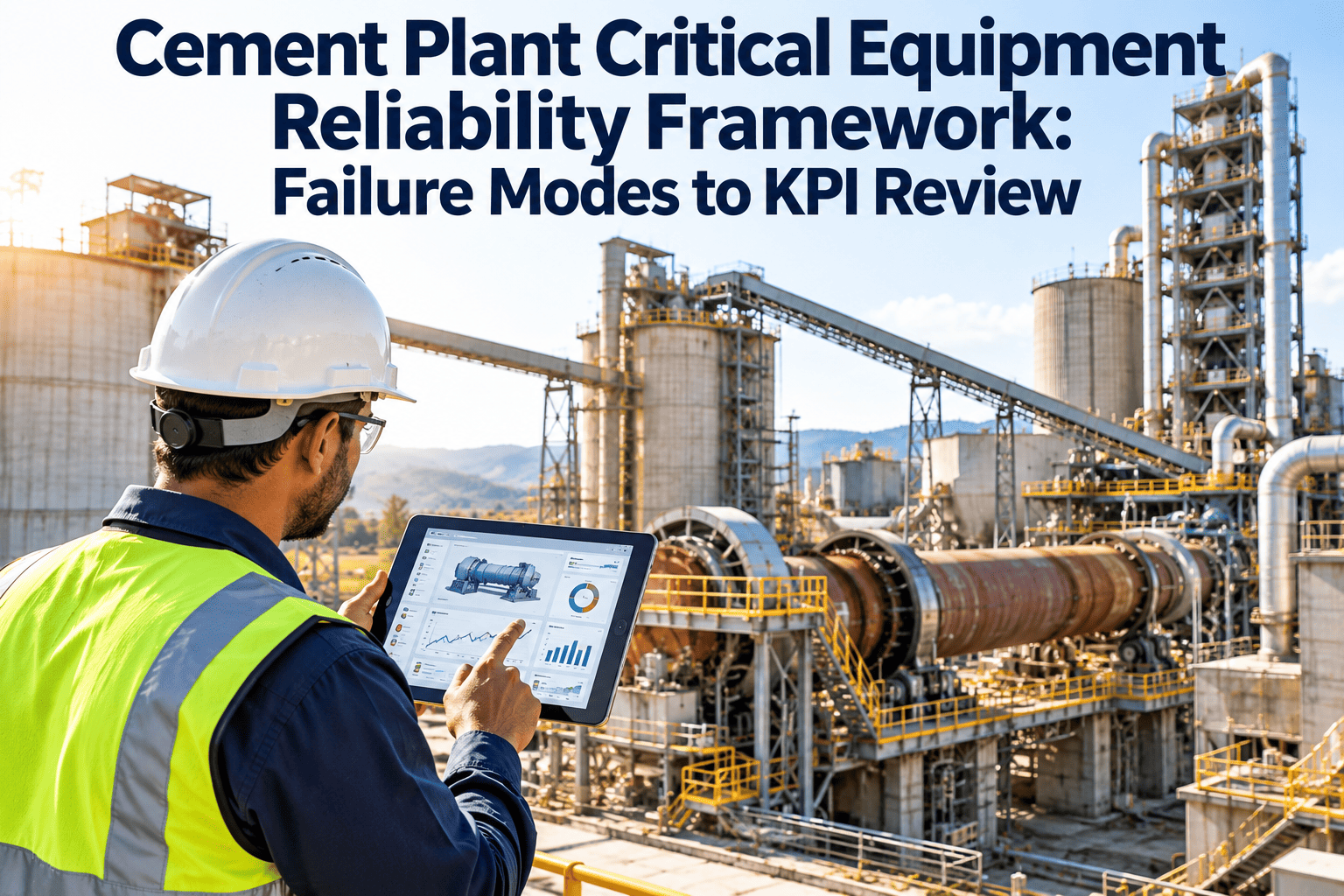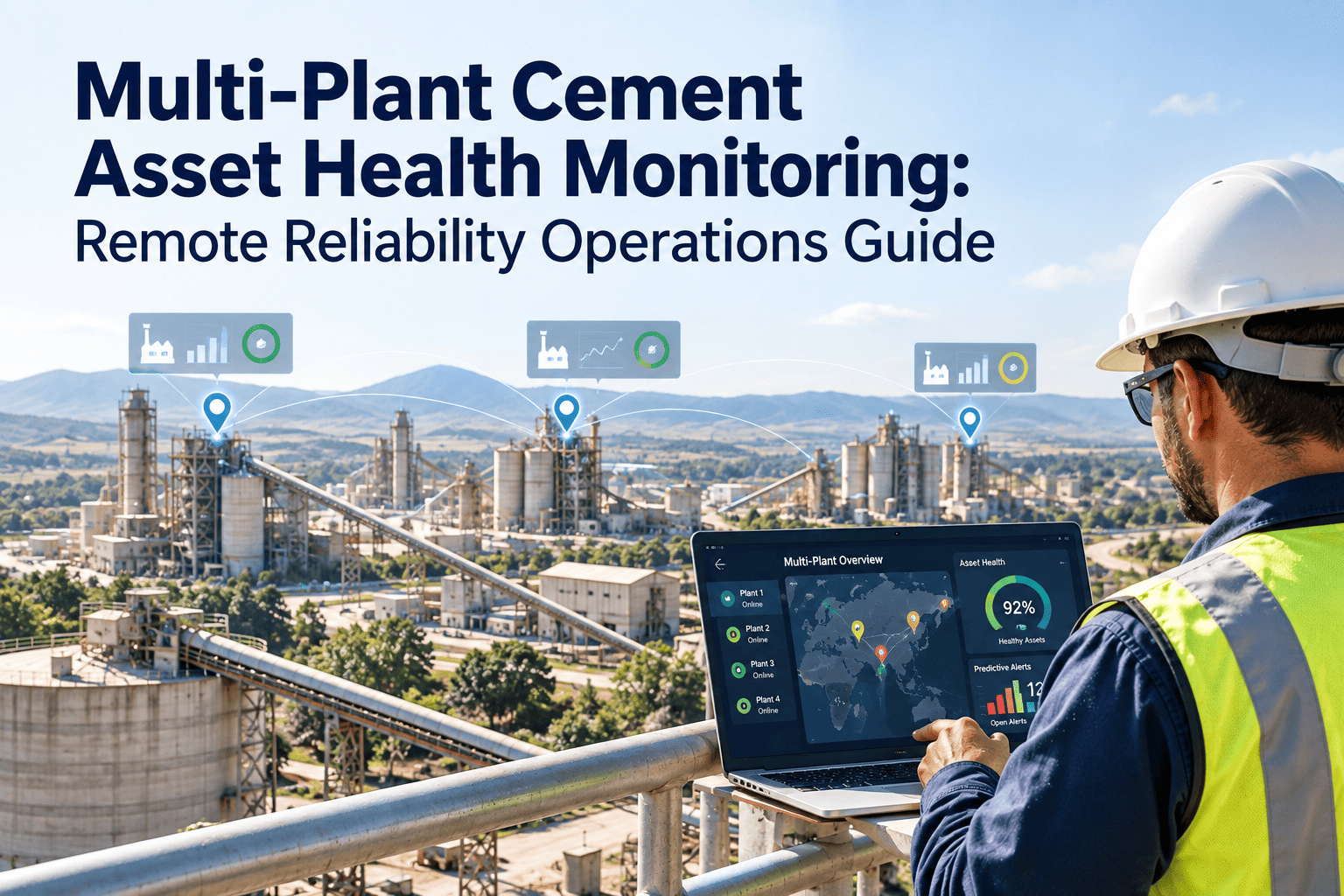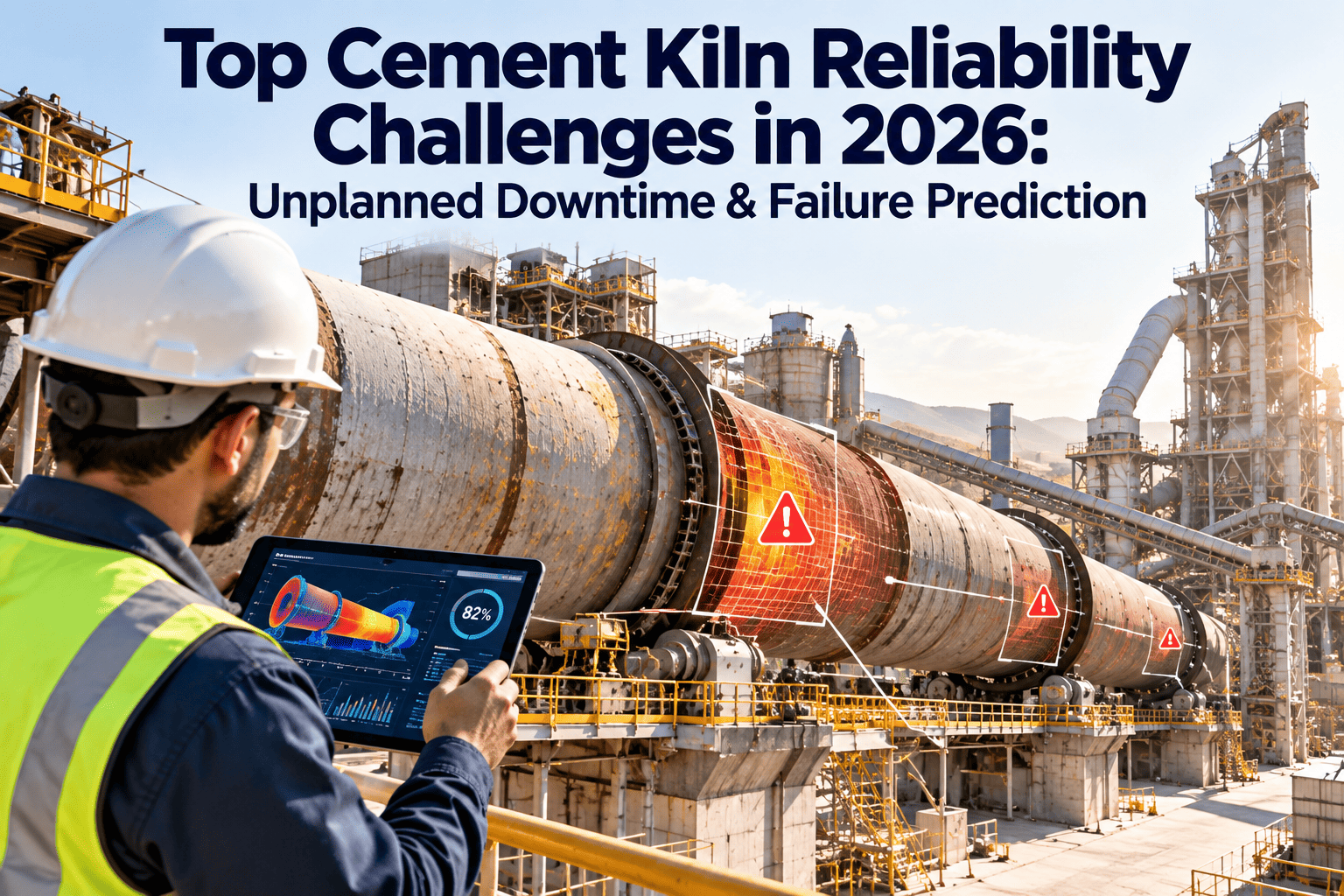
Cement plants generate more maintenance signals than any team can read by hand: vibration trends, temperature drift, inspection photos, operator notes, and years of work order history. The problem is rarely a lack of data. It is that alerts, images, and repair records live in different places, so warnings stall before anyone acts on them. An AI-enabled maintenance platform closes that gap by turning findings into assigned, tracked work. This page explains how that flow works for cement equipment and where Oxmaint AI CMMS software fits into it.
AI-Enabled Cement Maintenance Platform
Predictive alerts, vision-assisted inspections, and work orders in one connected workflow for cement plant maintenance teams.
The gap between an alert and a repair
In many plants an alarm ends in a control room message, a phone call, or a note in someone's notebook. Each handoff is a place where the warning can be lost.
Data sits in silos
Monitoring, inspection, and maintenance records are held in separate tools.
Alerts lack ownership
No one is clearly assigned, so follow-up depends on who happens to notice.
Findings are not history
Photos and comments never reach the asset record, so patterns stay hidden.
Priorities are unclear
Every open item looks equal, even when kiln or mill risk is higher.
Where AI helps in cement maintenance
AI is most useful when it narrows attention. It should point the team toward the assets and findings that need a decision.
| Cement equipment | What AI can watch | Resulting action |
|---|---|---|
| Raw mill and cement mill | Vibration and power trends, gearbox condition | Predictive alert and inspection task |
| Kiln drives and support rollers | Temperature drift, vibration, lubrication records | Condition-based work order |
| Fans and blowers | Imbalance signatures, bearing temperature | Cleaning or balancing job |
| Conveyors and elevators | Motor current, belt condition photos | Belt inspection or repair |
| Crushers | Wear indicators, vibration, downtime history | Liner planning |
| Packing and loading | Recurring fault patterns from work order history | Preventive schedule change |
Three capabilities, one asset record
Predictive alerts
Condition data is compared against normal behaviour and thresholds. When a trend moves the wrong way, the platform flags it before the equipment stops.
- Trend-based rather than single-reading alarms
- Linked directly to the affected asset
- Ranked by criticality
Vision-assisted inspection
Technicians capture photos during rounds. Images are stored against the asset so changes in wear, leaks, or corrosion can be compared over time.
- Photos attached to checklists
- Visual history per asset
- Reviewer confirms findings
Automated work orders
A confirmed finding becomes a work order with priority, tasks, parts, and a responsible person, instead of a message that someone has to remember.
- Prefilled from the alert or inspection
- Assigned and scheduled
- Closed with recorded findings
Move from alerts to assigned work
Set up your cement plant assets and see how one connected workflow reduces missed warnings.
A day in the life of one alert
This timeline shows how a bearing warning on a mill fan moves through the platform.
- Shift start
Trend crosses a limit
Vibration on the fan bearing rises above its normal band and an alert appears against the asset.
- Within hours
Technician checks on site
A mobile inspection is opened, a photo and comment are recorded, and the finding is confirmed.
- Same day
Work order created
The planner adds tasks, checks the bearing in inventory, and picks a suitable stop window.
- Planned window
Repair completed
The bearing is replaced, readings are recorded, and the alert is cleared with notes.
- Afterwards
History improves the next decision
The event joins the asset record and informs thresholds and the preventive plan.
What a cement plant should ask before choosing a platform
Use this list to compare options. It focuses on how the system will be used every day on site.
Can technicians use it on the floor?
Mobile access, photo capture, and simple checklists matter in dusty, noisy areas.
Do alerts create accountable work?
Look for direct conversion from an alert or inspection finding to a work order.
Is asset history complete?
Repairs, parts, photos, and readings should sit under one asset.
Can it link parts to jobs?
Inventory visibility prevents predicted repairs from waiting on spares.
Does reporting support decisions?
Dashboards should show backlog, downtime causes, and preventive compliance.
Can you start small?
A phased rollout on critical assets reduces risk and builds team confidence.
Rolling out in phases
Register critical assets
Start with mills, kiln drives, fans, and crushers. Add hierarchy and criticality.
Standardise routines
Build preventive schedules and mobile inspection checklists for those assets.
Connect condition data
Bring in available monitoring data and define alert rules with reliability staff.
Review and refine
Track alert-to-action time, backlog, and repeat failures, then adjust.
How Oxmaint supports the connected workflow
Oxmaint combines the core CMMS functions cement teams already need with AI-enabled maintenance workflows.
- Asset management with maintenance history by equipment
- Preventive maintenance scheduling and recurring tasks
- Corrective work orders with priority, tasks, and parts
- Mobile inspections with checklists and photos
- Inventory tracking for critical spares
- Dashboards and reports for backlog, downtime, and compliance
Keep people in charge of decisions
AI suggests where to look. Engineers and technicians confirm the finding and choose the repair, which keeps accountability clear and builds trust in alerts.
Platform questions from cement teams
Do we need sensors on every asset?
No. Start with critical equipment and add condition data over time.
How does vision help inspections?
Photos stored on the asset make wear and leaks easier to compare between rounds.
Can alerts become work orders automatically?
Confirmed findings can be turned into work orders. Sign up to test the flow.
Is it only for large plants?
No. A phased setup suits single-line and multi-plant operations.
Can we see it with our equipment?
Yes. Book a demo to walk through a cement example.
Give every cement maintenance alert an owner
Connect predictive alerts, inspections, and work orders so problems are handled before they stop production.