A cement plant in Texas faced a $156,000 OSHA citation after an employee entered a raw mill without proper confined space clearance—the clearance had expired 36 hours earlier, but paper-based tracking failed to flag the issue. The incident exposed gaps in clearance documentation that are common across the industry. Implementing digital OSHA safety clearance processes through Oxmaint ensures every maintenance activity has valid authorization, every permit is tracked to expiration, and every regulatory compliance requirement is documented. Sign up for Oxmaint to digitize your safety clearance workflows and eliminate compliance gaps.
OSHA Safety Clearance Process for Cement Plant Operations
Complete guide to implementing OSHA-compliant safety clearances for cement manufacturing. Covers required clearance types, authorization levels, documentation requirements, and digital tracking for regulatory compliance.
Cement manufacturing involves multiple OSHA-regulated hazards that require specific safety clearances before maintenance work can proceed. Understanding which OSHA standards apply to your operations is the foundation for building compliant clearance processes.
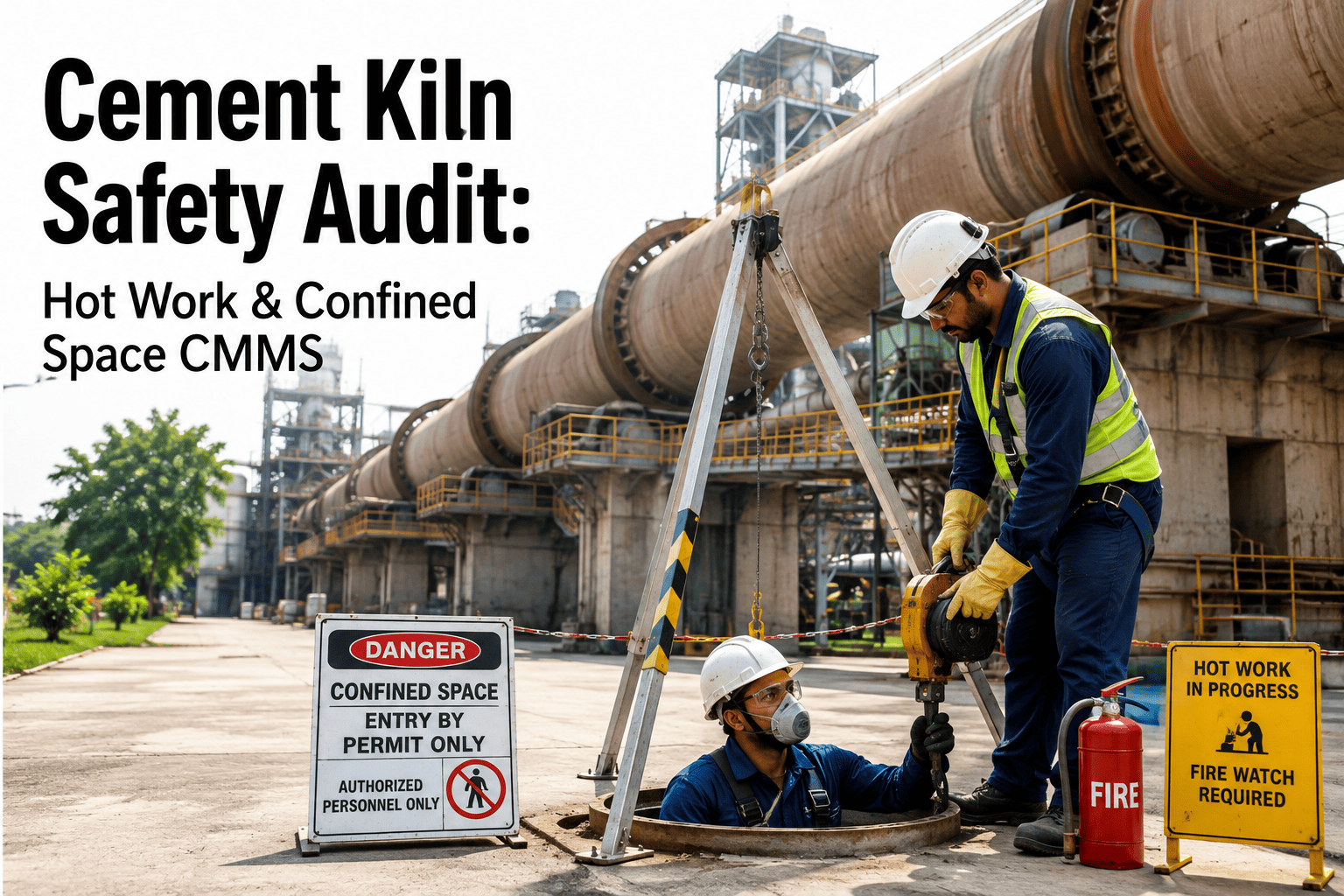
Requires written permits for entry into confined spaces with atmospheric hazards, engulfment risks, or configuration hazards.
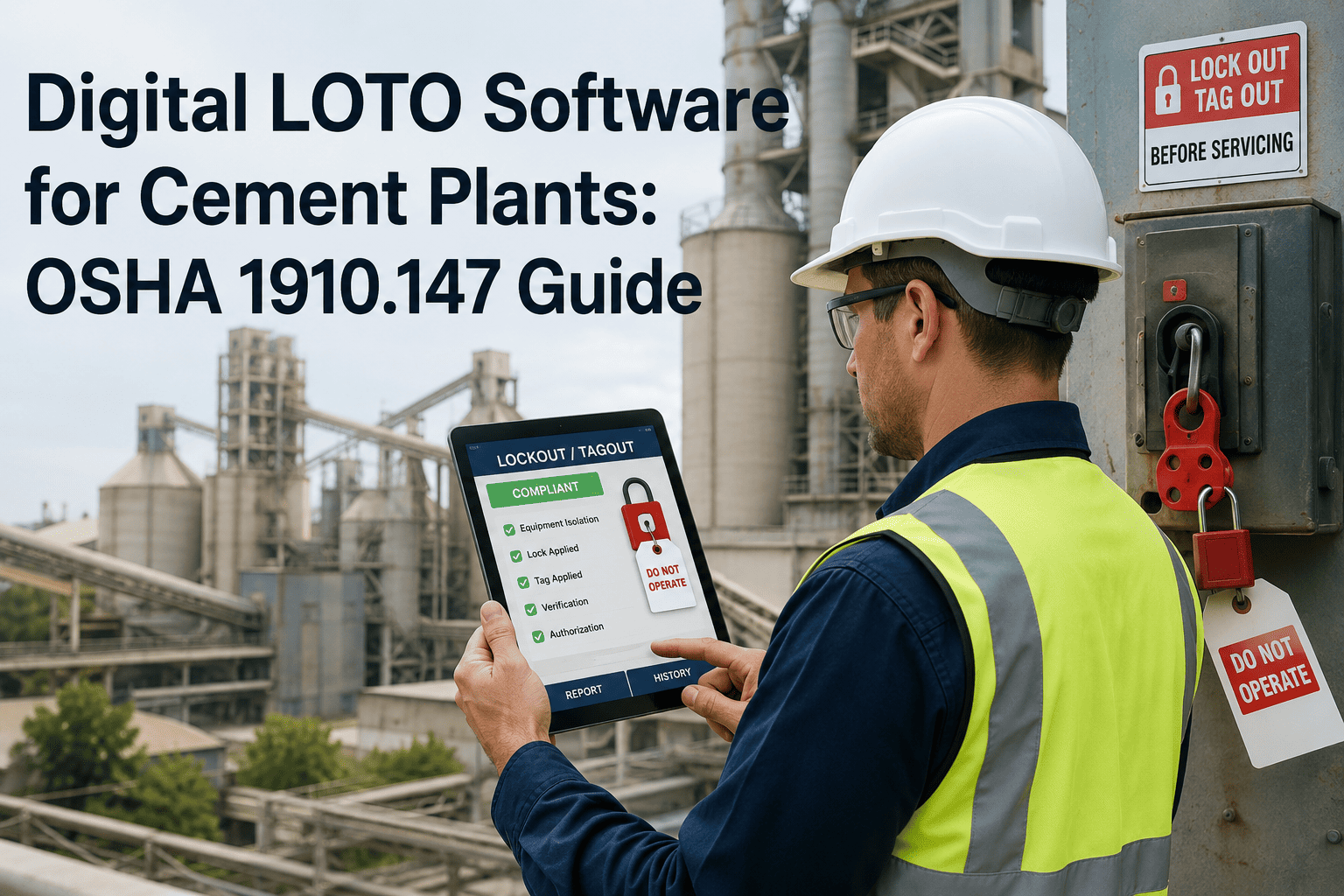
Requires procedures to disable machinery and prevent unexpected startup during servicing and maintenance.
Requires fire prevention measures, permits for hot work, and designated fire watch personnel.
Requires fall protection systems for work at heights of 6 feet or more in construction and 4 feet in general industry.
Requires respiratory protection program when employees are exposed to harmful dusts, fogs, or gases.
Sets permissible exposure limits for silica dust and requires engineering controls, exposure monitoring, and medical surveillance.
Every maintenance activity requiring safety authorization follows a standardized clearance process from request through closure. This process ensures proper hazard assessment, appropriate authorization, and complete documentation for OSHA compliance.
Each clearance type has specific OSHA requirements that must be verified before work begins. Use these checklists to ensure complete compliance with applicable safety regulations. Sign up for Oxmaint to implement digital checklists with automatic compliance tracking.
Required for entry into silos, mills, vessels, and other permit-required confined spaces in cement operations.
Required for all maintenance activities involving equipment with potential for unexpected energization or startup.
Required for welding, cutting, grinding, or other spark-producing activities outside designated hot work areas.
Required for work performed at heights of 6 feet or more above lower levels in cement plant operations.
Authorization Levels for Safety Clearances
Different clearance types require different authorization levels based on risk severity
OSHA requires specific clearance documentation to be maintained and available for inspection. Incomplete or missing documentation is one of the most common citation triggers during OSHA audits of cement plants.
Cement manufacturing presents unique hazards that require specific clearance considerations beyond general industry requirements. These cement-specific hazards must be addressed in your clearance procedures.
| Work Area | Primary Hazards | Required Clearances | Risk Level |
|---|---|---|---|
| Kiln Section | Heat, rotation, confined spaces | LOTO + Confined Space + Hot Work | Critical |
| Raw Mill | Engulfment, rotating parts, dust | LOTO + Confined Space + Respiratory | Critical |
| Cement Mill | Engulfment, noise, rotating parts | LOTO + Confined Space | Critical |
| Preheater Tower | Heat, height, confined spaces | Height + Confined Space + Heat Stress | High |
| Silos | Engulfment, atmospheric, falls | Confined Space + Height + Respiratory | Critical |
| Conveyor Systems | Entanglement, pinch points | LOTO | Medium |
Understanding the financial and operational consequences of OSHA compliance failures helps justify investment in proper clearance systems. Penalties have increased significantly in recent years.
Frequently Asked Questions
QHow long are safety clearances valid?
Clearance validity depends on the type. Confined space permits are typically valid for one shift (8-12 hours) and must be renewed if work extends beyond. LOTO clearances remain valid until the authorized employee removes their lock. Hot work permits usually expire at end of shift or 8 hours, whichever is shorter. Oxmaint automatically tracks expiration and sends alerts before clearances expire.
QWho can authorize safety clearances?
OSHA requires that clearances be authorized by "qualified persons" with appropriate training and authority. The specific authorization levels should be defined in your written safety program. Typically, supervisors authorize routine clearances while higher-risk activities require safety manager or plant manager approval. Book a demo to see how Oxmaint routes approvals automatically.
QWhat happens if a clearance expires during work?
Work must stop immediately when a clearance expires. The area must be secured, and a new clearance obtained before work resumes. Continuing work without valid clearance is an OSHA violation. Oxmaint sends expiration warnings 30, 15, and 5 minutes before clearance expiration to prevent this situation.
QHow should we handle contractor clearances?
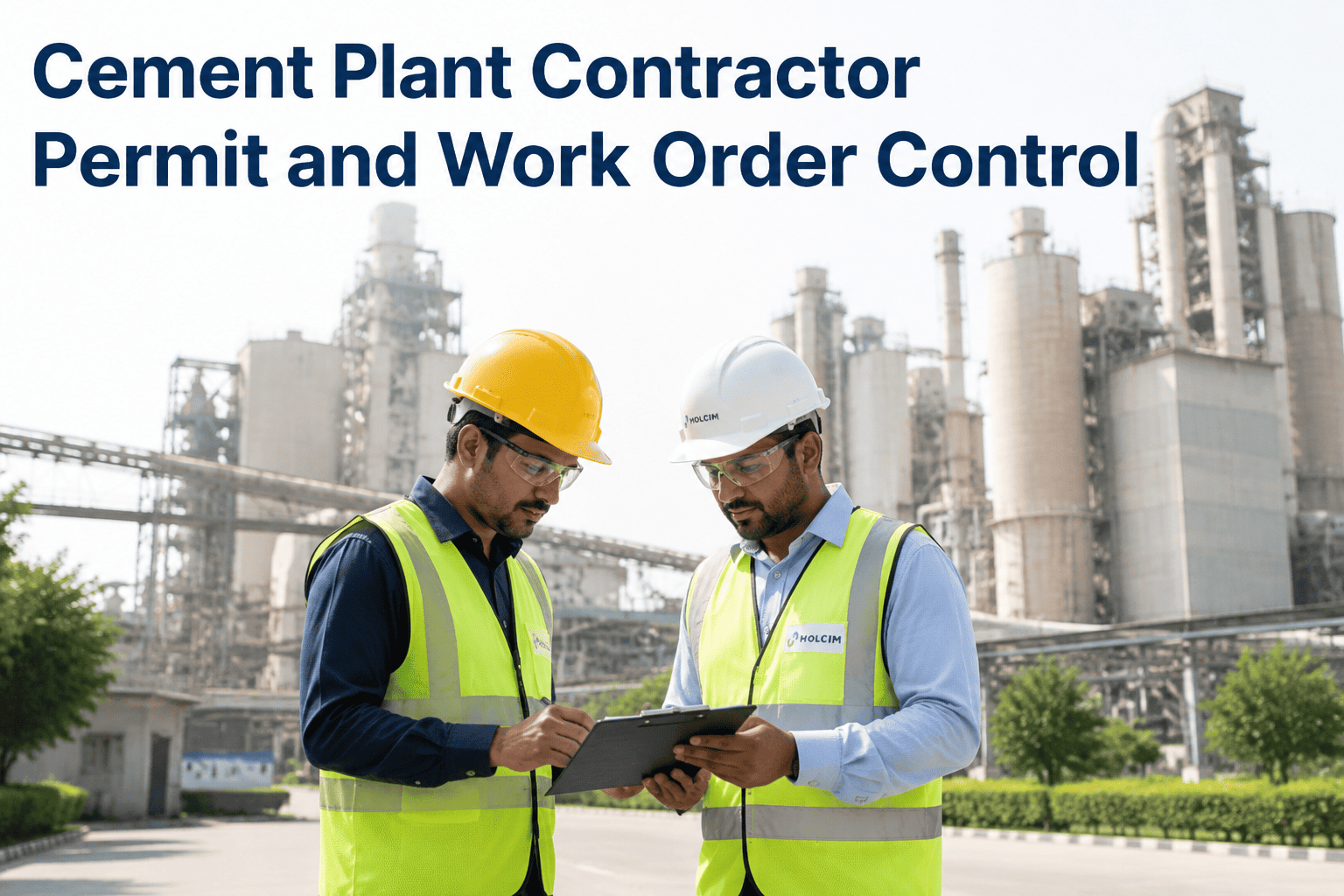
Under OSHA's multi-employer citation policy, host employers must ensure contractors follow the same safety clearance requirements as employees. Require contractors to use your clearance system or provide proof of equivalent procedures. Sign up for Oxmaint to give contractors mobile access to your clearance system while maintaining full audit trails.
QWhat documentation is required during OSHA inspections?
OSHA inspectors will request: current and recent clearance permits, training records for employees performing permitted work, written procedures for each clearance type, equipment inspection and calibration records, and incident reports. Digital systems like Oxmaint can produce these records instantly, which demonstrates program effectiveness to inspectors.
Achieve 100% OSHA Clearance Compliance
Oxmaint digitizes your safety clearance process with automated workflows, expiration tracking, training verification, and complete audit documentation. Never face a clearance-related citation again.