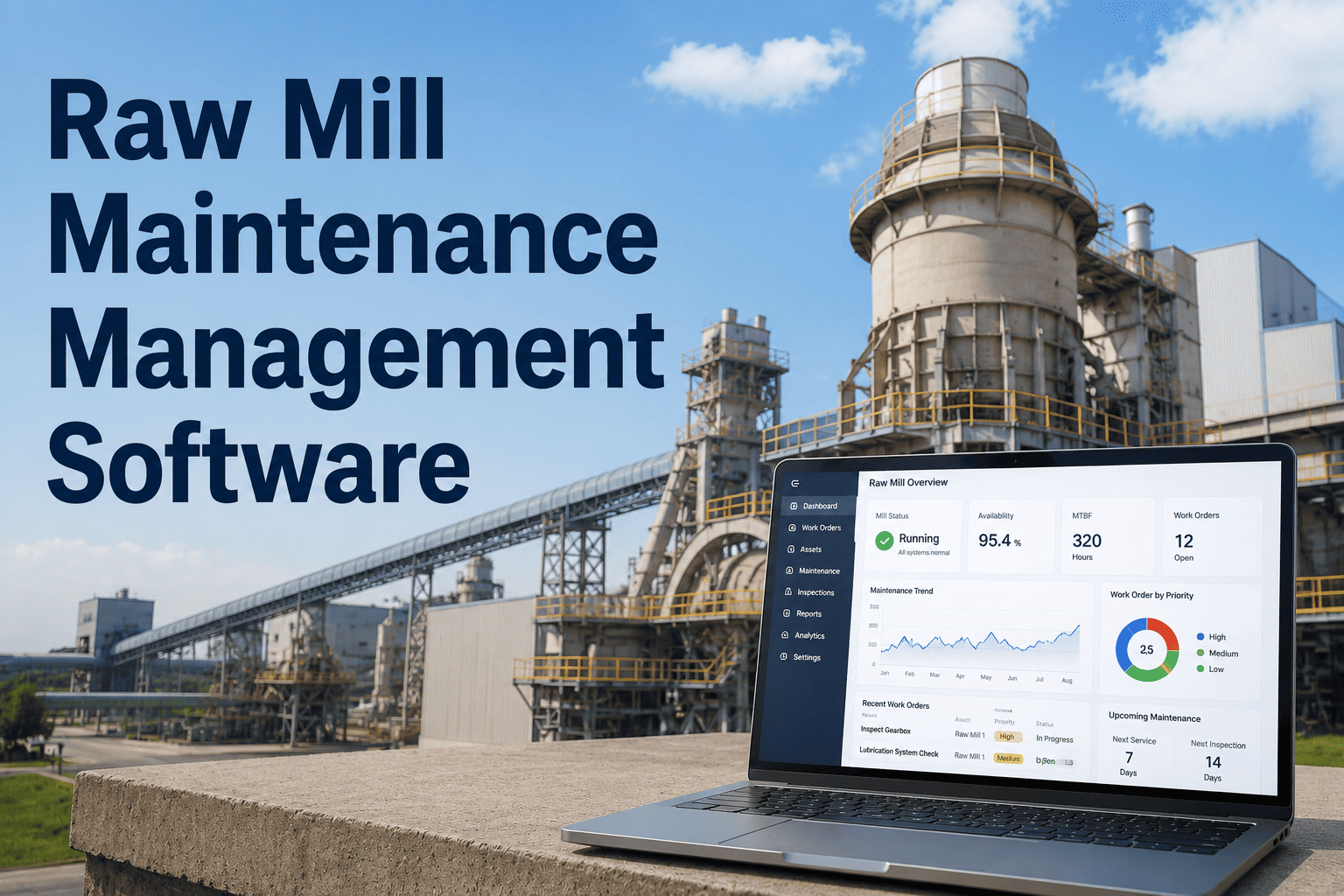
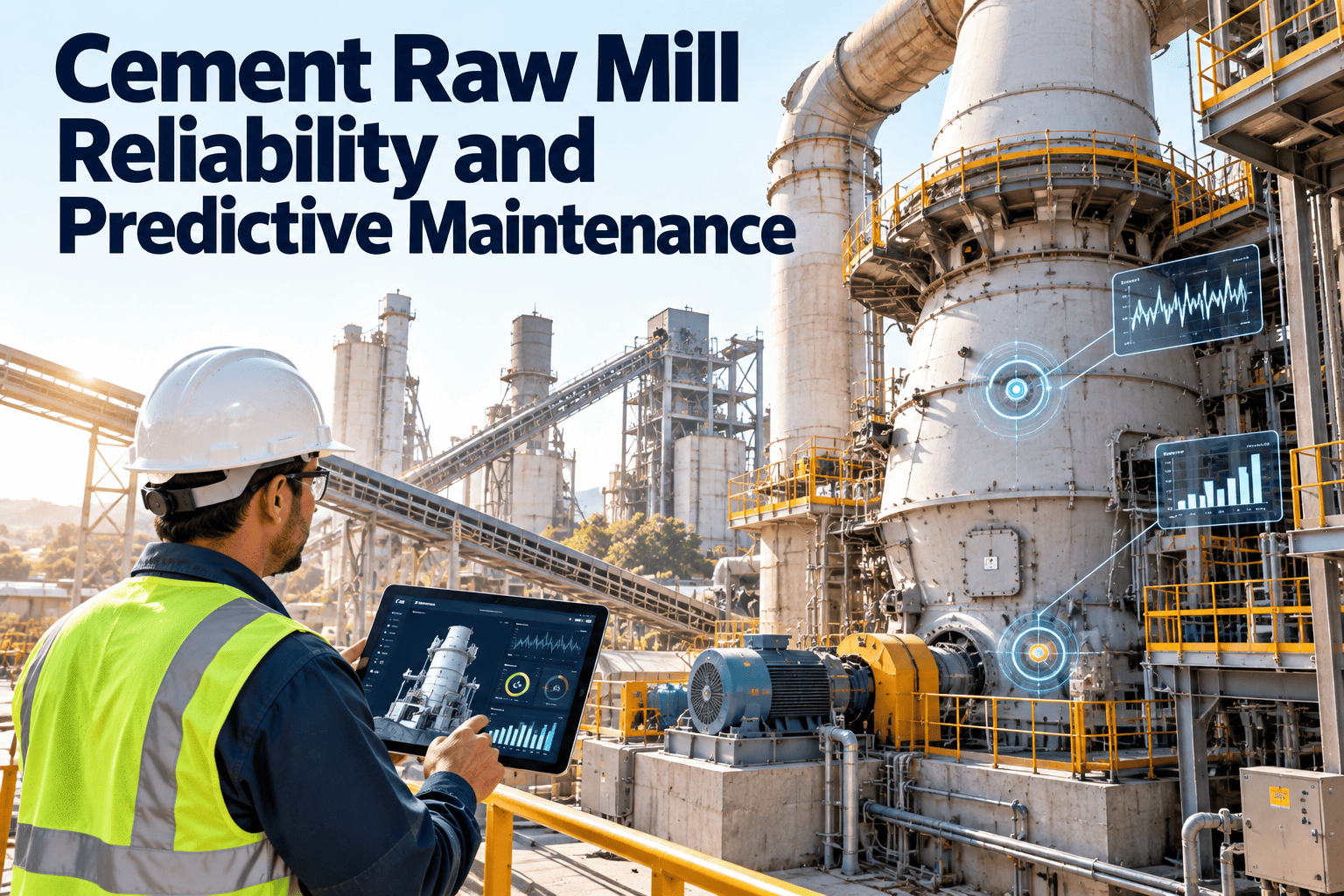
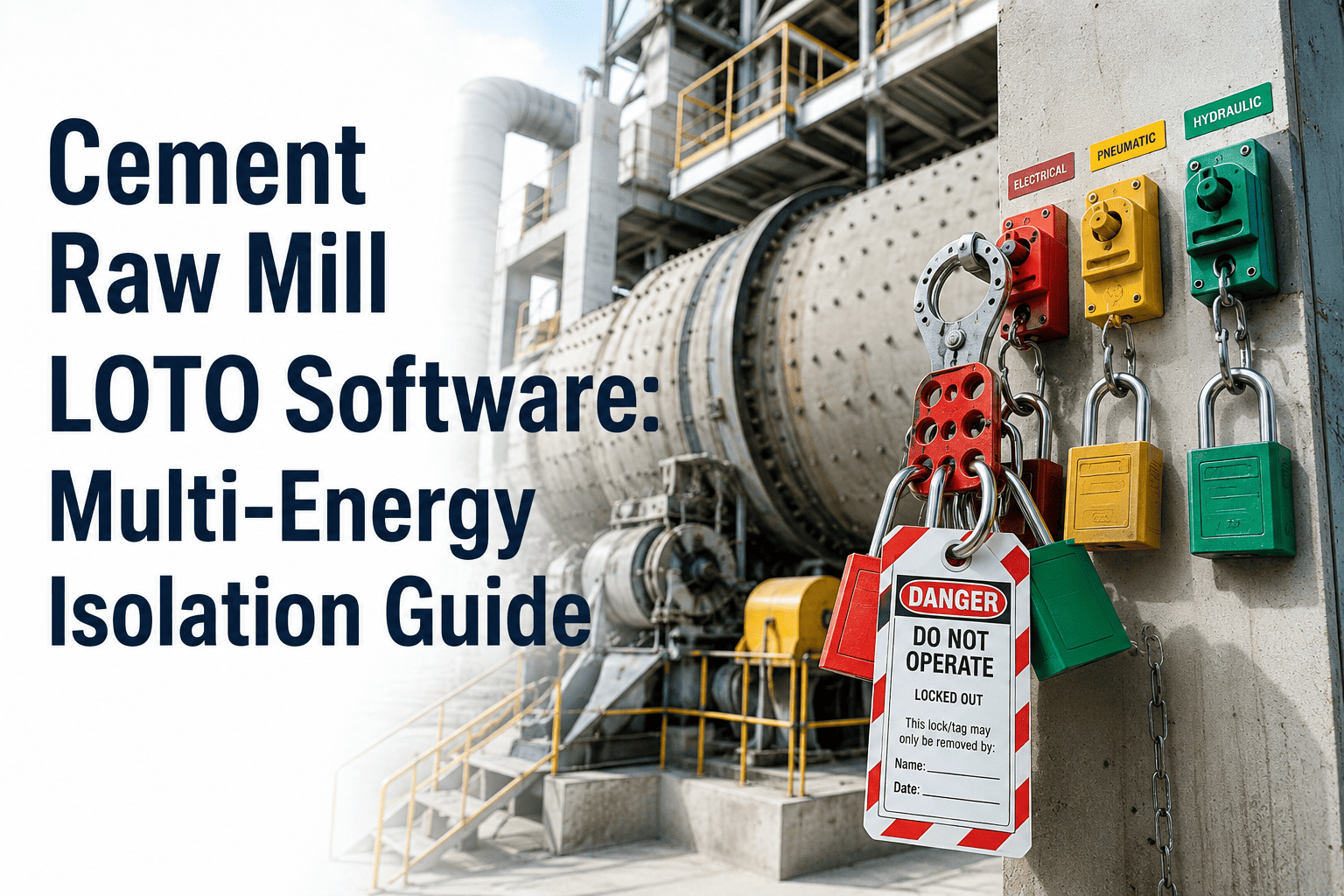
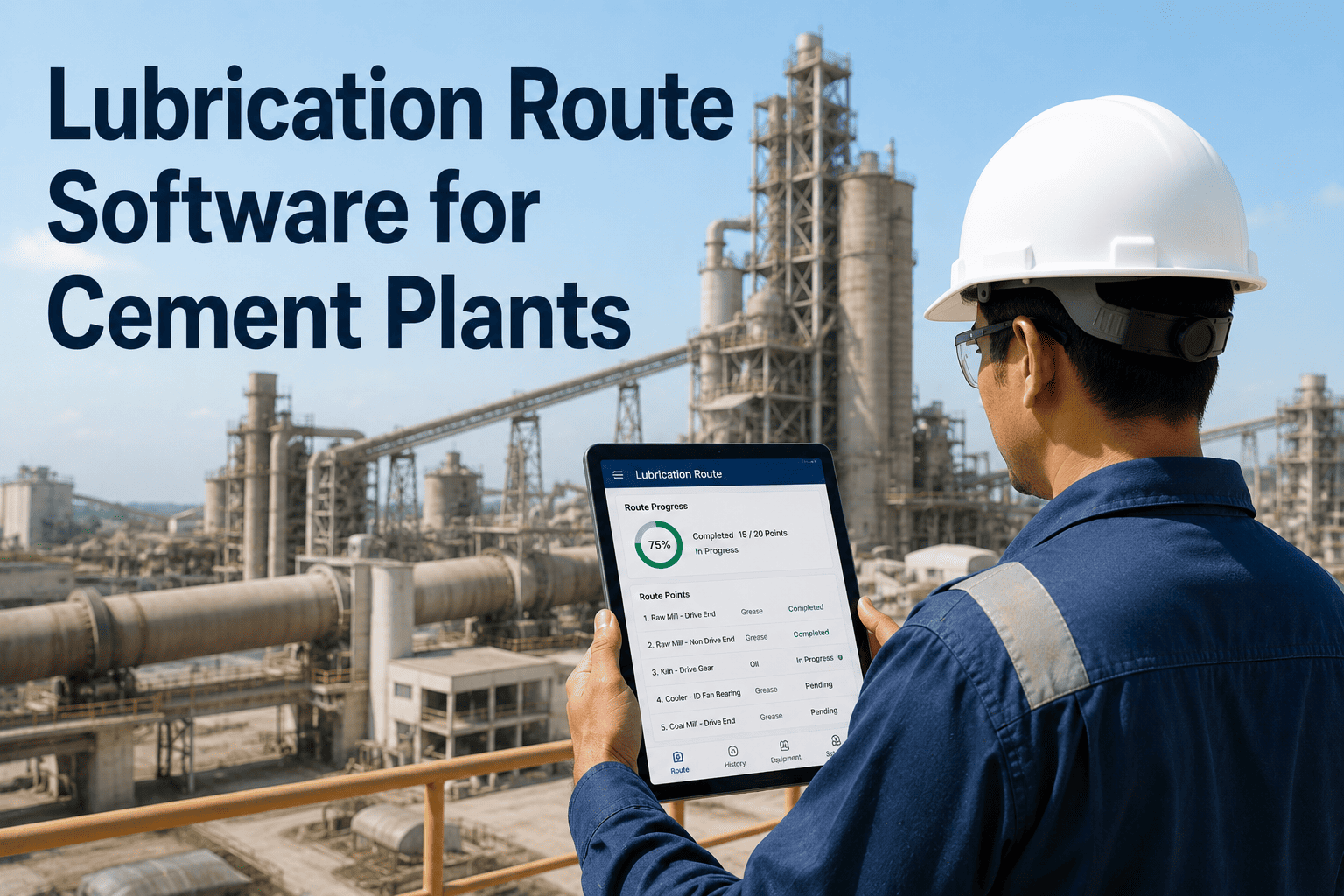
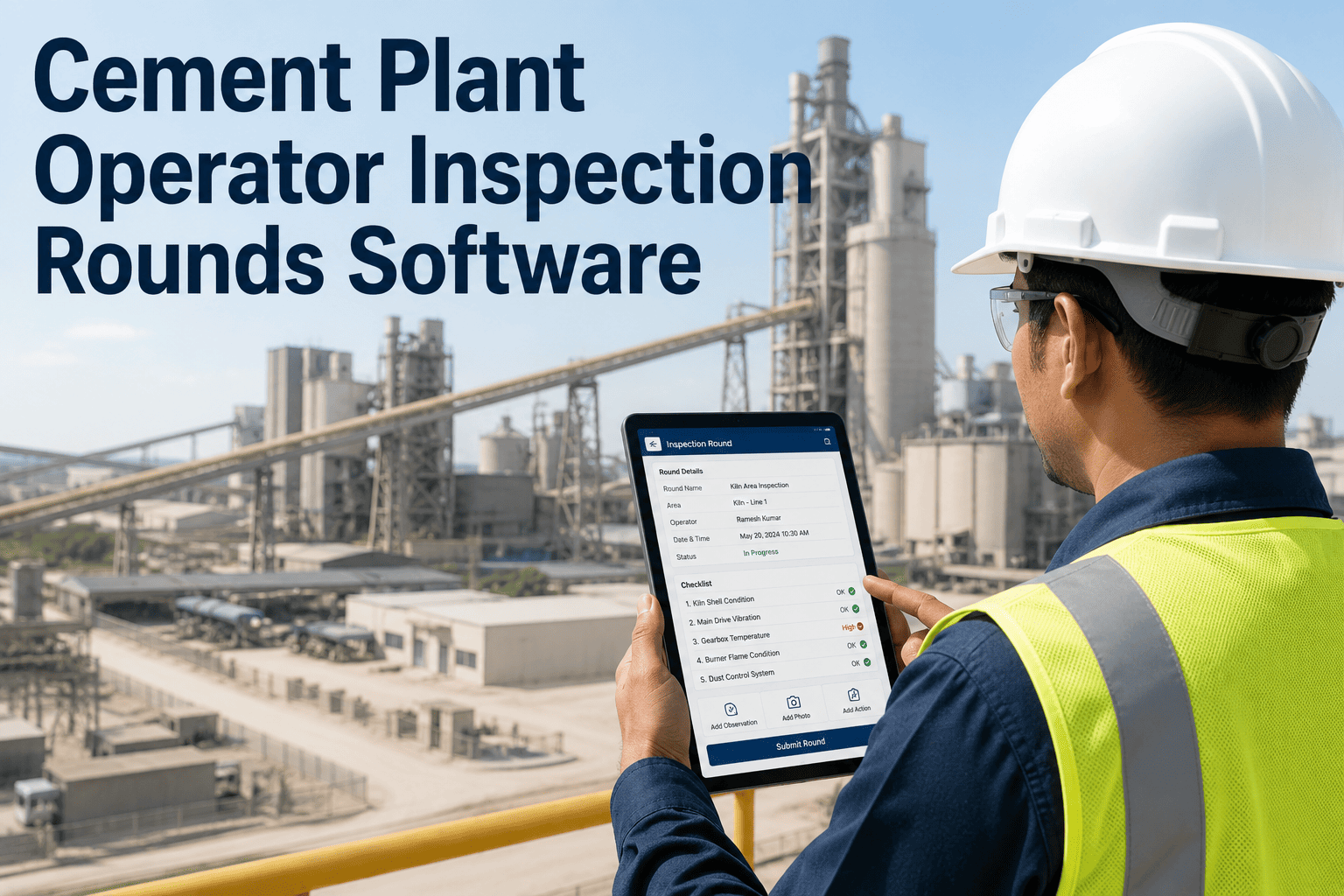
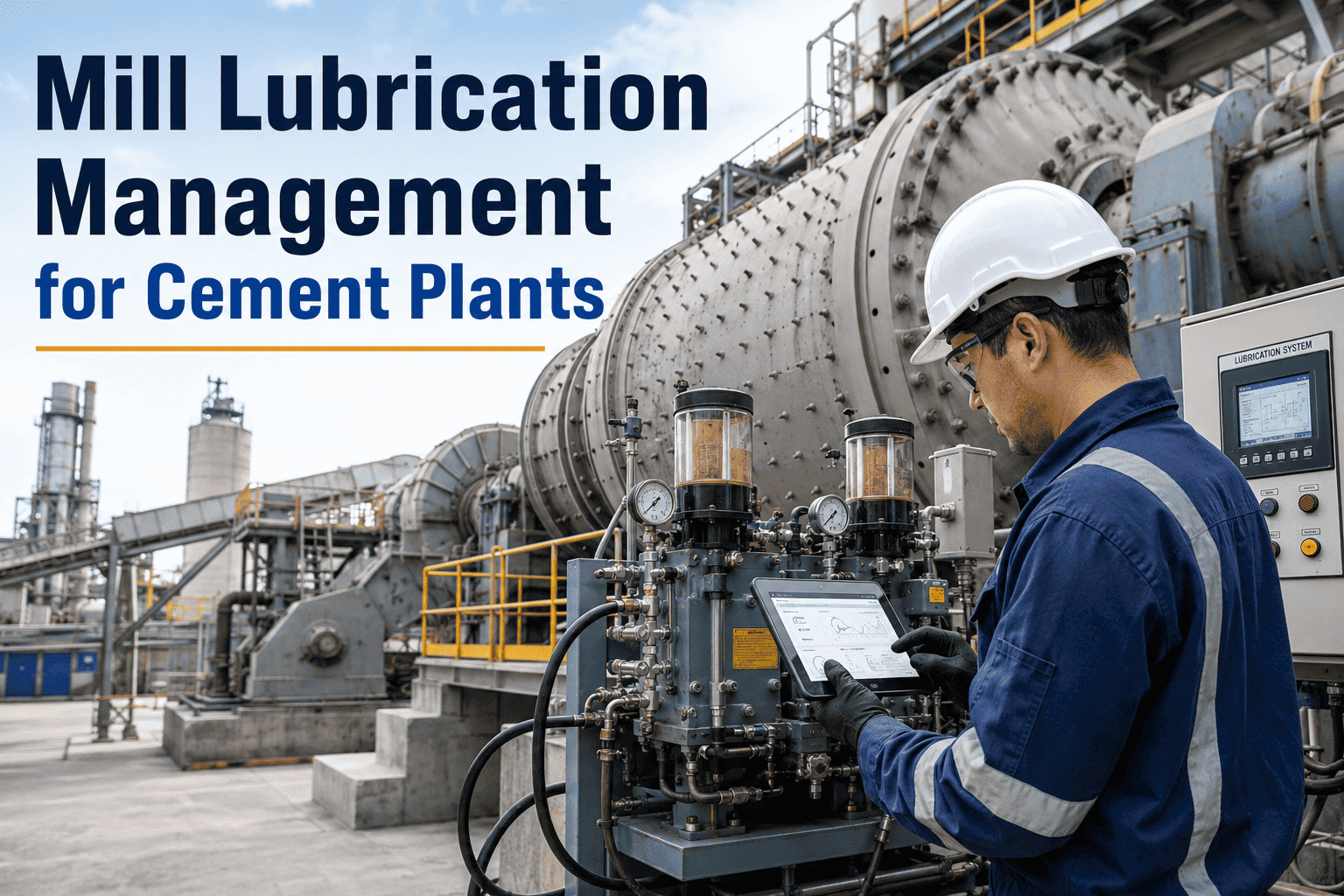
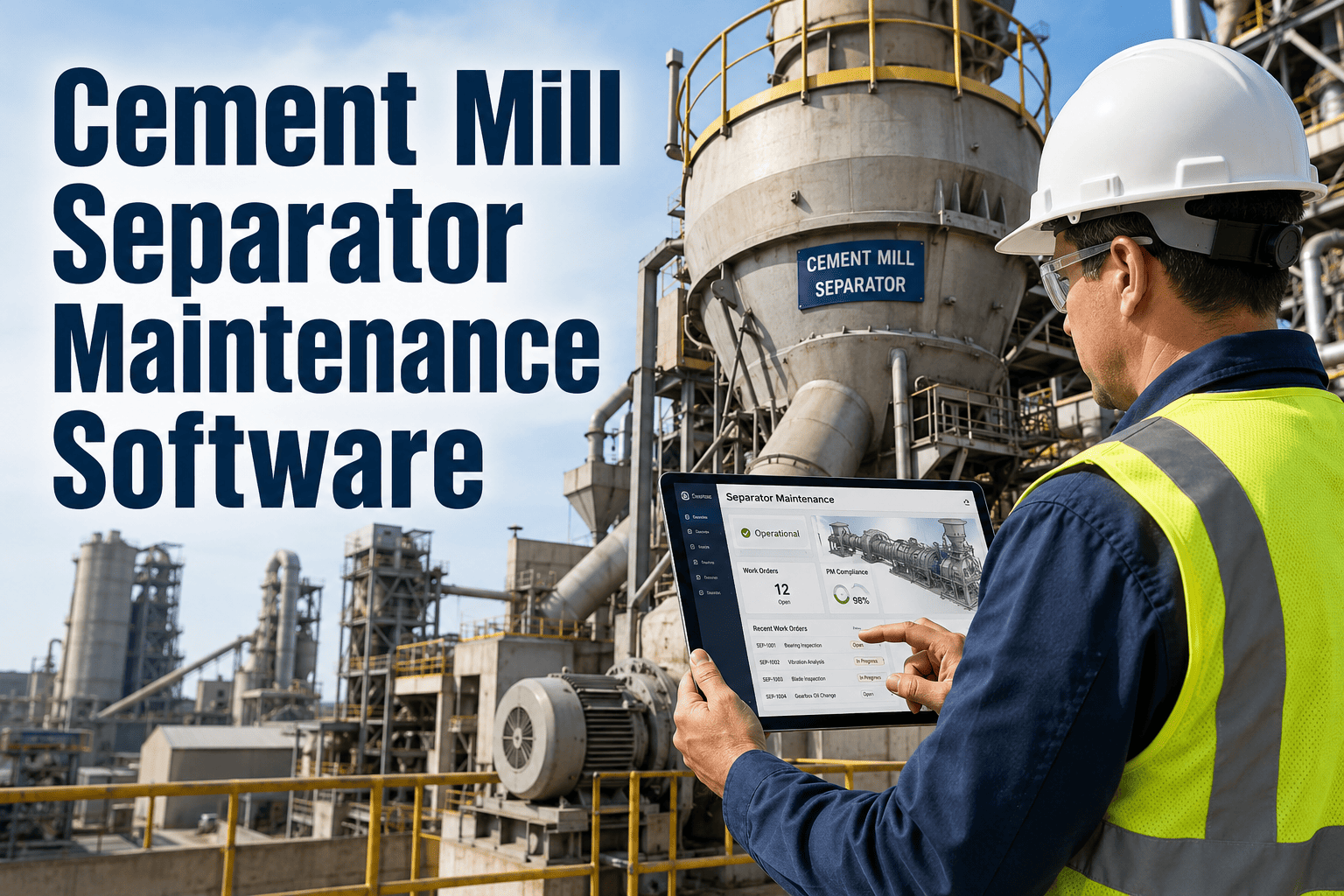
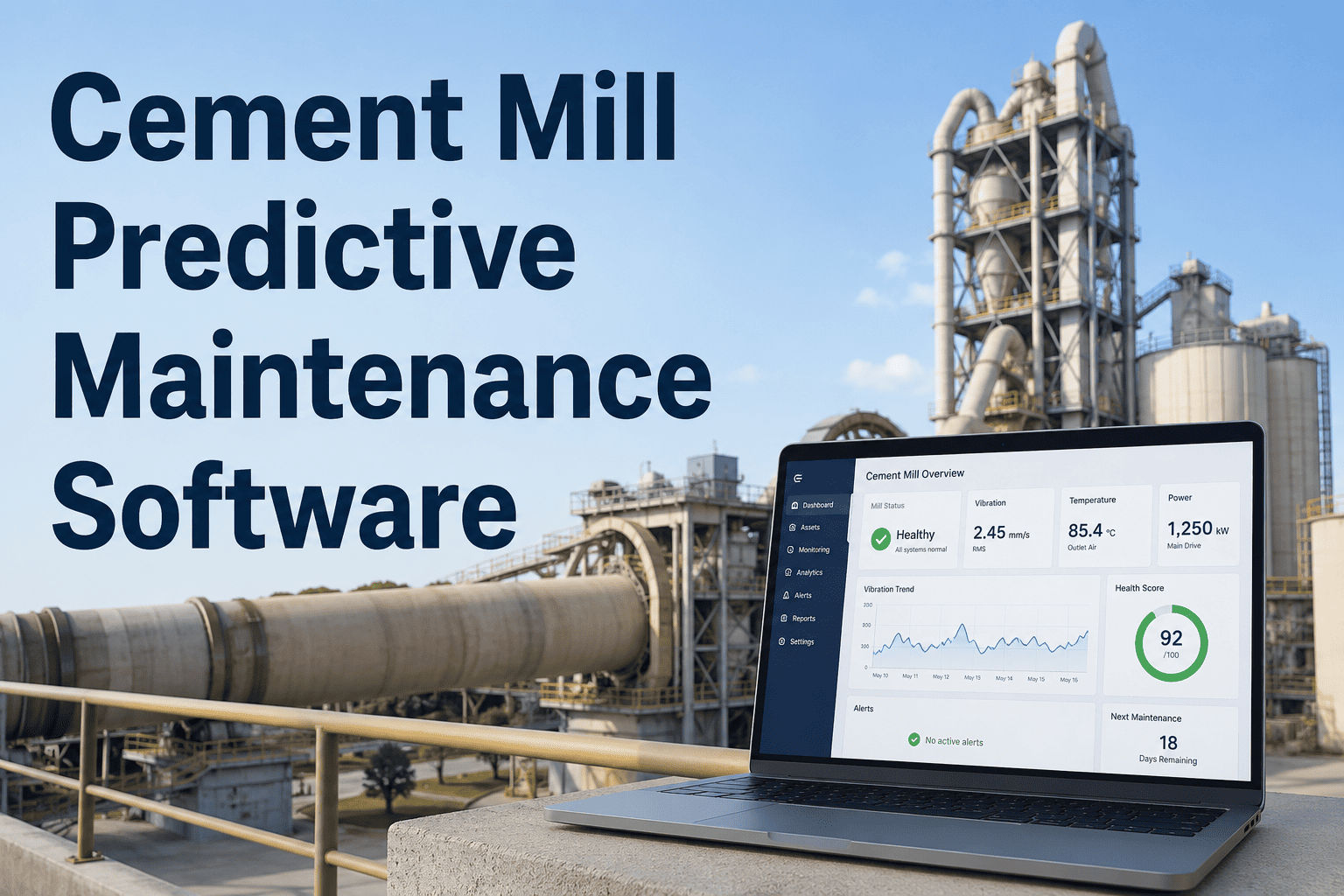
Raw mill reliability is the foundation of stable kiln feed chemistry — and unstable kiln feed is one of the most expensive problems a cement plant can have. Every unplanned raw mill stop disrupts kiln feed rate, forces operators into manual correction cycles, and risks kiln thermal instability that compounds the production loss well beyond the raw mill downtime itself. Plants that manage raw mill maintenance through disconnected spreadsheets, paper inspection logs, and manually-scheduled lubrication rounds consistently report higher breakdown rates, higher spare parts expediting costs, and longer mean time to repair than plants running a structured CMMS. The difference is not the quality of the maintenance team — it is the quality of the system they use to manage inspections, PM intervals, lubrication records, breakdown history, and spare parts availability. Oxmaint is purpose-built for cement plant asset management, bringing raw mill inspections, PMs, lubrication rounds, and parts tracking into a single mobile-first platform. If your raw mill maintenance is currently managed through paper, spreadsheets, or a disconnected ERP, book a demo to see what structured CMMS management changes.
Asset Management — Raw Mill
Raw Mill Maintenance. Structured. Mobile. Reliable.
Manage every raw mill inspection, PM task, lubrication round, spare part, and breakdown record in one platform — so your team spends less time on paperwork and more time keeping the kiln fed.
What Oxmaint Manages for Raw Mills
Planned Inspections
PM Work Orders
Lubrication Rounds
Roller Wear Tracking
Breakdown History
Spare Parts Inventory
Vibration Records
QR Code Scanning
Mobile Technician App
Asset Coverage
Every Raw Mill Component — Tracked, Inspected, Maintained
A raw mill is not a single asset — it is a system of interdependent components, each with its own failure mode, inspection requirement, and PM interval. Oxmaint registers every component as a distinct asset with its own maintenance history, condition record, and work order queue.
Grinding System
Grinding Table
Wear segment measurement every 500 hours + visual inspection every 250 hours
Roller Tires
Thickness measurement every 1,000 hours — projected replacement 90 days in advance
Roller Journal Bearings
Vibration monitoring continuous + oil temperature check every shift
Hydraulic Cylinders
Pressure trending continuous + seal inspection every 2,000 hours
Drive System
Main Gearbox
Oil analysis every 2,000 hours + vibration review monthly
Main Motor
Bearing temp continuous + winding insulation test annually
Coupling
Alignment check every 8,760 hours or after any gearbox work
Separator System
Separator Rotor
Vibration monitoring continuous + visual inspection every outage
Rotor Bearings
Vibration measurement monthly + grease replenishment per manufacturer schedule
Cage Bar Wear
Visual inspection at every planned stop — replacement triggers product quality drift
Process Systems
Raw Meal Silo Feed
Flow meter calibration quarterly + valve seat inspection every 6 months
Rotary Feeder
Seal air pressure continuous + blade wear inspection every 1,000 hours
Mill Fan Bearings
Vibration monitoring continuous — common failure point before DCS alarm activates
Lubrication Management
Lubrication Failure Is the Leading Cause of Raw Mill Breakdowns
Oil contamination from cement dust, incorrect lubricant grade selection, and missed re-greasing intervals are responsible for the majority of preventable raw mill bearing failures. Oxmaint manages every lubrication task as a structured, tracked work order — not a clipboard checklist that may or may not get completed.
| Component |
Lubricant Type |
Interval |
Key Check |
Failure Risk If Missed |
| Main Gearbox |
ISO VG 320 mineral or synthetic gear oil |
Oil analysis every 2,000 hrs |
Fe, Cr particle count + ISO cleanliness |
Gear tooth surface fatigue — $120K–$200K |
| Roller Journal Bearings |
High-pressure grease (NLGI 2 with EP additives) |
Per OEM schedule — typically 500 hrs |
Purge old grease, check housing temp |
Bearing seizure — unplanned 72-hr stop |
| Hydraulic System |
ISO VG 46 or 68 hydraulic fluid |
Filter change 1,000 hrs, full change 4,000 hrs |
Water content, particle count, acidity |
Cylinder seal failure + accumulator rupture |
| Separator Bearings |
NLGI 2 or 3 ball bearing grease |
Per OEM, typically 2,000 hrs |
Color, consistency, contamination |
Rotor imbalance + product quality drift |
| Mill Fan Bearings |
High-temp NLGI 3 grease |
Every 1,500 hrs |
Bearing temp + vibration baseline comparison |
Fan bearing seizure halts gas recirculation |
A missed grease round costs more than a year of CMMS software. Track every lubrication task in Oxmaint.
Oxmaint assigns lubrication work orders to specific technicians, tracks completion with mobile sign-off, records the lubricant grade and quantity applied, and flags overdue tasks before they become failures. Raw mill lubrication compliance becomes measurable and auditable — not assumed.
Breakdown History + Spare Parts
Why Breakdown History and Spare Parts Belong in the Same System
The most expensive aspect of an unplanned raw mill stop is usually not the repair itself — it is the 6–12 hours spent locating the right spare part across three different stores, two legacy spreadsheets, and a conversation with the procurement team that happened six months ago. Oxmaint links every failure to the spare part it consumed, every spare part to its current stock level, and every low-stock alert to a purchase requisition workflow.
What Breakdown History Captures
Root Cause
Failure classification (lubrication, wear, contamination, installation error) linked to each work order — buildingrepeat failure analysis over time
MTTR by Component
Mean time to repair measured from failure to production restoration — flagging which components are consuming disproportionate repair time
Parts Consumed
Every spare part used in each repair, linked to the failure event and deducted from inventory automatically
Technician Time
Labour hours recorded per work order — enabling maintenance cost tracking by component and failure type
Spare Parts Management
Reorder Triggers
Minimum stock levels set per part — Oxmaint flags low-stock items before they become critical, not after the failure that needs them
Lead Time Tracking
Long-lead items (gearbox bearing sets, roller tires) tracked with expected delivery dates — ensuring parts arrive before the planned stop, not during it
Part-to-Asset Linking
Every spare part linked to the specific raw mill asset it fits — so the right part is identified in seconds during a breakdown, not after a 2-hour parts search
Cross-Site Visibility
Multi-site operations see combined inventory across all plants — avoiding duplicate emergency procurement for parts already stocked at a nearby facility
FAQ
Questions About Raw Mill Maintenance Management
How does Oxmaint handle roller wear trending across multiple campaigns?
Each roller wear measurement is logged against the component's asset record with the date, operating hours, and measured thickness. Oxmaint calculates the wear rate (mm per 1,000 hours) from the measurement series and projects the replacement date based on the minimum serviceable thickness for your specific roller type. When projected replacement falls within 60 days, a planned shutdown work order package is auto-generated with the roller change task, required materials list, and estimated duration.
Start your trial to configure roller wear tracking for your VRM fleet.
Can mobile QR codes be used for raw mill inspections in dusty environments?
Yes. Oxmaint uses durable QR code labels rated for cement plant environments — including high-dust zones and temperature exposure. Technicians scan the label on any raw mill component with the Oxmaint mobile app to pull up the inspection checklist, record readings, photograph abnormalities, and submit the completed inspection from the field. QR code scanning eliminates the transcription step between paper inspection forms and the maintenance database — a source of data loss in most paper-based programs.
How long does it take to build the raw mill asset hierarchy in Oxmaint?
A standard vertical roller mill asset hierarchy — covering the grinding table, rollers, gearbox, motor, hydraulic system, and separator — can be configured in 2–3 days using Oxmaint's bulk import tool. PM templates for all major raw mill components are pre-built and available in the cement plant template library, reducing setup to configuration rather than creation. The first PM work orders typically fire within the first week of deployment.
Book a demo to see the template library and import workflow.
Can Oxmaint replace our paper-based lubrication routes without disrupting the current team workflow?
The transition is designed to be non-disruptive. Existing paper lubrication routes are digitized into Oxmaint work order templates that replicate the physical sequence of the current route. Technicians use the mobile app exactly as they used the paper form — checking off tasks, recording quantities, and noting observations — without changing the physical route sequence. The improvement is on the back end: managers see completion status in real time instead of collecting clipboards at shift end.
How does Oxmaint handle raw mill maintenance records for insurance and audit purposes?
Every work order in Oxmaint carries a permanent, timestamped audit trail: who assigned it, who completed it, what was found, what was done, and what parts were used. This record is immutable and exportable in PDF or structured data formats. Insurance auditors, ISO 9001 certification reviewers, and internal CapEx justification processes all require exactly this kind of structured maintenance history — which Oxmaint generates as a byproduct of normal daily operations, not as a special reporting exercise.
Sign up to see what the audit trail looks like in practice.
Stable raw meal production starts with structured raw mill maintenance.
Oxmaint brings every raw mill inspection, PM task, lubrication round, spare part, and breakdown event into a single mobile platform — giving your maintenance team the structure they need to keep kiln feed chemistry stable and unplanned stops from becoming production crises.