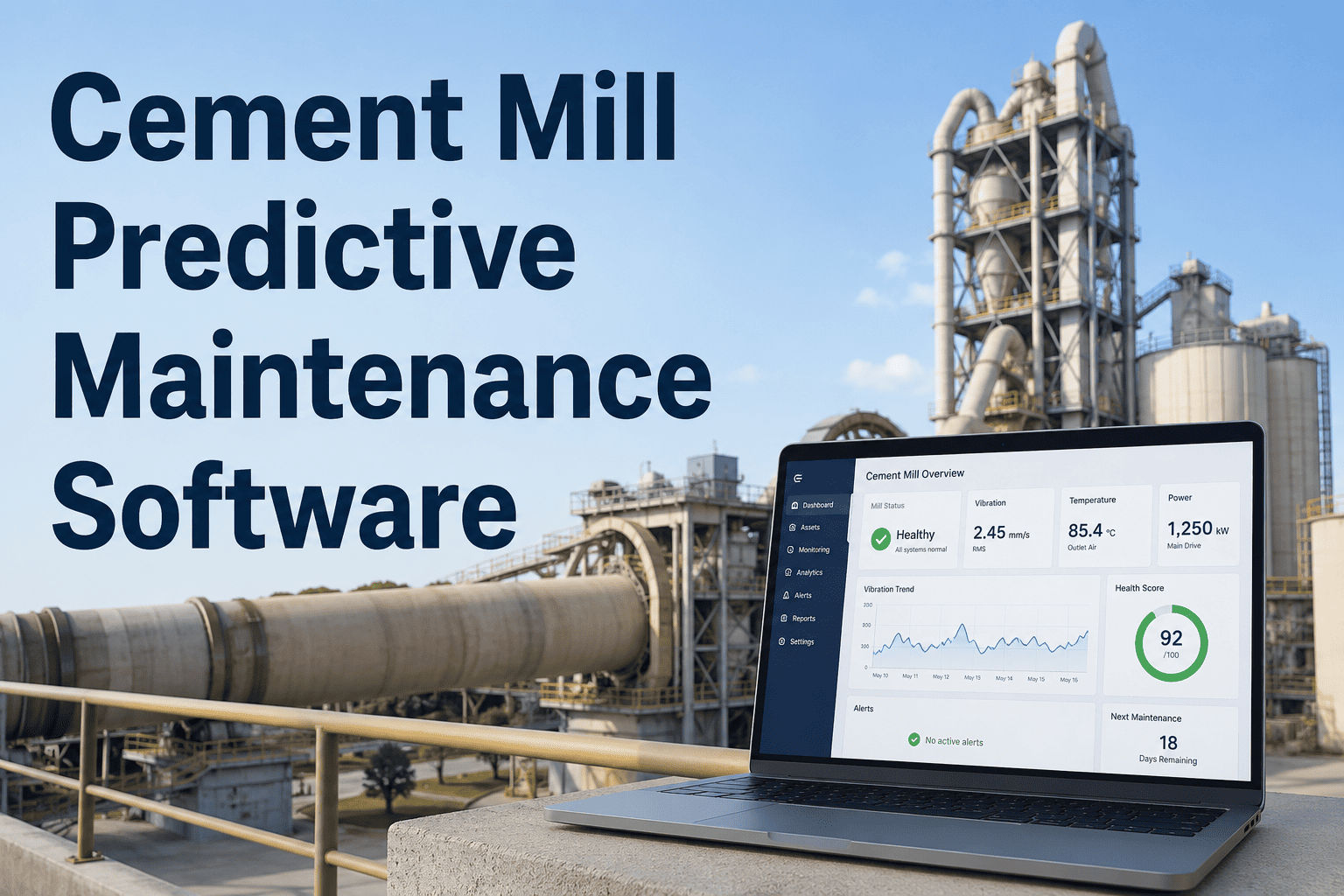
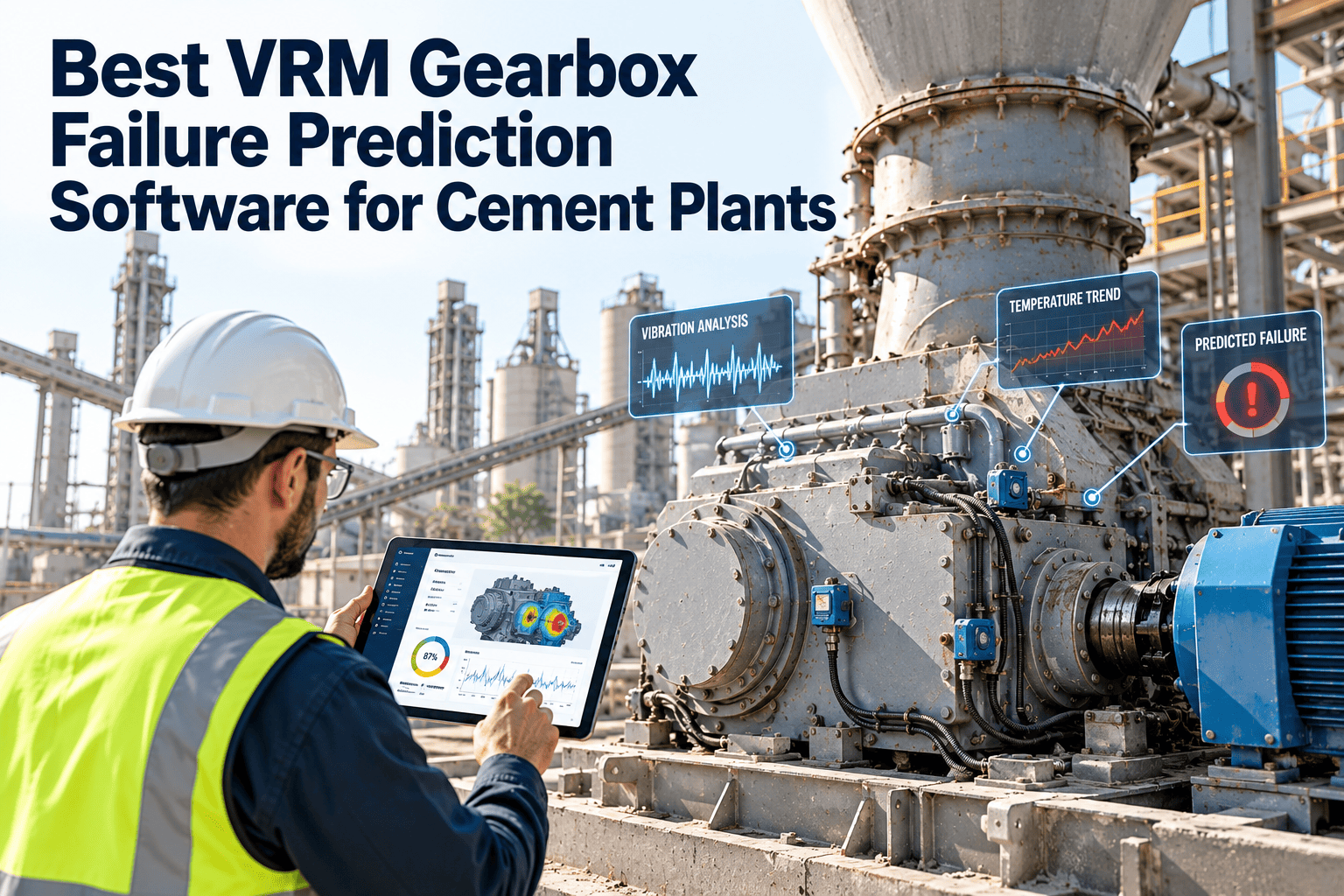
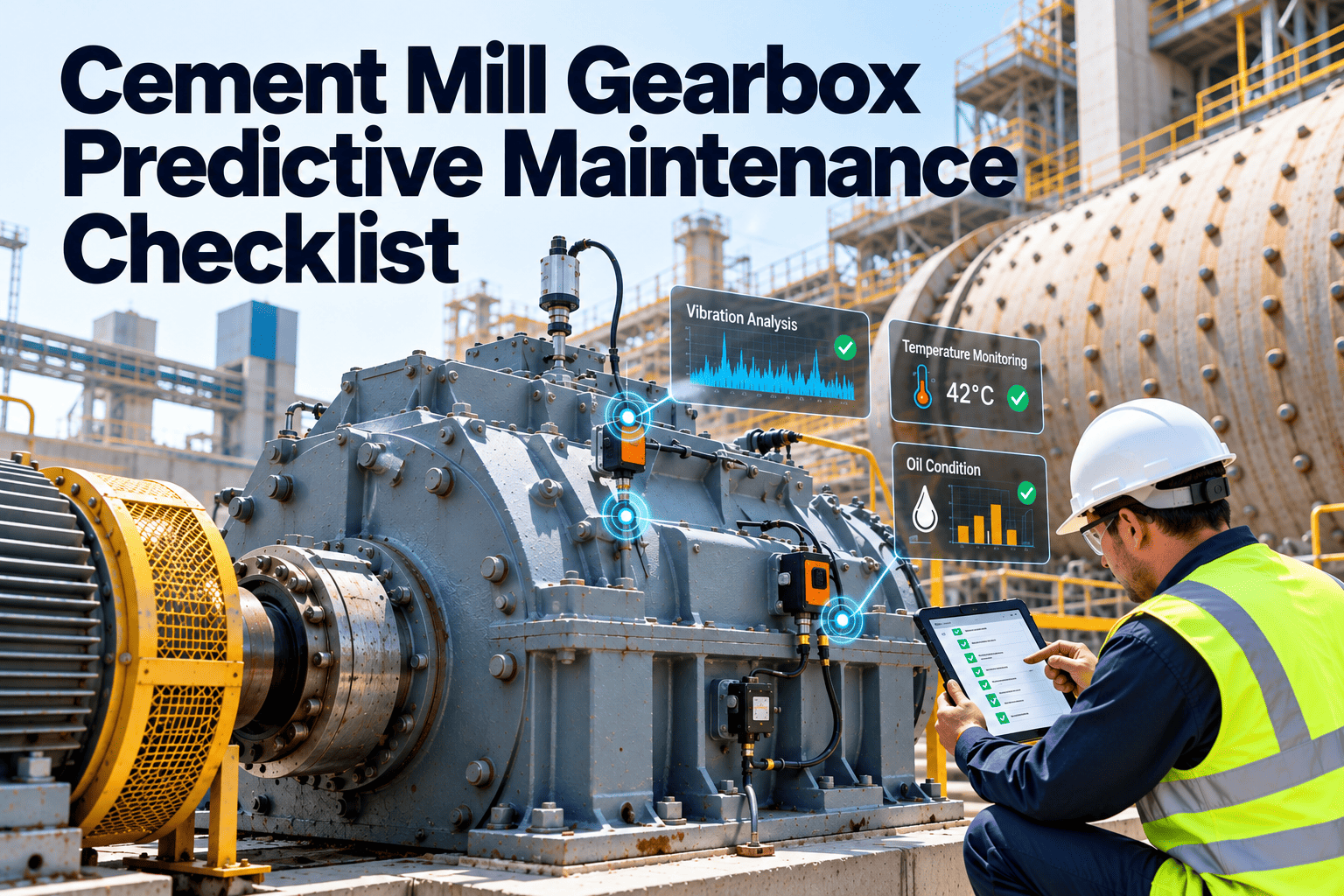
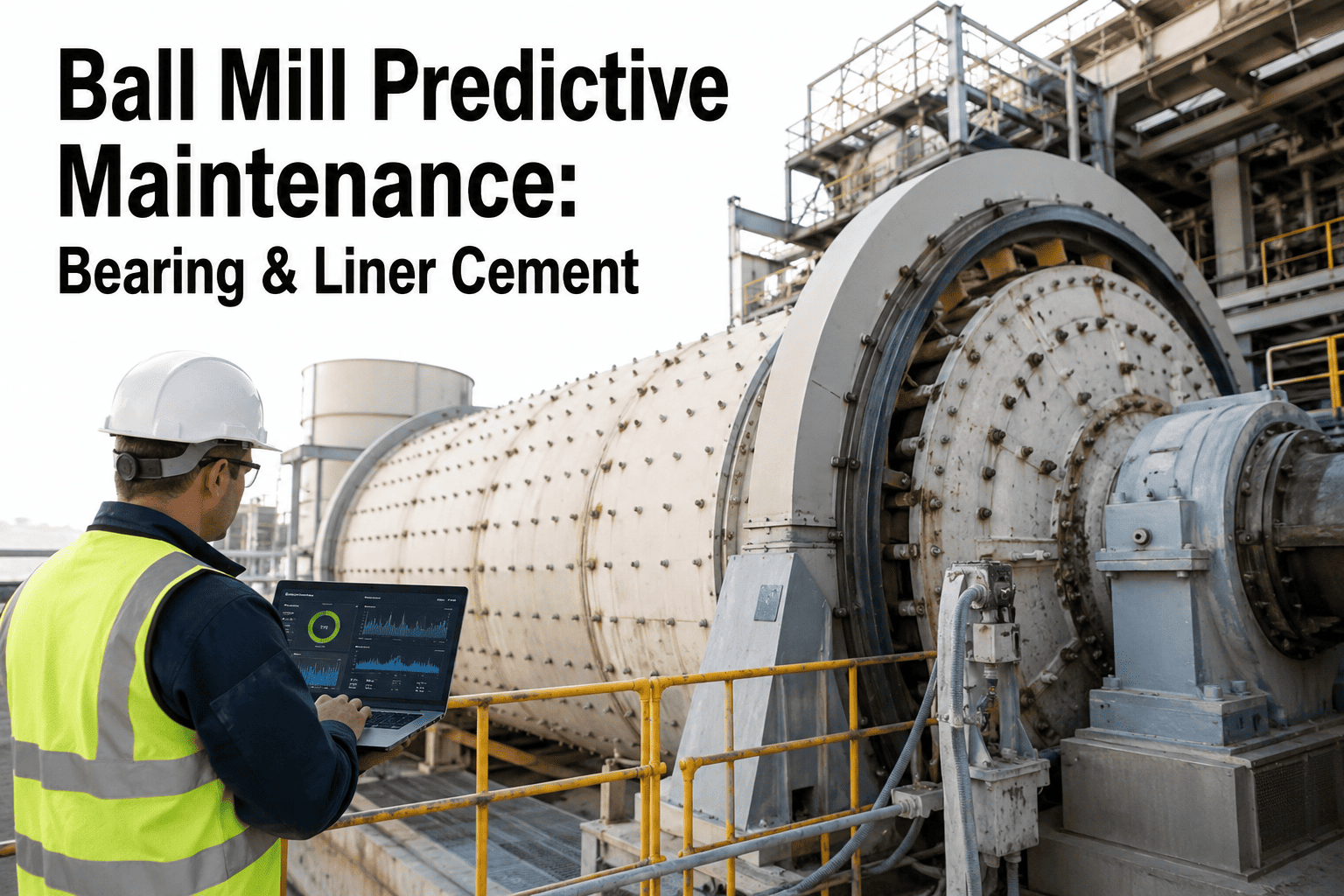
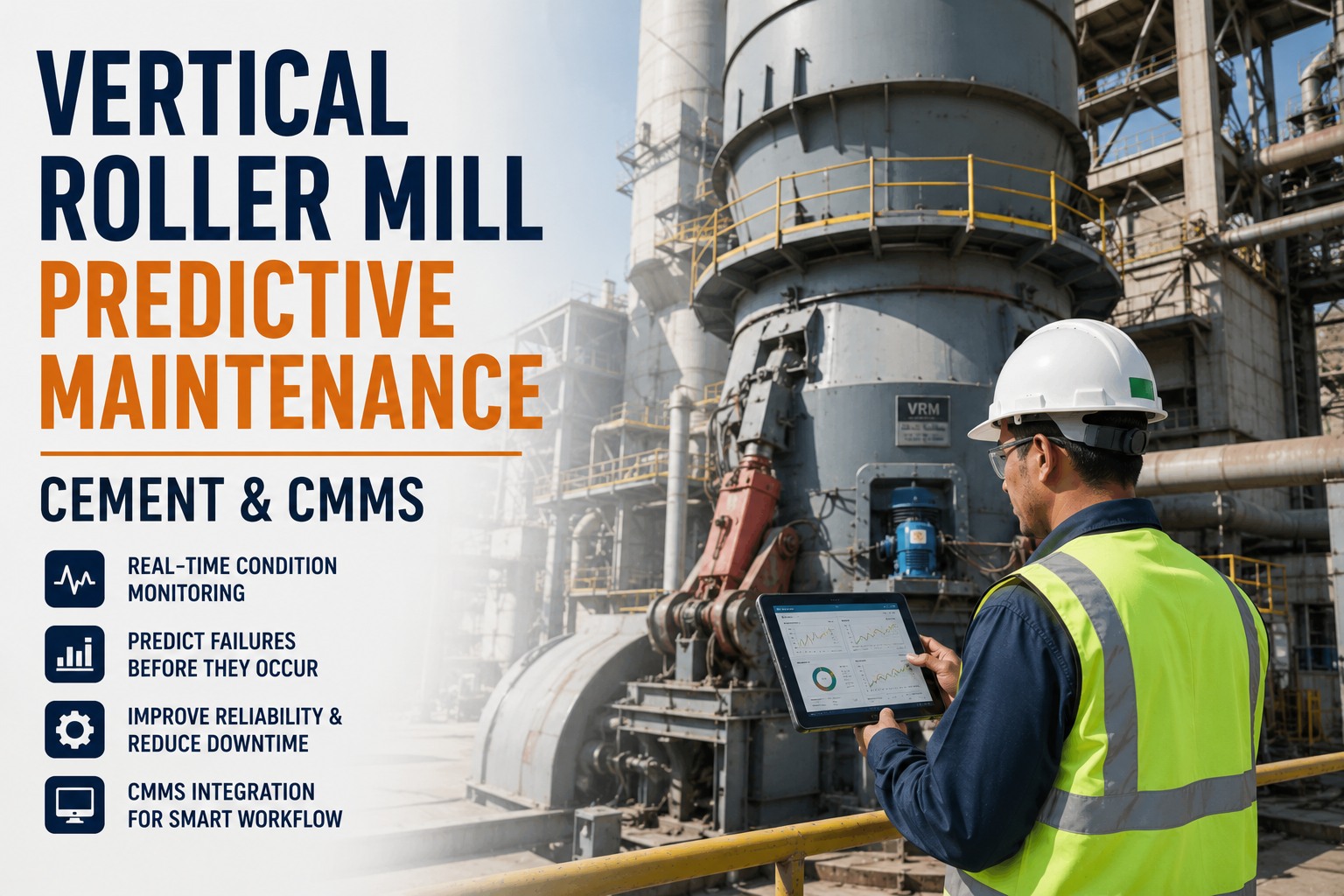
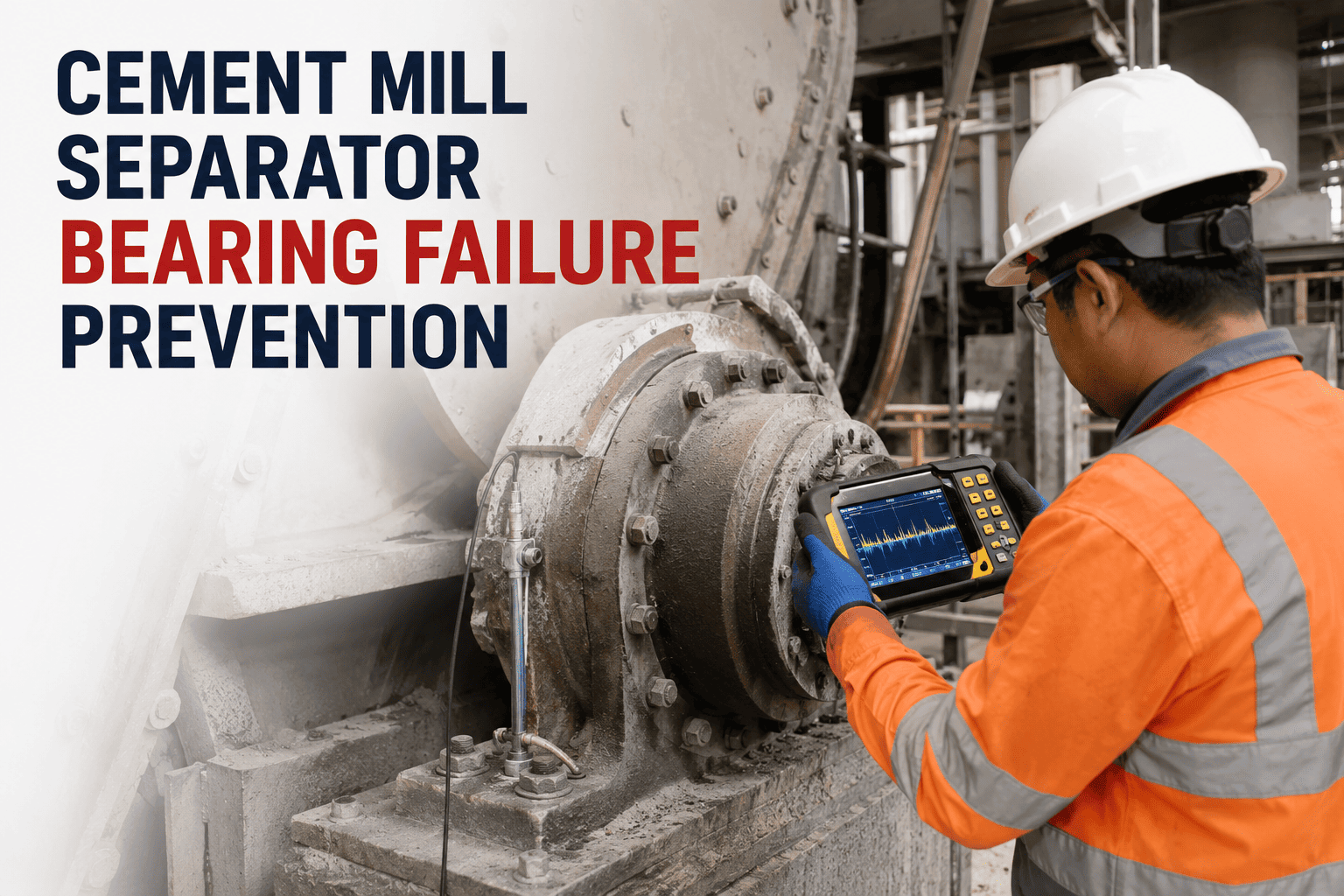
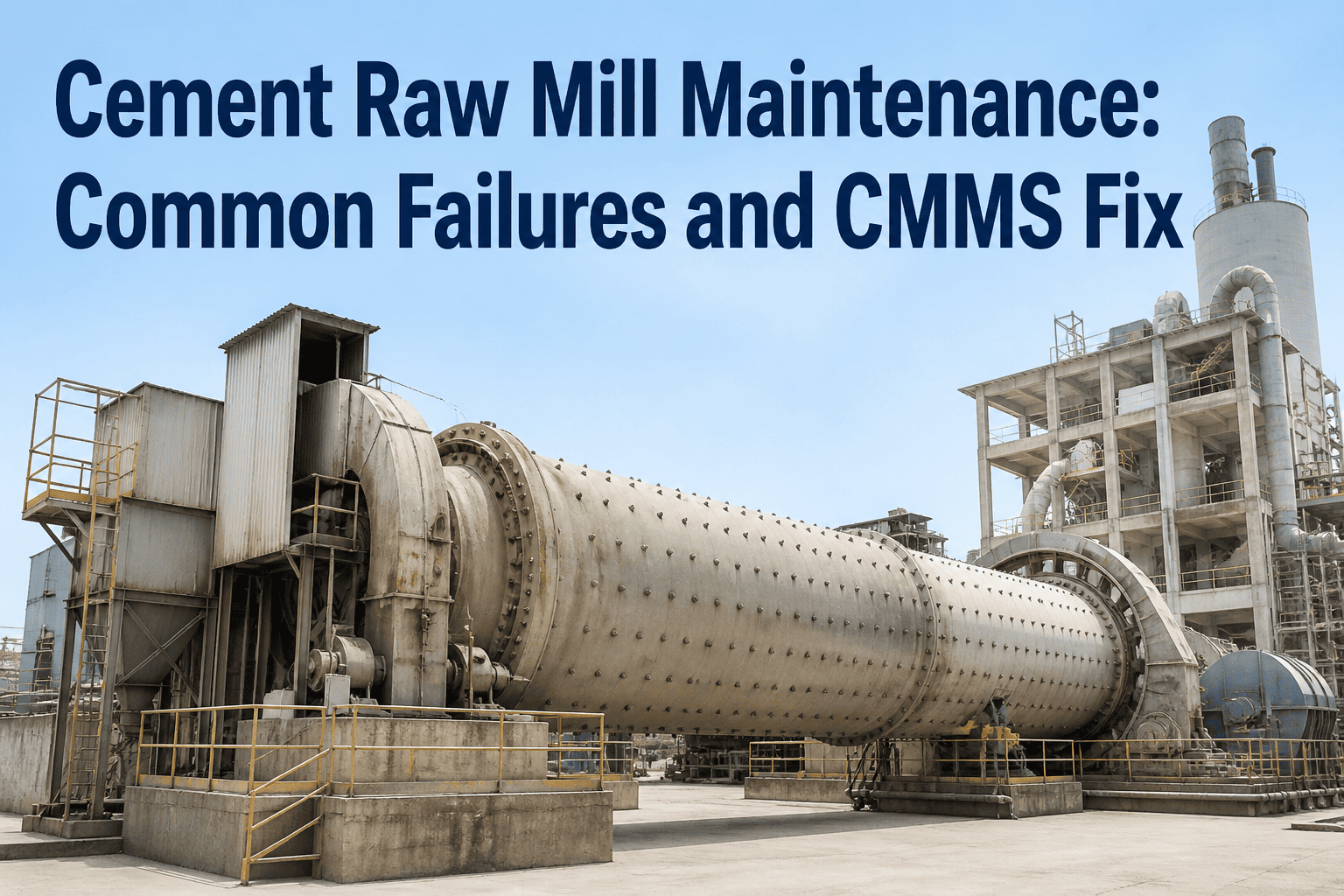
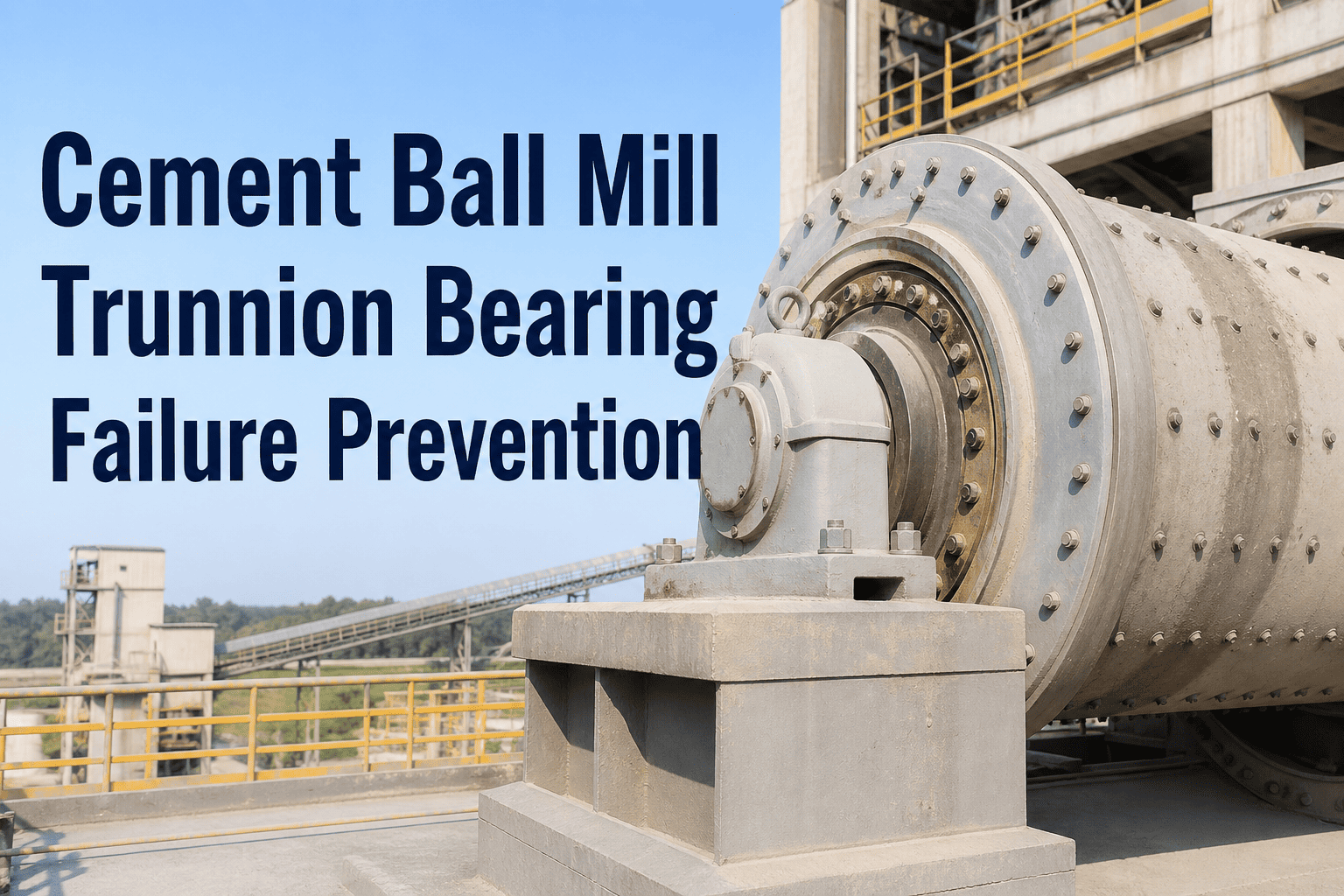
A cement mill planet bearing failure that could have been caught 5–7 days in advance instead triggers an unplanned stop, an emergency rebuild, and 18 weeks of lead time for a replacement gearbox. The financial damage — $850,000 in parts, $70/ton lost margin on 35,000 tons of unproduced cement, and expedited freight for components — accumulates faster than most plant managers expect. The engineering reality is that every bearing failure, every separator degradation, every gearbox wear progression announces itself through vibration signatures, oil particle counts, and power draw trends weeks before the component fails. AI predictive maintenance software reads those signals continuously, identifies the specific failure patterns, and routes a work order to the right technician before the event — not after. Oxmaint is built specifically for cement mill asset management, connecting your existing sensor infrastructure to a maintenance workflow that acts on data, not guesswork. If your mill relies on weekly manual vibration reviews or calendar-based PM, book a demo to see what always-on AI monitoring changes.
AI Predictive Maintenance — Cement Mill
Predict Mill Failures Before They Stop Production
AI monitors every bearing, gearbox stage, and separator shaft in your cement mill — identifying fault signatures 5 to 30 days before failure and routing work orders automatically so your team acts on data, not alarms.
$850K
Typical planet bearing failure + lost production cost
18 wks
Gearbox replacement lead time when caught too late
5–7 days
AI warning lead time for planet bearing wear-out phase
40–60%
Reduction in equipment failure rates with AI vibration monitoring
Failure Mode Map
The Six Failure Modes That Stop Cement Mills
Each cement mill component fails through a distinct physical mechanism — with its own early warning signal, detection window, and intervention cost profile. AI predictive maintenance addresses all six simultaneously, continuously.
Early signal: BPFO frequency rise + rising crest factor in vibration spectrum
Detection window: 5–7 days before seizure
Emergency cost if missed: $850,000 — rebuild + 18-week lead time + lost production
Planned intervention cost: $95,000 — scheduled bearing replacement during coordinated stop
Early signal: Radial load anomaly + thermal elevation at NDE bearing housing
Detection window: 14–30 days before failure
Emergency cost if missed: $400,000+ — unplanned stop, emergency crew mobilization
Planned intervention cost: $60,000 — bearing replacement during scheduled maintenance
Early signal: Vibration change at separator shaft before product quality drifts
Detection window: 10–21 days
Emergency cost if missed: Product quality non-conformance + unplanned stop
Planned intervention: Bearing swap at coordinated outage — minimal throughput impact
Early signal: Rising iron/chromium in oil sample + dust ingress indicator
Detection window: 3–8 weeks (oil analysis cycle)
Emergency cost if missed: Accelerated gear tooth wear, bearing seizure within 2–6 weeks
Planned intervention: Flush + filter change + seal inspection — 1-day planned stop
Early signal: Gear mesh frequency deviation + rising kurtosis in vibration
Detection window: 2–8 weeks before tooth fracture
Emergency cost if missed: $120,000–$200,000 partial gear set replacement
Planned intervention: Scheduled profile inspection + lubricant change + monitoring increase
Early signal: Motor current signature deviation + bearing housing temp rise
Detection window: 7–21 days
Emergency cost if missed: Motor rewind or replacement + extended mill outage
Planned intervention: Bearing replacement at next coordinated stop — $15,000–$35,000
AI Monitoring Technology
How AI Reads Your Mill's Condition — Continuously
Oxmaint AI combines four monitoring streams into a single condition picture for every cement mill asset — correlating data sources that individually show partial signals into a clear, actionable diagnostic.
Vibration Spectrum Analysis
Triaxial accelerometers at each bearing position detect BPFO, BPFI, BSF, and FTF defect frequencies — the fingerprints of inner race, outer race, ball, and cage faults. High-frequency enveloping strips low-frequency noise so AI hears early-stage bearing damage months before thermal elevation. Rising kurtosis flags lubrication starvation before tooth wear begins.
Trunnion DE + NDE
Gearbox input + output
Motor DE + NDE
Separator shaft
Oil Analysis Integration
Scheduled oil samples from main gearbox and lubrication circuits feed into Oxmaint as structured condition records. AI correlates particle count trends, wear metal ratios (Fe, Cr, Cu, Al), and ISO cleanliness codes against vibration data — a combined signal that is far more diagnostic than either source alone. Dust contamination shows up in oil data weeks before it degrades gear surfaces.
Main gearbox sump
Circulation lubrication circuit
Pinion bearing oil bath
Power Draw Monitoring
Mill motor power draw trends reveal grinding efficiency changes driven by liner wear, ball charge level, and separator performance — before they manifest as throughput loss or product quality drift. AI distinguishes process-driven power changes from mechanical degradation by correlating power with feed rate, moisture content, and product fineness data simultaneously.
Main drive motor current
Separator motor draw
Specific energy kWh/t
Thermal Monitoring
Temperature sensors at bearing housings, gearbox oil temperature, and mill shell surface provide the thermal validation layer — confirming vibration findings and catching lubrication failures that appear as thermal events before vibration signatures develop. Bearing housing temperature rise of 15°C above baseline triggers an advisory alert even without a vibration anomaly.
Trunnion bearing housings
Gearbox oil temperature
Mill shell surface temp
Your mill's next bearing failure will announce itself in the data. Will your system be listening?
Oxmaint connects your existing vibration sensors, oil analysis data, and motor current readings to a continuous AI monitoring layer — alerting your team 5 to 30 days before any critical mill component reaches the failure threshold.
FAQ
Questions About Cement Mill Predictive Maintenance
How many vibration sensors does Oxmaint need for a ball mill deployment?
A full cement ball mill deployment uses 6–8 triaxial accelerometer positions: trunnion bearings (DE and NDE), gearbox input and output bearings, main motor DE and NDE, and — for mills with separate pinion drives — the pinion bearing housing. Many cement mills already have 40–60% of this instrumentation installed and connected to the DCS. Oxmaint ingests data from existing sensors via OPC-UA before any new hardware is required.
Book a demo and we'll map your existing sensor coverage in the first session.
How does AI distinguish a mechanical fault from a process change?
Process changes — feed rate, moisture, material hardness — affect mill power draw and general vibration levels in characteristic ways. Mechanical faults generate frequency-specific signatures (bearing defect frequencies, gear mesh harmonics) that are independent of process conditions. Oxmaint AI correlates both signal types simultaneously, filtering out process-driven variation and flagging only genuine mechanical anomalies. This eliminates the false alarms that make manual vibration review programs unreliable.
How quickly can Oxmaint be deployed on an existing cement mill?
Integration with existing DCS data typically takes 1–3 days. Vibration baseline establishment requires 30 days of steady-state operation data before AI models begin generating actionable alerts. Full predictive capability — including bearing defect frequency analysis and remaining useful life estimates — is available within 45 days of initial connection.
Start your trial and our onboarding team will configure your mill asset hierarchy in the first week.
Can Oxmaint manage multiple cement mills across different plant sites?
Yes. Oxmaint's portfolio dashboard compares vibration health scores, PM compliance rates, and oil analysis status across all mills and sites in a unified view. Each plant maintains its own work order queue and asset hierarchy while plant directors and VP-level users see cross-site benchmarking and fleet-level CapEx forecasting. Multi-site deployments typically go live 3–4 weeks after the first site is configured.
What ROI should we expect from cement mill AI predictive maintenance?
The primary ROI driver is avoided unplanned stops. A single prevented planet bearing emergency seizure typically pays for 3–5 years of Oxmaint subscription. Secondary benefits include extended gearbox life through earlier lubrication interventions, reduced overtime from reactive maintenance, and improved PM scheduling that eliminates unnecessary bearing replacements. Plants with 3–6 finish mills typically recover full deployment cost within 8–12 months.
Book a consultation to model the ROI for your mill fleet.
Every cement mill failure announces itself first in the data. Oxmaint makes sure your team is always first to hear it.
AI predictive maintenance for cement mills — covering bearing defect frequencies, gearbox oil analysis, separator shaft health, and motor current signatures — all connected to automatic work orders that fire when your equipment needs attention, not after it fails.