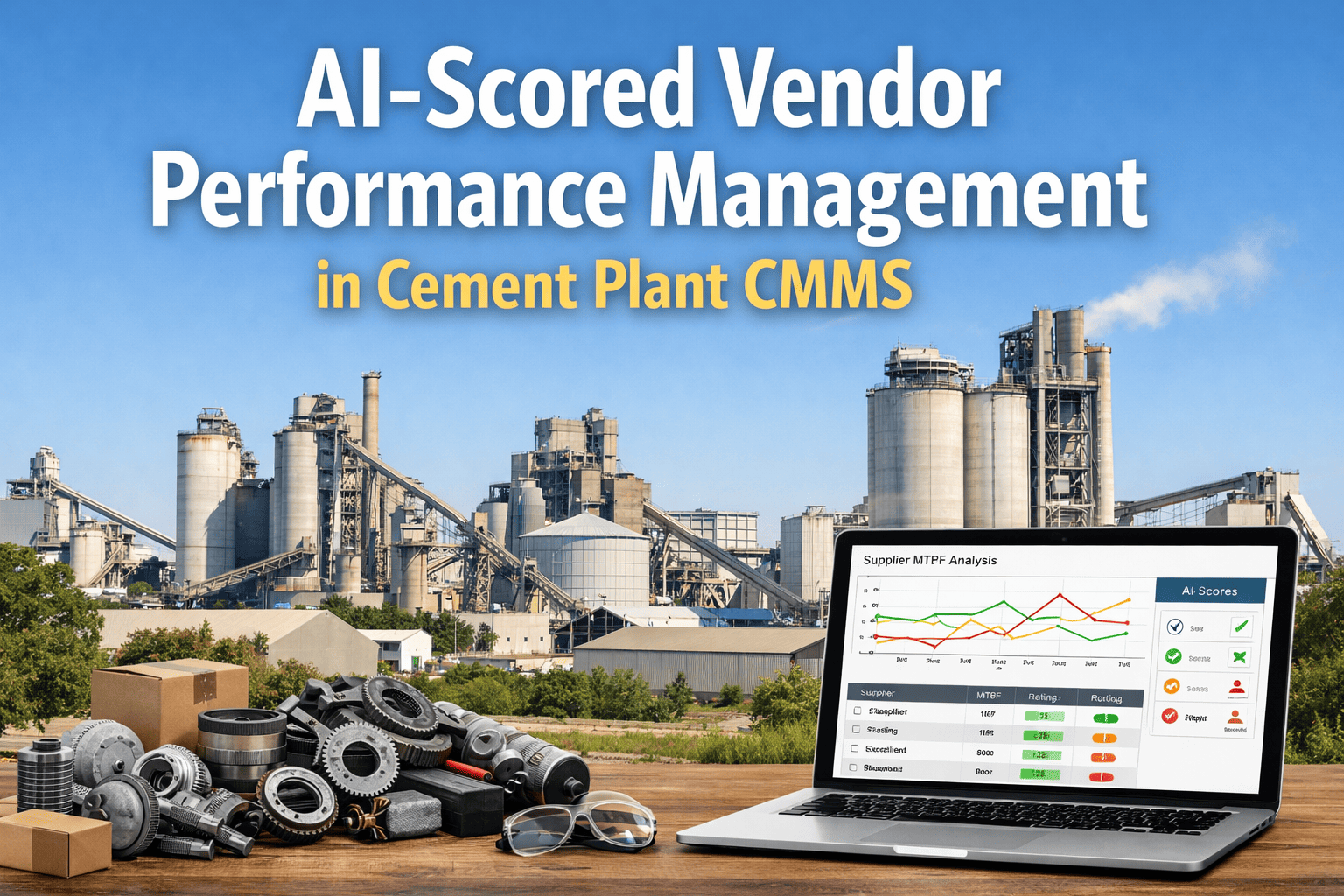
A cement plant managing 250 active maintenance suppliers — each with separate contact relationships, separate pricing agreements, separate invoice streams, and no performance measurement system — is not running a supply chain. It is running a collection of uncoordinated transactions that systematically overpays for parts, accepts late deliveries without consequence, and has no mechanism to identify which suppliers are reliable enough to depend on for production-critical components. Plants that have consolidated to 50–80 preferred vendors with documented performance records, negotiated pricing frameworks, and CMMS-integrated purchase order workflows consistently report 12–20% reduction in procurement cost and 35–50% reduction in administrative processing overhead within 24 months. The difference is not the suppliers — it is the management system behind them. Book a demo to see how Oxmaint structures vendor qualification, performance tracking, and purchase order workflows across cement plant maintenance procurement.
The Financial Scale of Cement Plant Vendor Management
Compliance Standards by Region: Vendor Qualification and Supply Chain Management
Cement plant vendor management carries supplier qualification, product certification, import compliance, and supply chain due diligence obligations that vary by region. Oxmaint automates vendor qualification record management, product certification tracking, approved supplier register maintenance, and procurement audit trail generation — keeping every plant's vendor programme compliant across all applicable frameworks without manual administration.
| Region | Key Frameworks | Oxmaint Coverage |
|---|---|---|
| USA | OSHA approved parts sourcing for safety-critical maintenance, EPA chemical supplier documentation, SOX procurement controls, FCPA third-party due diligence | Approved supplier register with certification records, SOX-compliant purchase order audit trails, hazardous materials supplier documentation, vendor qualification tracking |
| UAE | Civil Defence approved supplier requirements, In-Country Value programme local content obligations, OSHAD-SF vendor safety standards, Ministry of Human Resources contractor requirements | Approved vendor register with ICV status, local content tracking per purchase, contractor qualification records, multi-site vendor compliance dashboards |
| India | BIS certification requirements for specified maintenance items, GST registered vendor compliance, MSME preferred supplier programmes, Factories Act approved contractor standards | BIS certification status per vendor and product category, GST registration records, MSME classification tracking, statutory vendor qualification documentation |
| Germany | Lieferkettensorgfaltspflichtengesetz supply chain due diligence, EU REACH supplier substance declarations, CE marking verification for replacement parts, BetrSichV approved parts sourcing | Supply chain due diligence documentation, REACH substance declaration records, CE marking verification per product, BetrSichV approved parts supplier register |
| UK | Modern Slavery Act supplier statements, UK REACH substance compliance, COSHH hazardous material supplier documentation, Construction Design and Management contractor requirements | Modern Slavery Act statement tracking per supplier, UK REACH compliance records, COSHH substance documentation, contractor qualification management |
| Canada | CEPA hazardous substance supplier compliance, Provincial contractor qualification requirements, CBSA import documentation, Canadian Anti-Spam Legislation supplier communication compliance | Hazardous substance compliance per supplier, import documentation records, provincial contractor qualification tracking, multi-site vendor programme dashboards |
Oxmaint delivers vendor qualification records, approved supplier register management, product certification tracking, and procurement audit trail documentation for cement plant vendor programmes across every region above — accurate compliance records available at every audit without manual file assembly.
What Is Structured Vendor Management for Cement Plant Maintenance Supplies?
Structured vendor management is the systematic approach to qualifying, selecting, contracting, monitoring, and developing the suppliers who provide all maintenance materials consumed in cement plant operations — from rotating equipment spares and refractory materials through to lubricants, electrical components, and mechanical consumables. It converts an unmanaged collection of transactional relationships into a strategic supplier base where delivery performance is measured, pricing is negotiated on volume commitments, quality standards are contractually specified, and purchasing workflows are integrated directly with the CMMS to eliminate manual processing steps. Book a demo to see how Oxmaint manages the full vendor lifecycle from initial qualification through to ongoing performance management in a live cement plant.
Vendor Qualification and Approved Register
Formal qualification process for all maintenance suppliers — financial stability assessment, product quality certification verification, delivery capability confirmation, and safety and compliance credential review — before a supplier enters the approved vendor register. Qualification records maintained digitally with expiry tracking for time-limited certifications such as ISO 9001, CE marking, BIS certification, and insurance documents. Only suppliers on the approved register can receive purchase orders in CMMS-integrated procurement workflows.
Performance Measurement and Scorecard
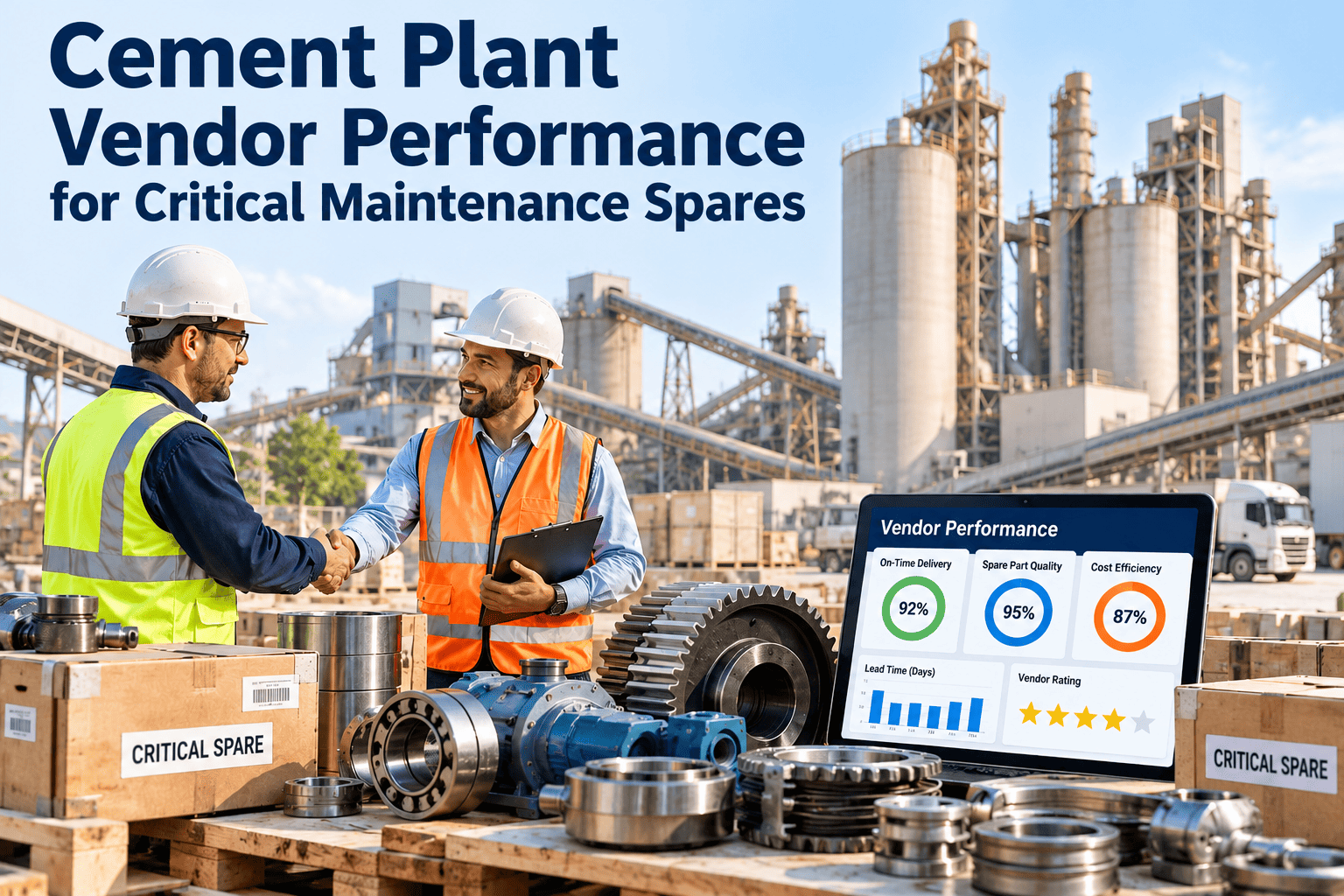
Systematic tracking of on-time delivery rate, price versus quoted, quality rejection frequency, and responsiveness to urgent requests per vendor across every purchase order received. Vendor scorecards updated automatically from purchase order receipt data — removing the manual effort of performance compilation and ensuring that procurement decisions are made on documented performance history rather than personal relationships or last transaction memory.
Contract and Pricing Management
Blanket purchase order frameworks, annual pricing agreements, and preferred vendor contracts structured around actual consumption volumes from CMMS work order history — giving procurement teams the volume commitment data needed to negotiate meaningful discounts. Contract expiry alerts generated automatically, ensuring renegotiation cycles are planned in advance rather than contracts lapsing and purchasing reverting to uncontracted list pricing without notice.
CMMS-Integrated Purchase Order Workflows
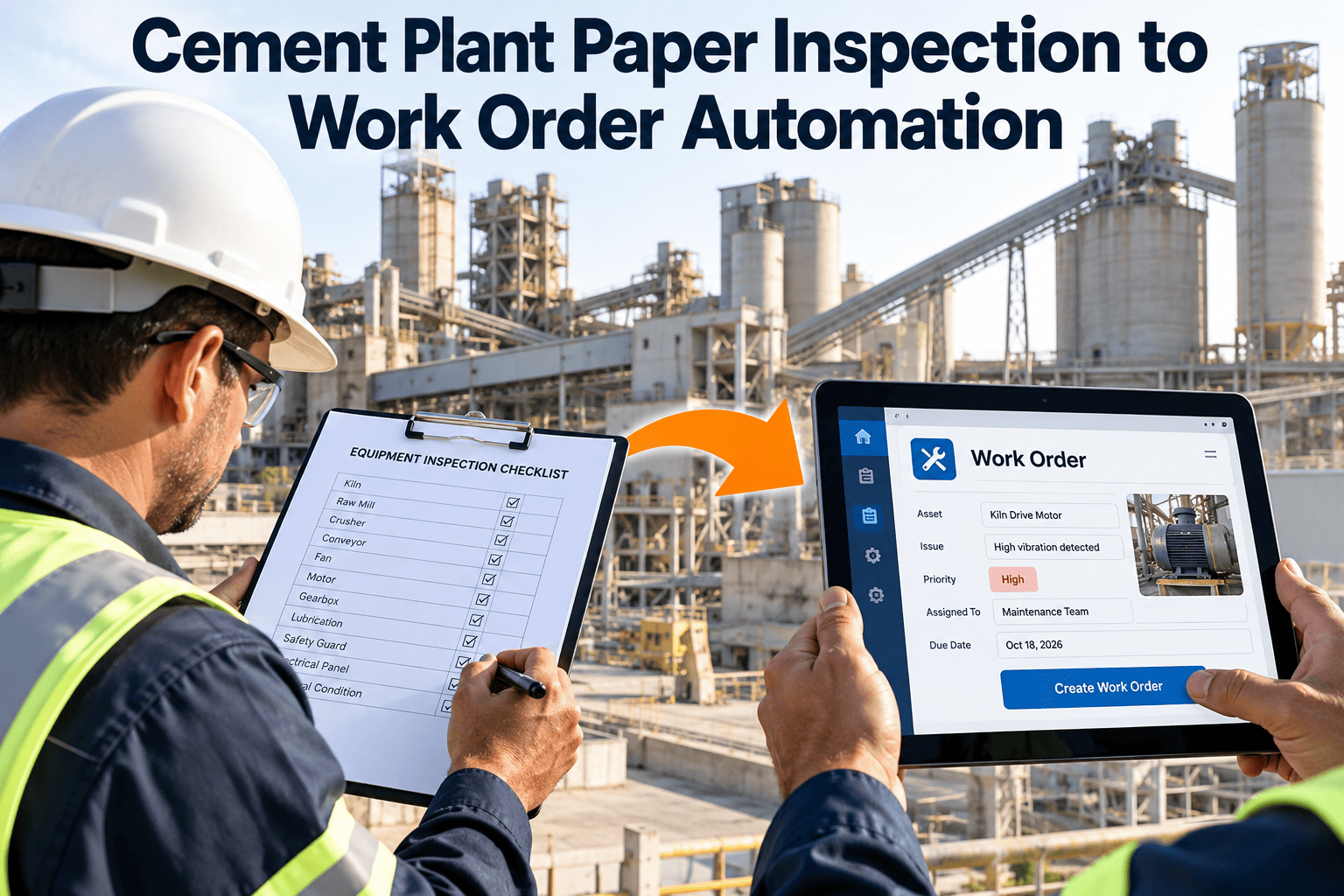
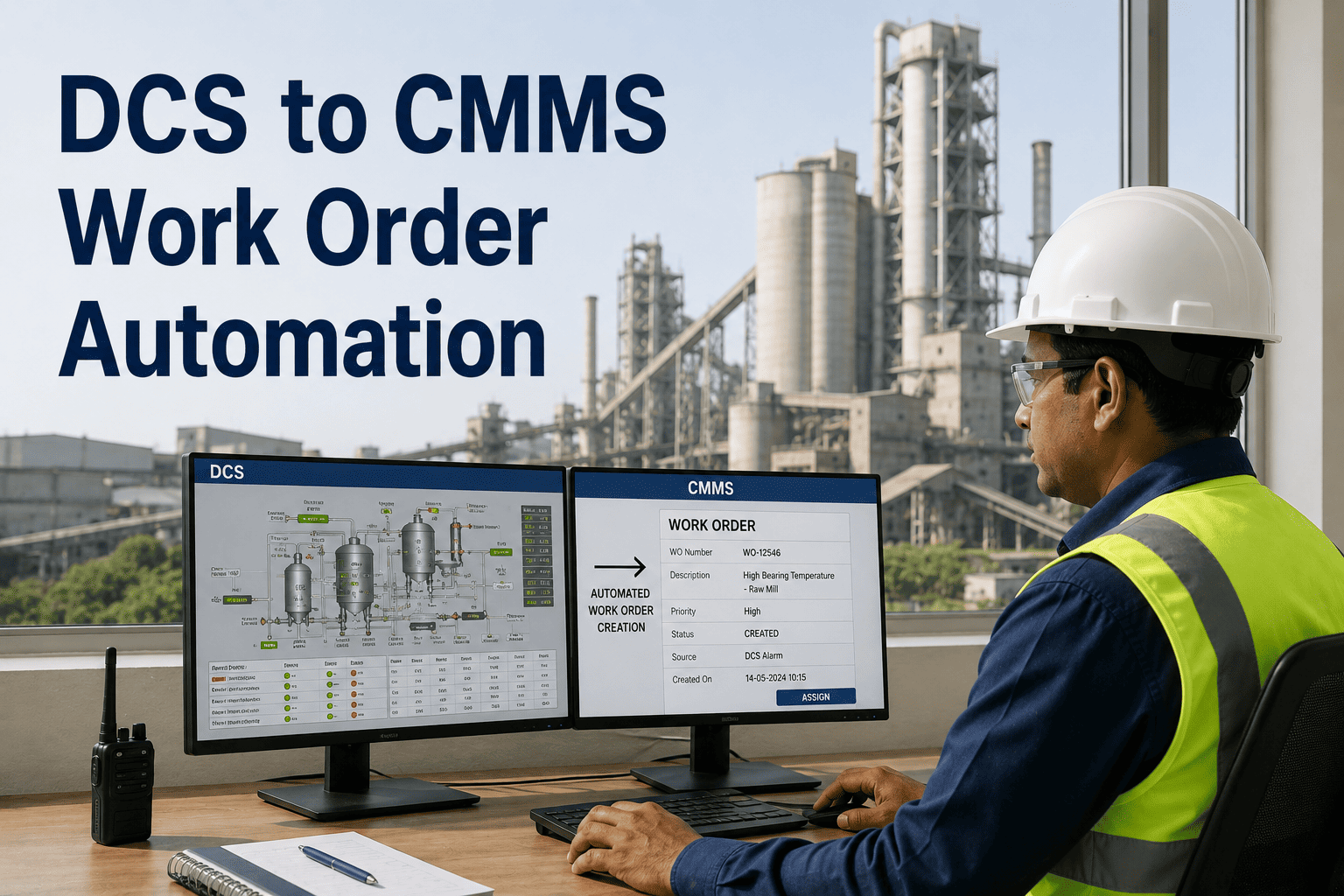
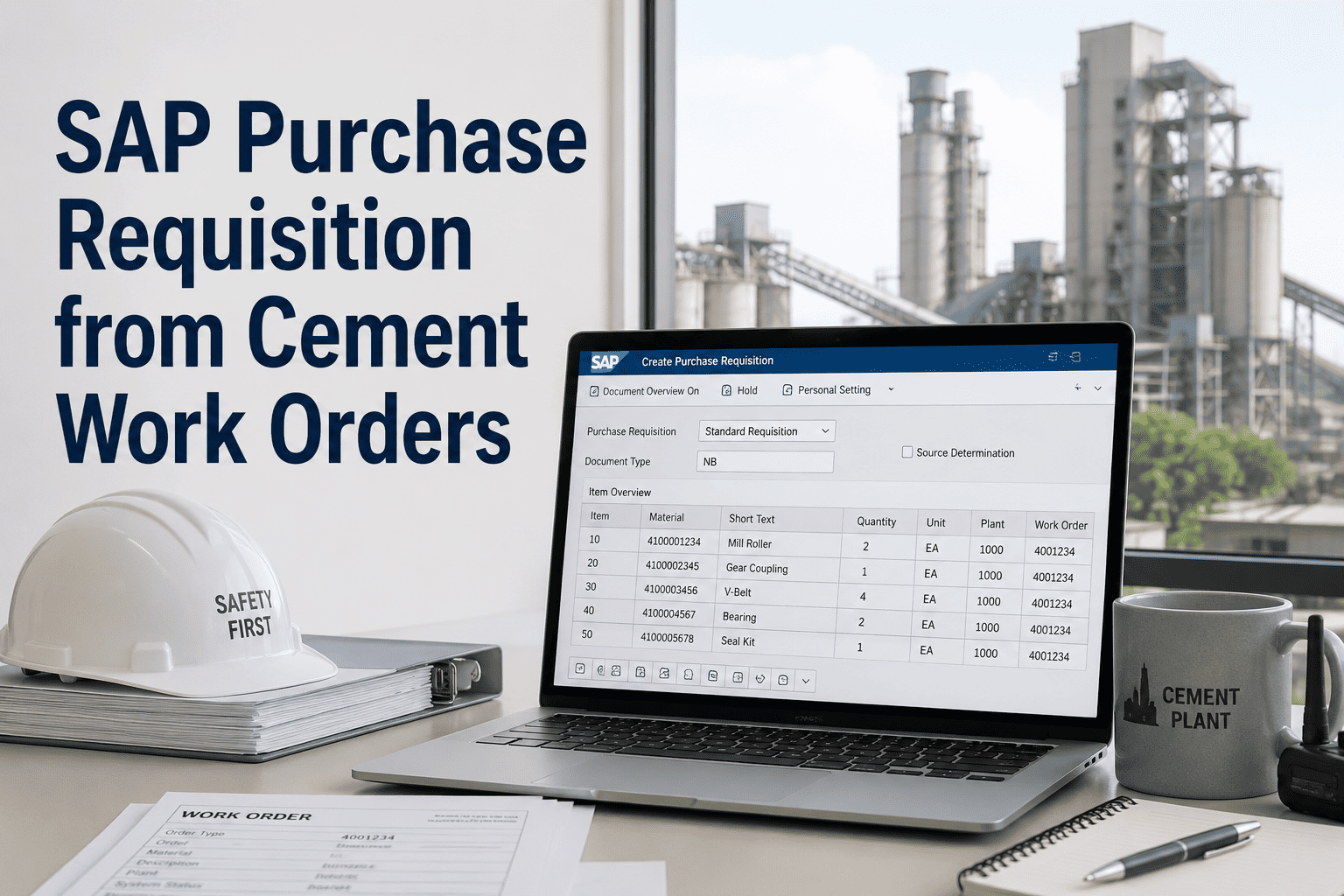
Purchase requisitions generated automatically from CMMS work order material requirements and inventory reorder alerts — routed through the approval workflow and converted to purchase orders against the preferred vendor for that part category with pre-negotiated pricing already populated. Every purchase order linked to the originating work order and asset record, creating a complete audit trail from maintenance demand through procurement to delivery and work order closure with no manual re-keying step.
See Oxmaint Running Vendor Management for Cement Plant Maintenance Procurement
Our team will walk you through a live demo with approved vendor registers, supplier scorecards, CMMS-integrated purchase order workflows, and contract management tools built for cement manufacturing operations — in under 30 minutes.
Four Vendor Management Failures Driving Procurement Cost in Cement Plants
These four structural failures account for the majority of avoidable procurement cost, supplier risk exposure, and purchasing administration overhead in cement plant maintenance supply chains — and all four are directly addressable through structured CMMS-integrated vendor management.
No Formal Vendor Qualification — Anyone Can Supply
Most cement plants have no formal process for qualifying new maintenance suppliers before they receive their first purchase order. Parts are sourced from any distributor who quotes a competitive price on the day — regardless of whether that distributor can consistently deliver to specification, maintains the certifications required for safety-critical components, or has the financial stability to honour warranty obligations. The consequence is a supplier base that grows continuously as individual buyers source from convenient options, compliance certifications expire without tracking, and counterfeit or substandard parts enter the maintenance supply chain through unqualified channels.
Supplier Performance Tracked Only by Complaint
When supplier performance is measured only by the complaints that reach the procurement desk — a wrong delivery, a rejected invoice, or a quality failure visible enough to generate a formal complaint — the underlying performance data that should drive consolidation decisions is never captured. A supplier delivering on time 68% of the time and consistently on the high side of moisture specification generates no complaint if individual orders are not tracked. The cumulative cost of that performance — production delays, quality deviations, rework — is absorbed by the maintenance and production budget and never attributed to vendor performance.
Contracts Lapsing and Reverting to List Pricing Without Notice
Blanket purchase orders and pricing agreements in cement plant procurement commonly run for 12 months without automated expiry alerts. When the contract period ends, purchasing staff continue placing orders against the same supplier — but at current uncontracted list prices rather than the agreed contract rates. In commodity MRO categories where market pricing fluctuates, list price at the time of the next order can exceed contracted price by 15–35%. This premium is paid for every purchase until someone notices the pricing discrepancy — which may not happen until the annual procurement review, six to nine months into the post-contract period.
Purchase Orders Processed Manually Outside the CMMS
When CMMS work orders identify required parts and the procurement process lives entirely outside the maintenance management system — in a separate ERP module, a standalone purchasing application, or a manual requisition process — the connection between maintenance demand and procurement action depends entirely on human communication and manual re-keying. Wrong part numbers are transcribed, delivery urgency is communicated informally and inconsistently, and the procurement team has no visibility of asset criticality or production impact when prioritising purchase order processing. The result is the maintenance system recording parts needs that procurement has never seen, and procurement buying parts that maintenance never requested.
How Oxmaint Structures Vendor Management for Cement Plant Maintenance Supplies
Oxmaint integrates vendor qualification, performance measurement, contract management, and CMMS-linked purchase order workflows into a single platform — converting fragmented supplier relationships into a managed vendor base where every procurement decision is based on documented performance data and executed through automated workflows at pre-negotiated pricing. Book a demo to walk through the full vendor management framework with your plant's current supplier base and procurement volume.
Ready to Build a High-Performance Vendor Base for Your Cement Plant?
Oxmaint deploys across a cement plant's vendor management and procurement workflows in 60–90 days. Start with the approved vendor register, activate purchase order performance tracking, and build the supplier scorecard data that drives consolidation and cost reduction. Book a personalised 30-minute demo — your supplier base, our platform, zero obligation.
Oxmaint Platform: Purpose-Built for Cement Plant Vendor and Procurement Management
Each module addresses a specific failure point in cement plant vendor management — from initial qualification through to performance-driven consolidation. Together they form a closed procurement loop where every purchase order builds vendor performance data, every performance review drives supplier base optimisation, and every contract agreement is monitored against actual spend and delivery compliance. Book a demo to walk through each module with your plant's current supplier base and maintenance procurement profile.
Unmanaged Vendor Relationships vs. Oxmaint: The Performance and Cost Gap
| Factor | With Oxmaint | Manual Management |
|---|---|---|
| Vendor Qualification | Formal qualification process with documented criteria per product category. Certification expiry tracked automatically. Only approved vendors accessible in purchase order workflow. | No formal qualification process. Any supplier quoting a competitive price can receive orders. Counterfeit or substandard parts enter supply chain through unqualified channels without detection. |
| Performance Visibility | On-time delivery, price compliance, and quality rejection tracked per vendor from every purchase order. Scorecards updated automatically. Procurement decisions based on 12-month documented performance. | Performance tracked only by complaints reaching the procurement desk. Suppliers delivering on time 65% of the time generate no formal record. Consolidation decisions made on personal relationships rather than data. |
| Contract Expiry Management | Expiry alerts at 90 days and 30 days. Renegotiation cycles planned in advance with 12-month performance data prepared. Contracted pricing maintained continuously — no undetected reversion to list rates. | Contracts lapse unnoticed. Purchasing continues against the same supplier at current list pricing. Premium of 15–35% above contracted rate paid for months before the discrepancy is identified in an audit. |
| Purchase Order Processing | Work order requirements trigger automatic requisitions with contracted pricing pre-populated. Approval routing by value threshold. Full audit trail from maintenance demand to delivery. Processing cost $15–30 per call-off. | Manual requisition raised by technician, communicated to purchasing by phone or email, re-keyed by purchasing clerk, routed manually for approval. Processing cost $80–150 per transaction. Wrong part numbers common. |
| Supplier Base Size | Spend concentration analysis and performance data enable structured consolidation to 50–80 preferred vendors with volume-leveraged pricing. Transaction cost reduced by 70–80%. | Supplier base grows continuously as buyers source from convenient options. 250–400 active suppliers generating hundreds of separate invoice and payment streams with no volume relationship with any of them. |
| Compliance Documentation | Vendor qualifications, product certifications, and supply chain due diligence records maintained in Oxmaint with expiry tracking. Audit-ready vendor compliance export in under 10 minutes. | Certification documents filed in physical folders or email archives. Expiry dates tracked manually or not at all. Regulatory audit requires days of record assembly — lapsed certifications frequently discovered. |
Cement Plant Vendor Management Programme Performance Benchmarks
These performance improvements represent average outcomes from cement plants that implemented structured vendor management with Oxmaint integration within 18 months of deployment.
Your Vendor Base Optimisation Programme Starts Here
Oxmaint delivers measurable vendor management improvements within 60–90 days of deployment. Book a 30-minute demo to map your current supplier base against best practice and build a consolidation roadmap for your procurement leadership team.
Vendor Category Profiles: Management Strategy by Maintenance Supply Type
Vendor qualification criteria, performance weighting, contract structure, and consolidation strategy differ significantly across the major maintenance supply categories in cement manufacturing. Applying a single vendor management approach uniformly across all categories misses the category-specific risk and commercial dynamics that determine whether a vendor programme actually reduces cost and improves reliability. Book a demo to see how Oxmaint applies category-specific vendor strategy across your plant's full maintenance supply base.
OEM Rotating Equipment Spares — Bearings, Gearboxes, Couplings
Only authorised distributor certificates on file in the vendor record permit purchase order placement for OEM bearing and rotating equipment spares — counterfeit parts in kiln and mill drive applications represent safety and production risk far exceeding any unit price saving from an unqualified distributor. Authorised distributor status verified annually with the relevant manufacturer. Volume consolidated to two preferred distributors per brand to maintain backup supply while achieving pricing leverage. Traceability documentation required per delivery lot and stored against the purchase order record.
Refractory Materials — Bricks, Castables, Mortars
Refractory vendor qualification includes product approval for each grade specified in the kiln lining design — approval by plant engineering, not just ISO certification by the supplier. Test certificates required per delivery batch and stored against the purchase order in Oxmaint. Procurement timing linked to kiln zone condition data from the CMMS inspection records — vendor framework agreements pre-negotiated with material delivery committed to the planned shutdown window, eliminating the 4–16 week lead time risk of spot ordering when shutdown scope is defined too late for normal procurement lead times.
Lubricants and Fluid Power Components
Lubricant product rationalisation managed through the Oxmaint parts register — equipment application cross-references from the previous multi-brand specification mapped to consolidated single-brand equivalents with each equipment asset record updated. REACH compliance documentation required per product and stored against the supplier record for regulatory inspection readiness. Vendor-managed inventory programmes structured with the preferred lubricant supplier managing tank levels directly — with Oxmaint tracking actual consumption per PM work order closure to provide the vendor with accurate replenishment signals rather than manual tank dip reporting.
Electrical Components and Instrumentation
Electrical and instrumentation procurement managed through blanket orders with 2–4 preferred distributors offering broad catalogue coverage — reducing the number of one-off spot purchases across a fragmented distributor base to near zero. Electronic catalogue integration with preferred distributor systems eliminates manual part number enquiry for standard components. CE marking and safety certification documentation required per delivery for components used in safety-critical control systems — stored against the purchase order record for traceability during any future safety incident investigation or regulatory audit.
ROI From Structured Vendor Management in Cement Plant Procurement
Frequently Asked Questions: Vendor Management for Cement Plant Maintenance Supplies
QWhat should a formal vendor qualification process cover for cement plant maintenance suppliers?
QHow should vendor performance be measured and reviewed in a cement plant context?
QWhich global compliance obligations affect vendor management in cement plant procurement?
QHow do blanket purchase orders reduce procurement cost in cement plant maintenance?
QHow long does Oxmaint take to deploy a vendor management programme in a cement plant?
QCan Oxmaint vendor management data integrate with SAP or ERP purchasing modules?
Continue Reading: Cement Plant Supply Chain and Procurement Resources
Explore these in-depth guides to build a complete picture of logistics management, warehouse operations, critical spares strategy, and MRO procurement optimisation across cement manufacturing operations.
Start Building Your Preferred Vendor Programme Today
Oxmaint deploys across your cement plant's vendor management and procurement workflows in 60–90 days — no heavy implementation fees and no long onboarding. Start with the approved vendor register, activate purchase order performance tracking, and build the supplier scorecard data that drives consolidation, negotiation, and 12–20% procurement cost reduction. Book a 30-minute demo — your vendor base, our platform, zero obligation.