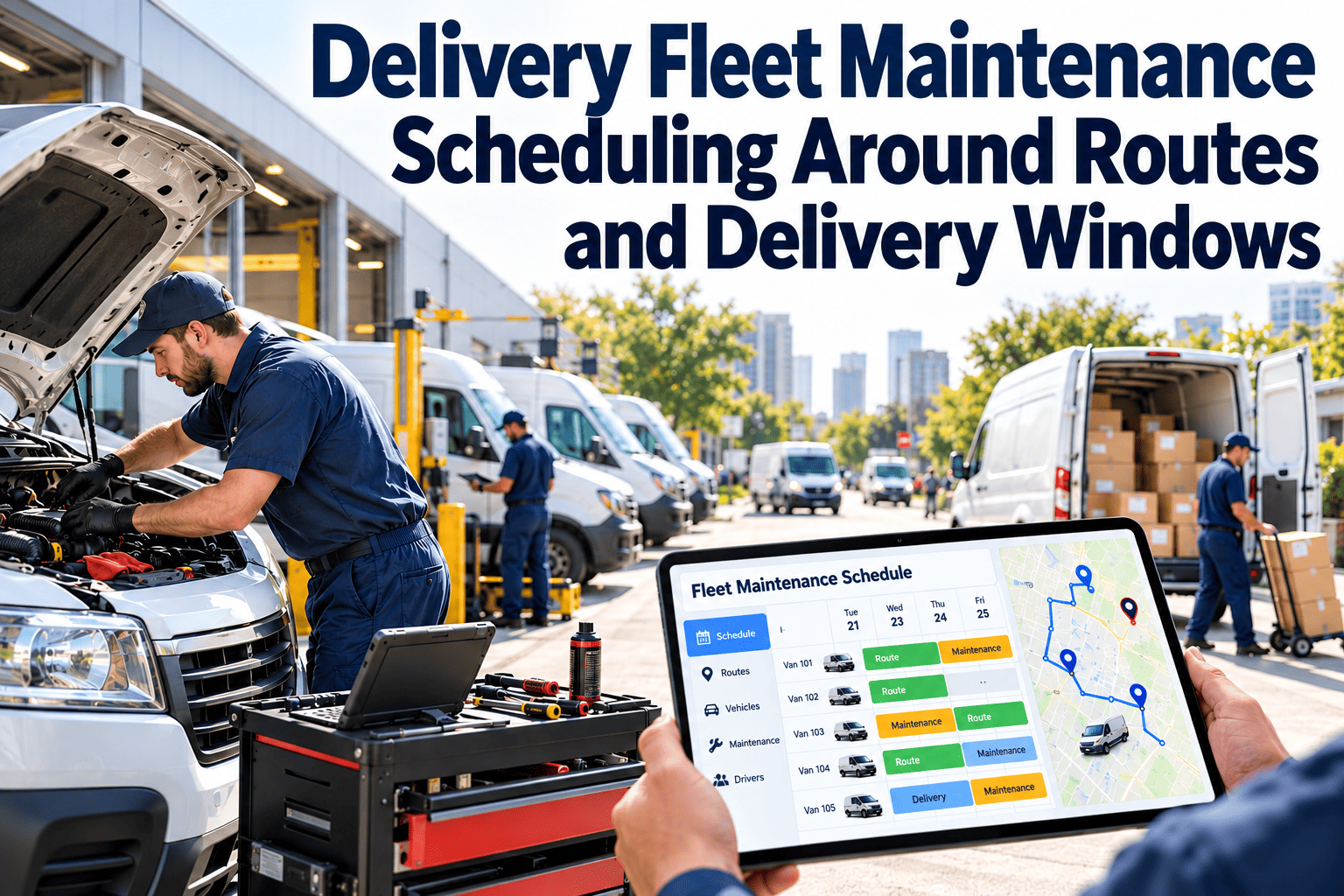
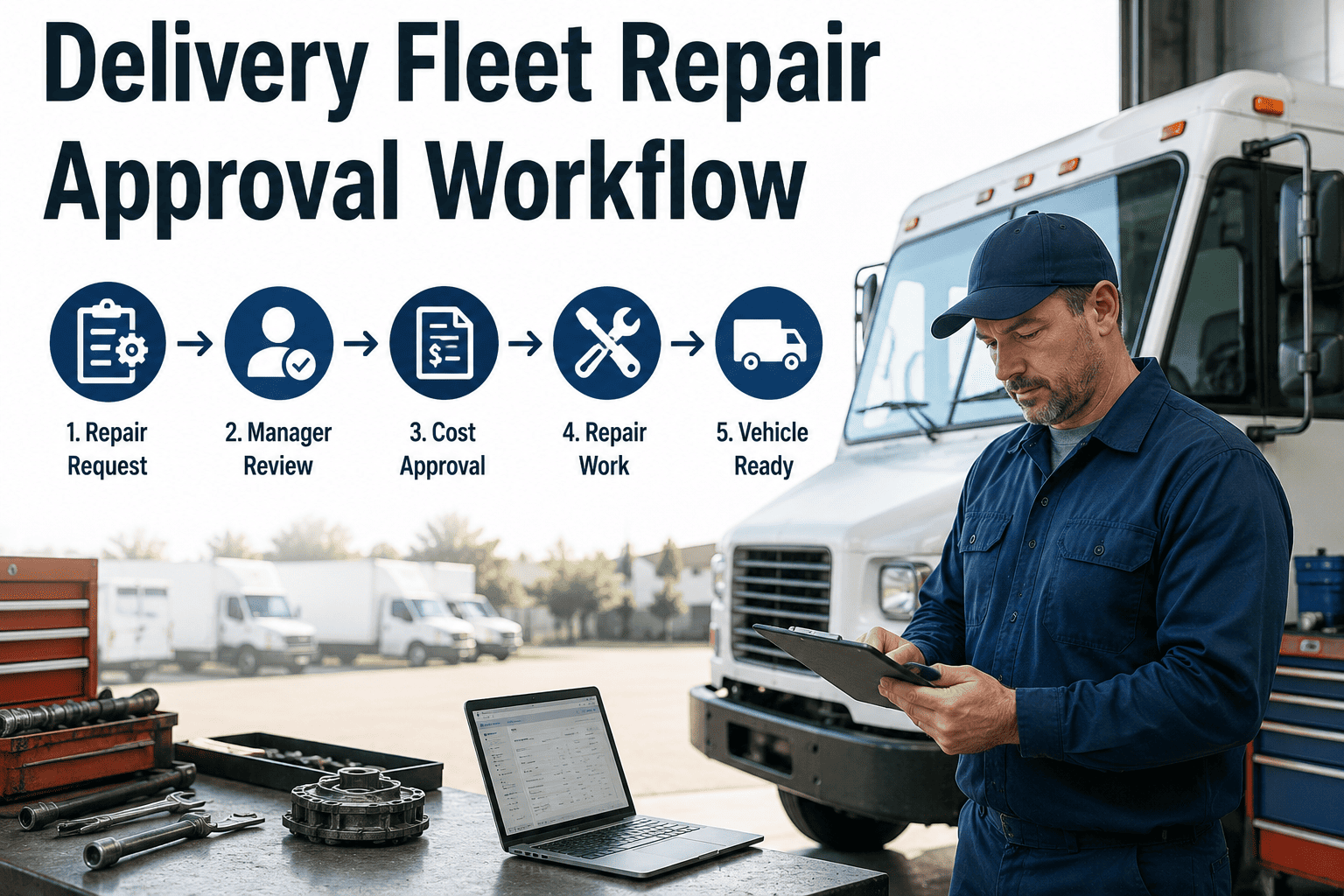
When a delivery fleet has ten vehicles flagged for repair and only four mechanic bays, the order in which you fix them determines whether you hit your SLAs or miss them. Most fleet workshops still prioritise by first-in, loudest-complaint, or gut instinct — none of which accounts for route criticality, delivery volume at risk, vehicle health trajectory, or parts availability. OxMaint.ai changes the entire decision logic with AI repair prioritisation that weighs every factor simultaneously and surfaces the right repair sequence automatically, before the morning shift begins. The result is not just fewer failures — it is the right vehicles on the right routes every time, with the operational intelligence to back every decision. Try OxMaint Free and put AI-driven repair prioritisation to work in your fleet within 60 minutes.
AI Repair Prioritization · Delivery Operations · OxMaint AI
AI Repair Prioritization for Delivery Operations
Stop fixing vehicles in the order they break down. Start fixing them in the order that matters — by route impact, SLA risk, vehicle health score, and asset criticality — all determined automatically by OxMaint AI before your shift begins.
Route Impact
Which routes lose coverage if this vehicle stays down?
SLA Risk
Which repairs carry delivery penalty exposure today?
Vehicle Health
Is this fault stable or accelerating toward failure?
Asset Criticality
Is this a high-value, high-utilisation, or hard-to-replace unit?
The Problem With Manual Prioritization
Why First-In, Loudest-Complaint Workshop Logic Costs You More Than You Think
Manual repair prioritisation in delivery fleets follows a predictable and costly pattern: the vehicle that broke down last night gets fixed first because it is physically in the bay. The loudest driver gets their vehicle bumped up the queue. High-mileage routes get no special weighting because the workshop has no visibility into route schedules. Faults that are quietly accelerating toward failure get deferred because they look less urgent than the visible breakdown in Bay 1.
This is not a people problem. It is an information problem. Workshop supervisors do not have a single view of route criticality, vehicle health trajectory, SLA exposure, and parts availability at the moment they are making repair sequencing decisions. OxMaint AI gives them that view — automatically, every morning, before the first wrench turns.
78% of SLA misses in delivery fleets are linked to suboptimal repair sequencing, not total vehicle unavailability
65% of deferred minor faults in manually-prioritised workshops escalate to major failures within 30 days
52% of avoidable field breakdowns occur on vehicles that were in the workshop within the preceding 14 days — and cleared without addressing the fault that caused the breakdown
How AI Prioritization Works
The Four Signals OxMaint Weighs Simultaneously to Sequence Every Repair
Signal 1
Route Impact Scoring
OxMaint cross-references the vehicle's assigned routes against the day's delivery volume, customer SLA tiers, and route redundancy. A vehicle covering a high-volume route with no backup coverage scores higher urgency than one assigned to a covered route — even if both faults have similar severity.
Example
Van B-14 has a brake wear alert. It is the sole vehicle covering a 240-stop express route. Priority: Critical. Van B-22 has the same alert but covers a route with three available backup vehicles. Priority: Schedule next available window.
Signal 2
SLA Risk Calculation
AI maps each vehicle's current fault status against the delivery SLA commitments attached to its routes. Repairs that carry direct financial penalty exposure — missed next-day delivery windows, premium route guarantees, contractual service levels — are elevated above standard urgency regardless of fault severity.
Output
SLA exposure value calculated per vehicle per day of downtime — presented as a financial figure, not just a priority label.
Signal 3
Vehicle Health Trajectory
OxMaint tracks whether a fault is stable, progressing, or accelerating. A fault that has been consistent for 14 days and is trending slowly is prioritised differently from a fault that has worsened 40% in the last 72 hours. Trajectory analysis prevents the common mistake of deferring something that looks minor but is moving fast.
Output
Estimated days-to-failure window displayed per vehicle alongside fault description — actionable, not just informational.
Signal 4
Asset Criticality Index
Not all vehicles are equal. Refrigerated units, high-capacity vehicles, specialist equipment, and fleet-age outliers each carry different replacement cost, insurance exposure, and operational dependency. OxMaint's asset criticality index weights these factors so high-value, hard-to-replace assets receive proportionally higher maintenance urgency.
Output
Asset criticality score displayed per vehicle in the repair queue — automatically updated as fleet composition changes.
Daily Workflow
What AI-Prioritized Repair Scheduling Looks Like in Practice
05:30
Overnight Data Processing
OxMaint processes all overnight telematics data, driver defect reports, and inspection submissions. Vehicle health scores are updated. Route schedules for the incoming day are ingested from dispatch. SLA tiers for the day's delivery commitments are mapped to vehicle assignments.
06:00
Prioritized Repair Queue Generated
The AI produces a ranked repair queue for the workshop supervisor — every vehicle with an open fault ordered by composite priority score. Each entry shows fault type, route impact, SLA exposure value, health trajectory, and recommended action. No manual triage required.
06:15
Dispatch Briefing Auto-Generated
Dispatch receives an automated summary showing which vehicles are confirmed available, which are in workshop with estimated return times, and which routes need coverage reallocation. Dispatch plans the day's runs from accurate information — not phone calls to the workshop.
Throughout Day
Real-Time Priority Updates
As new faults are reported, route changes are made, or repair completions alter fleet availability, OxMaint updates the priority queue in real time. Workshop and dispatch both operate from the same live picture — no lag, no miscommunication, no missed escalations.
Before and After
Manual Prioritization vs AI Prioritization — The Operational Difference
Manual Prioritization
Repair Sequence Logic
First vehicle in bay, loudest complaint, or supervisor gut feel — no systematic weighting of operational consequence
SLA Visibility
Workshop has no visibility into which vehicles carry SLA commitments — all faults treated with equal operational weight
Fault Trajectory
Mechanics judge severity at point of inspection only — no trending data to identify faults accelerating toward failure
Dispatch Communication
Workshop calls dispatch when vehicles are ready — dispatch plans from delayed, incomplete information
Deferral Decisions
Deferrals made without data on failure probability — regularly results in deferred faults escalating to breakdowns
OxMaint AI Prioritization
Repair Sequence Logic
Composite score from route impact, SLA value, health trajectory, and asset criticality — updated automatically every morning
SLA Visibility
SLA exposure value calculated per vehicle per downtime day — presented as a financial figure alongside every repair decision
Fault Trajectory
Days-to-failure window estimated per vehicle from trend analysis — fast-moving faults escalated even when current severity looks low
Dispatch Communication
Automated dispatch briefing generated at 06:00 — availability, workshop ETAs, and route reallocation recommendations in one view
Deferral Decisions
Deferral safety window calculated per fault from historical failure data — supervisors defer with confidence, not guesswork
See AI Prioritization in Your Fleet
Your Workshop Makes Better Decisions When It Has Better Information.
OxMaint connects to your existing telematics, dispatch system, and maintenance records to deliver a prioritised repair queue every morning — automatically. No integration project. No new hardware. Live in under 60 minutes. The first morning your workshop supervisor opens a prioritised queue instead of a whiteboard, the ROI begins.
Measured Impact
What Fleets Report After 90 Days of AI-Driven Repair Prioritization
74%
Reduction in SLA Misses Caused by Maintenance Downtime
When repairs are sequenced by route impact and SLA exposure, the vehicles that carry the highest delivery commitment risk are fixed first. The result is a dramatic reduction in customer-facing service failures that were previously caused by workshop sequencing errors rather than total fleet unavailability.
2.1x
Faster Workshop Throughput
AI pre-staging of parts requirements and mechanic skill matching means vehicles enter the bay with parts already pulled and the right mechanic assigned. Average bay occupancy time drops, and total daily throughput increases without adding headcount.
58%
Fewer Fault Escalations from Deferral
Deferral decisions backed by AI failure probability windows mean faults are not deferred past their safe window. Minor faults that would previously have been pushed out and then failed catastrophically are now addressed within the calculated safe deferral period.
3 hrs
Morning Briefing Time Saved Daily
The daily workshop-to-dispatch communication cycle — previously driven by phone calls, radio messages, and manual status boards — is replaced by an automated briefing generated before either team arrives. Three hours of coordination time recovered every morning.
Common Questions
What Operations Managers Ask About AI Repair Prioritization
Can the AI override decisions our workshop supervisor wants to make manually?
OxMaint provides recommendations, not mandatory commands. The prioritised queue is a decision-support tool — supervisors can override any ranking with one click and note the reason. Over time, override patterns feed back into the model to improve future recommendations. The goal is better-informed human decisions, not automated control.
Book a demo to see how the override and approval workflow operates.
Does this require integration with our dispatch and route planning system?
Full route impact and SLA scoring requires a data connection to your dispatch system. OxMaint integrates with the major fleet management and route planning platforms via standard APIs. If integration is not available immediately, OxMaint can operate in a reduced mode using vehicle telematics and health data alone, which still significantly improves repair sequencing over manual triage.
Start your free trial to assess integration options with your specific stack.
What happens when multiple vehicles are all scored as critical priority simultaneously?
When multiple critical-priority vehicles compete for limited bay capacity, OxMaint applies a secondary ranking based on estimated days-to-failure, SLA financial exposure, and route redundancy availability. The system also surfaces reallocation options — vehicles with backup coverage can be rescheduled to create bay capacity for the highest-impact repairs.
See the triage logic in action in a 30-minute demo.
How does the system learn our specific fleet's patterns over time?
OxMaint's AI continuously refines its recommendations based on repair outcomes in your specific fleet — comparing predictions against actuals, learning which fault types progress fastest in your vehicle mix, and adjusting deferral window calculations to your operating conditions. Recommendations improve measurably over the first 60–90 days.
Start building your fleet's learning baseline today — free trial, no card required.
Can we apply different prioritization logic for different depot locations?
Yes — OxMaint supports depot-level configuration of prioritization rules. A depot operating express next-day delivery routes can weight SLA exposure more heavily than a depot running standard delivery. Asset criticality thresholds, deferral safety windows, and route redundancy thresholds are all configurable per depot by fleet managers without technical support.
Book a demo to walk through the configuration options for your depot structure.
AI Repair Prioritization · Free to Start · Live in 60 Minutes
The Right Vehicle. The Right Bay. The Right Mechanic. Every Morning.
Delivery operations that fix vehicles in the order that matters — not in the order they arrived — run more efficiently, miss fewer SLAs, and spend less per repair event. OxMaint gives your workshop the intelligence to make every prioritization decision correctly, automatically, before the day begins. No guesswork. No phone calls. Just a ranked queue and the data behind every position on it.