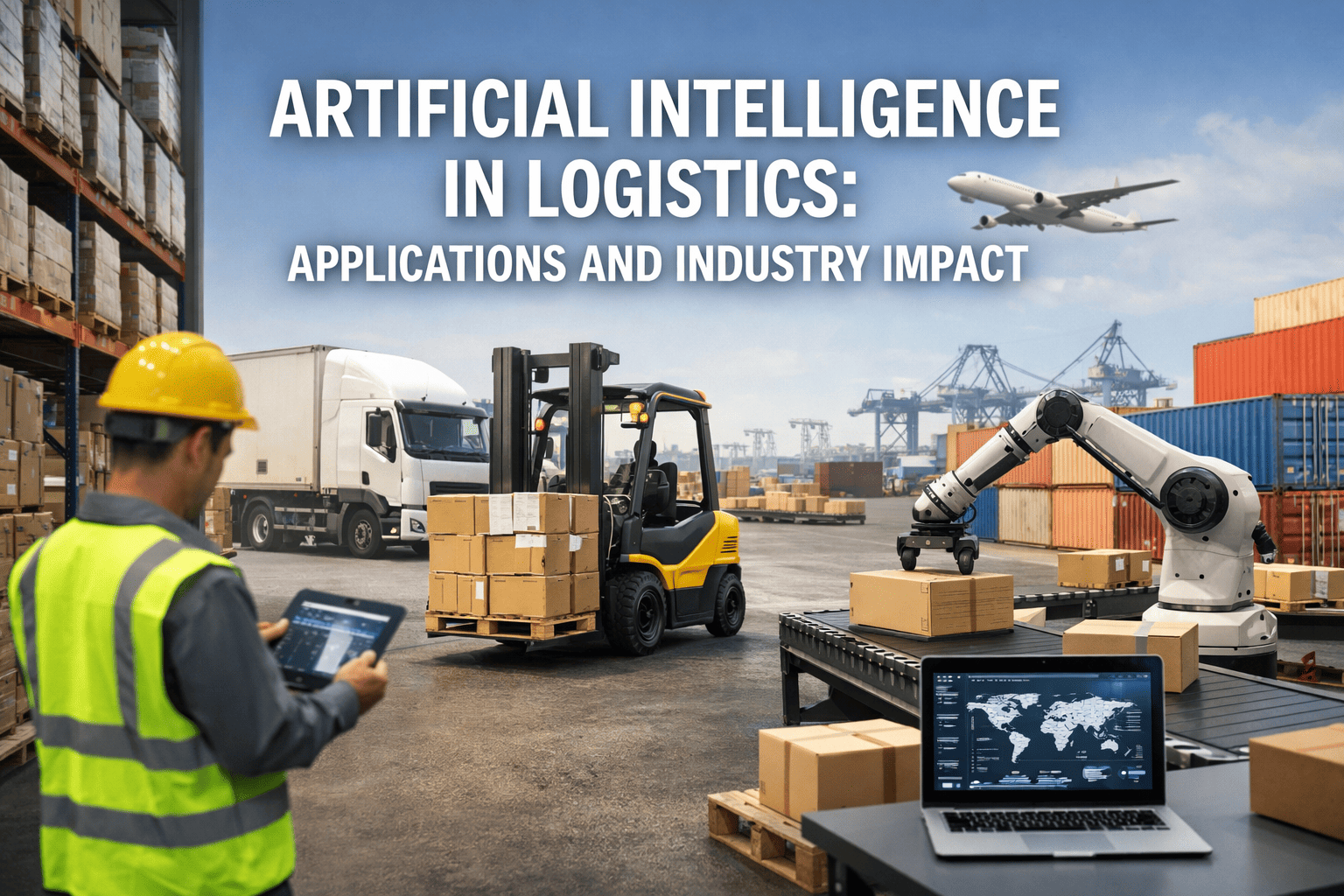
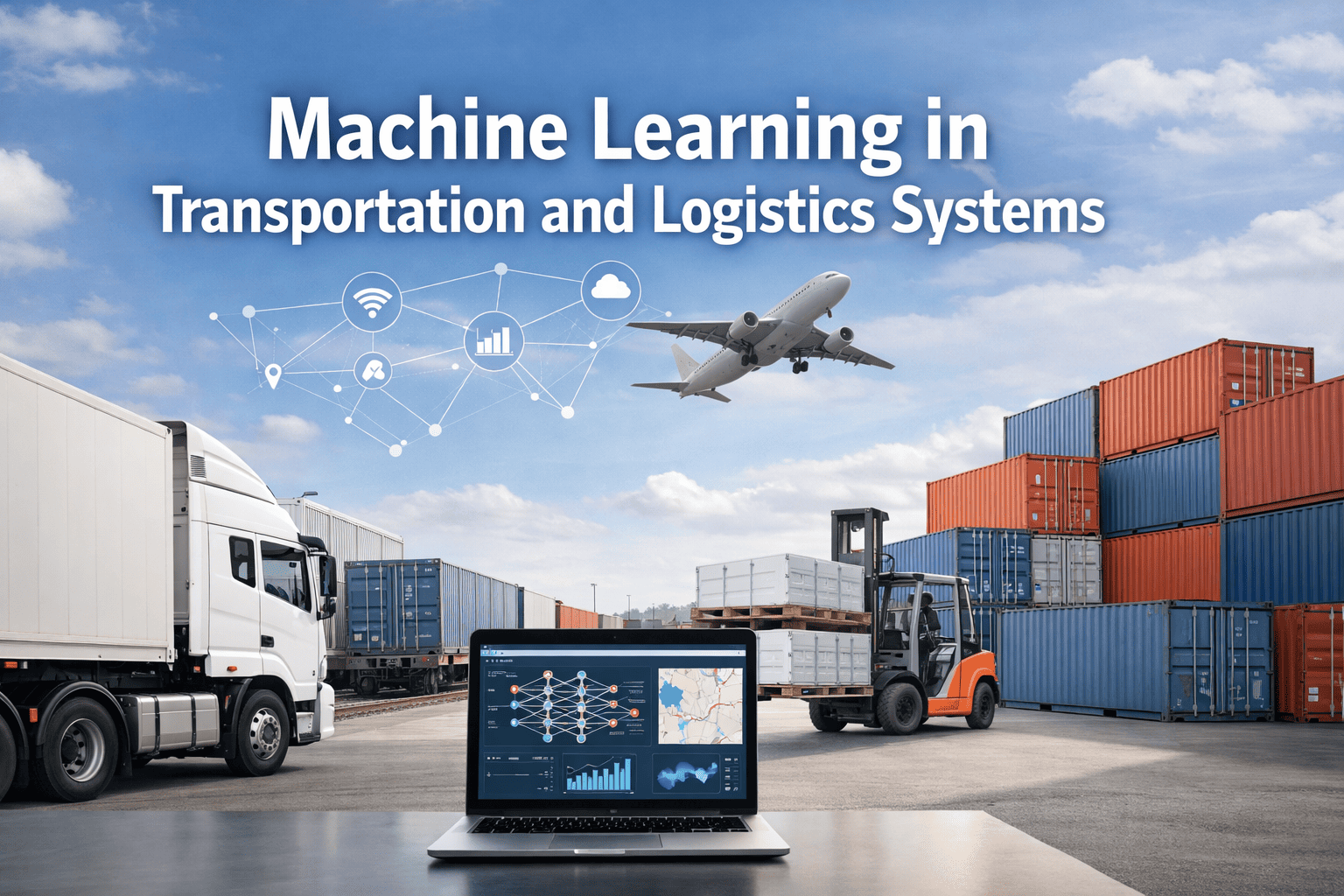
Logistics has always been a game of margins — shaving minutes off routes, catching breakdowns before they happen, and moving freight through a network with hundreds of variables in motion at once. Artificial intelligence is changing how that game is played. Not as a futuristic concept, but as a practical operational layer already deployed in fleet management, route optimisation, demand forecasting, and warehouse automation across the industry. This guide breaks down where AI is being applied in logistics today, what it actually does, and what it means for companies managing fleets and supply chains at scale. See how Oxmaint uses AI to power smarter fleet maintenance or book a demo to explore AI-driven operations for your team.
$49B
projected AI in logistics market size by 2030, growing at 42% annually
23%
average reduction in fuel costs achieved through AI-powered route optimisation
40%
reduction in unplanned downtime with AI predictive maintenance programmes
78%
of leading logistics companies have AI pilots or deployments in active operations
What AI Actually Does in Logistics
AI in logistics is not a single technology — it is a collection of machine learning models, automation systems, and decision engines applied to specific operational problems. Understanding what AI does requires separating it into its core functions and the workflows it transforms.
ML
Machine Learning
Learns from historical data — service records, delivery times, route performance — to identify patterns, predict outcomes, and improve decisions without being manually reprogrammed.
PA
Predictive Analytics
Uses vehicle sensor data, maintenance history, and operating conditions to forecast failures before they occur and recommend when to service assets before breakdowns happen.
NLP
Natural Language Processing
Enables conversational interfaces, automated document processing, and intelligent search across maintenance records, contracts, and compliance documents without manual indexing.
CV
Computer Vision
Analyses images and video to detect vehicle damage, verify inspection completeness, monitor driver behaviour, and automate warehouse sorting without human review of every frame.
OPT
Optimisation Algorithms
Processes thousands of route, scheduling, and load variables simultaneously to generate the most efficient delivery sequence — updated dynamically as conditions change in real time.
AUT
Automation and RPA
Executes repetitive operational tasks — work order generation, invoice processing, compliance alerts, dispatch notifications — without human intervention, freeing teams for higher-value decisions.
AI-powered maintenance management — built for logistics
Oxmaint uses predictive analytics and automation to reduce vehicle downtime and keep your fleet running at full capacity.
Start Free Trial
The 6 Major AI Applications in Logistics Operations
Predictive Maintenance for Fleet Vehicles
AI analyses telematics data, engine diagnostics, and maintenance history to predict when a vehicle is likely to fail — before it breaks down mid-route. Machine learning models identify patterns invisible to human review: an engine temperature trend at a specific load, a brake wear rate correlated with route type, a recurring fault code that precedes a costly failure three weeks later.
40%
less unplanned downtime
3x
lower emergency repair cost vs. reactive
25%
longer average vehicle service life
Dynamic Route Optimisation
AI optimisation engines calculate the most efficient delivery sequence in real time — accounting for traffic conditions, delivery time windows, vehicle load capacity, driver hours, and fuel cost simultaneously. Unlike static routing, AI continuously re-optimises as conditions change throughout the day: a road closure, a late pickup, a priority delivery added mid-shift.
23%
reduction in fuel consumption
18%
more deliveries completed per shift
15%
lower driver overtime cost
Demand Forecasting and Inventory Intelligence
AI models analyse historical shipment volumes, seasonal patterns, customer order behaviour, and external signals — weather events, market trends, supplier lead times — to forecast future demand with far greater accuracy than spreadsheet-based planning. The result is better fleet utilisation, optimised warehouse staffing, and fewer stockout or overstock situations.
30%
improvement in forecast accuracy
20%
reduction in excess inventory holding cost
12%
fewer missed delivery SLAs from capacity gaps
Supply Chain Visibility and Risk Detection
AI aggregates data from carrier systems, port feeds, supplier ERP platforms, and IoT sensors to create a real-time view of goods in transit across the entire supply chain. Anomaly detection models flag disruption signals — a supplier shipment running late, a port congestion pattern building, a carrier reliability score dropping — before they become missed delivery events.
65%
faster disruption detection vs. manual monitoring
35%
reduction in supply chain exception handling cost
2x
improvement in on-time delivery rates
Intelligent Warehouse Automation
AI powers pick-path optimisation, robotic sorting, computer vision-based quality control, and demand-driven slotting — placing high-velocity items in positions that minimise travel time for pickers or robots. Machine learning improves these decisions continuously as order patterns evolve, without requiring warehouse managers to manually update layout rules.
50%
reduction in pick-and-pack labour cost
99.9%
order accuracy achievable with vision-guided systems
3x
faster throughput vs. manual warehouse processes
Driver Behaviour Monitoring and Safety Intelligence
AI analyses telematics data — harsh braking, acceleration patterns, cornering forces, lane adherence — to score driver behaviour, identify high-risk patterns, and trigger coaching interventions before those patterns result in an accident or a compliance violation. Models identify correlations between specific driving behaviours and vehicle wear, reducing both safety incidents and maintenance cost simultaneously.
28%
reduction in accident frequency with AI driver monitoring
18%
lower fuel consumption from behaviour improvements
22%
reduction in vehicle wear caused by driver behaviour
Bring AI-powered maintenance to your fleet today
Oxmaint automates PM scheduling, defect detection, and fleet analytics — no data science team required.
Book a Demo
AI vs. Traditional Logistics Operations: The Capability Gap
| Operational Area |
Traditional Approach |
AI-Powered Approach |
| Fleet Maintenance |
Schedule-based service intervals; breakdowns detected after failure |
Predictive models forecast failures weeks before they occur based on sensor and usage data |
| Route Planning |
Static plans built the night before; manual updates during the day |
Dynamic optimisation recalculates the best route in real time as conditions change |
| Demand Forecasting |
Historical averages and manual adjustments by planners |
Multi-variable ML models incorporating 50+ signals updated daily |
| Supply Chain Risk |
Disruptions identified after they cause delivery failures |
Anomaly detection flags risk signals before they reach operational impact |
| Driver Safety |
Accident reporting and periodic manual review of logs |
Continuous behaviour scoring with automated coaching triggers and risk alerts |
| Work Order Management |
Manually raised after a reported fault; tracked in spreadsheets |
Auto-generated from sensor triggers or inspection defects; assigned and tracked digitally |
Where AI Delivers the Highest ROI in Logistics
Highest ROI
Predictive Maintenance
Every dollar invested in AI maintenance prediction returns 3 to 8 dollars in avoided emergency repair cost, vehicle downtime savings, and extended asset life. Payback period typically under 12 months.
High ROI
Route Optimisation
AI routing reduces fuel spend — the largest variable operating cost for any fleet — by 15 to 25%. Cumulative savings across a 50+ vehicle fleet are measurable within the first month of deployment.
High ROI
Demand Forecasting
Better forecasts reduce both overstock holding cost and stockout-driven expedited shipment cost. For high-velocity logistics operations, forecast accuracy improvements translate directly to margin recovery.
Strategic ROI
Supply Chain Visibility
The financial value of avoided disruptions is harder to quantify until the first major event is caught early. Companies with AI visibility report fewer surprise cost spikes and stronger client retention from consistent on-time performance.
Companies that deploy AI across their logistics operations are not just reducing costs. They are compressing the decision cycle from days to minutes — and that speed advantage compounds across every shipment, every route, and every maintenance event in the fleet.
Logistics Technology Benchmark Report
Industry AI Adoption Study, 2026
The AI Adoption Maturity Curve in Logistics
Stage 1
Data Foundation
Digitising records, connecting vehicle telematics, and centralising maintenance and operations data. Without clean, connected data, AI has nothing to learn from.
→
Stage 2
Reporting and Alerting
Dashboards showing fleet status, automated alerts for overdue PMs, inspection compliance tracking. Basic operational intelligence from connected data.
→
Stage 3
Predictive Recommendations
AI models flagging which vehicles are likely to fail, which routes will be delayed, which orders are at risk. The system recommends actions before problems materialise.
→
Stage 4
Autonomous Optimisation
AI takes routine operational decisions automatically — generating work orders, re-routing drivers, adjusting schedules — with human oversight reserved for exceptions only.
Industry Impact: Sectors Transformed by AI in Logistics
Last-Mile Delivery
AI route optimisation and dynamic dispatch have cut average cost per delivery by 18–22% in urban last-mile operations. Same-day delivery viability is now directly dependent on AI scheduling accuracy.
Long-Haul Trucking
Predictive maintenance and driver behaviour AI have reduced accident rates and roadside inspection failures for long-haul carriers. AI load-matching platforms are reducing empty-mile percentage across the sector.
Cold Chain and Pharma
AI temperature monitoring and anomaly detection now protect high-value cargo in real time. Deviation alerts trigger corrective action before product is compromised — reducing cold chain loss claims significantly.
E-Commerce Fulfilment
AI demand forecasting and warehouse slotting have become competitive requirements for e-commerce logistics providers. Companies without AI-driven inventory intelligence are losing SLA performance benchmarks to those that have it.
How Oxmaint Applies AI to Fleet Maintenance Operations
The predictive and automation capabilities that drive AI value in logistics are most directly applicable to fleet maintenance — where unplanned breakdowns, reactive processes, and fragmented data cost operations teams the most. Oxmaint applies these principles to make maintenance proactive, visible, and automatically managed. Start for free and see how AI-powered maintenance changes the operating model for your fleet.
Predictive PM Scheduling
Oxmaint analyses vehicle usage patterns and maintenance history to recommend service intervals that prevent failures before they happen — not just when a calendar date arrives.
Automated Work Order Intelligence
When a defect is reported or a PM threshold is reached, Oxmaint generates and assigns work orders automatically. No human step required between detecting a problem and dispatching a technician.
Fleet Health Analytics Dashboard
Real-time fleet health scoring gives operations managers a data-driven view of which vehicles need attention, which depots are underperforming, and where maintenance investment is generating the highest return.
Intelligent Compliance Alerts
Oxmaint monitors document expiry dates, inspection completion rates, and regulatory thresholds — alerting teams automatically before any compliance gap reaches the point of risk or violation.
Parts Demand Forecasting
Usage patterns across the fleet identify which components are approaching replacement frequency, allowing parts inventory to be restocked proactively rather than sourced as an emergency purchase after a breakdown.
Multi-Depot AI Benchmarking
For enterprise fleets, Oxmaint compares PM compliance, breakdown frequency, and cost per vehicle across locations — surfacing which depots are outperforming and which need operational intervention.
40%
fewer unplanned breakdowns with AI predictive maintenance deployed across the fleet
$49B
global AI logistics market by 2030 — the transformation is already underway
8x
ROI achievable on AI maintenance investment within the first year of structured deployment
AI-Powered Fleet Maintenance Starts Here
The logistics companies pulling ahead in 2026 are not the ones with the most vehicles — they are the ones with the best operational intelligence. Oxmaint brings AI-powered maintenance scheduling, predictive analytics, automated compliance tracking, and multi-depot visibility to your fleet — without requiring a data science team to run it.
Frequently Asked Questions
What is the most impactful AI application in logistics right now?
Predictive maintenance delivers the highest and fastest ROI for most logistics operations — particularly fleet-heavy companies. By preventing unplanned breakdowns, AI maintenance systems reduce the most expensive and disruptive cost in the operation. Route optimisation is the second highest-impact application, with fuel savings measurable within weeks of deployment.
Do logistics companies need a large technology team to implement AI?
Not with modern platforms. AI capabilities in fleet management and maintenance — predictive scheduling, automated alerts, analytics dashboards — are now embedded in purpose-built tools like Oxmaint that require no data science expertise to operate. The focus is on connecting your existing data and letting the platform surface the intelligence, rather than building models from scratch.
How does AI in logistics differ from traditional automation?
Traditional automation follows fixed rules — if this happens, do that. AI improves over time by learning from outcomes. A route optimisation algorithm that uses AI does not just apply a formula — it adjusts its recommendations as it learns which routes perform better for specific vehicle types, load configurations, and time windows. The system gets smarter the more data it processes.
What data does AI need to be effective in fleet maintenance?
The most valuable inputs are vehicle telematics data, historical maintenance records, defect reports, mileage and engine hours, and parts usage history. The more consistently and completely this data is captured — ideally through a digital maintenance platform — the more accurately AI models can identify patterns and predict failures. Starting with digitised records is the essential first step before any predictive model can deliver value.