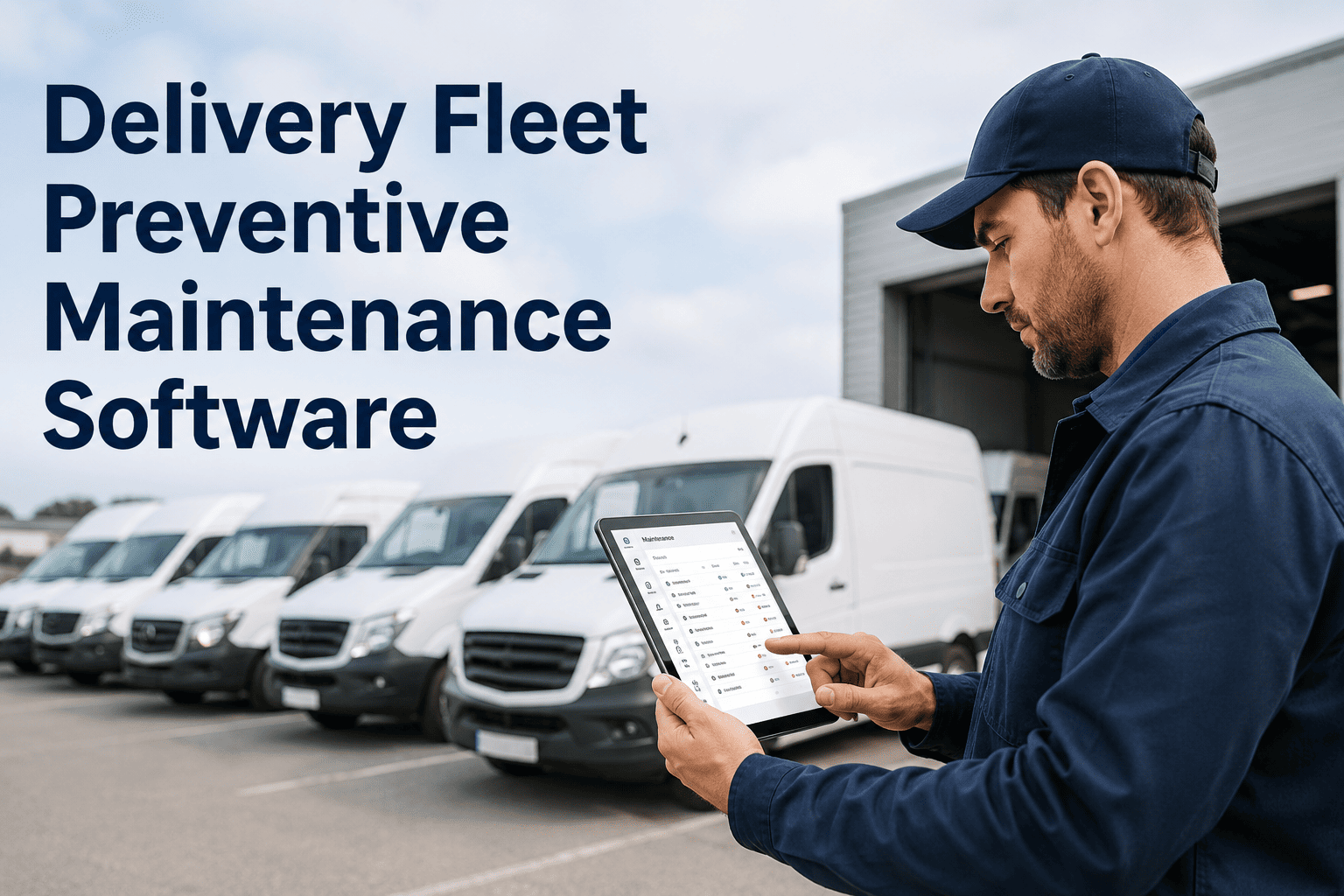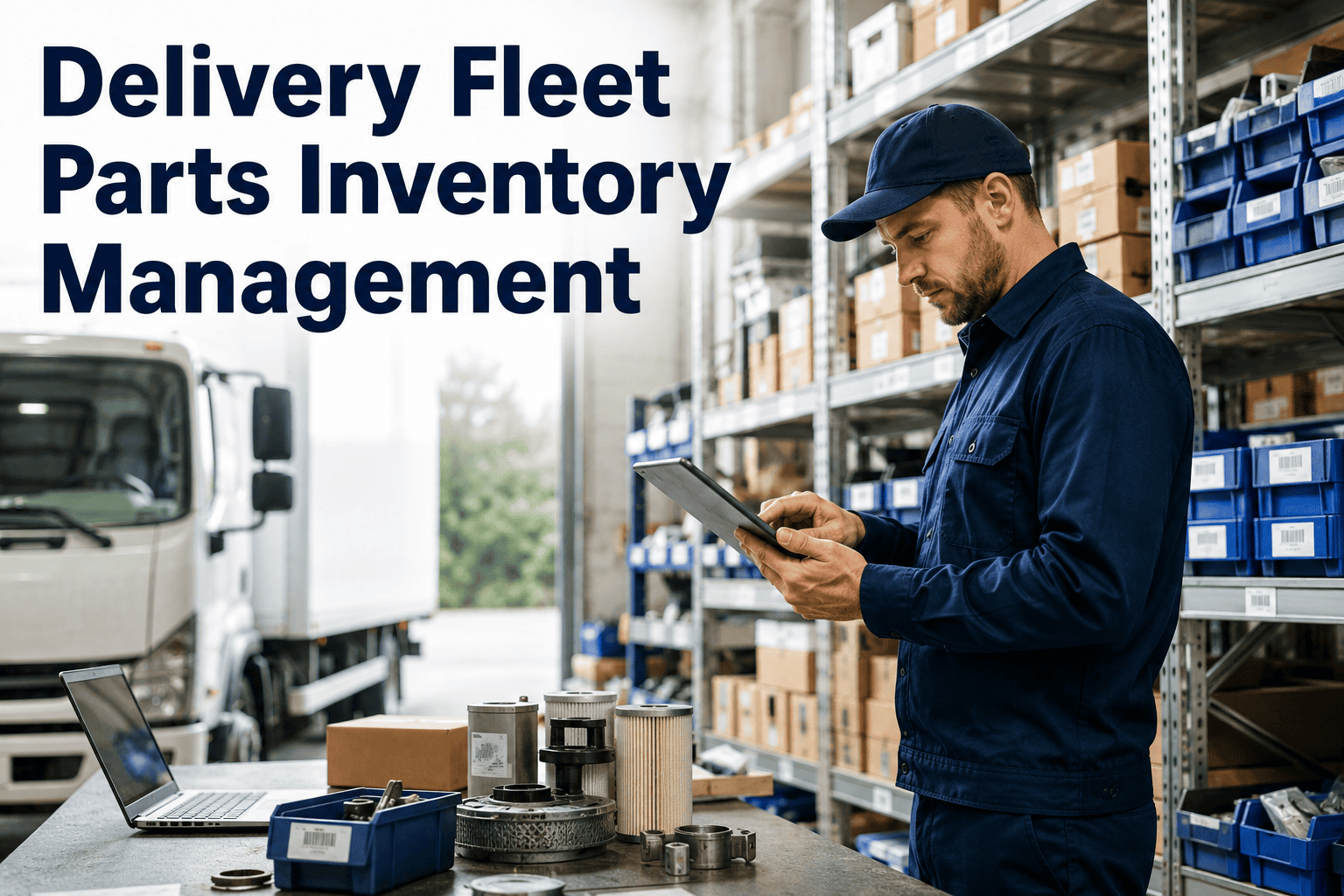
Every delivery fleet has a hidden money leak — and it lives in the parts room. A technician pulls a vehicle in for a brake job, and the parts bin is empty. The van sits idle for two days while an emergency order ships overnight at a 60% price premium. Multiply that across a fleet of 40 vehicles and you're not just losing parts budget — you're losing delivery contracts. OxMaint's parts inventory management system for delivery fleets gives dispatchers and fleet managers real-time visibility into tire stock, brake components, batteries, filters, and repair tools, so the right part is always on the shelf when the wrench turns. Fleets using OxMaint reduce emergency procurement by 74% and cut parts-related vehicle downtime by more than half — all without overstocking shelves or tying up excess capital. Start free at Oxmaint or book a 30-minute demo to see your parts room transformed.
Delivery Fleet Parts Inventory Management
Stop losing delivery days to empty shelves. Track every tire, brake pad, battery, and filter across your entire courier fleet — with automatic reorder alerts before you run out.
What a Stockout Really Costs a Delivery Fleet
The bill for a missing part goes far beyond the emergency shipping fee. It hits your delivery SLAs, your drivers' hours, and your customer relationships — all at once.
Parts ordered urgently carry 40–70% price premiums plus overnight freight. A brake caliper that costs $85 on a planned order costs $145 when the van breaks down at a depot at 6 AM on a Monday.
Every day a delivery van sits waiting for a part is a day of missed routes, reassigned drivers, and customer delivery promises broken. For courier fleets, one idle day per van per month adds up fast.
A mechanic who pulls a van into a bay and finds no parts on hand doesn't leave — they wait, reschedule other work, or improvise. That labor time is paid regardless of whether the job gets done.
A $90 filter not available on schedule becomes a $1,200 engine service three months later. Every dollar of deferred preventive maintenance generates five to eight dollars in reactive repair costs within 18 months.
Every Part Category Your Fleet Needs — Tracked in One Place
OxMaint organizes delivery fleet inventory by part category, vehicle type, and consumption rate — so planners see what's running low before drivers feel it on the road.
Brake pads, calipers, rotors, and brake fluid are the highest-consumption safety items in any delivery fleet. OxMaint tracks installation dates, mileage intervals, and stock levels — and triggers reorder automatically when stock drops below calculated safety stock levels.
Oil filters, air filters, fuel filters, and coolant are consumed at predictable intervals tied to mileage. OxMaint links filter consumption directly to work order history — so reorder points are calculated from actual usage, not manufacturer estimates.
Delivery vans and cargo bikes cycle through tires faster than standard vehicles due to stop-and-go urban routes and kerb loading. OxMaint tracks spare tire stock at every depot and flags shortfalls before the rotation schedule creates a gap.
Starter batteries, alternators, and electrical components in mixed fleets require separate tracking by vehicle age and type. OxMaint profiles failure frequency by vehicle model to maintain the right stock depth for each asset class in your fleet.
Drive belts, serpentine belts, coolant hoses, and suspension components fail less frequently but cost the most in downtime when missing. OxMaint maintains minimum stock of two units for each critical Category C part — regardless of consumption frequency.
Torque wrenches, diagnostic tools, fasteners, and workshop consumables disappear from depot shelves quietly. OxMaint tracks tool issue and return via work orders — ensuring technicians can account for every item without a manual audit cycle.
OxMaint gives your parts room a live dashboard — stock levels, reorder alerts, supplier lead times, and consumption history for every part across every depot. Watch an inventory manager walk through it in 30 minutes.
How OxMaint Calculates Your Reorder Points Automatically
Most fleet parts rooms run on gut feel. OxMaint calculates precise reorder points from 12 months of actual consumption data — updated automatically as your fleet changes.
OxMaint calculates all three variables from your actual work order history — not manufacturer estimates or guesswork. Fleets that switch from intuition-based to calculation-based reorder points reduce stockout frequency by 60% within 90 days.
Every part issued against a work order in OxMaint is recorded automatically. After 90 days of usage, the system has enough data to calculate accurate average daily consumption per part number.
OxMaint stores actual delivery times from your primary and secondary suppliers per part. When a supplier's lead time increases, safety stock calculations update automatically.
When on-hand stock hits the calculated reorder point, OxMaint creates a purchase requisition for your parts manager to approve — with supplier info, unit cost, and recommended quantity pre-filled.
Incoming deliveries are reconciled against open work orders. If a delivery is delayed and a work order needs that part, the maintenance planner is alerted before the vehicle arrives at the bay.
Parts Inventory Performance: Before and After OxMaint
These numbers come from delivery fleet deployments across courier, last-mile, and food distribution operations. The gap is real and measurable within the first quarter.
| Inventory KPI | Fleet Average (Without CMMS) | With OxMaint | Improvement |
|---|---|---|---|
| Parts Available at Job Start | 71% | 96% | +25 points |
| Emergency Procurement Events/Year | 34 avg. | 9 avg. | 74% fewer |
| Inventory Record Accuracy | 63% | 97% | +34 points |
| Stockout-Related Downtime Days/Year | 18 avg. | 6 avg. | 67% fewer |
| Excess Inventory Carrying Cost | High | Reduced 40% | Right-sized stock |
| Time Spent on Manual Stock Counts | 6 hrs/week | Under 1 hr/week | 85% time saved |
Frequently Asked Questions
Your Parts Room Should Never Stop a Van
OxMaint gives delivery fleet managers real-time parts visibility, automatic reorder alerts, and supplier tracking — so the right part is on the shelf before the vehicle enters the bay. Start free today or book a walkthrough with a fleet inventory specialist.