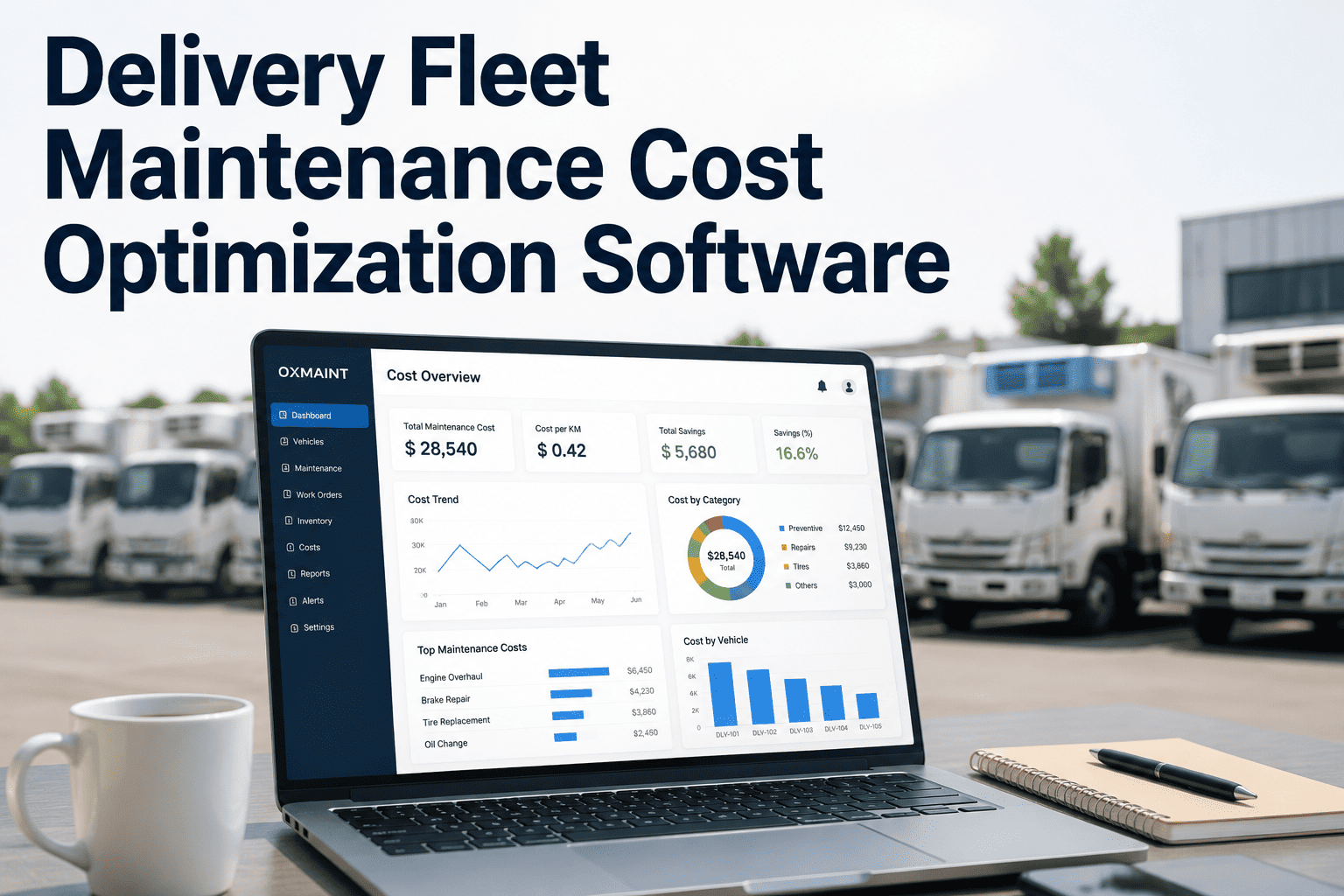
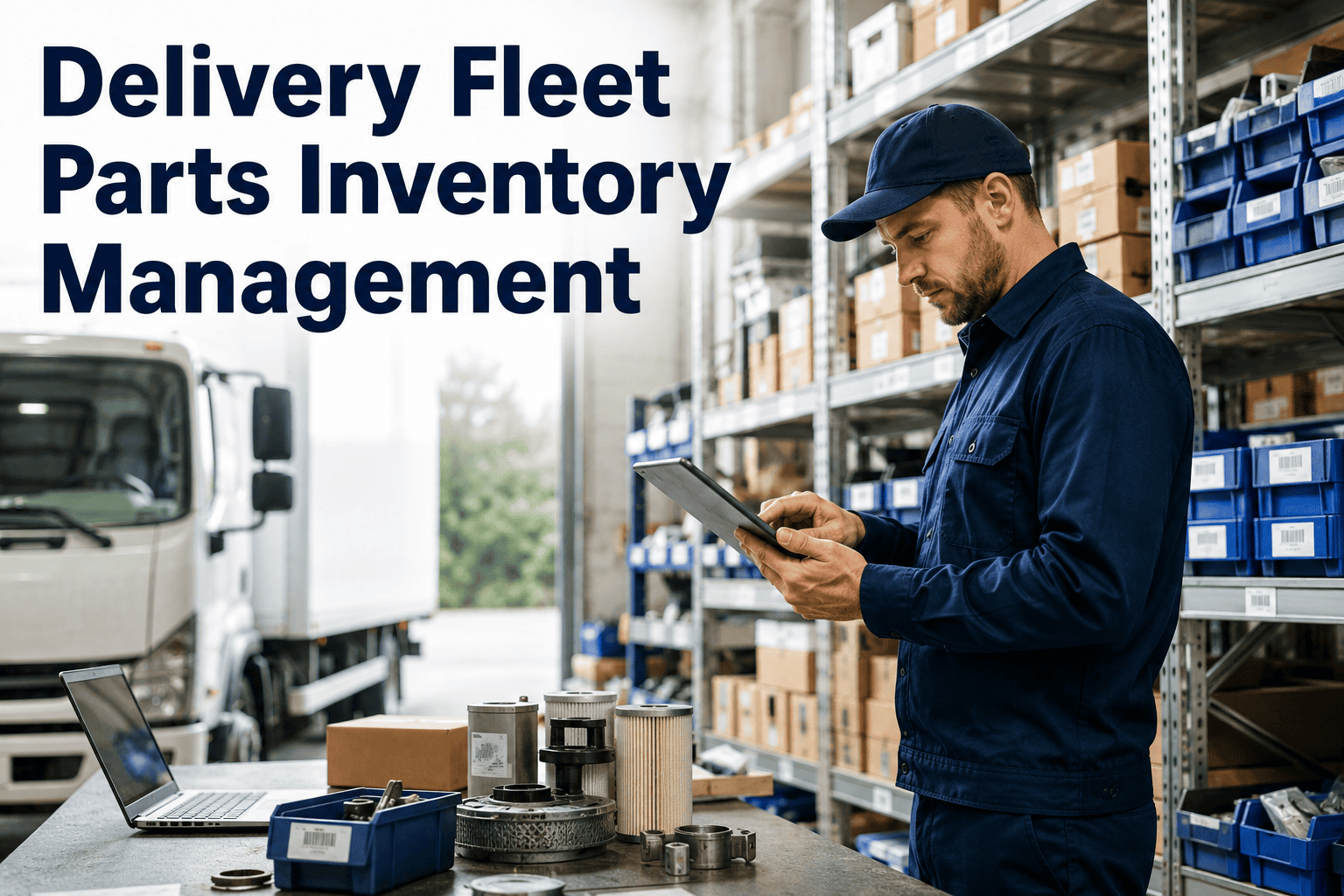
When a delivery vehicle sits idle because a $60 brake sensor is out of stock at the depot, that is not a purchasing problem — it is a data problem. Most fleet operations simultaneously carry tens of thousands of dollars in slow-moving parts that never get consumed, while the high-turnover items that actually keep vehicles on the road run out at precisely the wrong moment. In 2026, AI-driven spare parts management is eliminating both failure modes. Demand forecasting connected directly to predictive maintenance schedules, automated reorder triggers, and cross-depot inventory visibility are giving delivery fleet operations the parts control they have always needed — without the capital waste that comes from guessing.
Operational Optimization · Fleet Inventory Intelligence
Smart Spare Parts Management for Delivery Fleet Maintenance
How AI-driven demand forecasting, automated stock control, and cross-depot visibility eliminate stockouts, cut inventory waste, and keep every vehicle route-ready.
The Parts Management Problem at a Glance
Tech Time Wasted
35 min/job
Cost Reduction (AI)
25–30%
Avg. Fleet Inventory
$450K/yr
Why Spare Parts Management Breaks Down at Scale
Fleet parts management looks manageable at 50 vehicles. By 300 vehicles across 8 depots, it becomes a multi-location inventory crisis — with each depot ordering independently, no cross-depot visibility, and no connection between upcoming PM schedules and procurement decisions.
Dead Stock Lock
$135K / year
30% of parts inventory in a typical 500-vehicle fleet is never consumed. Capital locked into slow-moving stock inflates the budget while the parts that matter run out.
Stockout Premium
2.6x repair cost
When the right part is not on the shelf, emergency procurement costs 2.6x the standard price — expedited freight, after-hours supplier calls, and vehicle downtime all stack up before the repair even starts.
Multi-Depot Duplication
Zero shared visibility
Without cross-depot inventory data, each location buys independently. The same slow-moving part gets stocked at 10 depots simultaneously while the same critical part runs out at 4.
Technician Parts Hunt
25–35 min per job
Technicians spend an average of 35 minutes per work order locating and confirming parts. Across 15 jobs per depot per day, that is 9 hours of skilled labor wasted on stock-checking instead of repairs.
No PM-Linked Ordering
Reactive procurement
PM schedules create completely predictable parts demand — but most fleets do not connect their maintenance calendar to procurement. Orders react to depletion instead of leading it.
Shelf Life Write-Offs
Recurring annual loss
Seals, gaskets, belts, and electronic modules ordered speculatively degrade within 12–18 months. When vehicle models update, un-consumed stock becomes direct write-off losses with no recovery path.
How AI Smart Parts Management Works
AI parts management connects three data sources that traditional inventory systems keep completely separate: upcoming PM schedules, predictive fault detection alerts, and historical consumption patterns. When unified, demand forecasting becomes precise enough to eliminate both stockouts and dead stock simultaneously.
4-Layer AI Parts Intelligence Model
How Oxmaint converts maintenance data into optimized inventory at every depot
PM Schedule-Driven Demand Forecasting
AI reads every vehicle's upcoming 30–90 day PM schedule and calculates the exact parts consumption profile per depot, per week — oil filters, brake pads, belts, fluids, gaskets. Parts are ordered based on scheduled demand weeks before depletion, not in reaction to an empty shelf.
Result: Zero PM-related stockouts
Predictive Fault Parts Pre-Positioning
When AI detects a developing fault — bearing wear, coolant system anomaly, transmission stress — it immediately cross-checks depot inventory for the required repair parts. If stock is short, a purchase order fires before the work order is created. Parts arrive before the repair is needed.
Result: Fault repairs completed same shift
Consumption Pattern Optimization
Historical parts usage by part number, vehicle class, depot, and season builds true velocity profiles. Fast-moving parts get higher buffer stock. Slow-moving parts get minimum levels. Safety stock thresholds are calculated from real consumption data — not procurement intuition.
Result: 25–30% inventory cost reduction
Cross-Depot Inventory Balancing
When one depot has excess stock of a part that another urgently needs, AI flags the transfer before triggering an external purchase order. The entire fleet inventory is treated as one shared resource — eliminating duplicate ordering and unlocking consolidated purchasing leverage across all locations.
Result: Eliminate multi-depot duplication
Reactive Parts Management vs. AI Smart Inventory
| Metric |
Reactive / Manual |
AI Smart (Oxmaint) |
Outcome |
| Stockout Rate |
8–15% of jobs delayed |
Below 1% |
Near-zero repair delays |
| Dead Stock Waste |
30% never consumed |
Demand-driven only |
$90K–$135K annual saving |
| Emergency Procurement |
Frequent — 2.6x premium |
Rare — pre-positioned |
Procurement cost reduction |
| Parts Search Time |
25–35 min per work order |
Pre-linked at job creation |
35% productivity gain |
| Cross-Depot Visibility |
Zero — per-depot silos |
Real-time, fleet-wide |
Shared inventory leverage |
| Demand Signal |
Gut feel + order history |
PM schedule + fault data |
Right part, right depot |
| Reorder Trigger |
Manual check or alert |
Automated AI threshold |
Never caught short |
| Shelf Life Write-Offs |
High — speculative orders |
Low — demand-driven |
Reduced obsolescence |
Is your parts inventory working for your fleet — or against it?
Most fleets lose $90K–$135K per year to dead stock and emergency procurement combined. AI demand forecasting fixes both with one platform.
Start Free Trial →
Oxmaint Smart Parts Features for Delivery Fleets
Inventory Intelligence
AI Parts Demand Forecasting
PM schedules and predictive fault alerts feed directly into parts demand calculations — projecting consumption by part number, by depot, and by week. Procurement teams get 30–90 day demand visibility instead of reacting to empty shelves after stock runs out.
PM-LinkedFault-Driven90-Day Horizon
Work Order Integration
Auto Parts Reservation at Job Creation
Every work order auto-identifies required parts and checks depot inventory in real time. Parts are reserved at job creation — preventing double-allocation to concurrent jobs and eliminating the technician time wasted confirming availability manually before work starts.
Auto-ReserveLive CheckMobile Access
Portfolio Visibility
Cross-Depot Inventory Dashboard
Live stock levels, reorder status, parts reserved for open work orders, and parts on order — visible across every depot from one screen. Cross-depot transfer alerts fire automatically before external purchase orders are triggered, protecting purchasing leverage fleet-wide.
All Depots LiveTransfer AlertsReorder Status
Cost Control
Parts Spend Analytics and CapEx Forecasting
Parts cost per vehicle, per depot, and per vehicle class tracked and benchmarked fleet-wide. Historical consumption trends feed rolling CapEx forecasts — connecting parts spend to asset lifecycle planning and giving CFOs data-driven capital allocation visibility.
Cost Per VehicleCapEx LinkingSpend Benchmarks
25–30%
Total Parts Inventory Cost Reduction
Demand-driven AI ordering eliminates speculative procurement and dead stock accumulation across all depots.
<1%
Work Order Stockout Rate
Pre-positioned stock and automatic parts reservation at job creation reduces parts-related repair delays to near zero.
$135K
Annual Dead Stock Savings (500 Vehicles)
Demand-driven procurement eliminates the 30% of inventory traditional fleets carry but never consume each year.
Key Takeaways: Smart Parts Management for Fleet Operations
→
Stockouts and dead stock are the same problem: Both result from procurement decisions made without data. AI demand forecasting solves both simultaneously by connecting what you will need to what you actually stock.
→
PM schedules are your best demand signal: Every PM generates completely predictable parts consumption. Connecting maintenance schedules to procurement is the single highest-ROI move in fleet parts management.
→
Cross-depot visibility changes the cost equation: Multi-depot operations that share inventory data eliminate duplicate ordering, unlock transfer-before-purchase decisions, and compound purchasing leverage across the entire network.
→
Parts pre-linking is the fastest technician productivity gain: Eliminating 25–35 minutes of parts search per work order frees 6–9 hours of technician time per depot per day — capacity that goes directly into repair throughput and fleet availability.
Take Control of Your Fleet Parts Inventory
Get AI-driven demand forecasting, real-time cross-depot parts visibility, automatic work order parts reservation, and spend analytics that connect inventory costs to asset lifecycle planning — all in one platform. Start free or book a walkthrough to see how Oxmaint works for your fleet.
Frequently Asked Questions
How does AI forecast spare parts demand for a delivery fleet?
AI demand forecasting pulls from three connected data sources: the upcoming PM schedule for every vehicle, which creates predictable parts consumption; predictive fault detection alerts, which identify specific repair parts needed before the job is created; and historical consumption data by part number, vehicle class, and depot. The combined model projects demand 30–90 days forward — giving procurement teams enough lead time to order at standard cost instead of reacting to stockouts with emergency orders at a 2.6x premium.
How does Oxmaint prevent parts from being double-allocated across concurrent work orders?
When a work order is created in Oxmaint, required parts are automatically checked against current depot inventory and reserved against that specific job — reducing available stock counts in real time. Any subsequent work order requiring the same part sees the updated availability, preventing two technicians from being assigned work against a shared part that only exists once in inventory. If stock falls below the AI-calculated threshold after reservation, an automated reorder is triggered immediately.
Can Oxmaint manage parts inventory across multiple depots from a single platform?
Yes. Oxmaint provides a unified cross-depot parts inventory dashboard — live stock levels, reorder status, parts reserved for open work orders, and parts on order — across every depot in your fleet network from one screen. When one location has excess stock of a part that another needs urgently, the system flags the transfer opportunity before an external purchase order is raised. This shared visibility eliminates the duplicate ordering that inflates parts costs across multi-depot operations.
How does smart parts management connect to fleet CapEx forecasting?
Oxmaint tracks parts cost per vehicle, per vehicle class, and per depot — and connects consumption trends to asset condition data and lifecycle models. As vehicles approach end-of-life, parts consumption typically increases and becomes less predictable. The platform identifies this inflection point, flags vehicles for replacement consideration, and feeds parts cost projections into rolling 5–10 year CapEx forecasts. Operations directors and CFOs get data-driven capital allocation planning instead of year-end budget surprises.