Delivery Vehicle Inspection Software for Digital DVIR and Pre Trip Compliance
By Alex Jordan on March 23, 2026
A driver who completes a paper DVIR in 60 seconds has not inspected the vehicle — they have signed a liability shield. The defect that causes a roadside breakdown or a DOT violation was almost certainly present during the last pre-trip inspection. It went unrecorded because the paper process rewards speed over accuracy, offers no escalation mechanism for flagged defects, and produces a record that is impossible to verify, search, or present in an audit without manual assembly. Digital DVIR changes every part of that equation. Mobile guided inspection checklists force complete walkarounds, photo capture creates irrefutable evidence at every stage, defect escalation connects the driver's finding directly to a work order, and compliance records build automatically — meeting DOT Part 396, DVSA O-licence, NHVL, and StVZO requirements without a single manual filing step. For fleet operations managers running delivery vehicles across the USA, UK, Canada, Australia, UAE, and Germany, this is not a technology upgrade — it is the replacement of a fundamentally broken process with one that actually works.
OxMaint · Digital DVIR & Vehicle Inspection · 2026
Pre-Trip Inspections That Actually Catch Defects. Compliance Records That Build Themselves.
Mobile DVIR, guided checklists, photo capture, instant defect escalation, and auto-generated DOT/DVSA/NHVL compliance reports — all in one platform.
of roadside violations stem from defects that existed at the last pre-trip inspection — and weren't recorded
90 sec
average time a driver spends on a paper DVIR. Average AI-guided mobile inspection: 6–8 minutes with photo evidence
$16,000
average DOT out-of-service violation fine — fully avoidable with complete pre-trip inspection records
Why Paper DVIR Is a Compliance Liability, Not a Safety Process
Paper DVIR creates no accountability for completeness, no mechanism to verify a flagged defect was addressed before the vehicle left, and no audit trail that holds up under investigation. A DOT inspector reviewing paper forms for a 50-vehicle fleet sees signatures and tick marks — nothing that tells them whether the inspection actually happened or what was done about any defect that was flagged. A fleet manager facing a post-accident investigation faces the same folder as their only defence. Digital DVIR fixes the process, not just the paperwork — verified, photo-evidenced, timestamped records that are tamper-proof, searchable, and immediately exportable. Start your free OxMaint trial and replace paper DVIR from day one.
PAPER DVIR VS DIGITAL DVIR — THE CRITICAL DIFFERENCES
Paper DVIR
Average completion time: 60–90 seconds
No photo evidence — defect description is a handwritten note
No escalation — defect may not reach maintenance before next trip
Compliance record: paper file, easily lost, hard to search
Audit response: full fleet export in under 2 minutes
Multi-driver: each shift signed off individually, timestamped
How OxMaint Digital DVIR Works: From Driver App to Compliance Record
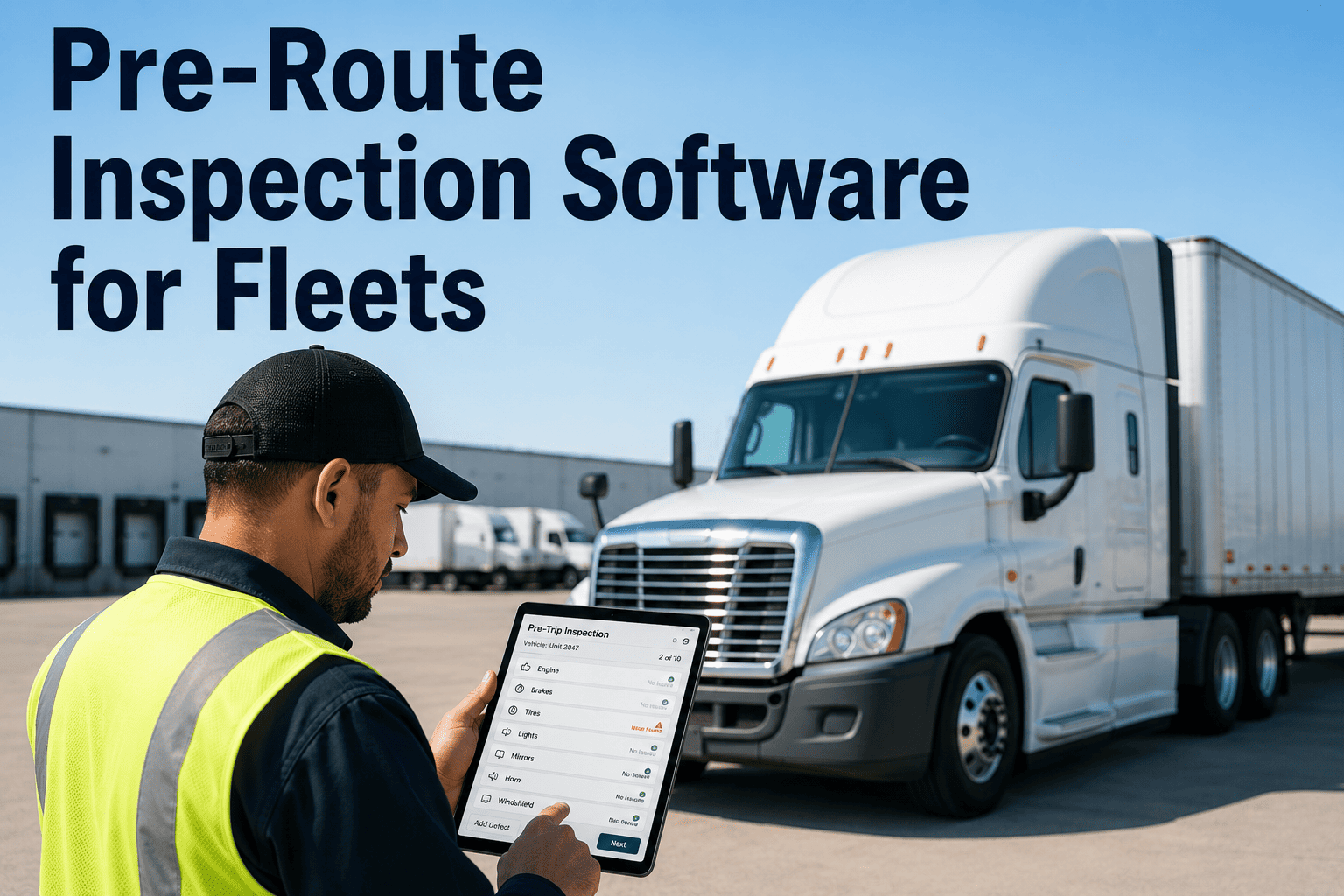
The OxMaint mobile DVIR app sequences every inspection checkpoint — exterior walkaround, lights, tyres, brakes, cab interior, load security, and any vehicle-specific items your fleet requires. Defect flags require a photo before the inspection can progress. When the driver signs off digitally, every photo, timestamp, and response uploads instantly. Any defect simultaneously triggers a work order in the maintenance system with the driver's photo attached — the workshop knows what they're looking at before the vehicle returns. Fleet managers see every vehicle's inspection status live on the compliance dashboard. Book a demo to see the full DVIR workflow from driver app to compliance record.
DIGITAL DVIR WORKFLOW — DRIVER APP TO CLOSED COMPLIANCE RECORD
App sequences every checkpoint. Photo required at each defect flag. Cannot skip or rush.
3
Digital Sign-Off
Driver signs digitally. Record uploads instantly with all photos and timestamps attached.
4
Defect Escalation
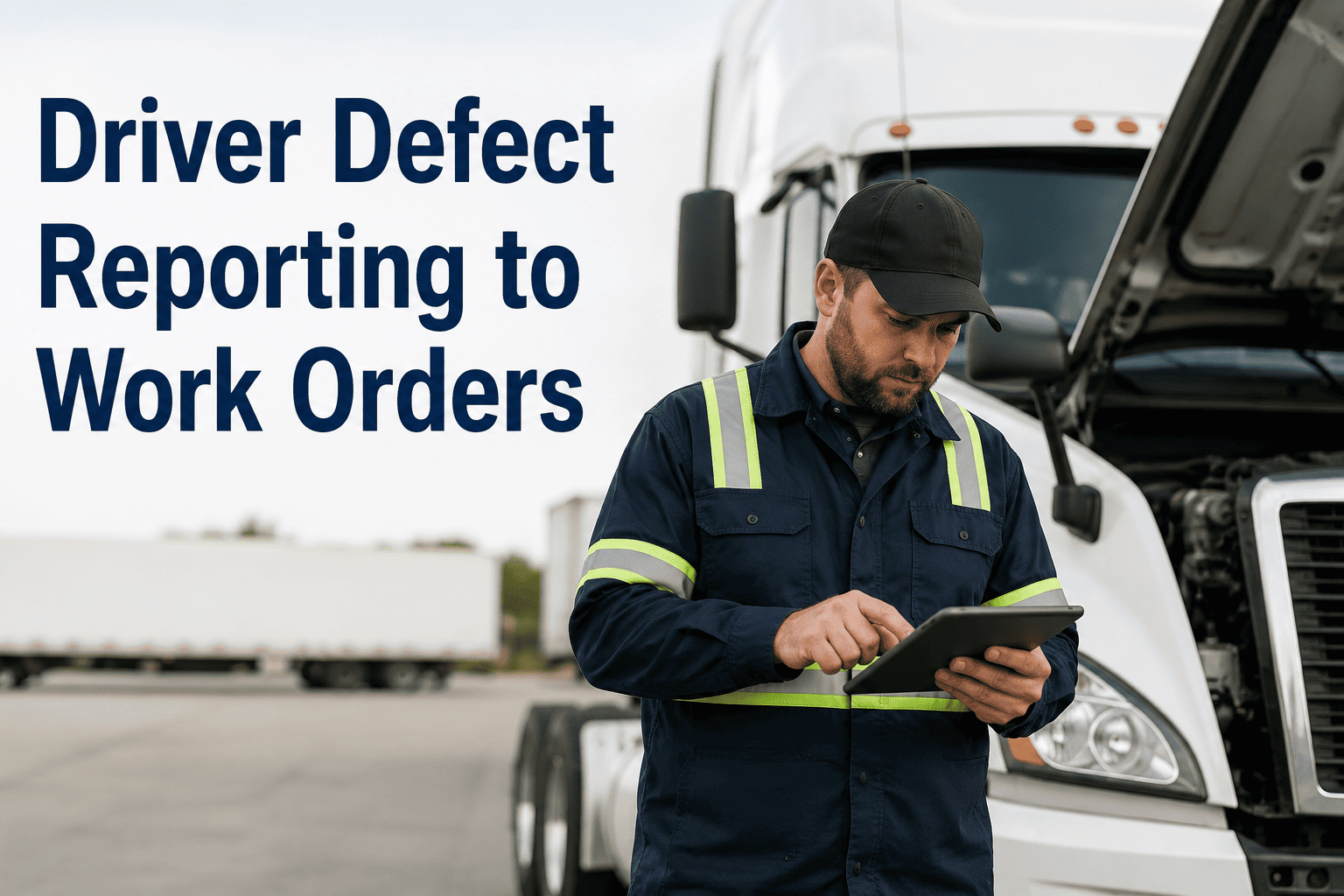
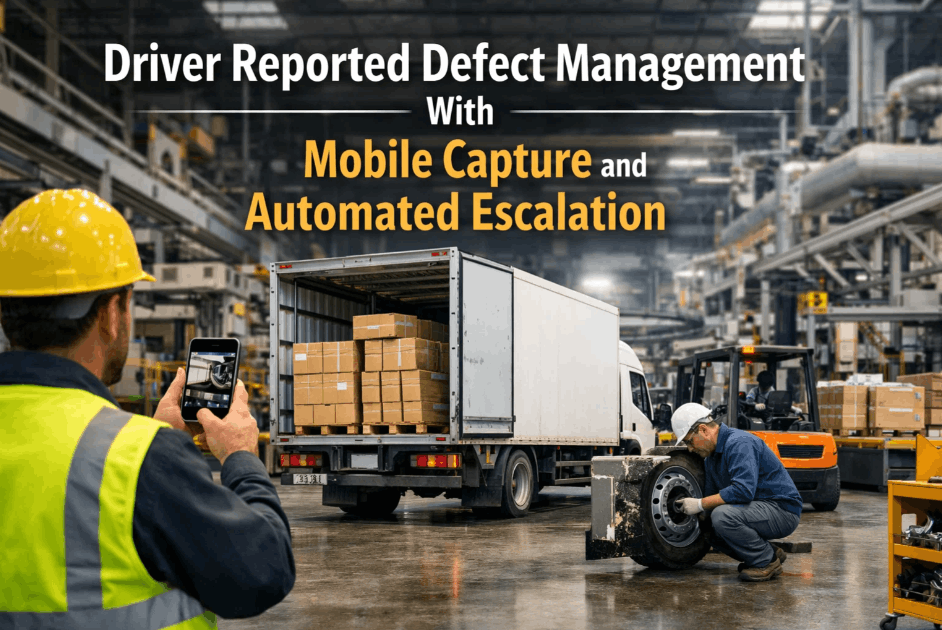
Any flagged defect auto-generates a maintenance work order. Photo attached. Tracked to close.
5
Compliance Record Built
DOT/DVSA/NHVL-formatted record auto-generated. Searchable. Exportable on demand.
AI Camera Vision: Pre-Departure Inspection Without the Walkaround
A depot dispatching 60 vehicles at 5am operates under time pressure that creates inspection shortcuts — however good the policy is. AI camera systems mounted at the depot gate provide a second inspection layer that runs independently of driver behaviour. Every vehicle is analysed in under 90 seconds — tyre condition, panel damage, fluid leaks, unsecured loads, brake disc visibility, and lighting — with a timestamped photo record generated automatically. If the camera identifies a defect the driver missed, it creates a defect record and triggers the same escalation workflow. OxMaint combines mobile DVIR and AI camera inspection into a single compliance record per vehicle per day — covering what the driver checked and what the camera independently verified.
INSPECTION COVERAGE — MOBILE DVIR VS AI CAMERA VS COMBINED
Mobile DVIR
Exterior walkaround
Cab interior check
Driver-reported defects
Undercarriage — limited
Speed-dependent accuracy
AI Camera Gate
Tyres, panels, lights
Consistent every vehicle
90 sec per vehicle
No cab interior
No driver-observed issues
Combined in OxMaint
Complete walkaround
Camera-independent verify
Single compliance record
Auto defect escalation
Dual-layer audit evidence
Replace Paper DVIRs With Records That Hold Up Under Scrutiny.
Mobile inspection, AI camera, defect escalation, and auto-compliance reporting — one platform, every vehicle, every day.
Compliance Coverage: DOT, DVSA, NHVL, StVZO — One Platform, Every Market
Fleets operating across multiple countries face a compliance challenge that no single paper process can solve — each jurisdiction has different inspection requirements, documentation formats, and audit frequencies. OxMaint is pre-configured for DOT FMCSA Part 396, DVSA O-licence, NHVL Chain of Responsibility, StVZO §29, NSC Standard 13 (Canada), and UAE RTA standards. The driver completes one mobile inspection — OxMaint generates the correctly formatted compliance record for every applicable jurisdiction simultaneously. No separate processes per country. No manual record reformatting. Book a demo to see how OxMaint maps your compliance requirements to a single inspection workflow.
REGULATORY COMPLIANCE COVERAGE BY REGION
US
??
USA
DOT FMCSA Part 396
DVIR pre & post tripSystematic PM recordsDriver certification log
Technology Integration: OBD, SAP, PLC, and Digital Twin
Digital DVIR is most powerful as part of a connected maintenance ecosystem, not a standalone app. When a driver flags a brake concern in the DVIR and OBD data simultaneously shows elevated wear — OxMaint upgrades the defect to urgent automatically. SAP bidirectional integration writes every inspection-triggered work order to SAP PM without double entry, keeping enterprise records current across US, Canadian, Australian, and European operations. PLC integration feeds EV charging health into the inspection checklist. The AI digital twin identifies vehicles where recurring minor defects signal an underlying component issue before it becomes a breakdown. All four layers deploy from a single OxMaint deployment — digital DVIR today, full integration as your infrastructure scales.
OBD
Sensor + Inspection Combined
Driver flags brake concern. OBD shows elevated wear data simultaneously. OxMaint upgrades to urgent work order automatically.
Defect priority set by data, not guesswork
SAP
Enterprise Asset Sync
Every inspection-triggered defect and resolved repair writes to SAP PM automatically. No double entry. Asset records always current.
Zero data lag between DVIR and ERP
PLC
Depot Infrastructure Link
Charging and docking status feeds into inspection workflow for EV fleets. Battery health items surface in DVIR checklist automatically.
EV-specific inspection items, auto-triggered
TWIN
Recurring Defect Pattern Analysis
Digital twin identifies vehicles where repeated minor defects signal an underlying issue — before it becomes a breakdown or a compliance failure.
Pattern detection across inspection history
What Digital DVIR Means for Your Bottom Line
Every DOT out-of-service violation that stems from an unrecorded defect carries an average fine of $16,000 — plus the operational cost of the vehicle taken off the road. Every post-accident investigation where the DVIR record is incomplete, missing, or unverifiable exposes the fleet operator to liability that a complete digital record would have resolved quickly. The cost of deploying digital DVIR is a fraction of a single avoided violation. Beyond compliance, the operational gains are measurable: pre-departure inspection time drops from 10–15 minutes to 6–8 guided minutes with better coverage, defect-to-repair cycle time shrinks from days to hours, and the compliance audit that previously required a day of manual record assembly is handled by a 2-minute export. Start your free OxMaint trial — digital DVIR pays for itself before the first avoided violation.
DEFECT ESCALATION — FROM DRIVER FLAG TO CLOSED COMPLIANCE RECORD
Driver Flags Defect
Photo + description. Cannot proceed without it.
▶
Work Order Auto-Created
Within 60 seconds. Photo attached. Severity set.
▶
Dispatch Decision
Critical defects: vehicle blocked. Minor: flagged for review.
▶
Technician Resolves
Photo sign-off. Parts logged. SAP updated.
▶
Compliance Record Closed
Full chain of custody. Export on demand.
4 Inspection Failures That Expose Fleets to Fines, Liability, and Downtime
Most fleets are not failing inspections because of bad vehicles — they are failing because of broken processes around how defects are captured, escalated, and recorded. These four failure modes account for the majority of DOT violations, DVSA improvement notices, and post-accident liability findings across commercial delivery operations globally.
01
No Photo Evidence at Defect
Risk: Compliance · Liability
A written description — "brake squeal noted" — is legally worthless in a post-accident investigation or DOT cross-examination. Without a timestamped photo, there is no proof the defect was observed, reported, or its severity assessed.
OxMaint fix
Photo capture is mandatory at every defect flag. Inspection cannot proceed without it. Every photo is timestamped and attached to the vehicle's compliance record permanently.
02
Defect Reported — Vehicle Still Dispatched
Risk: Safety · Violation · Accident liability
The driver flags a defect. The form goes in the tray. Nobody connects it to the dispatch decision. The vehicle leaves with the defect unaddressed. Under DOT and DVSA standards, dispatching a vehicle with a known unresolved defect is a direct compliance violation — and in an accident, it becomes a negligence finding.
OxMaint fix
Critical defects automatically block dispatch clearance. The vehicle cannot be assigned a route until a technician resolves and signs off the defect in the system.
03
Records Incomplete or Inaccessible at Audit
Risk: Fine · Improvement notice · Licence review
An unannounced DVSA visit or a DOT roadside check requires the last 12 months of inspection records on demand. A fleet running paper DVIRs filed in folders across multiple depots cannot produce this in minutes. Incomplete records are treated the same as no records by most regulatory bodies — and fined accordingly.
OxMaint fix
Every inspection is searchable by vehicle, driver, date, and defect type. A full fleet export for any period is available in under 2 minutes — audit-ready format, no assembly required.
04
Inspection and Repair Records Not Linked
Risk: Chain of custody failure · Post-accident exposure
A defect was reported on Tuesday. The repair was completed on Thursday. But the inspection record and the work order exist in different systems with no visible connection between them. In a post-accident investigation, demonstrating that a defect was detected, escalated, repaired, and verified requires a continuous chain of custody — which disconnected records cannot produce.
OxMaint fix
Every defect links directly to the work order created from it, the technician who resolved it, the photo sign-off, and the updated vehicle health record — one unbroken chain of custody per defect, per vehicle.
Q1Does OxMaint's digital DVIR meet DOT FMCSA Part 396.11 requirements exactly?
Yes — OxMaint's DVIR template captures all Part 396.11 required items: driver ID, vehicle ID, date, odometer, parts and accessories inspection, driver signature, and defect reporting. Records are stored in the required format with timestamps and are immediately exportable for roadside inspection or audit. The app also supports the 24-hour carry-forward rule for previous DVIR review and certification.
Q2Can OxMaint handle fleets where multiple drivers use the same vehicle across different shifts?
Yes — each driver logs in individually before their inspection. Every sign-off is timestamped and attributed separately, creating a complete per-driver, per-shift record for each vehicle. This meets DVSA, FMCSA, and NHVL multi-driver documentation requirements without any additional configuration.
Q3How does defect escalation work if a defect is flagged in a remote location without mobile signal?
OxMaint's mobile app operates offline. The inspection is completed and stored locally, then syncs automatically when signal is restored. The defect work order and compliance record are created as soon as the sync occurs — typically within minutes of the driver returning to coverage. No inspection data is lost during offline operation.
Q4Can OxMaint DVIR records be integrated with our existing SAP system?
Q5How long does it take to deploy OxMaint digital DVIR across a 40-vehicle fleet?
Most 40-vehicle fleets are fully live within one week. Day 1–2: vehicle register created, inspection templates configured for applicable compliance frameworks. Day 3–4: drivers onboarded on the mobile app — the guided interface takes under 15 minutes to learn. Day 5: go-live with full digital DVIR. Compliance records begin building from the first inspection.
Paper DVIR Is a Liability. Digital DVIR Is a Defence.
Mobile inspection, photo evidence, instant defect escalation, and auto-generated compliance records for DOT, DVSA, NHVL, StVZO, and more.