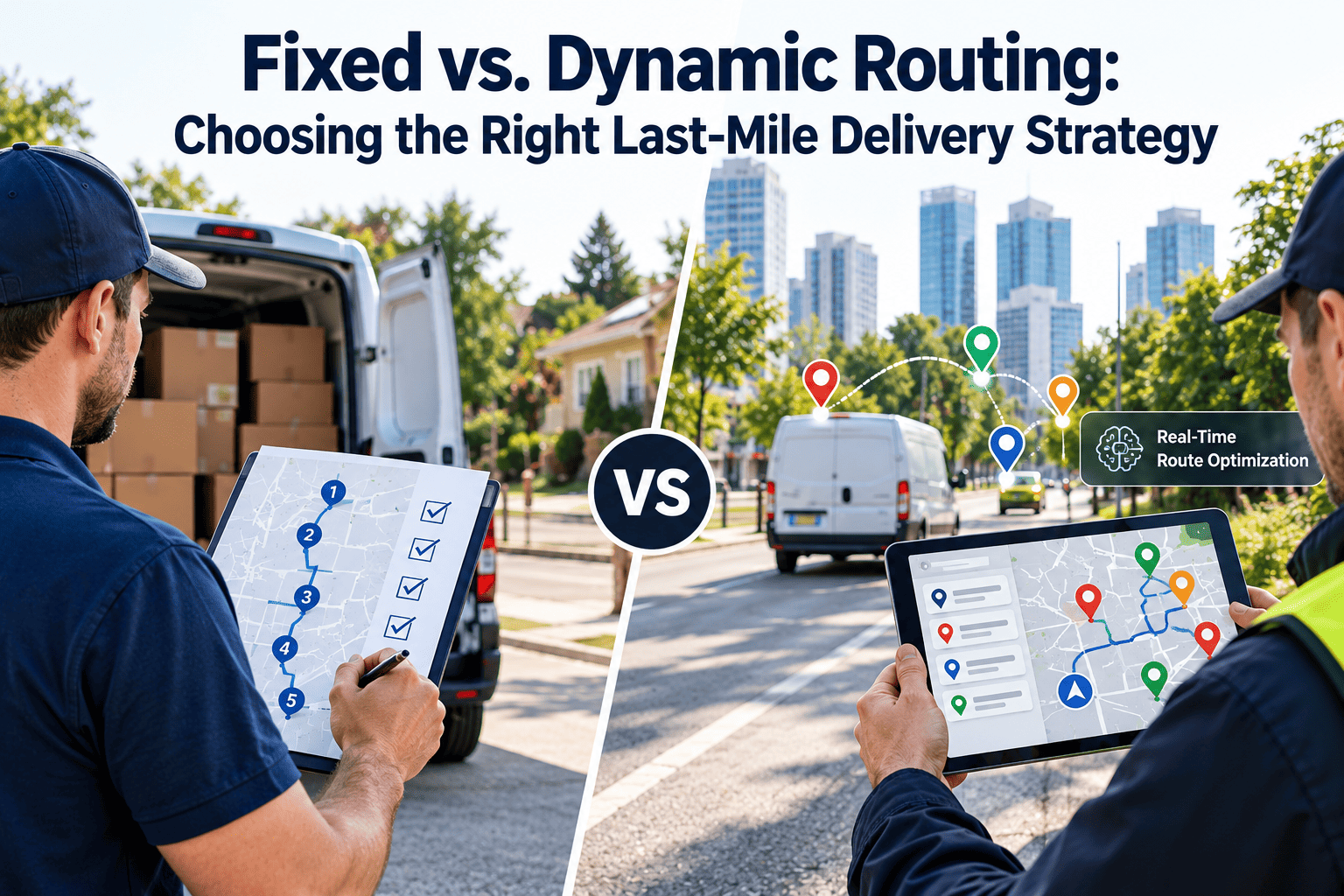
Few last-mile decisions get argued as often as this one: keep drivers on stable, repeatable routes, or let software reshuffle stops every day. Fixed routes build driver familiarity and customer trust, while dynamic routes adapt when demand swings. Neither is automatically better, and many operations end up with a mix. This guide compares both models, shows when each one wins, and explains how route design changes vehicle wear and maintenance planning, where Oxmaint helps fleets stay ahead of either approach.
Fixed vs. Dynamic Routing: Choosing the Right Last-Mile Delivery Strategy
Defining the Two Models
- Stops and sequence repeat on set days.
- Drivers learn buildings, access points, and customers.
- Planning is done occasionally and reviewed periodically.
- Works best when customers and volumes are stable.
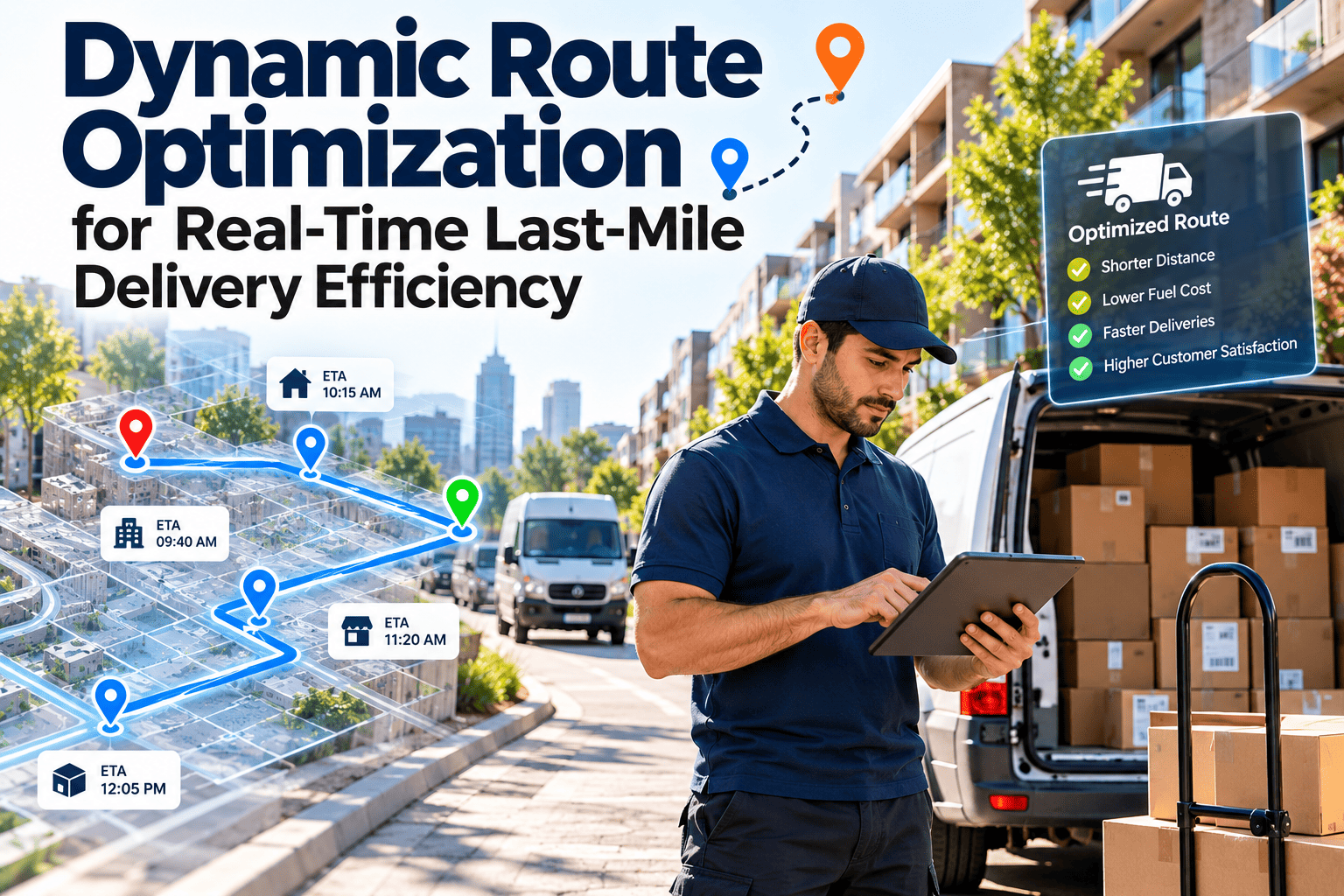
- Routes are generated from the day's actual orders.
- Sequence and assignment can change during the shift.
- Requires clean order data and routing software.
- Works best when demand and conditions vary.
Side-by-Side Comparison
| Factor | Fixed routes | Dynamic routes |
|---|---|---|
| Planning effort | Lower day to day, higher at redesign time | Automated daily, but needs data discipline |
| Efficiency when demand varies | Often suffers from empty miles and unused capacity | Usually stronger, because stops follow real orders |
| Driver familiarity | High | Lower, unless territories are kept loosely stable |
| Customer experience | Predictable arrival patterns | Windows and live ETAs matter more |
| Same-day orders | Hard to absorb | Easier to insert |
| Technology needs | Basic tools may be enough | Routing engine, driver app, reliable address data |
| Vehicle mileage pattern | Predictable by route | Variable by day and vehicle |
| Maintenance planning | Calendar and fixed mileage schedules work well | Usage-based schedules and live status work better |
When Fixed Routing Wins
- Recurring customers receive deliveries on the same days, such as retail replenishment or subscription drops.
- Volume is steady, so routes stay full without constant adjustment.
- Access knowledge matters, such as complicated sites, keys, security desks, and back-door deliveries.
- Drivers build relationships that reduce failed deliveries and speed up stops.
- The team lacks data quality or software to support daily optimization.
When Dynamic Routing Wins
- Order volume and location change daily, as in e-commerce and on-demand delivery.
- Time windows are tight, and late arrivals carry real cost.
- Same-day and priority orders are common.
- Traffic, weather, or access conditions change often enough to break a morning plan.
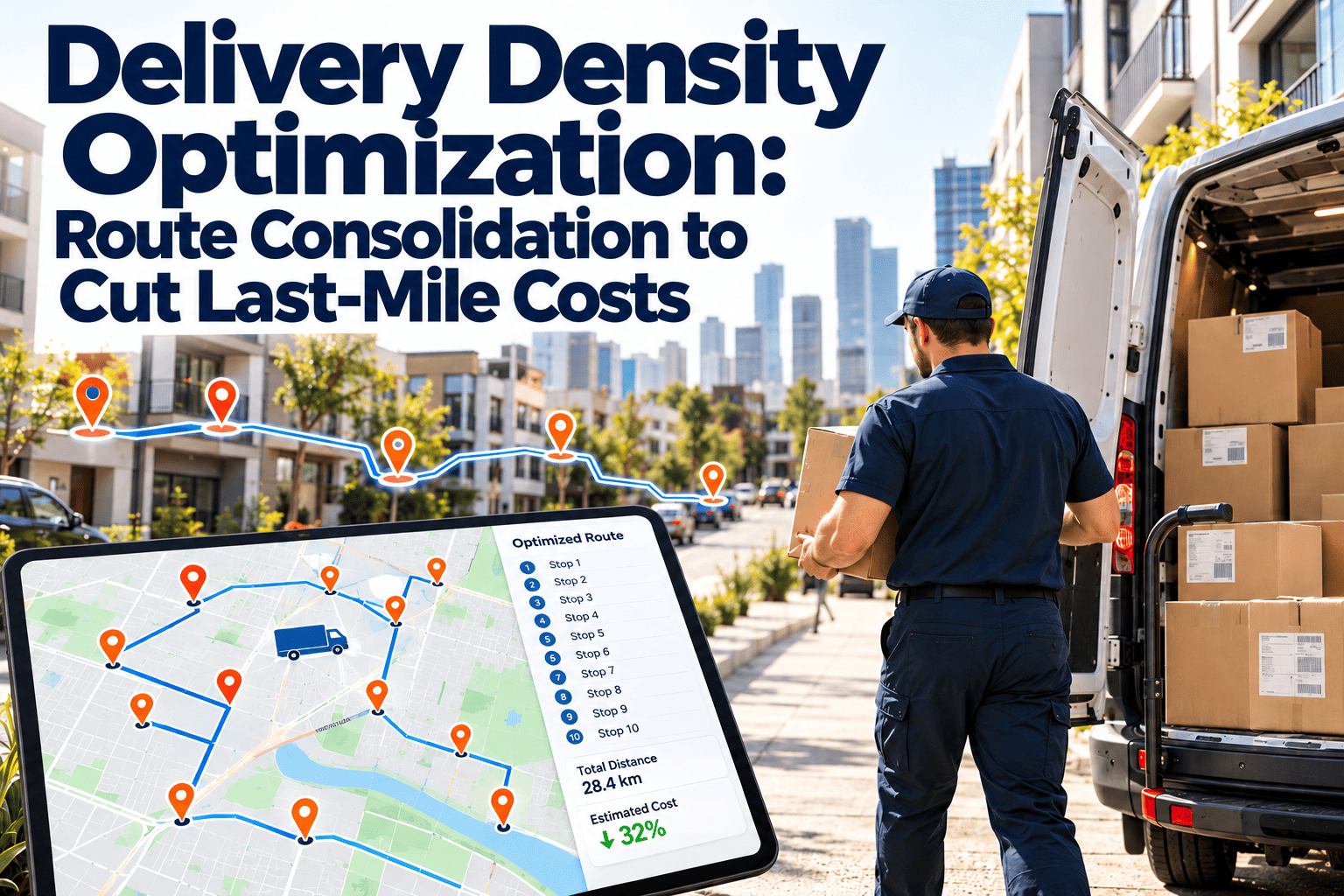
- The fleet is large enough that moving stops between vehicles produces measurable savings.
Hybrid Models Most Operations Actually Use
Hybrid is a design choice, not a compromise
Setting stability rules gives you much of the efficiency benefit without sacrificing the customer relationships fixed routes create.
Operational Maturity: Are You Ready for Dynamic?
Jumping from level one to level four rarely works. Each step needs better data and clearer processes than the one before.
What Your Routing Choice Means for Maintenance
| Maintenance area | Under fixed routes | Under dynamic routes |
|---|---|---|
| Preventive schedules | Mileage per vehicle is predictable, so calendar schedules often work | Mileage varies, so meter-based triggers are safer |
| Wear patterns | Brakes, tires, and suspension wear in consistent patterns by route | Wear spreads more evenly, but less predictably |
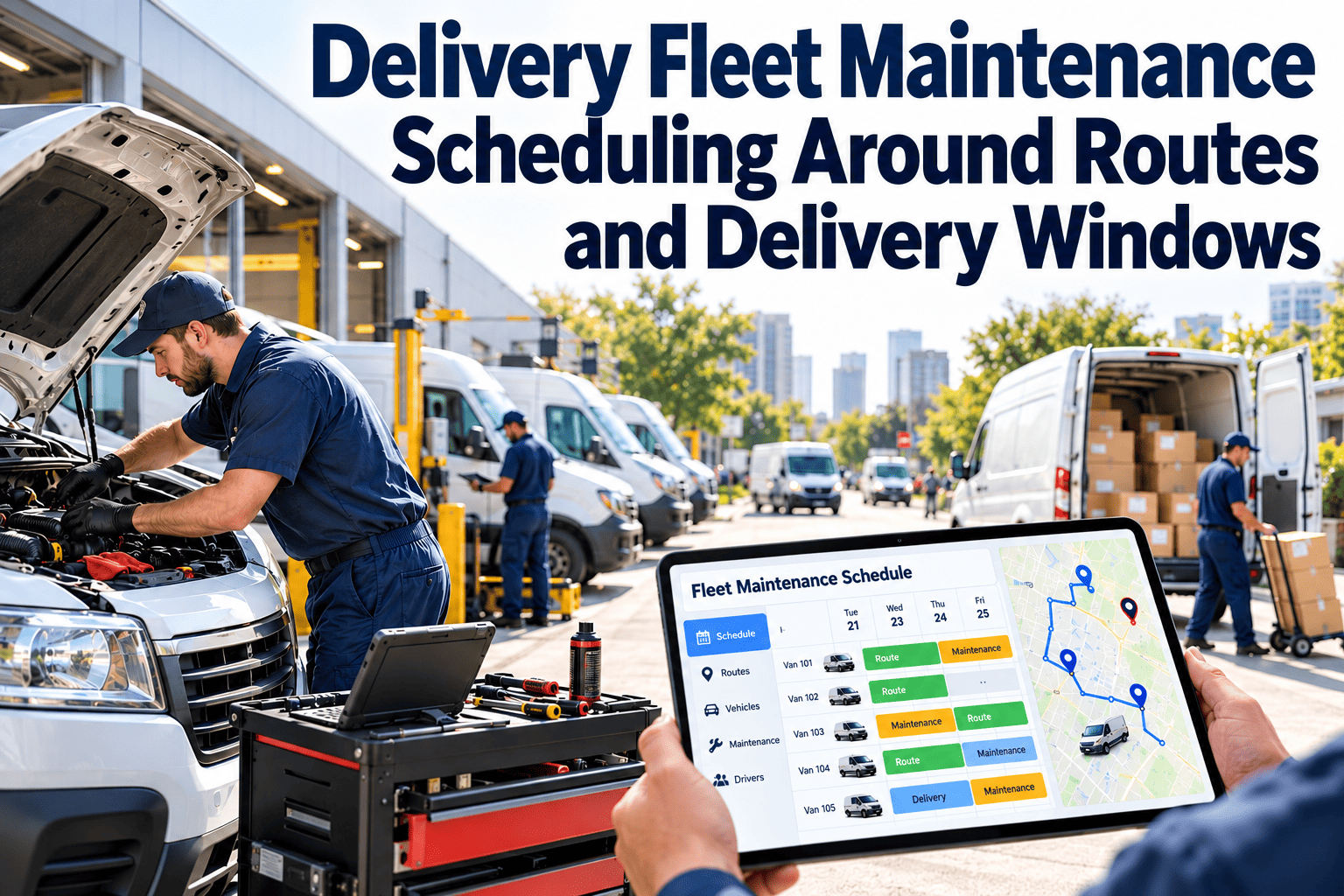
| Service windows | Easy to book around known quiet periods | Need to be coordinated with live demand |
| Vehicle-route matching | Worst vehicles can be kept on shorter or easier routes | Needs availability and condition data at planning time |
| Defect response | Replacement vehicle can be assigned to a known route | Stops can be redistributed across the fleet |
Urban stop-and-go versus long rural routes
- Dense urban routes with frequent stops put heavy demand on brakes, doors, and transmissions.
- Long rural routes accumulate mileage, so tires, fluids, and engine service intervals arrive sooner.
- Mixed assignments under dynamic plans can blur these patterns, so track usage per vehicle rather than assuming.
Driver Experience and Retention
- A familiar territory and routine.
- Faster stops through local knowledge.
- Easier onboarding of new drivers by shadowing.
- Clear explanations when sequences change.
- Reliable turn-by-turn guidance in the app.
- Fair workload balancing, so drivers do not feel penalized.
A Decision Framework You Can Use This Quarter
Metrics for Comparing Fixed and Dynamic Approaches
Scenarios: Which Model Fits Which Operation
| Operation type | Demand pattern | Likely best fit |
|---|---|---|
| Grocery or retail store replenishment | Recurring stops, predictable volumes | Fixed routes with seasonal review |
| E-commerce parcel delivery | New addresses daily, volatile volume | Dynamic or fixed territories with dynamic sequencing |
| Route-based distribution to businesses | Regular customers, occasional extra orders | Fixed core with dynamic overflow |
| Same-day or on-demand delivery | Orders arrive continuously | Dynamic routing |
| Field service or scheduled drop-offs | Appointments with tight windows | Dynamic with strong time window rules |
Hidden Costs on Each Side
- Routes that were balanced a year ago but are now uneven.
- Empty capacity on light days and overtime on heavy days.
- Manual dispatcher effort to handle exceptions.
- Slow response when customers add or cancel stops.
- Software, integration, and data cleanup effort.
- Training time for drivers and dispatchers.
- Loss of local knowledge when drivers rotate territories.
- More vehicle and driver variability for planners to manage.
Redesigning Fixed Routes Before You Abandon Them
Some teams switch to dynamic routing when the real problem is stale fixed routes. A structured review can recover much of the gap.
- Rebalance routes at least seasonally, using actual stop counts and service times.
- Split or merge territories when volume has shifted.
- Review sequence on each route for avoidable backtracking.
- Use measured stop times, not assumed averages, to set workloads.
- Track late deliveries by route, and redesign the worst performers first.
Questions that expose a stale design
- Do some drivers finish early while others regularly work overtime?
- Do dispatchers rewrite routes by phone on a typical morning?
- Have major customers been added or lost since the last redesign?
Making Dynamic Routing Feel Stable to Drivers
- Assign soft territories, so a driver mostly serves the same neighborhoods.
- Add a stability penalty to the optimizer, discouraging large changes from day to day.
- Freeze the next few stops once a driver is close to them.
- Show drivers the reason for changes, such as a closure or a priority order.
- Collect access notes and keep them with each address, so knowledge survives driver changes.
Seasonality and Peak Planning
Vehicle Assignment: A Link Most Routing Debates Miss
- Fixed routes make it easy to assign the right vehicle type to each route over time.
- Dynamic plans need vehicle capacity, refrigeration, lift gates, and condition known at planning time.
- Vehicles with open defects should be flagged before they are assigned to long or remote routes.
- Repeat repairs on a vehicle may signal it is better suited to short routes or replacement.
Building a Fair Comparison Test
How Oxmaint Fits Either Strategy
Oxmaint is maintenance management software. It supports the vehicles behind your routing strategy rather than planning routes.
- Create preventive maintenance by calendar or by meter reading, matching how your routes use vehicles.
- Run digital pre-trip and post-trip inspections and turn defects into corrective work orders.
- Keep a full history for each vehicle, including repairs, parts, and costs.
- Track inventory for tires, brake parts, filters, and other items your fleet consumes.
- Use reports on downtime and repeat failures to decide which vehicles belong on demanding routes.
- Share vehicle status with dispatch so plans start with an accurate roster.
Mistakes to Avoid
- Switching to dynamic routing without cleaning address and service time data first.
- Ignoring driver relationships that fixed routes created.
- Comparing models without a baseline from the same routes and period.
- Scheduling maintenance on calendar dates when dynamic routing has made vehicle usage unpredictable.
- Skipping vehicle availability in the plan, which makes either model look worse than it is.
Data to Collect Whichever Model You Run
| Data | Use | Where it lives |
|---|---|---|
| Actual stop duration | Balances workloads and improves ETAs | Driver app or telematics |
| Route mileage per vehicle | Drives meter-based maintenance triggers | Telematics and maintenance system |
| Failed delivery reasons | Shows access, timing, or customer readiness issues | Driver app and dispatch notes |
| Inspection defects | Predicts availability and repair needs | Maintenance system |
| Repair cost by vehicle | Informs route assignment and replacement decisions | Maintenance system |
Governance and Review Rhythm
- Weekly: late deliveries, vehicle availability, and driver feedback on routes.
- Monthly: route balance, cost per stop, and open maintenance affecting routes.
- Quarterly: whether the chosen model still fits demand, customer mix, and fleet condition.
- Annually: a full routing and fleet review ahead of budget planning.
Assign a single owner for the decision
Routing strategy touches transport, customer service, and maintenance. A named owner prevents each group from optimizing only its own piece.
Customer Promise: The Deciding Factor Many Teams Overlook
- If customers expect a named delivery day and a rough time, fixed or hybrid routes protect that promise.
- If customers choose narrow windows or same-day delivery, dynamic planning gives you the flexibility to honor them.
- If service levels differ by customer tier, build rules that protect priority accounts in either model.
- If failed deliveries are costly, favor approaches that use driver knowledge and customer notifications.
- If your promise is likely to change next year, choose tools that let you shift models without starting over.
Write the promise down first
Document the service commitments you actually make, then test each routing model against them. The model that protects those commitments at the lowest total cost is usually the right choice.