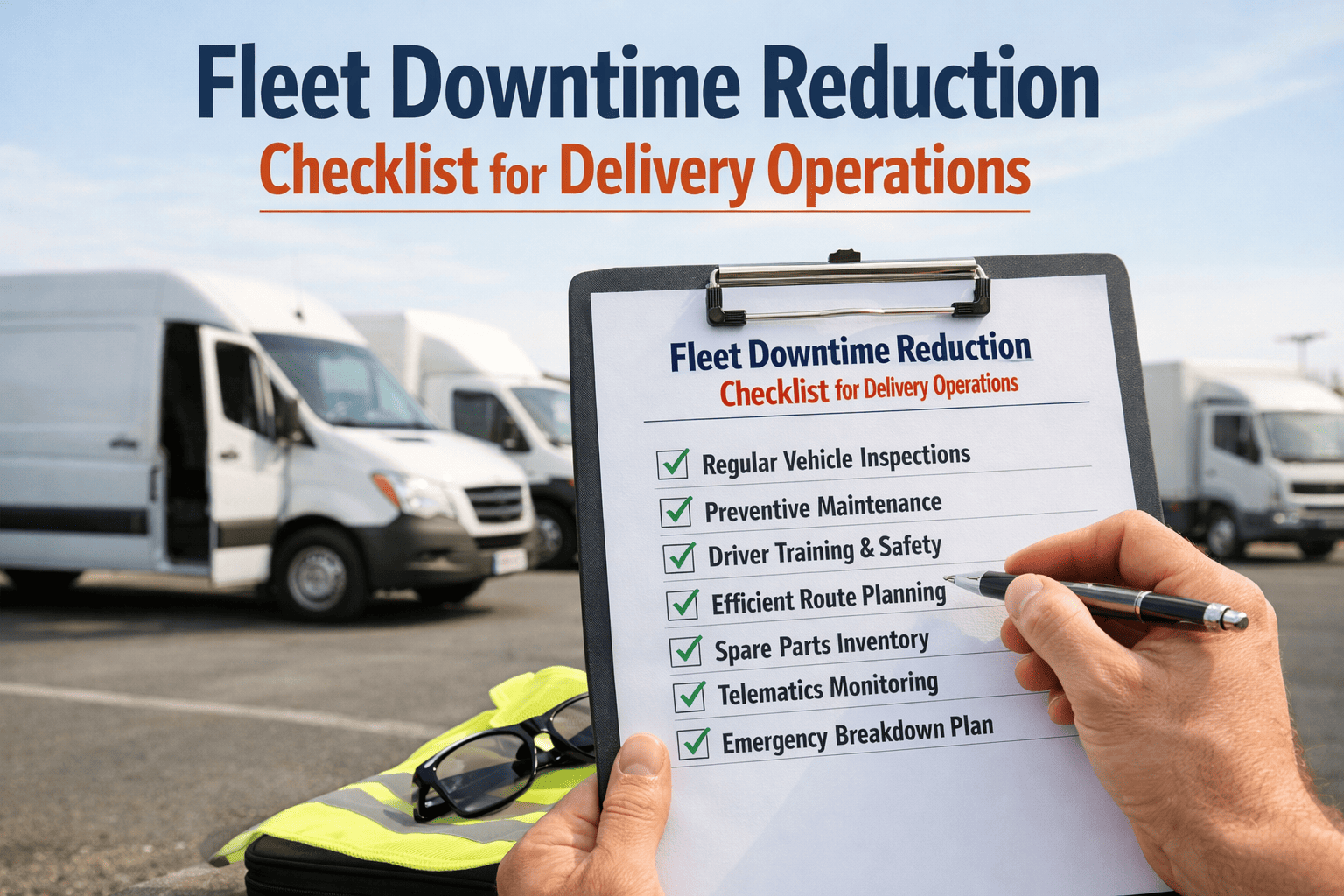
Downtime does not announce itself. It builds quietly — through skipped maintenance, untracked wear, and reactive habits — until a vehicle fails mid-route and the entire day's operations unravel. For delivery companies, every hour of unplanned downtime carries a direct cost: missed stops, driver overtime, emergency repairs, and damaged client trust. This checklist gives operations and fleet managers a structured framework to identify the root causes of breakdowns and systematically eliminate them. Start tracking your fleet reliability on Oxmaint or book a free demo to see how delivery teams cut downtime by up to 40%.
$4,700
average cost of a single unplanned vehicle breakdown in delivery operations
68%
of delivery fleet breakdowns are caused by avoidable, preventable issues
3x
higher repair cost for emergency fixes vs. scheduled preventive maintenance
40%
reduction in unplanned downtime achievable with a structured PM programme
The Real Reasons Your Fleet Keeps Breaking Down
Most downtime is not bad luck — it is a process failure. Before building a reduction strategy, every fleet manager needs an honest diagnosis of where their operation is leaking reliability. The four root causes below account for the vast majority of avoidable breakdowns in delivery fleets.
01
Reactive Maintenance Culture
Vehicles are only serviced after a problem appears. There is no forward-looking schedule based on mileage, engine hours, or time — just a cycle of breakdown and repair.
02
Missed or Inconsistent Inspections
Pre-trip inspections are incomplete, skipped, or undocumented. Developing faults go undetected until they become full failures during an active delivery run.
03
No Visibility Into Vehicle Health
Fleet managers have no real-time view of which vehicles have open defects, overdue PMs, or approaching service thresholds. Problems hide until they escalate.
04
Parts and Resource Gaps
When a fault is identified, repairs are delayed because the right parts are not in stock, technicians are unavailable, or work orders are not tracked digitally.
Identify your downtime root cause and fix it fast
Oxmaint gives fleet managers real-time visibility into vehicle health, PM status, and open defects — all in one dashboard.
Start Free Trial
Section 1 — Preventive Maintenance Programme Checklist
The single highest-impact action any delivery fleet can take is shifting from reactive to preventive maintenance. This section checks whether your PM programme is structured, consistent, and actually followed.
PM Intervals Set for Every Vehicle
Every vehicle has a defined service schedule based on mileage, engine hours, and calendar — not a generic interval applied across the whole fleet.
Automated Work Order Generation
Work orders are triggered automatically when a vehicle hits its PM threshold — no manual tracking, no missed alerts, no dependency on someone remembering.
Zero Overdue PMs Tolerated
Any vehicle with an overdue PM is flagged before dispatch. Dispatchers have real-time visibility into PM status before assigning routes.
Maintenance Scheduled in Off-Peak Hours
PM tasks are planned for overnight, weekends, or vehicle rotation gaps — not squeezed into operating hours that create scheduling conflicts.
Full Service History Per Vehicle
Every completed maintenance task is logged with date, technician, mileage, and parts used. History is accessible in under 60 seconds for any vehicle in the fleet.
PM Completion Rate Tracked Monthly
The percentage of PMs completed on time is reviewed monthly by fleet management. Any month below 95% triggers a root-cause review of the scheduling process.
Section 2 — Daily Inspection and Defect Reporting Checklist
Breakdowns that happen mid-route almost always had warning signs that went undetected. A consistent daily inspection programme catches those signals before departure — when they are cheap to fix rather than catastrophic to ignore.
100% Pre-Trip Completion Rate
Every vehicle receives a completed inspection before dispatch. Any vehicle without a filed inspection report is held until one is completed and submitted.
Defects Reported via Digital Tool
Drivers report faults through a mobile app rather than verbal handoffs or paper notes. Every defect is timestamped, categorised, and assigned to a technician instantly.
Defect-to-Work-Order Flow Automatic
Any defect flagged in an inspection automatically generates a work order. No manual step is required between a driver reporting a fault and a technician receiving the job.
Critical Defects Ground the Vehicle
Brake, steering, tyre, and fluid system defects immediately prevent dispatch. The decision is systematic — not left to driver or dispatcher judgment under time pressure.
Post-Trip Inspections Filed Daily
Drivers complete a post-trip report at end of shift. Faults that developed during the run are logged for overnight repair before the vehicle is assigned to the next day's route.
Inspection Compliance Reviewed Weekly
Fleet manager reviews completion rates by driver and vehicle weekly. Patterns of skipped inspections are addressed before they result in a breakdown or compliance breach.
Replace paper inspection sheets with mobile digital checklists
Drivers complete inspections on their phone in under 5 minutes. Defects go straight to your maintenance team with zero manual steps.
Book a Demo
Section 3 — Fleet Visibility and Dispatch Readiness Checklist
Downtime is compounded when dispatchers assign routes to vehicles with open defects simply because they cannot see which vehicles are ready. Visibility gaps turn single-vehicle problems into fleet-wide disruptions.
Real-Time Vehicle Status Dashboard
Dispatchers can see — at a glance — which vehicles are cleared, which have open defects, and which are in active maintenance. No phone calls required to get this information.
PM Due Dates Visible Before Dispatch
Upcoming PM due dates are surfaced in the dispatch interface. Vehicles approaching service thresholds are flagged so they can be routed to maintenance before they hit overdue status.
Open Work Orders Block Dispatch
Vehicles with unresolved critical work orders cannot be assigned routes. The block is automatic — it does not depend on communication between the maintenance team and dispatch.
Breakdown History Per Vehicle Accessible
Dispatchers can see how many times a vehicle has broken down, when it last had a PM, and what defects have been reported recently — before assigning it to a long-haul or time-critical run.
Section 4 — Parts and Inventory Readiness Checklist
A defect found in the morning should be repaired before the afternoon run. That only happens if your parts inventory is stocked, organised, and managed against actual fleet needs — not guesswork.
!
Always In Stock
Engine oil and filters — all vehicle types in fleet
Brake pads and shoes — common axle configurations
Drive belts and coolant hoses
Bulbs, fuses, and wiper blades
~
Monitor and Reorder
Tyres — minimum one spare per vehicle class
Air, fuel, and cabin filters
Coolant, transmission fluid, and DEF
Battery terminals and cables
+
Process Checks
Reorder thresholds set and automated in system
Emergency supplier SLA documented and tested
Parts usage tracked per vehicle to identify repeat failures
Warranty claims process defined for recent replacements
Downtime Root Cause: Identify Where Your Fleet Stands
| Downtime Symptom |
Likely Root Cause |
Fix to Apply |
| Repeated breakdowns on the same vehicle |
PM intervals too long or service history incomplete |
Tighten PM schedule, audit full service history, check for recurring fault pattern |
| Breakdowns always discovered mid-route |
Pre-trip inspections being skipped or not thorough |
Mandate digital inspection completion before dispatch; review driver compliance weekly |
| Repairs taking 2+ days for simple jobs |
Parts not in stock; no automated work order flow |
Set parts reorder thresholds; connect defect reports directly to technician work orders |
| Vehicles dispatched with known defects |
Dispatcher has no visibility into open maintenance items |
Implement real-time vehicle status dashboard with automatic dispatch blocks on open critical defects |
| High emergency repair costs each month |
Reactive maintenance culture — no PM programme in place |
Build mileage and calendar-based PM schedule; track on-time completion rate monthly |
| Drivers unaware of vehicle fault history |
No digital record sharing between maintenance and operations |
Give drivers access to their vehicle's recent inspection and repair history before each run |
Downtime Reduction: Before vs. After
Reactive Fleet Operations
Vehicles serviced only after breakdown or driver complaint
Inspections done verbally or skipped under time pressure
Faults reported by phone — no audit trail, no work order
Dispatcher assigns routes without checking vehicle status
Parts sourced on emergency basis at premium cost
Breakdown frequency discovered from driver calls, not data
Proactive Fleet Operations
PM work orders auto-generated before thresholds are hit
Digital inspections completed on mobile before every run
Defect triggers instant work order to technician with photo
Dispatch dashboard shows cleared vs. grounded vehicles in real time
Parts reorder thresholds prevent stockout delays
Downtime trends tracked by vehicle, driver, and zone
Key Metrics That Measure Downtime Reduction Progress
U
Vehicle Uptime %
Time available for delivery vs. time in maintenance. Target: 95% or higher for active delivery fleets operating daily routes.
M
Mean Time Between Failures
Average operating hours between unplanned breakdowns per vehicle. A rising MTBF is the clearest signal your PM programme is working.
R
Mean Time to Repair
Average hours from defect reported to vehicle cleared. Tracks how fast your maintenance team resolves issues once they are identified.
P
PM On-Time Rate
Percentage of scheduled PMs completed before the due date. Fleets sustaining 95%+ PM compliance see the steepest drops in breakdown frequency.
40%
fewer unplanned breakdowns in fleets running structured preventive maintenance
3x
lower repair cost per incident with planned maintenance vs. emergency response
95%+
vehicle uptime target achievable for delivery fleets with digital PM scheduling
How Oxmaint Eliminates Fleet Downtime Systematically
Most delivery fleets know they have a downtime problem. The barrier is always the same — no centralised system, no consistent process, and no real-time visibility to act before a breakdown happens. Oxmaint addresses all three by connecting vehicle inspections, PM scheduling, work order tracking, and parts management into a single platform built for the pace of delivery operations. Start for free and have your first PM schedule live in under a day.
Automated PM Scheduling
Define maintenance intervals by mileage, engine hours, or calendar. Oxmaint generates work orders automatically and alerts your team before due dates are missed.
Mobile Driver Inspections
Drivers complete pre-trip and post-trip checklists on their phone. Defects are flagged instantly to dispatch with photo evidence and a timestamped record.
Real-Time Vehicle Status Dashboard
See every vehicle's PM status, open defects, and dispatch readiness from one screen. Dispatchers assign routes with confidence — not guesswork.
Digital Work Order Tracking
Every defect, repair, and maintenance task is logged and tracked in real time. No phone tag between drivers, technicians, and dispatchers — just clear, visible progress.
Parts and Inventory Management
Track stock levels, set reorder thresholds, and ensure critical parts are available before a defect becomes a multi-day delay. Usage history identifies recurring failure patterns.
Downtime and Reliability Analytics
Track MTBF, MTTR, uptime percentage, and PM compliance rate by vehicle, driver, or fleet-wide. Data shows exactly where downtime is concentrated and why.
Stop Reacting to Breakdowns. Start Preventing Them.
Oxmaint gives delivery operations teams the tools to build a proactive maintenance programme — with automated PM scheduling, digital inspections, real-time vehicle visibility, and analytics that show where downtime is hiding before it costs you a route.
Frequently Asked Questions
What is the most effective way to reduce fleet downtime for delivery operations?
The highest-impact action is transitioning from reactive to preventive maintenance — building a schedule based on mileage, engine hours, and calendar triggers rather than waiting for failures. Pairing that with mandatory digital pre-trip inspections and real-time visibility into vehicle health addresses the three most common downtime root causes simultaneously.
How do I know if my fleet's downtime is above average?
Industry benchmark for well-managed delivery fleets is 95% or higher vehicle uptime. If your fleet is regularly below that — or if you are experiencing more than one unplanned breakdown per vehicle per quarter — your PM programme or inspection process has gaps that this checklist is designed to surface and resolve.
How quickly can a delivery fleet see results after implementing a PM programme?
Most fleets see measurable improvement within 60 to 90 days of consistent PM programme execution. The steepest gains typically come in months two and three as overdue maintenance is cleared, inspection compliance improves, and the parts inventory aligns with actual fleet needs. Full ROI on implementation is typically recovered within 6 to 12 months through reduced emergency repair costs.
Can Oxmaint track both PM schedules and inspection reports in one platform?
Yes. Oxmaint combines preventive maintenance scheduling, digital driver inspections, work order tracking, parts inventory management, and fleet analytics in a single platform. Fleet managers get one dashboard showing PM compliance, open defects, vehicle readiness, and downtime trends — without needing to reconcile data from multiple disconnected tools.