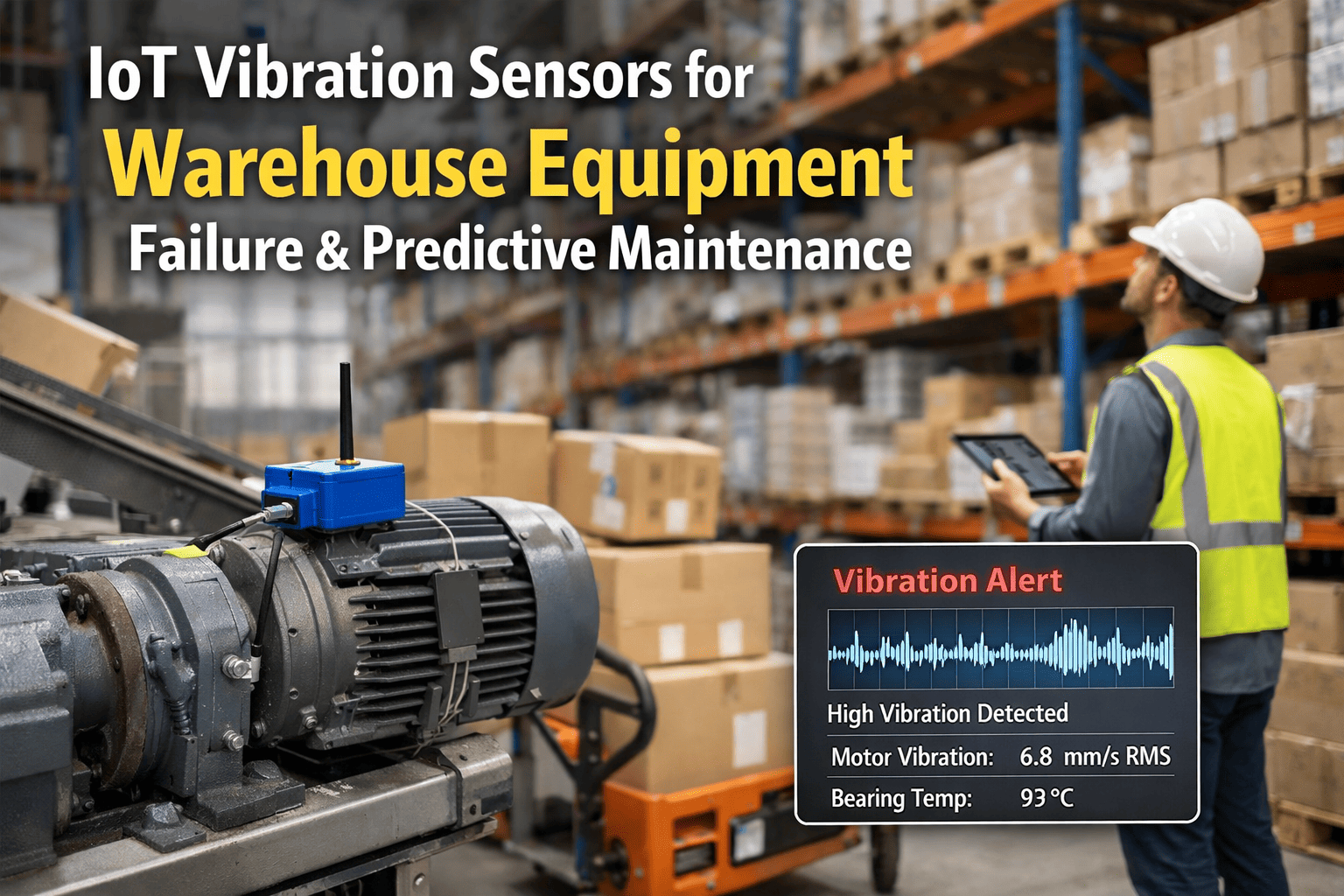
Every warehouse delivery operation runs on a quiet assumption: that the conveyor will keep moving, the sorter will keep sorting, and the dock equipment will stay ready. That assumption costs millions every year — not because equipment fails without warning, but because the warning signals go undetected until it is too late to act. AI fault detection integrated into your CMMS identifies those signals 2 to 8 weeks before a breakdown occurs, converting what would have been a peak-season crisis into a scheduled repair completed on your terms. If your warehouse is still reacting to failures instead of predicting them, explore OxMaint's AI-powered maintenance platform or book a 30-minute session with a warehouse CMMS specialist to see how early fault detection works in your operation.
AI Maintenance · Predictive Fault Detection · Warehouse CMMS
AI Detects Equipment Faults 2–8 Weeks Before Failure in Warehouse Delivery Operations
The gap between a fault signal and an asset breaking down during peak delivery is where the real profit opportunity lives. Here is how AI-driven CMMS closes that gap.
2–8
Weeks early warning before failure
90%
Failure prediction accuracy with AI models
35–50%
Reduction in unplanned downtime
25%
Drop in total maintenance costs
The Real Cost of Missing a Fault Signal in Warehouse Delivery
Warehouse delivery operations run on razor-thin windows. A conveyor stoppage during peak order fulfilment does not just delay one shipment — it backs up the entire line, triggers SLA penalties, and pulls technicians off planned work to fight fires. The economics are unforgiving.
Unplanned Downtime Cost
3×
more downtime for operations running without predictive maintenance compared to AI-equipped facilities
Emergency Repair Premium
40–60%
higher repair cost when work is unplanned — parts expedited, overtime incurred, contractor rates apply
SLA Breach Exposure
Peak Window
failures during Q4 or promotional peaks expose operations to the highest penalty and reputational risk
With AI Fault Detection
Planned
the same repair becomes a scheduled job — right technician, right parts, right window, no emergency premium
How AI Reads Equipment Health Before Your Technicians Can See a Problem
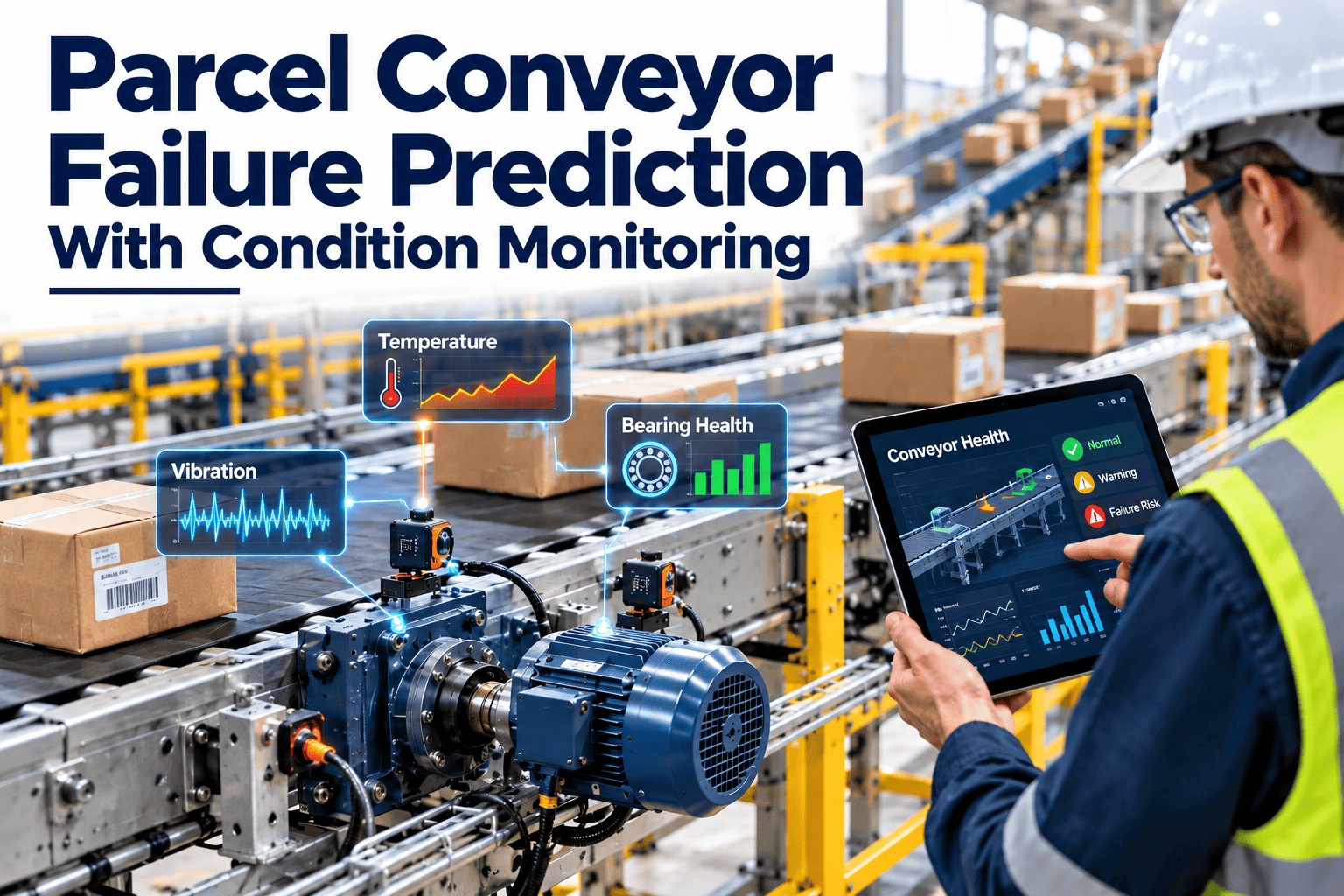
AI fault detection works by continuously analysing sensor data streams — vibration, temperature, current draw, cycle time, pressure — and identifying patterns that precede failure. These patterns are invisible to scheduled inspection but unmistakable to a trained model.
Week 1–2 Before Failure
Micro-vibration anomaly detected in conveyor drive bearing — 0.3mm/s deviation from baseline. Invisible to human inspection. AI flags asset for Watchlist monitoring. No work order yet.
Week 3–4 Before Failure
Deviation trend accelerates. Temperature at bearing housing rises 4°C above normal. AI upgrades severity. CMMS automatically drafts a work order and routes it to the maintenance planner for review.
Week 5–6 Before Failure
Planner approves work order. Parts confirmed in stock. Repair scheduled for next planned maintenance window. Technician briefed on specific fault — "check drive-end bearing." Zero unplanned downtime risk.
Repair Completed — Before Any Failure
Bearing replaced during scheduled window. Asset returns to service at full health. Total repair cost: standard rate, no emergency premium, no production disruption, no SLA breach.
Which Warehouse Assets AI Monitors and What It Detects
AI fault detection is most impactful on high-throughput, continuous-run assets where failure causes immediate flow stoppage. The following asset categories and fault signatures are the primary targets in warehouse delivery operations.
| Asset Type |
Primary Fault Signals Detected |
Typical Early Warning Window |
Failure Mode Prevented |
| Belt Conveyors |
Belt tension drift, drive motor current spike, roller bearing vibration |
3–6 weeks |
Belt snap, drive seizure, roller collapse |
| Sortation Systems |
Diverter actuator response time, scan rate drop, jam frequency increase |
2–4 weeks |
Sortation jam, misroute surge, line stoppage |
| Dock Levellers |
Hydraulic pressure variance, cycle time extension, seal wear signature |
4–8 weeks |
Hydraulic failure, stuck leveller, dock bay closure |
| Forklift Fleets |
Battery discharge curve deviation, mast hydraulic lag, brake pad sensor |
2–5 weeks |
Battery failure, mast collapse, brake fade |
| HVAC / Refrigeration |
Compressor current anomaly, refrigerant pressure trend, coil temperature delta |
5–8 weeks |
Cold chain breach, compressor burnout, ambient exceedance |
| Automated Storage (AS/RS) |
Shuttle position drift, encoder error rate, load cell variance |
3–6 weeks |
Retrieval collision, system error halt, encoder failure |
See Which of Your Warehouse Assets Have Active Fault Signals Right Now
OxMaint's AI engine monitors your asset health in real time and surfaces early fault signals weeks before they become failures — so your team plans repairs, not emergencies.
The 3 Fault Severity Levels That Drive CMMS Action
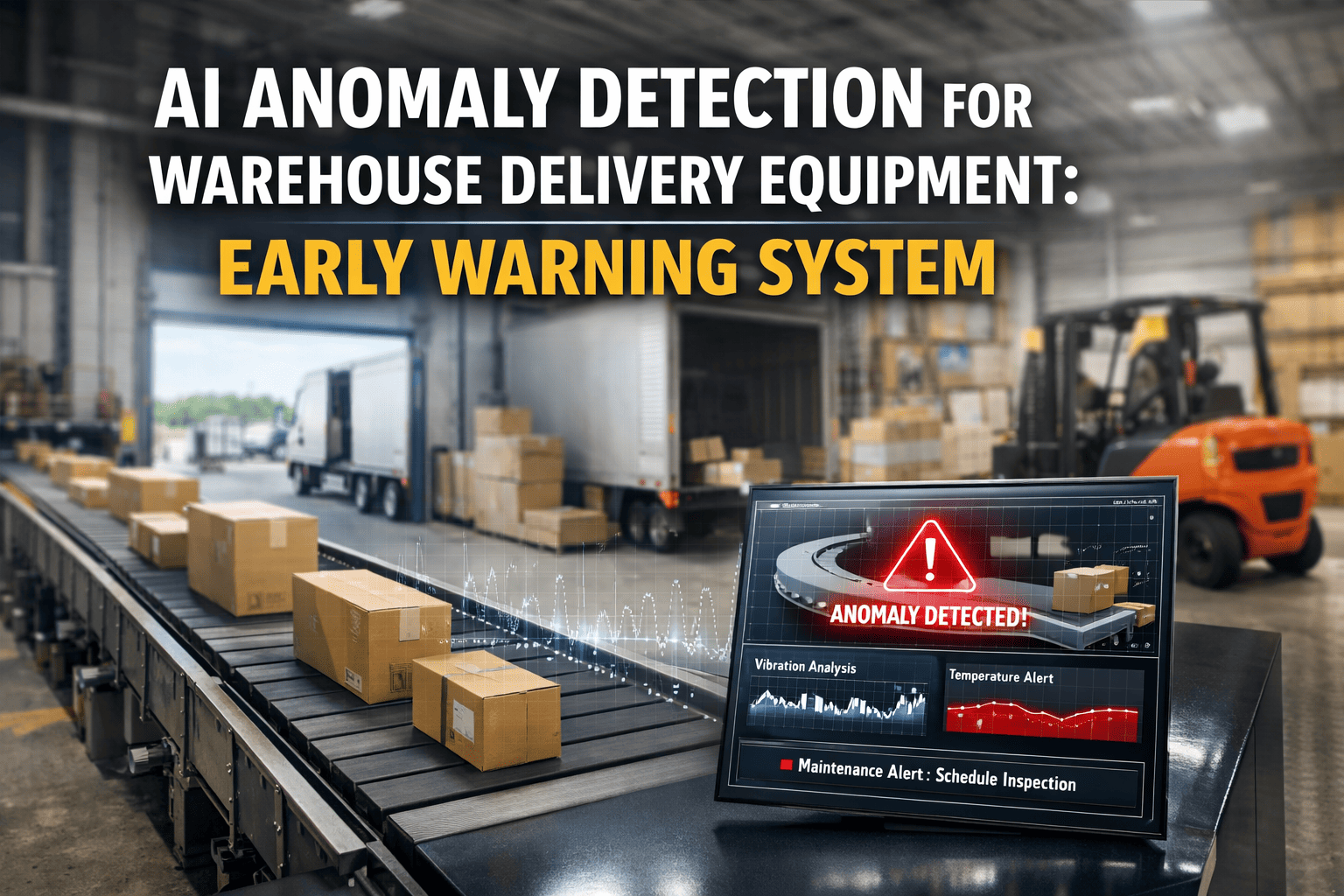
Not every anomaly is a crisis. A well-configured AI fault detection system categorises severity so your team responds proportionately — and is never flooded with false alarms that erode trust in the system.
Level 1 — Watchlist
Subtle Deviation — Monitor Only
Signal is outside normal baseline but within tolerance. Asset logged for trend monitoring. No work order generated. Technician not interrupted. Reviewed at next scheduled inspection.
Log + Track
Level 2 — Plan
Trend Confirmed — Draft Work Order
Anomaly trend is consistent across 3+ data cycles. Failure probability threshold crossed. CMMS auto-drafts work order for planner review. Parts availability checked. Scheduled into next available window.
Schedule Repair
Level 3 — Act Now
Imminent Failure — Escalate Immediately
Fault signature indicates failure within days. Supervisor and operations manager notified automatically. Asset flagged for immediate inspection or controlled shutdown before catastrophic failure occurs.
Escalate
AI Fault Detection vs. Traditional Scheduled Maintenance
Traditional time-based preventive maintenance schedules work on averages — not on the actual health of your specific asset on a given day. The result is either over-maintenance (replacing parts with life remaining) or under-maintenance (missing a fault that developed between scheduled intervals).
Traditional Scheduled PM
Intervals based on average asset life, not actual condition
Faults developing between schedules go undetected
30% of preventive tasks performed on healthy assets — wasted labour
Breakdown during peak periods remains a real risk
Technician dispatched reactively — wrong parts, wrong prep
AI Condition-Based Detection
Maintenance triggered by actual asset health signals
Faults detected 2–8 weeks before failure across all monitored assets
Work is only generated when an asset actually needs attention
Peak-period failures structurally eliminated — not managed reactively
Technician dispatched with specific fault diagnosis and pre-staged parts
Frequently Asked Questions
How does AI fault detection integrate with an existing warehouse CMMS?
OxMaint connects to IoT sensors already fitted to your assets — or guides sensor deployment for assets that are not yet monitored. Fault signals from the AI engine automatically trigger draft work orders inside your existing CMMS workflow, so your planning team works from one system rather than toggling between monitoring dashboards and a separate maintenance platform.
What sensors are needed to enable AI fault detection on warehouse conveyors?
Vibration sensors on drive bearings, current transducers on motor feeds, and temperature probes at critical friction points provide the core data for conveyor fault detection. Many modern conveyor systems already carry these as factory-fit components — OxMaint ingests the data stream directly without additional hardware in most cases.
How long does it take for the AI model to learn baseline behaviour for a specific asset?
Most warehouse assets reach a reliable baseline within 4–6 weeks of sensor data collection. During this period the system is in monitoring mode. Early warning alerts activate once the model has sufficient history to distinguish normal operating variance from genuine fault development.
Can AI fault detection reduce false alarms that flood maintenance teams with low-priority alerts?
Yes — this is a critical design requirement. OxMaint's three-tier severity model (Watchlist, Plan, Act Now) filters noise at the lowest level and only generates work orders when a confirmed trend crosses a defined failure probability threshold. Teams that previously ignored alert systems because of noise report a significant increase in alert trust within 60 days.
Is AI-based predictive maintenance cost-effective for mid-size warehouse operations?
The predictive maintenance market grew to over USD 13 billion in 2025 precisely because ROI is strong across facility sizes. A single prevented conveyor failure during a peak delivery window typically recovers the annual platform cost several times over. OxMaint's pricing is structured for mid-size operations, and 95% of adopters report positive ROI within the first year.
Your Next Equipment Failure Is Giving Off Signals Right Now. Catch It Before It Happens.
OxMaint's AI fault detection monitors your warehouse assets continuously, converts anomaly signals into scheduled work orders, and eliminates the unplanned breakdowns that cost your operation the most.