Warehouse & Delivery Fleet Integrated Maintenance Strategy

By Leo on March 2, 2026

warehouse-delivery-fleet-integrated-maintenance

Most logistics operations manage their warehouse equipment and delivery fleets as two separate worlds — different teams, different tools, different budgets. The conveyor goes down in the distribution center, and it takes hours to fix because the maintenance request was buried in an email thread. Meanwhile, two delivery trucks sit idle in the yard because nobody connected the PM schedule to the dispatch calendar. The result is a chain reaction: warehouse downtime delays order fulfillment, late fulfillment delays fleet dispatch, and late dispatch means missed delivery windows. For a 750,000 sq. ft. distribution center, every hour of unplanned downtime costs roughly $10,000. Across the fleet, reactive repairs cost 35% more per incident than planned maintenance. In 2026, the logistics operations that win are the ones that unify warehouse and fleet maintenance under one digital platform — eliminating the gap between where packages are prepared and where they are delivered.

Trending News · Logistics Maintenance Strategy
Warehouse and Delivery Fleet Integrated Maintenance Strategy
Why the most efficient logistics operations in 2026 manage warehouse equipment and delivery vehicles through a single CMMS — and how to build that integration from scratch.
The Cost of Running Two Separate Maintenance Systems
Warehouse Downtime
$10,000/hr
Equipment Failures
42% of Downtime
Reactive vs Planned
35% More Costly
Fully Integrated Ops
Only 23%
Avg Unplanned Downtime
800 hrs/yr

The Hidden Problem: Two Maintenance Silos in One Operation

Walk into most distribution centers and you will find two completely disconnected maintenance operations. The warehouse team manages conveyors, sortation systems, dock levelers, HVAC, and forklifts using one set of tools — often spreadsheets, whiteboards, or a facility-only CMMS. The fleet team manages delivery vehicles using a separate system, or no system at all. Neither team sees what the other is doing. Neither team shares data, parts inventory, or technician availability.

This is not just an organizational inconvenience — it is a structural vulnerability. When a conveyor belt fails during peak shipping hours, the warehouse team scrambles to fix it while fully loaded trucks sit idle in the yard. When a delivery vehicle breaks down on route, nobody back at the warehouse adjusts outbound scheduling to compensate. The cascade effect turns a single maintenance failure into a multi-hour, multi-department disruption.

What Happens with Siloed Maintenance

Conveyor breakdown halts outbound sorting for 3 hours. Fleet dispatch is not notified. 14 trucks depart late. 340 packages miss their delivery window. Customer complaint rate spikes 22% that week. The warehouse team blames equipment age. The fleet team blames late loading. Neither sees the root cause: a $200 bearing that should have been replaced two weeks ago during scheduled PM.

What Happens with Integrated Maintenance

CMMS flags conveyor bearing vibration anomaly during routine sensor check. Work order auto-generated and scheduled for the next low-volume window. Bearing replaced in 45 minutes during planned downtime. Fleet dispatch is never affected. 340 packages delivered on time. Total cost of intervention: $200 part plus 45 minutes of technician time versus $30,000+ in cascading losses.

Why Integration Is No Longer Optional in 2026

The logistics industry is undergoing a structural shift. Fleet operations that were historically managed as a support function have become a strategic business driver. Warehouse automation is accelerating — 93% of companies now consider equipment uptime their most important factor when evaluating automation systems. And the trend data for 2026 is clear: the operations that integrate their maintenance workflows across facilities and fleets are the ones achieving the best uptime, lowest costs, and highest delivery reliability.

75%
Downtime Reduction
Predictive maintenance on conveyor systems reduces unplanned warehouse downtime by up to 75%.
30-50%
PM Downtime Savings
Preventive maintenance programs reduce equipment downtime by 30-50% and extend asset lifespan 20-40%.
3x
More Unplanned Failures
Low-cost equipment without integrated maintenance tracking experiences 3x more unplanned downtime events.

The Two Sides of Your Logistics Maintenance Operation

An integrated maintenance strategy starts by understanding what assets live on each side of the operation — and where the dependencies exist between them. Here is the full asset landscape that a unified CMMS must cover.

Warehouse Side

Facility and Equipment Assets

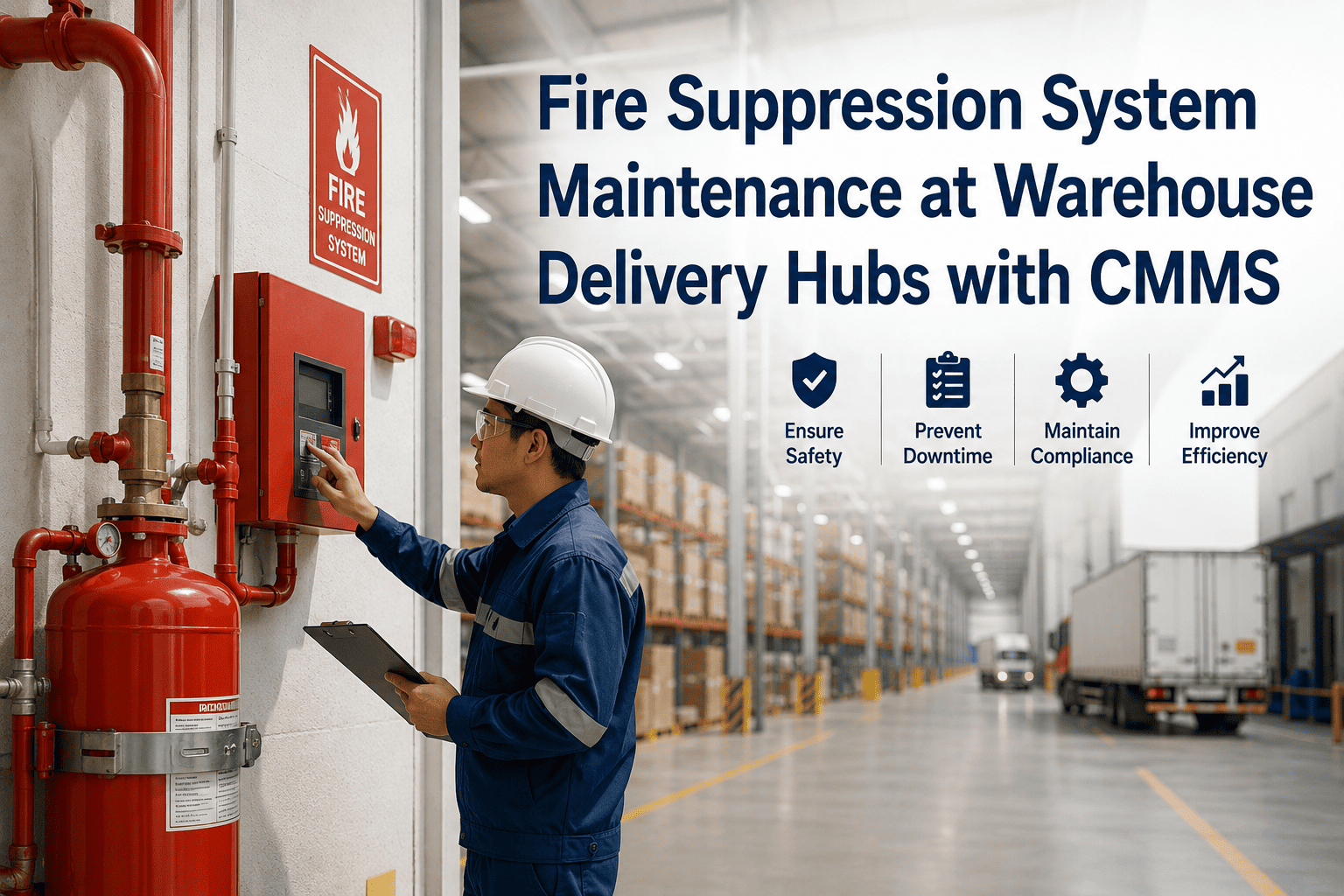
Conveyor systems and sortation lines, dock levelers and loading bay doors, forklifts and pallet jacks, HVAC and refrigeration units, fire suppression and safety systems, racking and automated storage retrieval systems. When any of these fail, outbound order flow stops — and every delivery truck in the yard is affected.

42% of downtime from equipment failure 80% cannot estimate their downtime cost
Fleet Side

Vehicle and Mobile Assets

Delivery trucks and vans, refrigerated transport units, liftgates and cargo restraints, telematics and GPS devices, tires, brakes, and drivetrain components. When vehicles are down for unplanned repairs, delivery capacity drops — and warehouse teams overload the remaining fleet or reschedule shipments.

800 hours avg unplanned maintenance per year Reactive repairs cost 35% more per minute
The Connection

Where Warehouse Meets Fleet

The loading dock is where both worlds collide. Dock leveler failures delay truck loading. Conveyor stoppages delay sortation. Late sortation delays dispatch. Late dispatch means missed delivery windows. An integrated CMMS connects both sides so that maintenance scheduling accounts for the entire flow — from inbound receiving through outbound delivery.

Loading dock = critical integration point One failure cascades across both operations

Managing warehouse and fleet maintenance separately?

See how a single CMMS eliminates the gap between your facility and your vehicles.

Book a Free Demo

What an Integrated Maintenance Strategy Actually Looks Like

Integration does not mean buying more software. It means connecting the maintenance workflows that already exist on both sides of your operation into a single, shared system. Here are the four pillars of a truly integrated logistics maintenance strategy.

Pillar 1: Unified Asset Registry

Every asset — from conveyor motors to delivery truck engines — lives in one system with complete maintenance history, warranty status, and parts inventory. No more hunting across spreadsheets, email threads, and separate vendor portals to find a vehicle's last oil change or a conveyor's belt replacement date.

Pillar 2: Shared Work Order System

Warehouse technicians and fleet mechanics submit and track work orders through the same platform. Managers see every open request, every scheduled PM, and every pending part across both operations in a single dashboard. Priority is based on operational impact — not which department shouted loudest.

Pillar 3: Cross-Functional Scheduling

Preventive maintenance on warehouse conveyors is scheduled during low-volume shipping windows. Fleet PM is scheduled around dispatch calendars. Neither operation blindsides the other with surprise downtime. Technician workloads are balanced across both facility and fleet needs.

Pillar 4: Shared Parts Inventory

Bearings, belts, filters, and fluids often overlap between warehouse equipment and vehicles. An integrated system tracks shared inventory, triggers reorder points automatically, and prevents the classic problem of one team hoarding parts while the other waits for an emergency shipment.

The ROI of Integration: Before vs. After

The financial case for integrated maintenance is built on three levers: reduced unplanned downtime, lower per-incident repair costs, and improved delivery reliability. Here is what changes when warehouse and fleet maintenance operate as one system.

MetricSiloed MaintenanceIntegrated CMMS
Avg Response to Equipment Failure2-4 hoursUnder 30 min
Unplanned Downtime Events/Month8-12 incidents2-3 incidents
Fleet Availability Rate78-82%94-97%
Conveyor Uptime85-88%96-99%
Maintenance Cost per AssetReactive premium +35%Planned baseline
Parts Stockout FrequencyWeeklyRare
On-Time Delivery Rate82-86%95%+
"Fleet operations have historically been fragmented — fuel systems in one platform, maintenance in another, financial data in spreadsheets. In 2026, integration is becoming the key to efficiency."
— AssetWorks
2026 Transportation and Logistics Trends Report

Your 5-Step Integration Roadmap

Moving from siloed maintenance to an integrated strategy does not require a full system overhaul on day one. It follows a clear, phased approach where each step builds on the previous one and delivers measurable value immediately.

01Audit and Inventory All Assets: Document every warehouse asset and fleet vehicle in a single registry. Include make, model, age, condition, maintenance history, and criticality rating. This becomes the foundation for everything that follows. Most teams discover 15-20% of their assets have no documented maintenance history at all.
02Centralize Work Orders: Move all maintenance requests — warehouse and fleet — into one CMMS. Eliminate the separate spreadsheets, email threads, and whiteboard systems. Every request gets logged, tracked, and resolved through a single workflow with clear accountability and timestamps.
03Build Cross-Functional PM Schedules: Create preventive maintenance calendars that account for both warehouse throughput windows and fleet dispatch schedules. Conveyor PM happens during low-volume hours. Fleet PM happens during non-dispatch windows. Neither team creates surprise downtime for the other.
04Unify Parts Inventory: Consolidate spare parts tracking across both operations. Identify shared components — bearings, belts, filters, lubricants — and set unified reorder points. This alone typically reduces parts spending by 12-18% through volume consolidation and elimination of emergency orders.
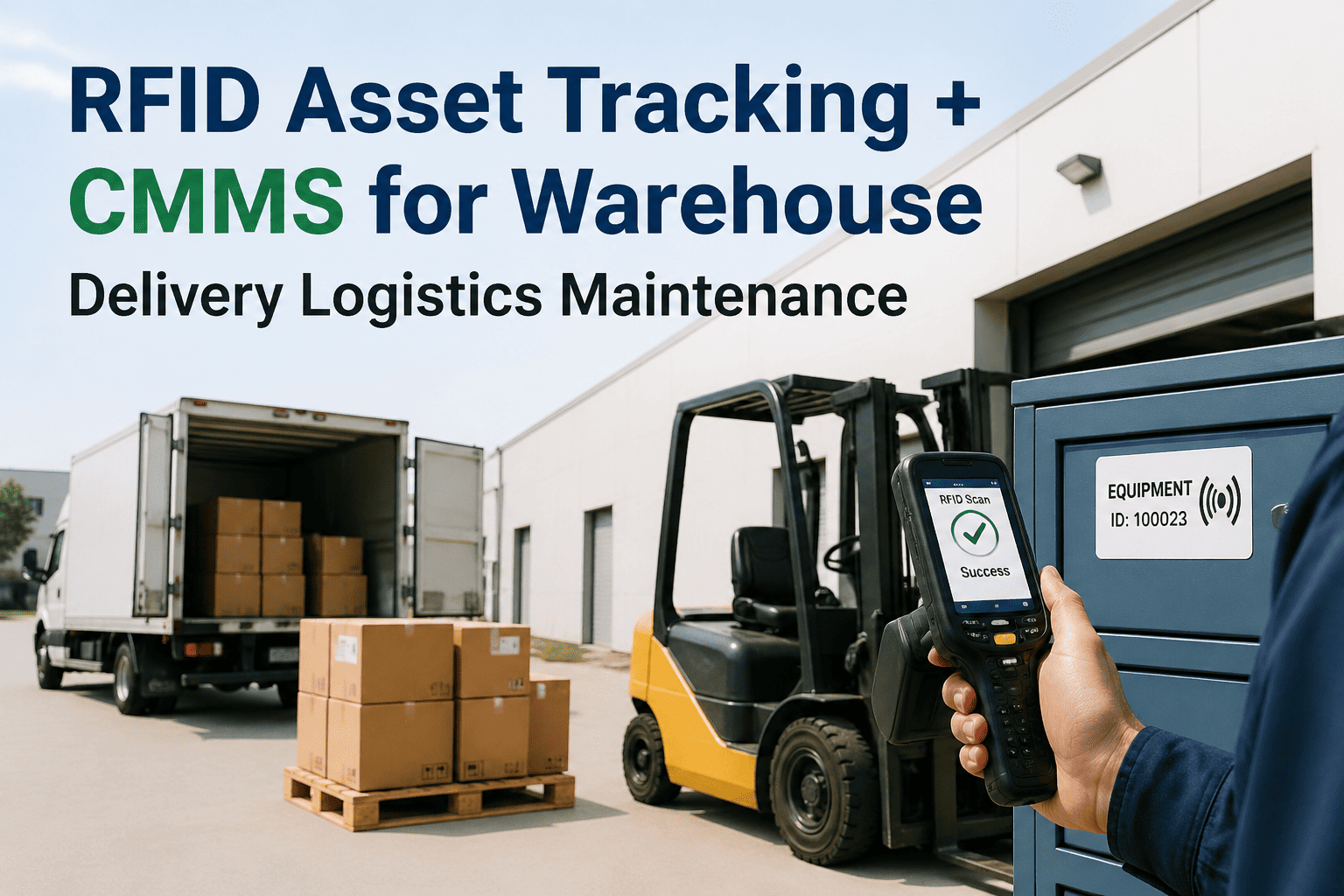
05Connect IoT and Telematics: Wire conveyor sensors, forklift hour meters, and fleet telematics into your CMMS for real-time condition monitoring. This enables the shift from calendar-based PM to condition-based maintenance — fixing what needs fixing, when it needs fixing, before it fails.

Ready to unify your warehouse and fleet maintenance?

Start with a free asset audit and see how a single CMMS covers both operations.

Start Free Trial

What to Look for in a Unified CMMS

Not every CMMS is built to handle both warehouse equipment and fleet vehicles. The right platform needs to bridge the gap between facility maintenance and mobile asset management without forcing you to run two separate systems.
1
Multi-Asset Support
Handles fixed facility equipment (conveyors, HVAC, docks) and mobile fleet assets (trucks, vans, forklifts) in one registry.
2
Mobile-First Access
Technicians on the warehouse floor and mechanics in the fleet yard both submit and close work orders from their phones.
3
IoT + Telematics Ready
Integrates sensor data from conveyors and telematics from vehicles to trigger condition-based maintenance automatically.
Key Takeaways
Siloed maintenance costs more than you think: Warehouse downtime runs $10,000/hour. Fleet reactive repairs cost 35% more than planned. Equipment failures cause 42% of all unplanned downtime. Running two separate systems guarantees you pay the premium on both sides.
Only 23% of logistics operations are fully integrated: Three out of four organizations know integration is essential — but most are still operating with disconnected systems. The gap between intention and execution is where competitive advantage lives.
The loading dock is your critical integration point: Where warehouse meets fleet is where cascading failures begin. An integrated CMMS ensures maintenance scheduling on both sides accounts for the full order-to-delivery flow.
Predictive maintenance on conveyors cuts downtime 75%: IoT sensors monitoring vibration, temperature, and belt wear catch failures weeks before they happen — preventing the cascade that delays fleet dispatch and delivery.
Start with asset inventory and centralized work orders: You do not need to integrate everything overnight. The first two steps — a unified asset registry and shared work order system — deliver immediate visibility and cost savings. Start building your integrated strategy today.
One Platform for Warehouse Equipment and Delivery Fleet Maintenance
OxMaint unifies facility equipment and fleet vehicle maintenance under a single CMMS — with shared work orders, cross-functional PM scheduling, unified parts inventory, and mobile access for every technician and mechanic in your operation. Stop running two systems. Start running one operation.

Frequently Asked Questions

Why should warehouse and fleet maintenance be managed together?
Because they are operationally dependent. A conveyor breakdown delays order sortation, which delays truck loading, which delays deliveries. Managing both in one CMMS ensures maintenance scheduling on one side accounts for the impact on the other — preventing the cascade failures that siloed systems miss entirely.
What warehouse equipment should be tracked in a CMMS alongside fleet vehicles?
All critical assets that affect order flow: conveyor systems, sortation lines, dock levelers, loading bay doors, forklifts, pallet jacks, HVAC and refrigeration units, fire suppression systems, and automated storage retrieval systems. Each should have a complete maintenance history, PM schedule, and parts linkage in the same system as your fleet vehicles.
How does integrated maintenance improve delivery reliability?
When warehouse PM is scheduled during low-volume windows and fleet PM is scheduled around dispatch calendars, neither operation creates surprise downtime for the other. The result is higher conveyor uptime (96-99%), higher fleet availability (94-97%), and on-time delivery rates above 95%. Book a demo to see this in action.
How long does it take to implement an integrated maintenance strategy?
Phase 1 — asset inventory and centralized work orders — can be completed in 2-4 weeks. Cross-functional PM scheduling is typically operational within 60 days. IoT and telematics integration follows over 3-6 months. Most operations see measurable ROI within the first 30 days of centralized work order management. Start your free trial today.
Can a single CMMS really handle both facility equipment and fleet vehicles?
Yes — if it is designed for multi-asset management. OxMaint supports fixed facility equipment and mobile fleet assets in one registry with shared work orders, unified parts inventory, mobile-first technician access, and IoT/telematics integration. It is purpose-built for logistics operations that need both sides managed under one digital roof.

Share This Story, Choose Your Platform!