When a dock leveler sticks or a door jams mid-shift, the checklist that should have caught it is usually missing, outdated, or filled in without anyone actually looking. Dock equipment works hard in the most crowded part of the building, so inspections have to be short, specific, and tied to a named bay. This page gives maintenance teams complete dock leveler, door, seal, and restraint checklists by frequency, along with out-of-service criteria, safe-work steps, and a return-to-service check. You can run every list on a phone through maintenance management software so each result is recorded against the right door.
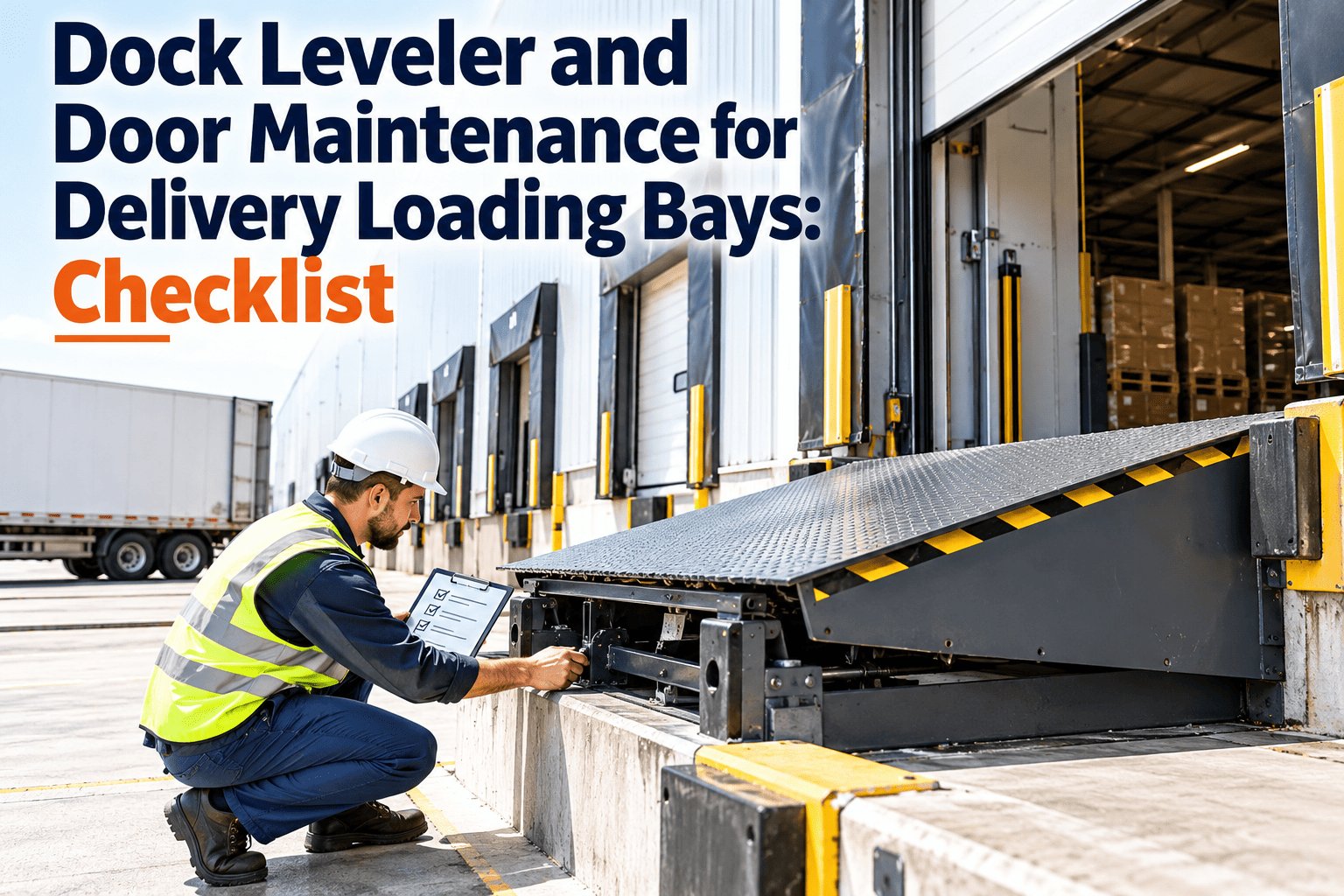
Dock Leveler and Door Maintenance for Delivery Loading Bays: Checklist
Dock levelers and doors fail in the busiest, highest-traffic spot in the building. Use these ready-to-run checklists to inspect every bay on a schedule and keep each loading position available.
Every use
Operator quick check
Weekly
Technician walk-through
Monthly
Component inspection
Quarterly
Detailed service
Annual
Full service and records review
Five checklists, one record for every dock position.
How to Use These Checklists
A checklist only prevents failures when it is completed honestly and acted on. Follow the same routine every time so results can be compared between doors and over months.
1
Print the list or open it on a mobile device and work through one dock position at a time, in the same order every inspection.
2
Mark each item as pass, fail, or monitor. Never leave an item blank, because a blank cannot be told apart from a skipped check.
3
Photograph every defect and describe it in plain words, including the exact position, such as left lip hinge or door track, upper section.
4
Raise a work order for every failed item the same day, and tag the bay out of service if it meets the criteria listed further down this page.
Checklist 1: Operator Pre-Use Check (Every Shift or Every Trailer)
Dock crews see the equipment more often than anyone. This takes under two minutes and catches the problems that cause injuries and stuck trailers.
Leveler and lip
Leveler is clear of debris, pallets, and ice before it is raised
Lip extends smoothly and rests fully on the trailer bed
No unusual noise, jerking, or slow movement during the cycle
No visible fluid on the pit floor, hoses, or around the power unit
Toe guards and side edges are intact with no pinch gaps
Deck surface is free of cracks, bent plate, or loose tread
Door, seals, and restraint
Door opens and closes fully without catching or drifting
Safety edge and photo-eye stop the door when tested with a safe object
Dock seal or shelter is intact and presses evenly against the trailer
Vehicle restraint engages and the light shows the correct status
Wheel chocks are available if the restraint is out of service
Dock lighting and communication lights are working
Checklist 2: Weekly Technician Walk-Through
The weekly round is a quick look by a technician who knows what normal looks like. Record a result for each line.
| Check item | What to look for | Pass | Fail |
|---|---|---|---|
| Hydraulic fluid level | Level within the marked range, fluid clear and free of foam or particles | ||
| Hoses and fittings | No weeping, bulges, rubbing, or loose connections | ||
| Lip operation | Full travel, no binding, lip returns to the stored position | ||
| Door travel | Smooth movement with no rubbing, noise, or uneven closing | ||
| Safety sensors | Photo-eyes clean and aligned, safety edge reverses the door | ||
| Seals and bumpers | No tears, flattened sections, or loose bumper fasteners | ||
| Restraint and lights | Engages on test, indicator lights match actual restraint status | ||
| Pit and floor area | Clean pit, working drainage, no standing water or ice |
Checklist 3: Monthly Component Inspection
Monthly checks add measurements, lubrication, and closer looks at wear points. Complete each column for every dock position.
Hydraulic leveler
Check the power unit for noise, heat, and loose electrical connections
Inspect cylinder rods for scoring, pitting, and leaks at seals
Confirm the deck holds position under load without drifting
Lubricate hinge points and lip pivots as specified
Mechanical leveler
Inspect springs for cracks, rust, and loss of tension
Check release mechanism and holddown for smooth operation
Examine linkage, pins, and retaining clips for wear
Lubricate moving parts and verify the return to rest position
Door and track
Inspect rollers, hinges, and track for wear or bending
Check springs, cables, and drums for fraying or damage
Test limit settings and the auto-reverse function
Look for panel dents that affect sealing or travel
Seals and restraints
Measure seal compression against the trailer for gaps
Inspect restraint hook, arm, and pins for bending or wear
Test the sensors that detect trailer presence
Check bumper wear and anchor bolts for movement
Checklist 4: Quarterly Detailed Service
Quarterly work is performed by trained technicians with the equipment locked out. Allow time for repairs, because this inspection often finds items that need parts.
Lock out and tag the leveler, door, and restraint before any hands-on work begins
Secure the deck with the maintenance prop or safety strut before working beneath it
Sample hydraulic fluid and replace it if it is dark, milky, or contaminated
Inspect welds on the deck, frame, and lip for cracks and fatigue
Check anchor bolts and frame fasteners for looseness or corrosion
Test pressure relief and holding valves against the manufacturer's values
Replace worn hoses, rollers, hinges, and bumpers before they fail
Clean and inspect the electrical panel, wiring, and limit switches
Verify alignment of door sections, seals, and shelter frames
Update the record with measurements, parts used, and the next due date
Checklist 5: Annual Full Service and Records Review
Complete manufacturer service on each leveler, door, and restraint, using authorized personnel where required
Load-test levelers where the manufacturer or your safety program requires it
Inspect structural parts, including the pit frame, curb angles, and support legs
Replace seals, wear parts, and labels that are damaged or unreadable
Review the year's repair history to find doors with repeated failures
Decide which units to repair, refurbish, or replace in the coming budget
Confirm that operators have been trained and that instructions are posted at each dock
Archive reports, certificates, and warranty documents against each asset
Out-of-Service Criteria: Stop Using the Bay If You See Any of These
Some findings cannot wait for the next scheduled repair. Tag the position out of service, block it visibly, and raise an urgent work order.
Leveler deck drifts downward or will not hold position under load
Visible cracks in deck plate, lip, hinge, or frame welds
Hydraulic leak that is active or leaves fluid pooled on the floor
Lip does not extend, retract, or seat securely on the trailer bed
Door will not stop or reverse when the safety edge is activated
Door is off track, has a broken spring, or has a frayed cable
Vehicle restraint fails to engage or the lights show the wrong status
Missing or damaged guards, toe protection, or safety struts
Run Every Checklist From a Phone
Oxmaint lets you schedule each checklist by dock door, record pass or fail results with photos, and turn every failed item into a tracked work order.
Safe-Work Checklist Before Anyone Services Dock Equipment
Trailer is removed, or restrained and chocked, with the driver informed
Power is isolated and locked out, and the lock is personal to the technician
Stored energy is released, including hydraulic pressure and spring tension
Maintenance prop or safety strut is in place before reaching under the deck
Area is barricaded and signed so forklifts and walkers do not enter
A second person is aware of the work location and expected duration
Follow your site procedures and applicable regulations, and record every lockout against the dock position.
Return-to-Service Checklist After a Repair
All tools, parts, and covers are removed from the pit and work area
Guards, toe protection, and panels are reinstalled and secure
Locks and tags are removed only by the person who applied them
Leveler cycles fully with no leaks, noise, or drift
Door and safety sensors operate and reverse correctly
Restraint and lights are tested with a trailer or approved test method
Work order is closed with cause, parts used, and time spent
Dock supervisor is told the bay is available again
What the Checklist Findings Usually Mean
| Finding | Likely cause | Recommended action |
|---|---|---|
| Slow or uneven leveler movement | Low fluid, air in the system, worn seals, or power unit issue | Check fluid and hoses, then test the power unit and valves |
| Deck drifts under load | Faulty holding valve or leaking cylinder seal | Remove from service and repair before further use |
| Lip will not seat on trailer | Binding hinge, bent lip, or debris | Clean, lubricate, and inspect pins and hinge |
| Door stops or reverses at random | Dirty or misaligned photo-eye, faulty safety edge | Clean and realign sensors and test the circuit |
| Drafts, water, or pests at the dock | Torn seals, flattened bumpers, or gaps around the leveler | Repair or replace seals and check threshold gaps |
| Restraint will not release or engage | Bent arm, sticking mechanism, or sensor fault | Use backup chocks and schedule urgent repair |
Seasonal Dock Checklists
Before cold weather
Seal flexibility checked and torn sections replaced
Hydraulic fluid suitable for low temperatures
Pit drains cleared so ice cannot lock the leveler
Door heaters and weather strips tested
Before peak volume
Every overdue inspection completed on all doors
Seals, rollers, hoses, and sensors stocked
Outside service contact numbers posted
Temporary staff briefed on dock safety and reporting
Inspection Record: Fields Every Sign-Off Should Contain
A checklist without a record cannot support a warranty claim, an audit, or a trend review. Capture these fields every time.
Dock position
Door number and equipment type
Date and shift
When the inspection was completed
Inspector
Name and role of the person signing
Result
Pass, fail, or monitor for each line
Photos
Images attached to each defect
Work order
Reference for every failed item
Status
Available, restricted, or out of service
Sign-off
Inspector and supervisor confirmation
Common Checklist Mistakes
- Ticking every box from memory at the end of the week instead of inspecting at the door.
- Using one generic list for different equipment types, which skips model-specific checks.
- Logging a defect without a work order, so nobody owns the repair.
- Letting operators skip the pre-use check on busy shifts, when failures are most likely.
- Storing paper forms in a drawer where trends and repeat failures cannot be seen.
- Never updating the list after a failure reveals a check that was missing.
Running the Checklists in Oxmaint
- Each leveler, door, and restraint is an asset with its model, location, and service history.
- Recurring inspection tasks are scheduled by dock position and frequency, and assigned to the right technician.
- Pass, fail, and monitor results are recorded on a phone with photos and notes.
- Failed items create corrective work orders with priority and due date.
- Parts inventory tracks seals, hoses, rollers, and sensors so repairs do not wait.
- Reports show repeat failures, overdue inspections, and cost by dock door.
Dock Leveler and Door Checklist FAQs
How often should dock levelers be inspected?
Operators should check before each use, with technician inspections weekly, monthly, and quarterly, plus a full annual service.
Who should complete the checklists?
Operators handle the pre-use check, while trained technicians complete the deeper lists and all lockout work.
What should I do when an item fails?
Record it with a photo, raise a work order, and tag the bay out of service if it meets the stop criteria. Track it in Oxmaint until it closes.
Can I adapt the checklist to my equipment?
Yes, always add manufacturer requirements for each model and your site's rules. Keep versions for hydraulic and mechanical units.
Can one system cover several buildings?
You can organize docks by facility and compare results. Book a demo to see multi-site reporting.
Keep Every Dock Position Inspected and Available
Put each checklist on a schedule, record every result, and fix failed items before they take a door out of service.