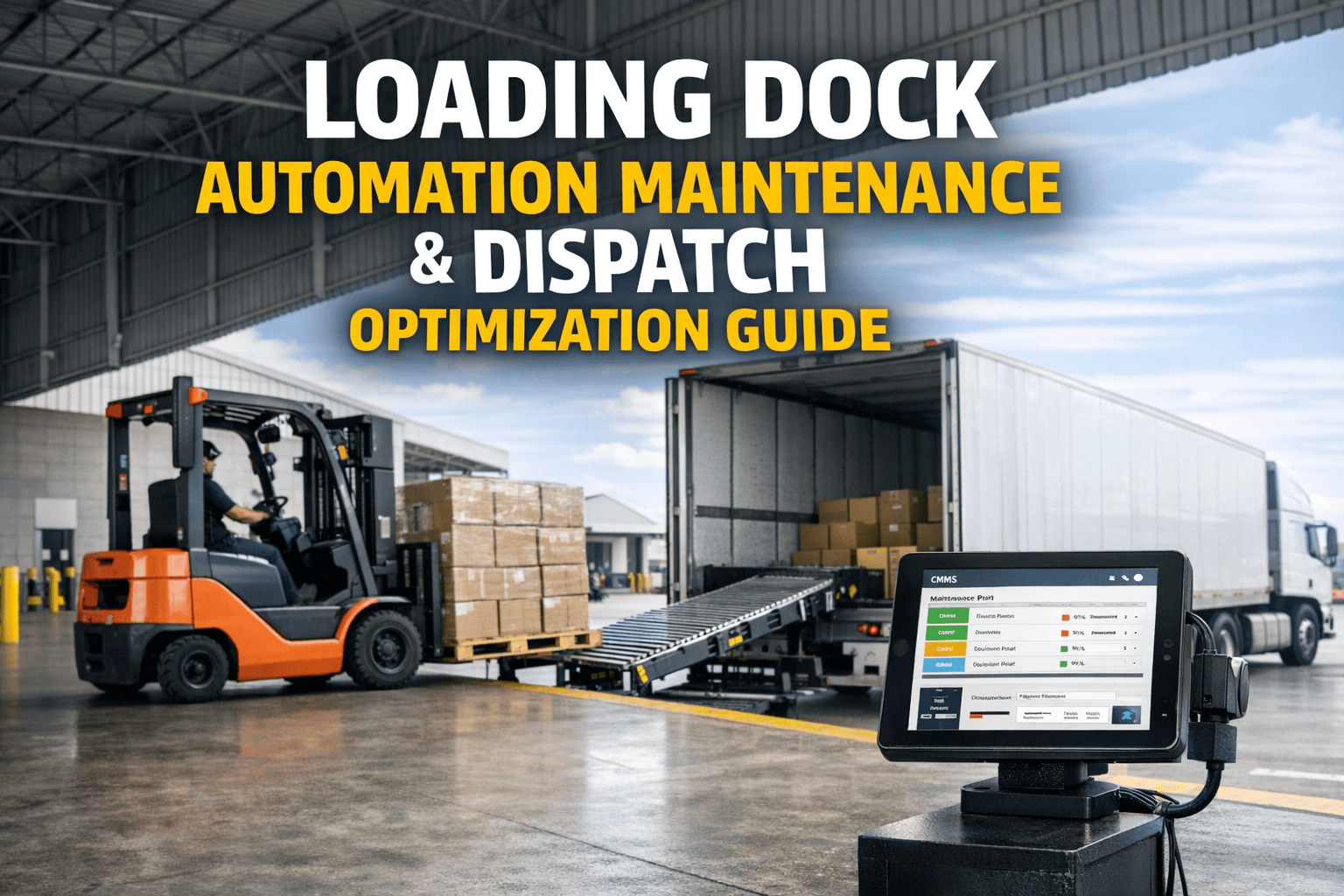
A single loading dock door failure during peak outbound hours creates a cascading logistics nightmare — trucks stack up in the yard waiting for available bays, dispatch schedules slip by 30–90 minutes per delayed trailer, and your warehouse shifts from synchronized flow to reactive chaos as supervisors manually redirect traffic to working doors. When automated dock levelers, vehicle restraint systems, and overhead doors degrade without warning, a 12-door facility operating at 85% capacity suddenly becomes an 11-door facility at 95% capacity — and that 10% margin evaporates the moment one more door goes down. The cost is immediate: $800–$2,500 per hour in detention fees, missed delivery windows, and emergency repair callouts. Start your free OxMaint trial to prevent dock equipment failures before they disrupt dispatch schedules, or book a demo to see how CMMS-driven dock maintenance eliminates bottlenecks in high-velocity fulfillment operations.
$2,500/hr
Peak Cost of Single Dock Door Downtime
15–25 min
Target Turnaround Time Per Truck
95%+
World-Class Dock Equipment Uptime
Why Loading Dock Automation Changes the Maintenance Game
Manual loading docks with basic leveling plates fail predictably and visibly — a bent plate or worn hinge announces itself immediately. Automated dock systems with hydraulic levelers, powered vehicle restraints, LED traffic lights, and integrated dock management software fail differently: sensors drift out of calibration, hydraulic seals weep slowly until catastrophic failure, and communication faults between WMS and dock control panels create invisible data gaps that only surface when a truck parks at the wrong door. These silent degradations compound until a single component failure triggers a complete door shutdown, and your dispatch board shows red.
Dock Automation Failure Chain: How Deferred PM Becomes 4-Hour Downtime
1
Dock leveler hydraulic seal shows minor seepage during PM — deferred for "next cycle" to avoid disrupting operations
→
2
Seal failure worsens under thermal cycling — leveler requires 3–4 activation attempts, slowing truck turnaround by 2 minutes per cycle
→
3
Seal ruptures during peak shift — leveler locks in down position, door unusable, 4-hour emergency repair + $1,800 in detention fees
Root cause: one deferred seal replacement ($180 part + 30 min labor). Total cost: $3,200 in downtime + repairs + detention.
Critical Dock Equipment Components and Maintenance Intervals
Automated loading dock systems integrate six mechanical subsystems that must function in perfect coordination. When maintenance is scheduled independently for each component rather than as a synchronized dock system, PM windows multiply and uptime suffers. A CMMS built for warehouse logistics clusters these tasks into single maintenance events that minimize door offline time.
Hydraulic fluid level check and top-off
Seal and cylinder inspection for leaks
Lip extension and retraction cycle test
Deck hinge pin lubrication
Safety velocity fuse function verification
Common Failure: Seal rupture from contaminated fluid
Hook engagement mechanism inspection
Sensor alignment and communication test
Interlock wiring continuity check
Impact bar padding condition assessment
Release button and emergency override test
Common Failure: Sensor misalignment causing false engagement signals
Spring tension measurement and adjustment
Track alignment and roller bearing inspection
Motor drive chain lubrication
Safety photo-eye cleaning and alignment
Weather seal compression and adhesion check
Common Failure: Spring fatigue causing door sag and binding
Foam pad compression recovery test
Fabric tear and abrasion inspection
Side curtain wear pattern assessment
Header pad mounting integrity check
Replacement planning based on wear grade
Common Failure: Foam degradation causing thermal gaps and pest entry
LED signal light function test (red/green)
Communication link verification to WMS
Sensor battery backup capacity test
Interlock logic verification with restraint
Display panel cleaning and readability check
Common Failure: Communication dropout causing dispatch conflicts
Mechanical or hydraulic lip extension test
Lip hinge and pivot point lubrication
Bumper compression and anchor bolt torque
Deck surface anti-slip coating condition
Below-dock clearance and debris removal
Common Failure: Lip binding from debris accumulation in pivot zone
Dock Maintenance CMMS
Synchronize Every Door, Every Component, Every PM Cycle
OxMaint schedules all six dock subsystems as coordinated maintenance events — one door offline window covers hydraulics, restraints, doors, seals, and controls. No redundant downtime, no missed dependencies, no dispatch disruptions from overlapping PMs.
Dispatch Integration: When Dock Maintenance Meets Logistics Planning
Traditional CMMS systems treat loading docks as isolated assets with maintenance schedules divorced from dispatch operations. Modern warehouse CMMS platforms integrate with transportation management systems to ensure PM windows never conflict with high-volume shipping windows, carrier pickup schedules, or peak seasonal throughput. This integration transforms dock maintenance from a disruptive event into an invisible background process.
Step 1
TMS Data Import
CMMS pulls 7-day carrier pickup schedule, identifies low-volume windows under 60% door utilization
Step 2
Maintenance Window Selection
System auto-schedules dock PM during identified low-volume periods, reserves adjacent doors for traffic overflow
Step 3
Dispatch Notification
TMS receives door closure notification 48 hours advance, automatically redistributes inbound appointments to available doors
Step 4
Dynamic Rescheduling
If unexpected surge occurs, CMMS delays non-critical PM and alerts team, preventing forced downtime during demand spike
Step 5
Post-PM Verification
Technician completes functional test, door returns to active status in both CMMS and TMS simultaneously
Predictive Maintenance Through IoT Sensor Integration
The next generation of loading dock automation embeds IoT sensors directly into hydraulic systems, door operators, and vehicle restraints to monitor performance in real-time. These sensors detect degradation patterns invisible to visual inspection — rising hydraulic pressure indicating seal wear, increasing door cycle times from spring fatigue, and intermittent restraint engagement failures that occur randomly but trend upward over time.
Hydraulic Pressure Monitoring
Pressure transducers measure leveler lift pressure on every cycle — trending analysis detects seal degradation 2–4 weeks before failure
Early Warning: 15–30 days
Door Cycle Time Tracking
System logs every open/close cycle duration — creeping cycle times indicate spring wear, motor issues, or track misalignment
Early Warning: 10–20 days
Restraint Engagement Sensing
Hook position sensors confirm full engagement every truck arrival — intermittent failures trigger immediate inspection before safety incident
Early Warning: Immediate
Temperature Anomaly Detection
Thermal sensors on door motors and hydraulic pumps flag overheating from bearing wear or electrical faults
Early Warning: 5–15 days
Maintenance Cost Benchmarks and ROI Analysis
Warehouse operations teams evaluating dock automation investments often focus on throughput gains and labor savings while underestimating ongoing maintenance costs. A 12-door automated facility should budget $18,000–$32,000 annually for preventive maintenance, parts, and occasional emergency repairs — but this investment prevents $150,000+ in downtime costs, detention fees, and lost shipment revenue over the same period.
| Dock Configuration |
Annual PM Cost |
Typical Emergency Repair Cost |
Detention Fee Risk (Annual) |
Recommended CMMS Investment |
| 4–6 doors (small facility) |
$8,000–$15,000 |
$12,000–$20,000 |
$25,000–$50,000 |
$3,000–$6,000/year |
| 8–12 doors (mid-size) |
$18,000–$32,000 |
$25,000–$45,000 |
$60,000–$120,000 |
$6,000–$12,000/year |
| 15–25 doors (large facility) |
$35,000–$65,000 |
$50,000–$90,000 |
$150,000–$300,000 |
$12,000–$20,000/year |
| 30+ doors (mega facility) |
$70,000–$125,000 |
$100,000–$180,000 |
$400,000–$750,000 |
$20,000–$35,000/year |
Warehouse Operations CMMS
Eliminate Dock Downtime Before It Hits Your Dispatch Board
OxMaint connects dock equipment sensors, maintenance schedules, and dispatch planning into one real-time system. Predict failures before they happen, schedule PM during low-volume windows, and keep every door operational when you need it most.
Performance Metrics: Measuring Dock Automation Success
Loading dock efficiency directly impacts customer delivery performance, carrier relationships, and warehouse labor costs. Operations teams tracking the right metrics can identify maintenance gaps before they degrade service levels and quantify the ROI of preventive maintenance investments against reactive failure costs.
Average Truck Turnaround Time
Poor Maintenance
30–40 min
Unplanned Downtime Events/Month
Detention Fee Incidents/Year
Frequently Asked Questions
Loading Dock CMMS Platform
Your Warehouse Processes 200 Trucks Daily — Can Your Docks Keep Pace?
OxMaint transforms loading dock maintenance from reactive firefighting into predictive optimization. Sensor integration, dispatch-aware scheduling, and real-time performance dashboards ensure every door stays operational when carriers arrive. Zero surprise failures, zero detention fees, zero missed shipments.
97%+
Door uptime achieved by OxMaint customers
75%
Reduction in emergency repair callouts
Real-Time
Equipment status integrated with TMS