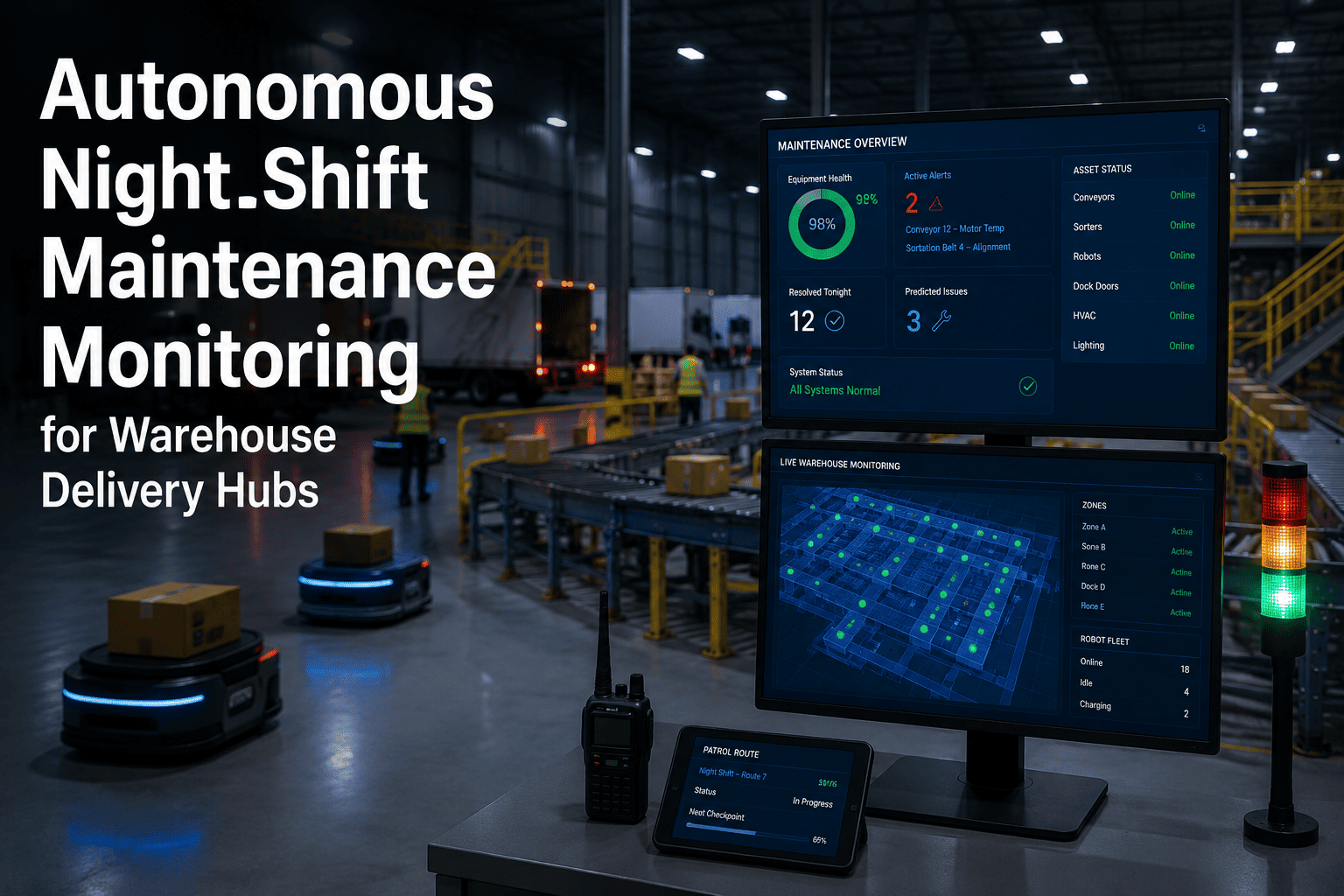
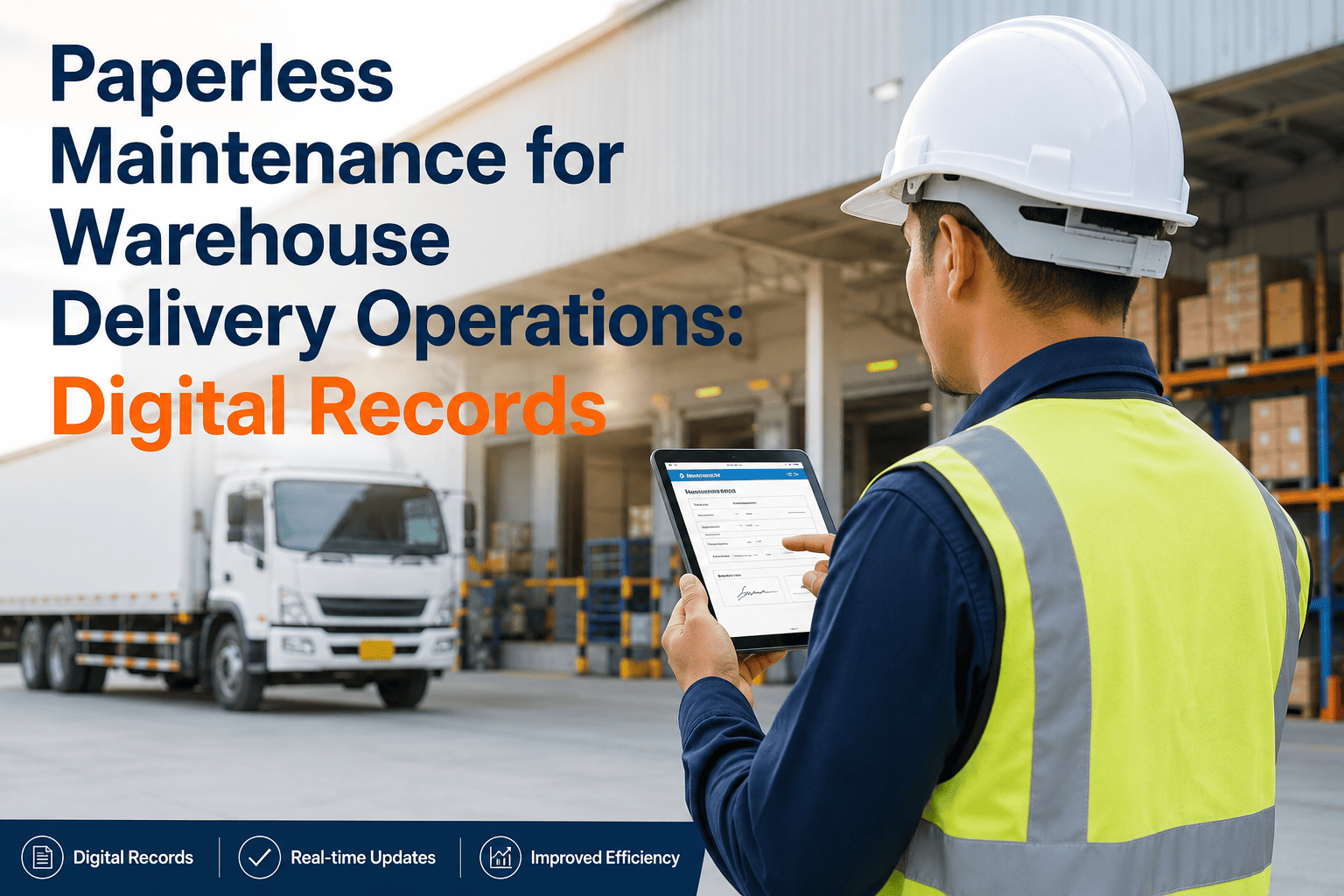
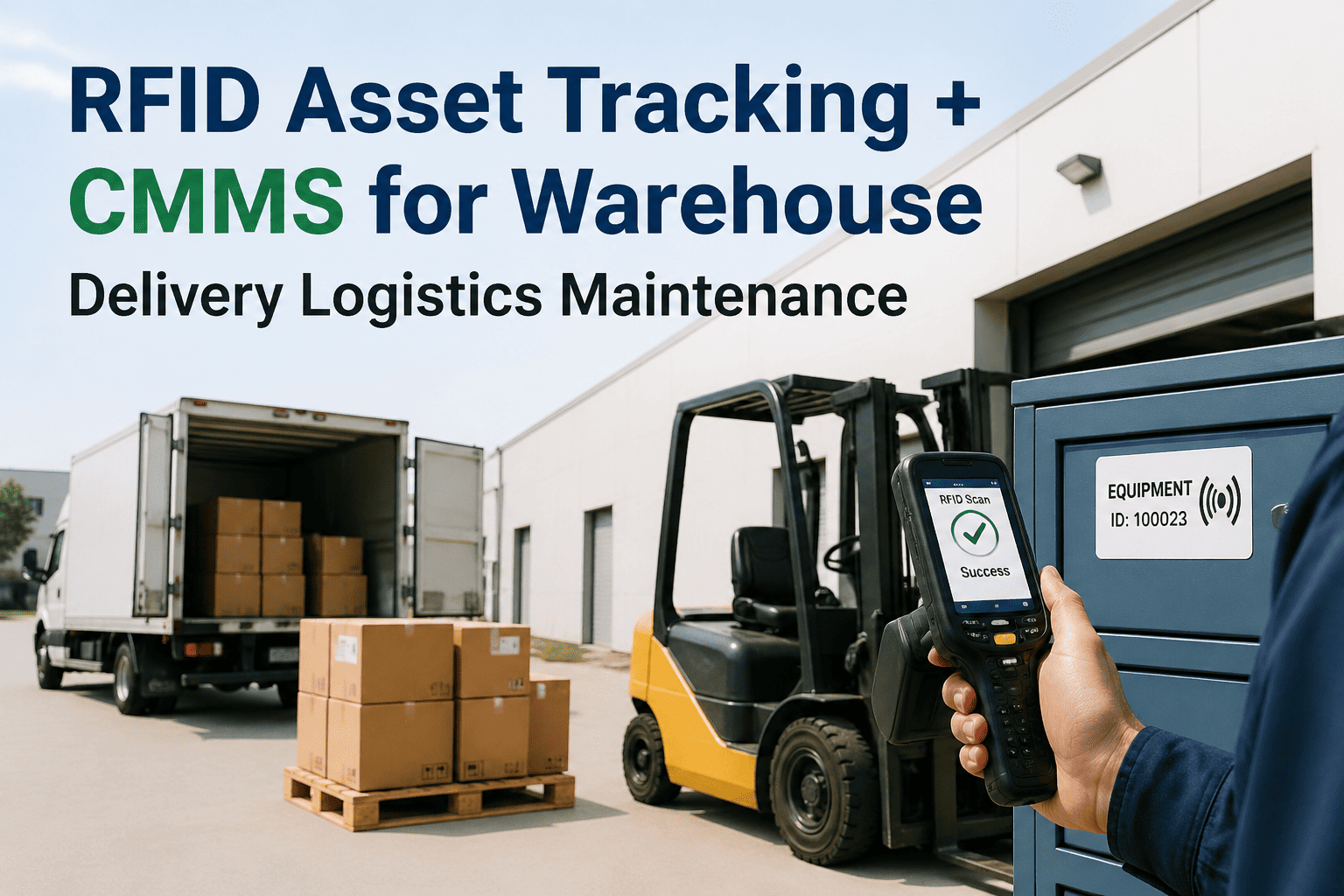
Every warehouse operates on shifts. But most shift transitions are a silent danger zone — the moment when critical fault history, half-completed repairs, and pending asset risks vanish between one team and the next. When paper logs, verbal briefings, or fragmented notes carry the weight of a 24/7 delivery operation, something always falls through the cracks. Digital CMMS shift handover changes this entirely. With OxMaint, incoming warehouse technicians open their mobile device and see every open fault, staged repair, at-risk asset, and pending work order — all in a structured, timestamped digital log that the outgoing shift completed in minutes. No phone calls. No guesswork. No repeated diagnostic work. Just a clean, complete picture of exactly where the operation stands at the moment the new team takes over. Start your free OxMaint trial and eliminate handover blind spots across every shift, every day.
Warehouse Maintenance · CMMS · Digital Shift Handover
Your Night Shift Just Left. Does Your Morning Team Know What Broke?
74% of warehouse equipment breakdowns are linked to poor shift communication. Digital CMMS shift handover gives every incoming technician a complete, real-time snapshot — open faults, pending repairs, asset risk, and staged parts — before their first task begins.
74%
of breakdowns linked to poor shift communication
45 min
avg wasted re-diagnosing known issues per shift
3–5×
higher cost of emergency vs. planned maintenance
60 sec
for incoming team to see full shift status in OxMaint
The Core Problem
What Gets Lost When Shifts Change Without a Digital Handover
Warehouse delivery operations run across two or three shifts every day. Each transition is a knowledge transfer — and without a structured digital system, that transfer is incomplete by default.
Fault History Disappears
The outgoing technician diagnosed a conveyor jam, applied a temporary fix, and told the next person verbally. Three shifts later, no one remembers — the root cause is never addressed and the asset fails again.
Duplicate Diagnostic Work
Without a digital record, incoming technicians repeat 45 minutes of diagnostic steps already completed by the previous shift. Every shift restart costs the same time budget on already-known problems.
Staged Parts Go Missing
A technician pulled the right part and staged it at the machine for the next shift. No one documented it. The incoming team orders the same part again — doubling cost and extending downtime by another half day.
SLA Windows Quietly Close
A repair flagged as urgent at 11 PM sits in a verbal note. By morning it is a missed SLA. Delivery performance scores drop. No one on the incoming shift even knew the clock was running.
Before vs. After
What Changes When Your Warehouse Uses Digital Shift Handover
| Handover Scenario |
Paper / Verbal |
OxMaint Digital CMMS |
| Fault visibility at shift start |
Ask outgoing tech or read paper log |
Full fault list on mobile, auto-loaded |
| Open work order status |
Unknown until supervisor checks |
Prioritized queue visible in 60 seconds |
| Asset risk tracking |
Memory and verbal warning |
Timestamped digital alert with asset ID |
| Staged parts documentation |
Post-it note or verbal only |
Parts logged to work order, no duplicates |
| Re-diagnostic time per shift |
30–60 minutes average |
Near zero — context is already in CMMS |
| SLA escalation awareness |
Discovered after breach |
Live countdown visible per open work order |
| Shift accountability |
No verifiable audit trail |
Timestamped records with technician attribution |
How It Works
The 5-Step Digital Shift Handover Flow in OxMaint
OxMaint structures the end-of-shift and start-of-shift experience so that critical information transfers happen by process, not by memory. Here is what every shift transition looks like when your warehouse is running on digital CMMS handover.
1
Outgoing Technician Files Digital End-of-Shift Log
Before clocking out, the outgoing technician completes a structured digital log in OxMaint — recording completed tasks, abnormal machine conditions, open faults, and staged parts. Mandatory fields prevent skipping critical details. Photo and video evidence can be attached directly to any asset record.
Mandatory structured fields · Photo evidence · Asset-linked
2
Open Work Orders Auto-Carry to Next Shift Queue
Any unresolved work order from the outgoing shift automatically carries forward and appears at the top of the incoming shift's queue — ranked by severity, SLA countdown, and asset criticality. Nothing drops silently between shifts.
Auto-carry · SLA ranking · Zero data loss
3
Incoming Technician Reviews Dashboard — Before Briefing Starts
The incoming team opens OxMaint on their mobile device and sees a prioritized list of open faults, active alarms, at-risk assets, and pending tasks. The 10-minute briefing becomes alignment — not information transfer — because everyone already knows the situation.
Mobile-first · Live view · Instant context
4
Digital Acknowledgement Creates Auditable Trail
Incoming supervisors click "Acknowledge" on the prior shift's log entries — creating a timestamped record that critical information was received. This eliminates the most common root cause of missed repairs: "I thought the other team knew."
Named acknowledgement · Timestamped · Audit-ready
5
Escalations Route Automatically — No Manual Calls
If a critical fault is not acknowledged within threshold time, OxMaint automatically alerts the supervisor via mobile push. No one has to remember to chase down a critical repair — the system escalates on schedule, every time.
Auto-escalation · Push alerts · Configurable thresholds
Stop Losing Fault History at Every Shift Change
OxMaint gives warehouse maintenance teams a structured digital handover that runs from their phone. No lengthy training. No IT project. Live in days — with every shift transition documented, acknowledged, and searchable.
Warehouse-Specific Impact
The Real Cost of Poor Shift Handover in Delivery Warehouses
These are not abstract numbers. They are the dollar amounts that appear on delivery warehouse P&Ls when shift transitions fail and equipment faults compound across teams.
$4,200–$8,500
Direct cost of a single dock bay failure event in a 6-bay warehouse causing 4 hours of downtime
Downstream: missed SLA, carrier detention fees, customer satisfaction drop
20%
Reduction in overall warehouse efficiency from a single malfunctioning piece of equipment left unresolved across shifts
Source: Industry studies on warehouse equipment downtime impact
3–5×
Higher cost of emergency repair vs. planned maintenance — the exact penalty for faults missed at shift handover
Source: Plant Engineering research on reactive vs. planned maintenance costs
What a Single Missed Fault at Shift Change Looks Like
11 PM
Night shift technician notices conveyor motor running hot. Mentions it verbally. No digital record created.
→
6 AM
Morning shift begins. No record of the fault. Conveyor runs for two more hours before motor failure.
→
8 AM
Unplanned downtime. Pick face replenishment stalls. Outbound orders begin to pile up behind the bottleneck.
→
Midday
Same-day delivery cut-off missed. Customer SLA failure recorded. Carrier performance score drops. Emergency repair at 3–5× planned cost.
This scenario repeats when shift handovers rely on verbal communication. OxMaint breaks the chain at 11 PM — by requiring a digital fault log before the technician clocks out.
What OxMaint Captures
Every Field Your Warehouse Shift Handover Must Include
A high-quality digital shift handover is not a free-text note — it is a structured record that covers the six areas incoming technicians need to start work immediately and safely.
01
Open Work Order Status
Every work order in progress — with current completion percentage, last action taken, next step required, and responsible technician. Incoming team picks up exactly where outgoing team left off, without a single phone call.
02
Abnormal Machine Conditions
Any asset behaving outside normal parameters — elevated temperature, unusual vibration, irregular cycle time, or suspicious noise — documented with asset ID, observed symptom, and recommended next action.
03
Staged Parts and Pending Deliveries
Parts already pulled from inventory and staged at a machine for the next shift, plus any emergency orders placed and their expected delivery time. Prevents duplicate orders and lost parts between shifts.
04
Active Safety Isolations
Every active LOTO isolation listed with asset ID, isolation point, energy type, and lock number. Incoming technicians must digitally acknowledge each active LOTO before interacting with the equipment — creating a verifiable safety record.
05
Priority Tasks for Incoming Shift
Top three to five maintenance priorities ranked by urgency, SLA window, and asset criticality — so the incoming team knows where to start within the first five minutes, not after a 30-minute briefing reconstruction.
06
Completed Work This Shift
A timestamped record of every task completed, inspection performed, and repair closed — with technician attribution and outcome. Builds the searchable maintenance history that prevents recurring failures and supports audit compliance.
FAQs
Common Questions About Digital Shift Handover for Warehouses
How long does it take for a warehouse technician to complete a digital shift handover in OxMaint?
Most technicians complete the structured end-of-shift log in 5 to 8 minutes on their mobile device. OxMaint's mandatory field format ensures nothing is skipped, while auto-populated asset data and work order carry-over reduces manual entry significantly.
Try OxMaint free and run your first digital handover today.
Can OxMaint support two-shift and three-shift warehouse operations simultaneously?
OxMaint supports unlimited shift configurations — two-shift, three-shift, rotating, and split-shift patterns. Each shift close triggers automatic carry-over of open tasks to the next shift queue, regardless of how many shifts are running in parallel across your facility or portfolio.
Book a demo to see multi-shift configuration in action.
Does digital shift handover require technicians to have smartphones or special hardware?
OxMaint works on any standard Android or iOS device — no specialized hardware required. Technicians access the handover log from their own devices or facility-provided tablets. The platform is mobile-first and designed for the warehouse floor, not an office desk.
How does OxMaint ensure incoming technicians actually read the handover before starting work?
OxMaint requires a digital acknowledgement from the incoming supervisor on the prior shift's log. This creates an auditable, timestamped record that critical information was received — not just sent. Unacknowledged handovers trigger automatic supervisor alerts so nothing sits unread.
Can shift handover records be used for compliance audits and insurance documentation?
Every shift handover in OxMaint creates a timestamped, technician-attributed digital record — searchable, exportable, and audit-ready. These records support OSHA compliance documentation, insurance claims, SLA dispute resolution, and franchisor audit requirements.
Start your free trial and build your compliance record from day one.
Every Shift Change Is a Vulnerability. Close It with OxMaint.
Warehouse delivery operations cannot afford the fault history that disappears at every shift transition. OxMaint's digital CMMS shift handover gives every incoming technician a complete, structured picture of the operation — live in days, no IT project, no training week.