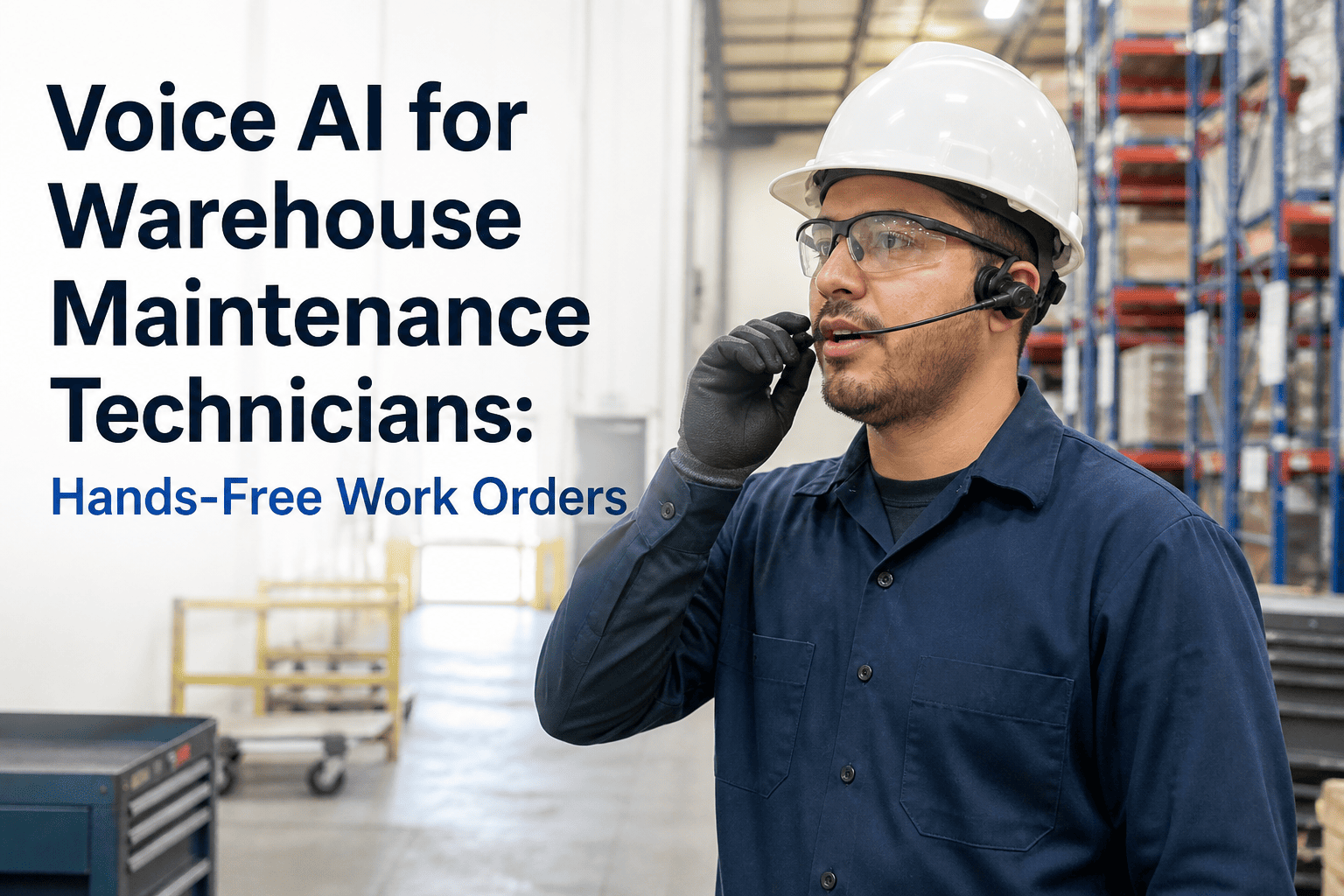
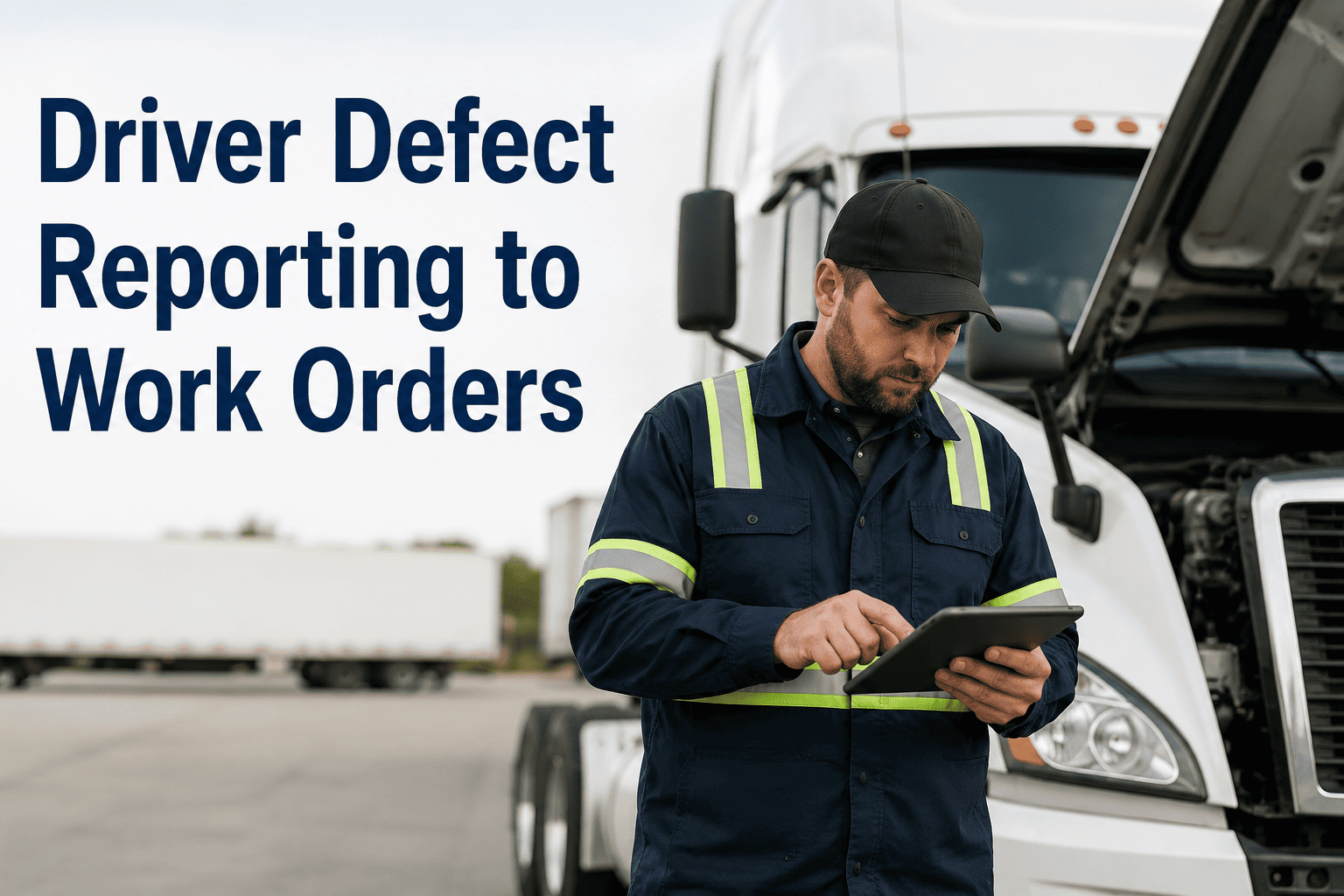
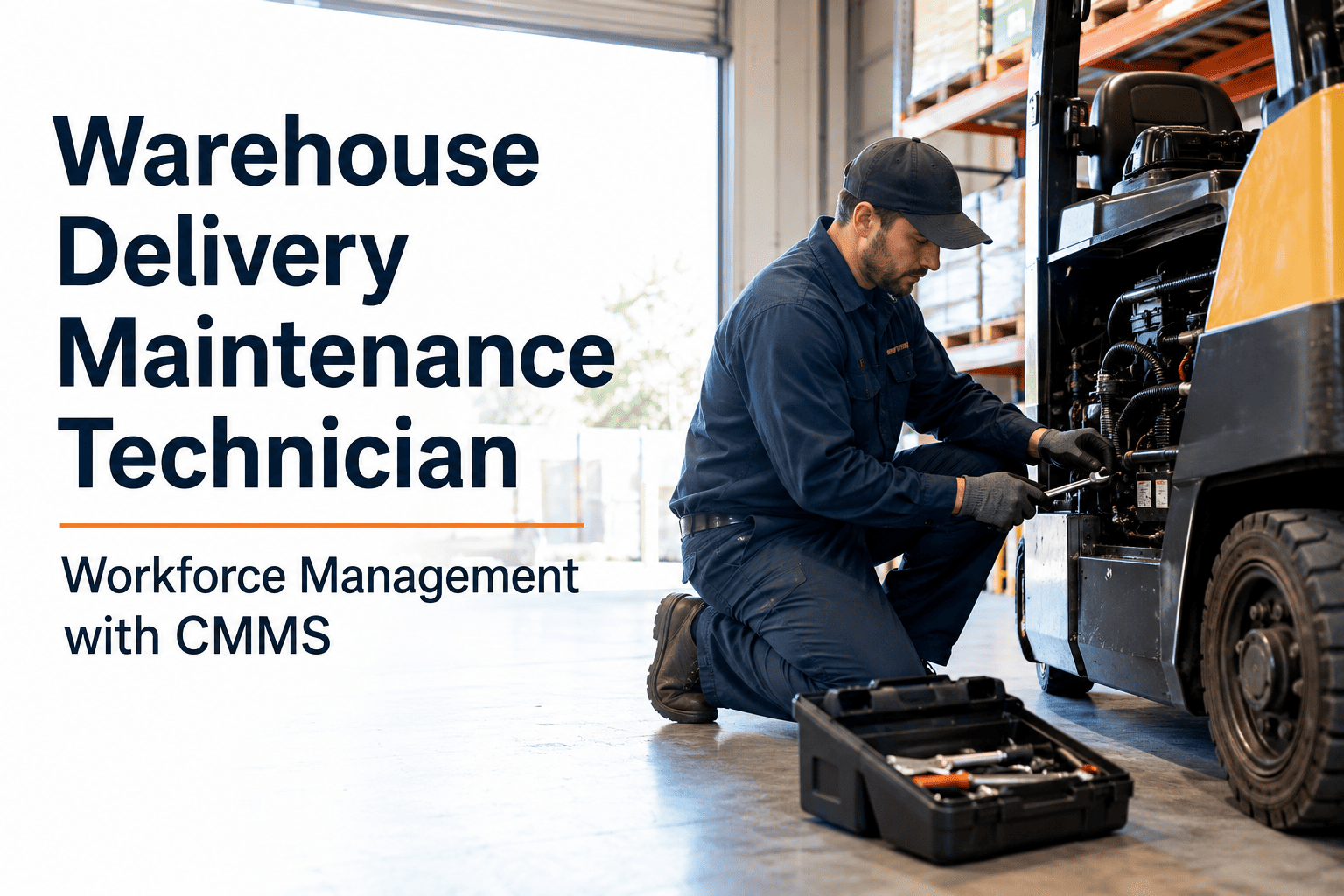
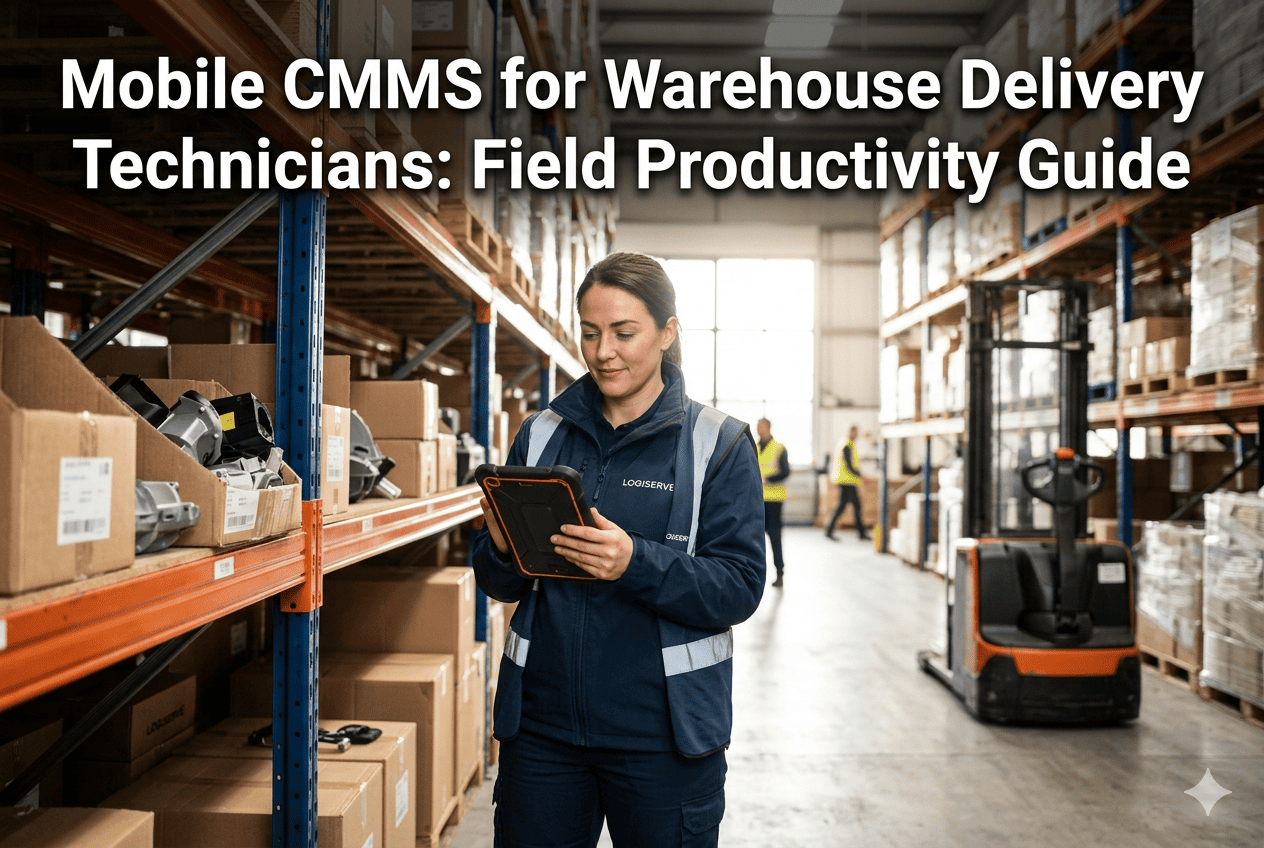
A warehouse technician mid-repair on a conveyor belt has both hands inside a drive assembly, grease on their gloves, and a fault code they've never seen before — and somewhere behind them, a work order is waiting to be typed. That last part is what breaks down. When logging requires stopping work, cleaning hands, and tapping through three screens, it simply doesn't happen with the detail it should. Voice AI integrated with a CMMS changes the physics of that situation: technicians speak naturally while their hands stay on the repair, and the system transcribes, structures, and files the data automatically. Facilities deploying voice-to-CMMS workflows have reported a 38% reduction in administrative effort within six months, while hands-free logging reduces the kind of task-switching that leads to incomplete records and missed fault patterns. OxMaint brings voice AI directly into the maintenance workflow — no separate app, no manual transcription, no information lost between the floor and the system. Book a demo to see OxMaint's voice AI in a live warehouse scenario or start a free trial and activate voice logging on your first asset today.
Voice AI · Hands-Free CMMS · Warehouse Maintenance
Both Hands on the Repair.
Zero Data Left Behind.
Voice AI for warehouse maintenance lets technicians log faults, update work orders, request parts, and close jobs by speaking — without stopping the repair, removing gloves, or unlocking a screen.
38%
Admin effort cut in 6 months with voice-to-CMMS workflows
43%
Drop in incident reports after hands-free voice workflows deployed
80%
Of frontline technicians projected to rely on voice AI daily by 2028
25%
Technician productivity increase with AI-assisted maintenance tools
The Real Problem on the Floor
Why Maintenance Data Disappears Between the Repair and the Record
Maintenance data quality problems don't start in your CMMS — they start at the moment a technician has to choose between finishing the repair and filing the record. In a loud, fast-moving warehouse environment, that choice almost always goes the same way. Here's what that costs.
5–20%
Productive Time Lost
The average warehouse facility loses between 5 and 20% of productive hours to unplanned equipment stoppages — most triggered by failures that incomplete maintenance records failed to predict.
70%
Breakdown Reduction Possible
Deloitte research shows AI-powered CMMS workflows reduce equipment breakdowns by up to 70% — but only when the underlying maintenance data is complete, structured, and timely.
32%
Work Order Backlog Reduction
AI pilot sites report 32% work-order backlog reductions when generative AI extracts intent and priority from technician input — but that only works if technicians actually log in the first place.
3–6 mo
New Technician Learning Gap
New hires spend months learning equipment quirks that experienced colleagues carry in their heads. When senior technicians don't log details — because logging is slow — that knowledge never transfers.
OxMaint Voice AI
See How Technicians Log Work Orders Without Typing a Single Word
A 30-minute demo shows exactly how OxMaint's voice AI works in a real warehouse maintenance scenario — fault logging, parts requests, work order updates, and job closure, all by voice.
Voice AI in Action
What a Technician Can Do With Their Voice That Used to Require Screen Time
Voice AI in OxMaint isn't a dictation tool — it's a full maintenance workflow engine activated by speech. Every action a technician used to perform by tapping through screens is now accessible by speaking a natural sentence. Here's what that looks like in practice across a typical shift.
Fault Detected
"Conveyor three has a belt tracking issue, left side is riding the edge. Fault started at the 08:20 shift change."
Voice AI creates a work order with asset ID, fault description, timestamp, and severity classification — no screen, no typing, no delay.
Mid-Repair
"I need two idler rollers, part number IR-220, and a tensioning wrench. Mark this job as in-progress."
Parts request goes to inventory management, job status updates in the CMMS, and the storeroom receives the pull request — all while the technician's hands stay on the equipment.
Finding Noted
"Belt wear pattern suggests the downstream pulley bearing is also degrading. Flag for inspection within two weeks."
Observation becomes a linked follow-up task attached to the downstream asset — the kind of detail that almost never makes it into typed notes.
Job Close
"Belt realigned, idler replaced, tracking confirmed good. Job complete, took 35 minutes, no further issues."
Work order closes with completion time, parts consumed, technician notes, and outcome recorded — a complete maintenance record generated entirely by voice.
Environment Matters
Built for the Conditions Warehouse Technicians Actually Work In
Voice AI designed for office use fails on the warehouse floor. Ambient noise, machinery, respiratory equipment, and accented speech all defeat systems that were built to understand a quiet boardroom. OxMaint's voice AI is trained and tuned specifically for industrial maintenance environments.
85+
dB
Noise Tolerance
Operational in conveyor, sortation, and packaging environments well above the ambient noise floor that defeats consumer voice assistants.
PPE
Ready
Works Through Hearing Protection
Compatible with bone-conduction headsets and hearing protection microphone setups — so mandatory PPE doesn't block voice logging.
Off
-line
Offline Capable
Voice logs captured in areas with poor connectivity queue and sync automatically when the device reconnects — no data lost in cold stores or dense rack zones.
Multi
Accent
Accent & Dialect Trained
Tuned across regional accents and technical maintenance vocabulary — the system learns from your team's speech patterns over time, improving with every shift.
Before vs. After
The Same Repair, Two Different Documentation Outcomes
Without Voice AI
Screen-dependent logging
Fault occurs. Technician finishes repair before logging — memory of exact timing already fading.
Gloves removed, device unlocked, three screens navigated to reach the work order form.
Notes typed briefly: "Belt issue — fixed." Secondary observation about the downstream bearing is not logged.
Downstream bearing fails three weeks later. No work order history connects it to the earlier repair.
Root cause investigation starts from scratch. Pattern has existed for six months — invisible in the CMMS.
With OxMaint Voice AI
Hands-free, in-context logging
Fault occurs. Technician speaks the fault description, time, and asset ID immediately — gloves on, mid-diagnosis.
Parts request made by voice. Inventory system receives pull request before the technician reaches the storeroom.
Downstream bearing observation spoken mid-repair. System creates a linked follow-up task on the correct asset automatically.
Job closed by voice with full completion detail. Work order contains everything: time, parts, observations, outcome.
Downstream bearing inspected and replaced proactively. No emergency repair, no downtime, no SLA breach.
Deployment Scope
Voice AI Capability Across Different Warehouse Maintenance Scenarios
| Voice Command Type |
What the Technician Says |
What OxMaint Does |
Time Saved vs. Screen |
| Fault Logging |
"Dock leveler 4 hydraulic seal leaking, severity high" |
Creates work order with asset, fault type, severity, timestamp |
3–5 min per event |
| Parts Request |
"Order hydraulic seal kit for dock leveler 4, urgent" |
Raises parts request linked to work order, flags priority |
2–4 min per request |
| Status Update |
"Work order 8842 is in progress, waiting on parts" |
Updates work order status, notifies supervisor of hold |
1–2 min per update |
| Observation Capture |
"Note: adjacent leveler shows same wear pattern, flag for PM" |
Creates linked follow-up task on adjacent asset |
4–6 min per note |
| Job Closure |
"Job done, seal replaced, tested good, 45 minutes total" |
Closes work order with parts used, labor time, outcome |
3–5 min per closure |
| Asset Query |
"What's the repair history on forklift 7 in the last 90 days?" |
Reads back maintenance summary from asset history |
5–8 min vs. manual search |
Frequently Asked Questions
What Warehouse Operations Managers Ask About Voice AI for CMMS
Will voice AI work accurately in a loud warehouse environment with machinery running?
OxMaint's voice AI is tuned for industrial ambient noise levels and works with standard bone-conduction headsets and hearing protection microphones. It performs reliably in conveyor, sortation, and packaging environments where consumer voice assistants fail entirely.
How does the system handle non-standard maintenance terminology or equipment codes specific to our facility?
OxMaint's voice model is trained on your CMMS asset register and work order vocabulary. After a short learning period using your facility's own terminology, recognition accuracy for site-specific codes and equipment names increases significantly compared to a generic voice assistant.
What happens to voice logs captured in areas with no network connectivity?
All voice logs are queued locally on the technician's device and sync automatically when connectivity is restored. No data is lost, and the timestamps reflect the original capture time — not the sync time. This is critical for cold stores, dense rack aisles, and sub-level plant rooms.
Does voice AI replace the need for technicians to review and confirm what was logged?
Voice AI transcribes and structures the input, but technicians receive a quick confirmation prompt before the record is filed. The system is designed to reduce friction, not bypass accountability — every entry is attributed to the technician who made it.
How long does it take for a maintenance team to get comfortable using voice logging daily?
Most teams reach comfortable daily usage within two to three weeks. OxMaint provides short guided onboarding sessions per technician, and the system's suggestion prompts make it easy to build the habit — especially once technicians see how much typing it eliminates.
OxMaint Voice AI + CMMS
Your Maintenance Data Is Only as Good as What Gets Logged. Make Logging Effortless.
Every repair your team completes is a source of maintenance intelligence — but only if it's recorded with the detail it deserves. Voice AI removes every barrier between the technician and the CMMS. Start a free trial today or book a demo to see hands-free maintenance logging in your type of facility.