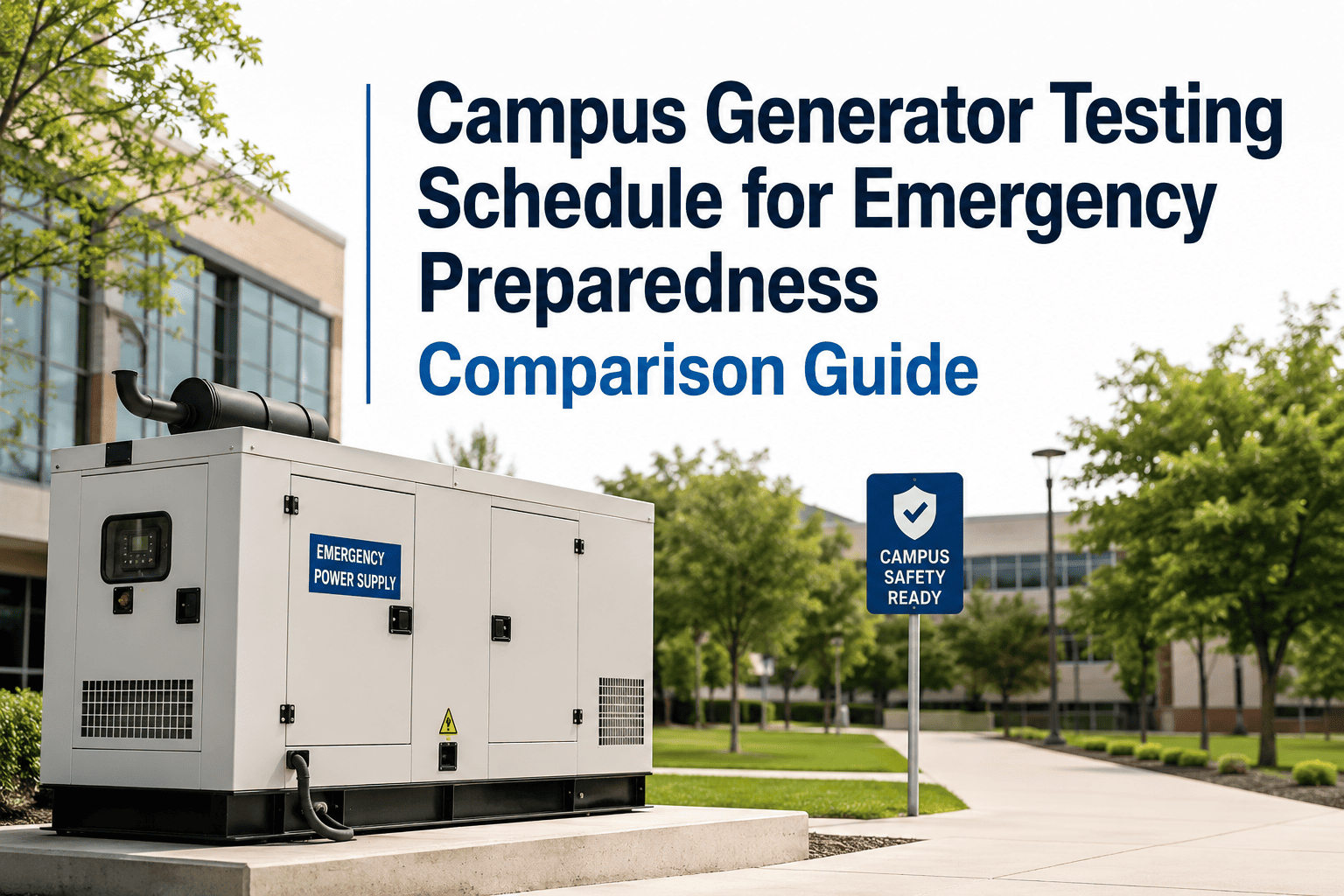
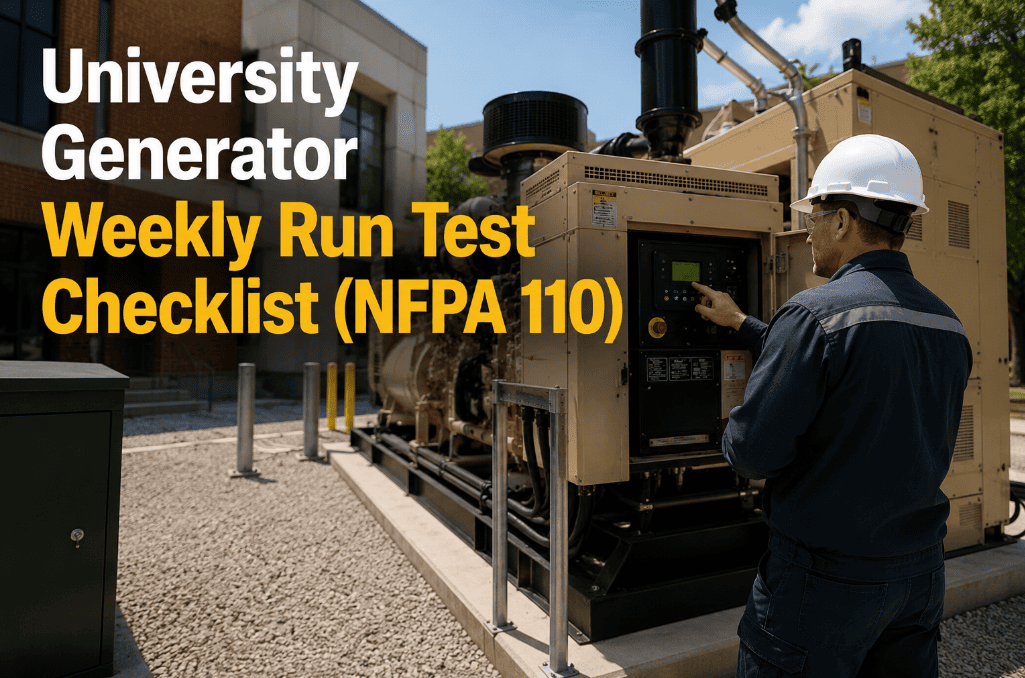
A 28,000-student research university in North Carolina lost backup power to its biomedical research building during a February ice storm — not because the generator failed mechanically, but because a corroded battery terminal prevented the engine from cranking. The automatic transfer switch detected the utility outage within 10 seconds and sent the start signal. Nothing happened. The generator sat silent for 11 hours while $2.3 million in tissue samples, cell cultures, and reagents reached ambient temperature in freezers rated for 72 hours of backup power that never arrived. The battery had passed a visual inspection 4 months earlier. It had not received a load test in 14 months — 2 months past the NFPA 110 required interval. A CMMS-managed preventive maintenance program would have auto-scheduled the battery load test, flagged the overdue status, and escalated the missed task before winter storm season. The $2.3 million loss was caused by a $180 battery that nobody tested on time. See how Oxmaint automates generator PM scheduling.
This guide covers every maintenance task campus facilities teams need to keep emergency generators reliable, compliant, and ready to start within 10 seconds of a utility outage — from weekly no-load inspections through annual full-load bank testing. Whether you maintain 3 generators or 30 across residence halls, research facilities, data centers, and dining operations, a structured preventive maintenance program is the difference between power resilience and catastrophic loss. Schedule a consultation to map this program to your campus.
The Hidden Risk in Campus Backup Power
Campus backup generators sit idle 99% of the time. That idle time is precisely what makes them dangerous — rubber components dry-rot, fuel degrades, batteries self-discharge, coolant chemistry shifts, and control systems lose calibration. When the utility drops and lives, research, and operations depend on instant backup power, the generator must start on the first crank every time. NFPA 110 exists because hope is not a maintenance strategy.
Generator Failures That Cost Campuses Millions
Battery Failure
Corroded terminals, dead cells, or discharged batteries prevent engine cranking
Cause of 40%+ generator no-starts
Fuel Degradation
Diesel fuel grows bacteria, absorbs water, and forms sludge in idle tanks
Clogs filters & injectors within 6–12 months
ATS Malfunction
Transfer switch fails to detect outage or transfer load to generator
Building stays dark despite running generator
Overdue PM
Missed NFPA 110 intervals void compliance and insurance coverage
$50K–$250K in fines & voided claims
How Preventive Maintenance Keeps Generators Ready
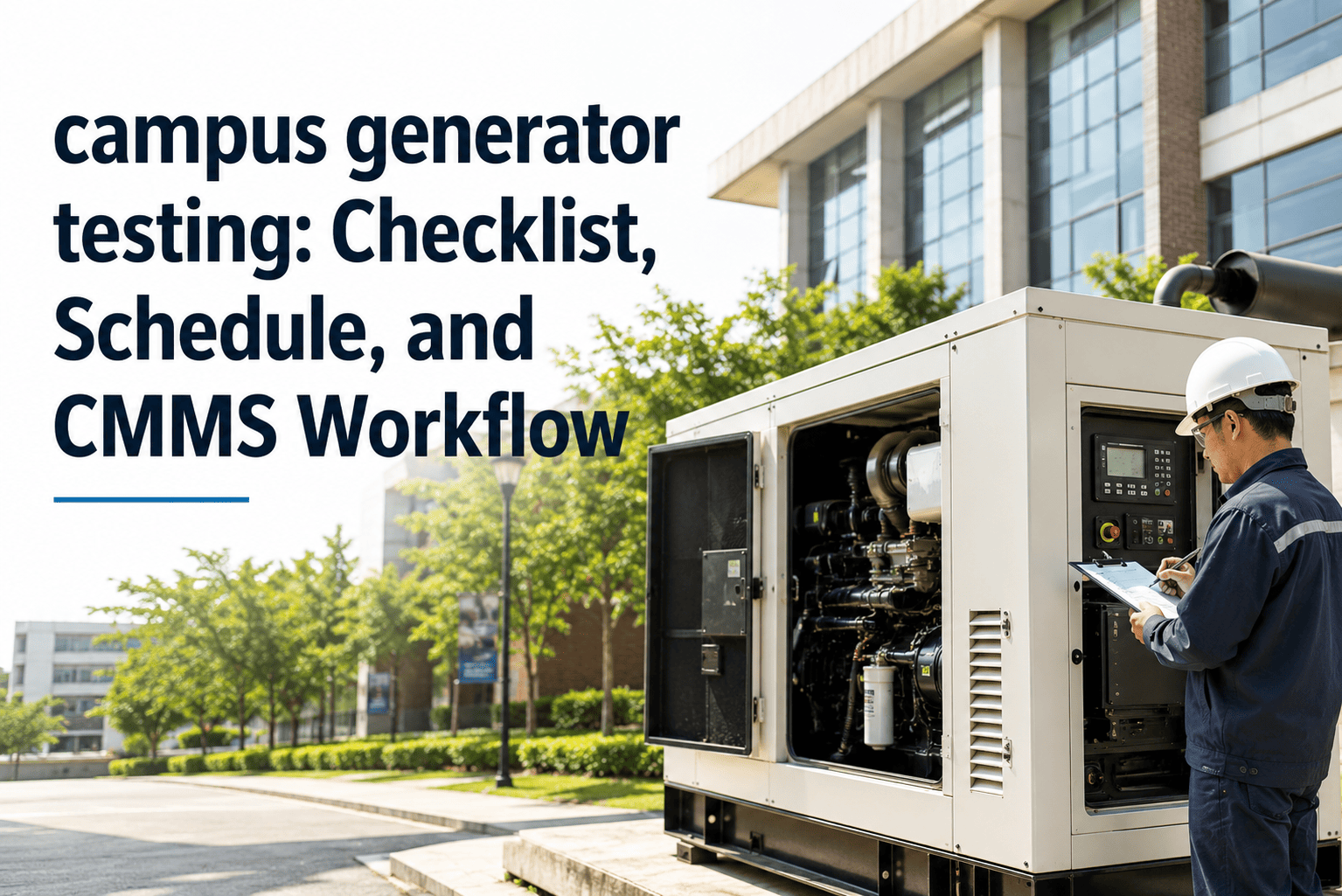
A campus generator PM program is not about fixing generators — it is about ensuring they never need fixing during an emergency. Every task in NFPA 110 Chapter 8 is designed to discover failure modes during scheduled testing, not during the ice storm, hurricane, or grid failure that brings the utility down. When integrated with Oxmaint CMMS, each PM cycle auto-generates work orders, tracks completion, and builds the compliance documentation your AHJ and insurance carrier require. Book a demo to see this workflow live.
Generator PM Cycle: From Scheduled Test to Verified Readiness
1
CMMS Generates Work Order
Auto-scheduled per NFPA 110
→
2
Technician Executes Checklist
Mobile device w/ photo docs
→
3
Run Time & Load Recorded
Engine hours logged
→
4
Anomalies Trigger Corrective WO
Auto-escalation if critical
→
5
Compliance Report Generated
Audit-ready documentation
The Financial Case for Generator PM
The cost of maintaining campus generators is a fraction of the cost of a single generator failure during an actual outage. A structured PM program — run on NFPA 110 intervals with CMMS tracking — costs $8,000–$15,000 per generator annually. A single failure event at a research university can destroy millions in irreplaceable specimens, shut down data centers, and create life-safety hazards in occupied residence halls. The math is not close.
Annual Cost: Reactive vs. Preventive Generator Maintenance
Reactive / Minimal Maintenance
Research loss from single generator failure$2,300,000
Emergency generator rental during repair$45,000
NFPA 110 compliance fines & citations$75,000
Insurance premium surcharge (missed PM)$35,000
Single-Event Exposure$2,455,000
VS
CMMS-Managed Preventive Maintenance
Annual PM per generator (10 units)$120,000
Annual load bank testing (contracted)$25,000
CMMS platform cost$4,800
Fuel polishing and treatment$8,000
Annual PM Investment$157,800
Risk Reduction Per Year (10-Generator Campus)$2.3M+ protected
Generator Types and Campus Applications
Different campus buildings have different backup power requirements — and different generator configurations. Your PM program must account for generator size, fuel type, load criticality, and NFPA 110 classification level. Each type has specific maintenance requirements that your CMMS must track independently.
Campus Generator Types and Criticality Classifications
LEVEL 1
Life Safety — Residence Halls & Assembly
NFPA 110 Level 1: must start and accept load within 10 seconds. Powers emergency lighting, fire alarm, elevator recall, and exit signage. Failure creates immediate life-safety hazard. Typically 100–500 kW diesel units. Most stringent PM requirements.
LEVEL 1
Critical Operations — Research & Data Centers
NFPA 110 Level 1: protects irreplaceable research specimens, live experiments, server infrastructure, and clinical operations. Typically 500–2,000 kW diesel units with extended fuel capacity for 72+ hour runtime. Requires monthly load testing.
LEVEL 2
Essential Systems — Dining & Administration
NFPA 110 Level 2: must start and accept load within 60 seconds. Powers food service refrigeration, administrative computing, and campus security systems. Typically 200–750 kW diesel or natural gas units. Quarterly load testing minimum.
LEVEL 2
Infrastructure — Central Plant & Utilities
Powers campus chilled water plants, heating plants, water treatment, and sewage lift stations. Often the largest generators on campus (1,000–3,000 kW). Natural gas or dual-fuel configurations common. Failure affects multiple buildings simultaneously.
Map Every Generator to a Maintenance Schedule That Matches Its Criticality
Whether your campus runs 3 diesel generators or 30 across residence halls, research labs, data centers, and dining facilities, Oxmaint registers each unit with its NFPA 110 classification, fuel type, ATS configuration, and manufacturer PM intervals — then auto-generates the inspection work orders your team needs on exactly the right schedule.
NFPA 110 Chapter 8 prescribes exact maintenance frequencies for every emergency power supply system component. These are not suggestions — they are the minimum standards your AHJ enforces and your insurance carrier requires. Missing any interval creates both a compliance gap and an operational risk. Sign up free to automate every NFPA 110 frequency in Oxmaint.
NFPA 110 Required Maintenance by Frequency
Weekly — Visual Inspection & Exercising
Run generator under no-load or available building load for minimum 30 minutes. Check oil pressure, coolant temperature, battery charger output, fuel level, and exhaust for abnormal smoke. Record engine hours and all gauge readings in CMMS.
Monthly — Load Test & Fluid Analysis
Exercise under building load or load bank at minimum 30% of nameplate rating for 30+ minutes per NFPA 110 §8.4.2. Test ATS transfer and retransfer operation. Check coolant level, oil level, belt tension, and all hose connections. Sample and test fuel for water and microbial contamination.
Semiannual — Deep Inspection & Battery Load Test
Full battery load test — not just voltage check. Inspect all electrical connections and terminals. Test all safety shutdowns (high coolant temp, low oil pressure, overspeed, overcrank). Inspect exhaust system for leaks. Clean or replace air filters. Verify block heater operation.
Annual — Full Load Bank Test & Overhaul
4-hour load bank test at 75–100% of nameplate rating per NFPA 110. Full fluid change (oil, coolant, fuel filters). Professional fuel polishing. Inspect and test all ATS components. Calibrate all controls and meters. Generate annual compliance report for AHJ and insurance.
Critical Subsystems Your PM Program Must Cover
A generator is not a single machine — it is an integrated system of engine, alternator, fuel supply, cooling, starting, controls, and transfer switching. Each subsystem has its own failure modes, PM intervals, and documentation requirements. Your CMMS must track each one independently because the fire marshal and insurance inspector will ask about each one specifically.
Generator Subsystem Failure Modes and PM Actions
Top Failure Modes
Battery failure — corroded terminals, dead cells40% of no-starts
Fuel contamination — water, bacteria, sludge30% of run failures
Coolant system — leaks, low level, failed thermostat15% of shutdowns
ATS failure — contact welding, control board fault10% of events
Combined95% preventable
VS
CMMS-Tracked PM Actions
Weekly battery voltage check + semiannual load test$180–$400/yr
Cost to Prevent vs. Cost of Failure$4,500 PM vs. $2.3M loss
Automatic Transfer Switch (ATS) Testing
The ATS is the critical link between utility power and generator power. If the ATS fails to detect an outage or fails to transfer load, the generator runs but the building stays dark. ATS testing is the most overlooked component of campus generator maintenance — and one of the most common causes of backup power failure during real events.
ATS Testing Requirements and Common Failures
Monthly Transfer & Retransfer Test
Simulate utility outage to verify ATS detects loss, sends start signal, and transfers load within NFPA 110 time requirement (10 sec Level 1, 60 sec Level 2). Then simulate utility restoration to verify retransfer after time delay. Record transfer time, retransfer time, and any hesitation.
Contact Inspection (Annual)
Inspect main power contacts for pitting, welding, or carbon buildup. ATS contacts that have welded together will not transfer under load — the building loses power and the generator runs with no connected load. Infrared scan contacts under load to identify hot spots.
Time Delay Verification
Verify engine start delay, transfer delay, retransfer delay, and engine cool-down delay are all programmed correctly. Incorrect time delays cause nuisance transfers during momentary utility blips or premature retransfer before utility power stabilizes.
Control Board & Communication
Test ATS controller for proper voltage and frequency sensing. Verify communication with BAS or campus monitoring system. Check exercise clock programming for automated weekly test runs. Replace control board battery if equipped.
Fuel Management — The Silent Killer
Diesel fuel is the lifeblood of campus emergency generators — and it degrades from the day it enters your tank. Water condensation, microbial growth (diesel bug), oxidation, and particulate formation can render stored fuel unusable within 6–12 months without active management. Most campus generators sit with full fuel tanks for months between real outage events. Without a fuel management program, you are storing a tank of problems, not a tank of fuel. Schedule a consultation to build your fuel management program.
Diesel Fuel Degradation Timeline Without Active Management
0–3 MO
Water Condensation Begins
Temperature cycling causes condensation inside partially filled tanks. Water collects at the tank bottom, creating the environment for microbial growth. PM action: monthly water drain from tank sump. CMMS tracks tank level and drain schedule.
3–6 MO
Microbial Growth Accelerates
Bacteria and fungi (Hormoconis resinae — "diesel bug") colonize the water-fuel interface. They produce acidic byproducts that corrode tank walls and generate sludge. PM action: quarterly fuel sampling and testing for microbial contamination. Treat with biocide if detected.
6–12 MO
Filter Clogging & Injector Fouling
Sludge and particulate matter clog fuel filters and foul injectors. Generator starts but cannot sustain load — stumbles, surges, or shuts down on high exhaust temperature. PM action: semiannual fuel polishing (filtering and reconditioning stored fuel). Replace fuel filters.
12+ MO
Fuel Becomes Unusable
Oxidation degrades fuel chemistry. Asphaltene formation creates tar-like deposits throughout the fuel system. Tank requires draining, cleaning, and refilling. Cost: $5,000–$15,000 per tank depending on size. PM action: annual fuel quality certification.
Your Campus Runs on Trust That the Generator Will Start. Make Sure It Does.
Oxmaint tracks every campus generator with its NFPA 110 classification, fuel type, ATS configuration, and manufacturer-specific PM schedule. The CMMS auto-generates weekly exercise reminders, monthly load test work orders, semiannual battery tests, and annual load bank scheduling — documenting every task with timestamps, readings, and photos that satisfy your AHJ, insurance carrier, and board of trustees. The North Carolina university lost $2.3 million because nobody tested a $180 battery. That doesn't have to be your story.
How often must campus generators be tested under NFPA 110?
NFPA 110 Chapter 8 requires weekly exercising (minimum 30 minutes under no-load or available building load), monthly load testing at minimum 30% of nameplate rating for 30 minutes, and annual load bank testing at 75–100% of nameplate for a continuous 4-hour period. Level 1 systems (life safety) have the most stringent requirements — they must demonstrate the ability to start, achieve rated speed and voltage, and accept load within 10 seconds of a utility outage signal. Your AHJ may impose additional requirements beyond NFPA 110 minimums. Book a demo to see how Oxmaint auto-schedules every NFPA 110 frequency.
What is the most common cause of generator failure during an actual outage?
Battery failure accounts for over 40% of generator no-start events according to industry data. Starting batteries self-discharge over time, terminals corrode, and individual cells fail — often without visible indication. A battery that shows 24V on a surface voltage check can still fail to deliver the cranking amperage needed to turn a large diesel engine. The only reliable test is a load test that measures battery capacity under actual cranking load conditions. NFPA 110 requires battery testing, and a CMMS ensures the test happens on schedule with documented results. Sign up free to start tracking battery health across your fleet.
How do we maintain diesel fuel quality in generators that rarely run?
Diesel fuel quality management requires four actions on a recurring schedule: drain water from tank sumps monthly (water enables microbial growth), sample and test fuel quarterly for water content and microbial contamination, polish (filter and recondition) stored fuel semiannually, and certify fuel quality annually with laboratory analysis. Fuel stabilizer additives extend usable life but do not eliminate the need for physical water removal and filtration. Most generator contractors offer fuel polishing as an add-on service during PM visits. Oxmaint tracks fuel sample results, polishing dates, and additive treatment schedules alongside engine PM work orders. Schedule a consultation to build your fuel management program.
What does a campus generator PM program cost versus the risk of failure?
A comprehensive CMMS-managed PM program costs $8,000–$15,000 per generator annually including weekly exercising, monthly load testing, fluid changes, filter replacements, fuel management, battery testing, and ATS maintenance. A 10-generator campus spends roughly $100,000–$150,000 per year on full NFPA 110 compliance. Compare that to the North Carolina university's $2.3 million research loss from a single untested battery, or the $45,000 cost of an emergency generator rental, or the insurance claim denied because PM documentation was incomplete. The CMMS itself typically costs $3,000–$8,000 annually to track the entire generator fleet. ROI is immediate — one prevented failure event pays for decades of PM service.