The treadmill belt that slipped last month just failed again—same unit, same symptom, same emergency repair cost. Your technician replaced the belt both times, documented the work order, and moved on to the next call. But the real question remains unanswered: why did this belt fail twice when identical units on the same floor haven't needed service in eighteen months? Without root cause analysis, you're treating symptoms while the underlying problem continues destroying equipment, consuming budget, and—most critically—creating conditions for student injuries.
Campus recreation facilities face a fundamental challenge that commercial gyms don't encounter: accountability extends beyond operational efficiency to institutional liability, student safety, and regulatory compliance. When equipment fails, administrators don't just want it fixed—they want assurance it won't happen again. That assurance requires systematic investigation that traces failures back to their origins, whether those origins lie in maintenance gaps, usage patterns, environmental conditions, or equipment design limitations.
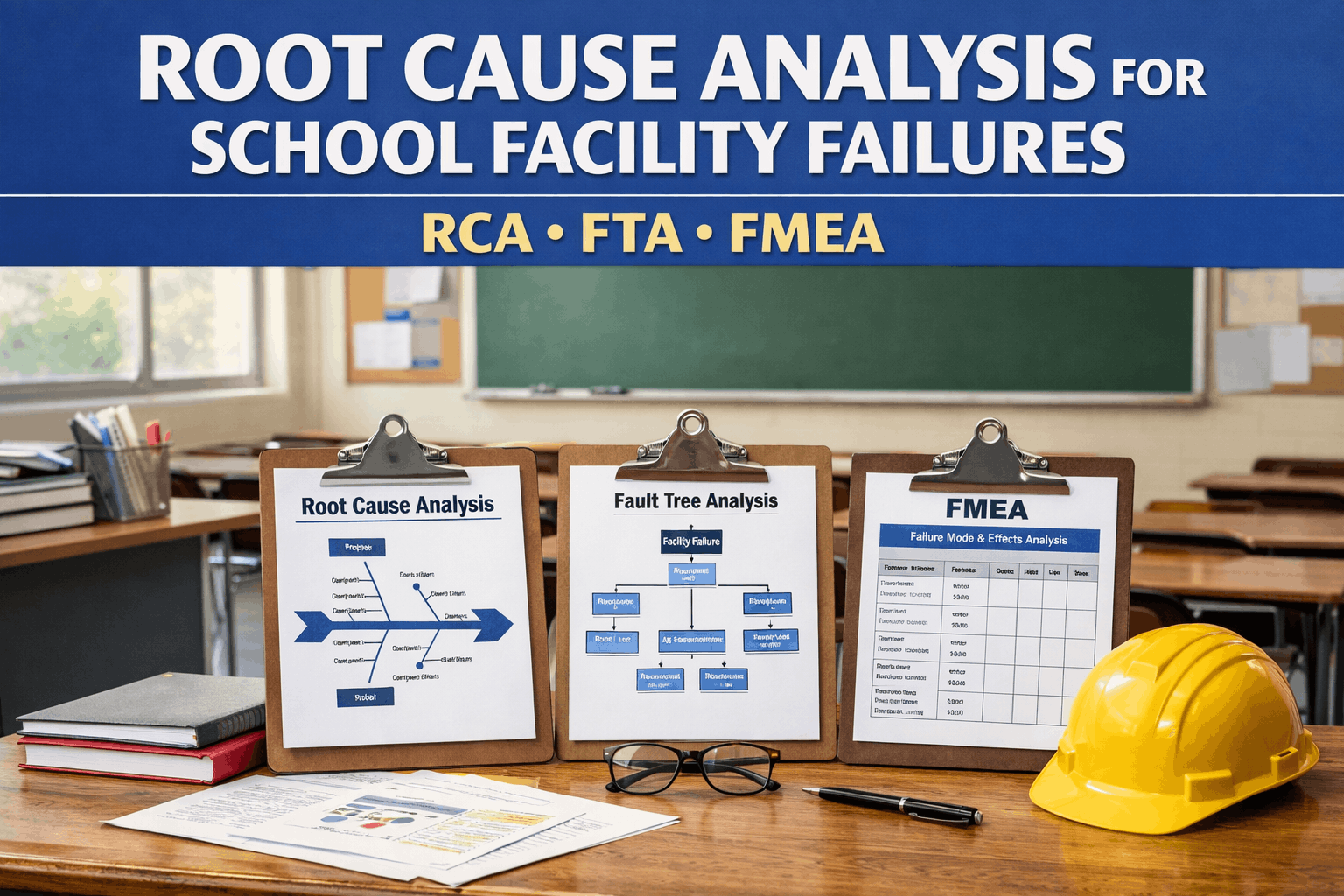
This guide establishes root cause analysis frameworks specifically designed for campus fitness equipment. Facilities implementing these protocols reduce repeat failures by 60-75% while building the documentation that protects institutions during incident investigations and insurance reviews. Teams ready to move beyond reactive repairs can sign up free to start tracking failure patterns with automated analysis tools.
Every repeat failure represents a root cause you haven't found yet. Every injury investigation will ask what you knew and when you knew it. Are your maintenance records ready for that scrutiny?
Why Root Cause Analysis Matters for Campus Fitness Equipment
Reactive maintenance—fixing what breaks when it breaks—keeps equipment running but never answers the essential question: why did this fail? Root cause analysis transforms isolated incidents into institutional learning, preventing the cascade of repeat failures that consume maintenance budgets and create safety risks. Try free RCA documentation tools to start capturing the data that reveals patterns.
Repeat Failure Elimination
Without RCA, the same problems recur indefinitely. A cable machine that fails from improper tensioning will fail again after repair—until someone identifies and addresses the tensioning procedure gap.
Budget Protection
Emergency repairs cost 3-5x more than planned maintenance. RCA identifies failure patterns before they become emergencies, shifting spend from reactive firefighting to preventive intervention.
Liability Documentation
Injury investigations examine maintenance history. RCA documentation demonstrates institutional diligence—you identified problems, analyzed causes, and implemented corrections. That record matters in litigation.
Student Safety Assurance
Campus recreation serves users who may not recognize equipment warning signs. RCA-driven maintenance catches hazards before inexperienced users encounter failing equipment.
The RCA Framework for Gym Equipment
Effective root cause analysis follows a structured methodology that moves systematically from symptom to source. Each step builds on the previous, creating an investigation trail that satisfies both operational and compliance requirements. Schedule a demo to see structured RCA workflows that guide technicians through proper investigation.
Problem Definition
What exactly failed, when, and what were the immediate consequences?
- Specific equipment identification (make, model, serial, location)
- Precise failure description (not "broken" but "belt slips under load >150 lbs")
- Timeline: when first noticed, when reported, when addressed
- Impact assessment: downtime duration, user affected, safety implications
- Similar equipment status: are other units showing symptoms?
Data Collection
What evidence exists about conditions before, during, and after failure?
- Maintenance history: all work orders, PM completion, parts replaced
- Usage data: hours, cycles, user reports of abnormal behavior
- Environmental factors: temperature, humidity, cleaning chemical exposure
- Physical evidence: photos, measurements, failed component analysis
- Operator observations: what users noticed before failure
Cause Analysis
Why did this failure occur? What chain of events led to this outcome?
- Apply 5 Whys technique to drill past symptoms to causes
- Distinguish immediate cause from contributing factors
- Identify systemic issues vs. isolated incidents
- Map causal chain from root to failure event
- Validate findings against collected evidence
Corrective Action
What changes will prevent this failure from recurring?
- Immediate actions: address the current failure safely
- Short-term corrections: prevent recurrence on this unit
- Systemic improvements: apply learnings across similar equipment
- Procedure updates: revise PM schedules, inspection checklists
- Training needs: address skill or knowledge gaps identified
Verification & Documentation
Did corrections work? Is the complete analysis preserved for future reference?
- Monitor corrected equipment for recurrence
- Track similar equipment for emerging patterns
- Document complete RCA with evidence and conclusions
- Update asset records with failure history
- Share learnings across maintenance team
Impact Data: Campus facilities implementing structured RCA reduce repeat equipment failures by 60-75% within the first year while decreasing total maintenance costs by 25-40%. Start tracking your failure patterns free.
The 5 Whys Technique Applied to Gym Equipment
The 5 Whys is the most practical RCA tool for maintenance teams—simple enough to apply quickly, powerful enough to reveal root causes hidden beneath obvious symptoms. The technique works by repeatedly asking "why" until you move past what failed to understand why it failed. Try free guided 5 Whys templates that walk technicians through proper analysis.
5 Whys Examples for Common Gym Equipment Failures
Stop fixing symptoms. Start eliminating causes. Structured RCA transforms every failure into prevention for the next one.
Common Root Cause Categories for Gym Equipment
While every failure is unique, root causes cluster into predictable categories. Recognizing these patterns accelerates analysis and guides corrective actions toward systemic improvements rather than isolated fixes. Start categorizing your failures free to reveal your facility's specific vulnerability patterns.
Equipment-Specific RCA Guidelines
Different equipment categories exhibit distinct failure patterns that guide investigation focus. Understanding typical failure modes for each equipment type accelerates root cause identification. Book a demo to see equipment-specific analysis templates.
| Equipment Type | Primary Failure Modes | Investigation Focus Areas | Key Data to Collect |
|---|---|---|---|
| Treadmills | Belt slip, motor failure, deck wear, controller issues | Lubrication schedule, belt tension history, motor temperature trends | Run hours, belt tension readings, motor amp draw, deck friction coefficient |
| Ellipticals | Bearing wear, drive belt failure, resistance system issues | Bearing lubrication, belt tension, resistance calibration | Cycle count, vibration patterns, resistance accuracy, noise levels |
| Cable Machines | Cable fraying, pulley bearing failure, weight stack misalignment | Cable inspection completeness, pulley lubrication, guide rod alignment | Cable age, pulley rotation smoothness, stack tracking, user load patterns |
| Free Weight Racks | J-hook damage, safety bar wear, structural loosening | Torque verification, impact damage assessment, weld inspection | Last torque check date, visible damage photos, bolt condition |
| Benches | Pad separation, adjustment mechanism failure, frame fatigue | Mounting hardware integrity, adjustment pin wear, weld stress points | Pad mounting torque, mechanism cycle count, frame inspection dates |
| Stationary Bikes | Pedal loosening, seat post failure, resistance malfunction | Thread integrity, post clamp condition, resistance motor current | Pedal torque readings, seat height adjustments, resistance test results |
Building a Failure Pattern Database
Individual RCAs generate value; aggregated RCA data generates transformation. When failure analyses accumulate over time, patterns emerge that reveal systemic vulnerabilities invisible in single incidents. Start building your failure database free with structured data capture that enables pattern analysis.
Identify equipment that consistently underperforms, informing replacement decisions and vendor negotiations.
Reveal usage spike impacts, seasonal environmental effects, and maintenance timing optimization opportunities.
Identify environmental hot spots, high-traffic wear zones, and facility design issues affecting equipment life.
Prioritize systemic improvements by addressing root causes that generate the most repeat failures.
KPIs for RCA Program Effectiveness
Measuring RCA program performance ensures continuous improvement and demonstrates value to stakeholders. Track these metrics to validate your investment and identify optimization opportunities. Access automated KPI dashboards free with real-time tracking of failure reduction progress.
Repeat Failure Rate
Target: Under 10%Percentage of failures that recur within 90 days on the same equipment for the same failure mode
RCA Completion Rate
Target: 100% critical, 80% allPercentage of qualifying failures receiving documented root cause analysis
Time to Root Cause
Target: Under 48 hoursAverage time from failure occurrence to documented root cause identification
Corrective Action Implementation
Target: 95%+ within 30 daysPercentage of identified corrective actions fully implemented within target timeframe
Failure Rate Trend
Target: 15%+ annual reductionYear-over-year change in total equipment failures per 1,000 operating hours
Mean Time Between Failures
Target: 20%+ annual increaseAverage operating time between failures across equipment categories
RCA Documentation for Liability Protection
When equipment failures result in injuries, legal proceedings examine maintenance records with forensic intensity. Proper RCA documentation demonstrates institutional diligence that can determine liability outcomes. Schedule a demo to see litigation-ready documentation that protects your institution.
Incident Capture
Timestamped failure report with photos, witness statements, and immediate conditions documented
Evidence Preservation
Failed components retained, maintenance history exported, related records secured
Analysis Record
Complete 5 Whys documentation with evidence links, participant signatures, conclusions
Action Verification
Corrective actions documented with completion evidence, effectiveness monitoring ongoing
Legal Reality: Institutions with documented RCA programs showing proactive failure prevention resolve liability claims 65% faster with 40% lower average settlements than those with reactive maintenance records only. Build your documentation foundation free.
Implementation Roadmap
Building an effective RCA program requires systematic implementation that develops capability while demonstrating value. This roadmap provides a realistic timeline for campus recreation facilities. Get a customized implementation plan—book a consultation.
Foundation
Weeks 1-4Establish failure tracking system, define RCA triggers, train core team on 5 Whys methodology
Pilot Phase
Weeks 5-12Apply RCA to all critical equipment failures, refine templates, begin building failure database
Expansion
Weeks 13-26Extend RCA to all equipment categories, implement systemic corrections, measure repeat failure reduction
Optimization
OngoingContinuous improvement through pattern analysis, predictive capabilities, benchmark advancement
Implementation Impact — Typical Campus Recreation Facility
Every equipment failure is an opportunity to prevent the next one. Turn your maintenance data into institutional learning with structured root cause analysis.
Frequently Asked Questions
Q: Which equipment failures should trigger a formal RCA?
At minimum, conduct formal RCA for: any failure that caused or could have caused injury, any failure that recurs within 90 days of repair, any failure on safety-critical equipment (treadmills, cable machines, racks), and any failure costing more than $500 to repair. As your program matures, extend RCA to all failures to maximize learning. Try free automatic RCA triggers based on your criteria.
Q: How long should a typical RCA take to complete?
Simple failures with obvious root causes can be analyzed in 30-60 minutes. Complex failures involving multiple contributing factors may require 2-4 hours of investigation. The goal is thoroughness, not speed—but structured templates and guided workflows significantly reduce analysis time while improving consistency. Target 48 hours from failure to documented root cause for routine issues.
Q: What if we identify a root cause we can't immediately fix?
Document the root cause, implement available interim controls, and create a corrective action plan with timeline and resource requirements. Some root causes require budget approval, vendor involvement, or facility modifications that take time. The key is demonstrating awareness and active management of the risk—not necessarily immediate resolution. Schedule a demo to see corrective action tracking.
Q: How do we get maintenance technicians to embrace RCA?
Position RCA as a tool that makes their work easier by eliminating repeat failures they're tired of fixing. Start with failures they've seen recur—show them how RCA could have prevented the callbacks. Keep initial analyses simple with guided templates. Celebrate when corrections eliminate problems. Avoid using RCA findings punitively—the goal is learning, not blame.
Q: How long should we retain RCA documentation?
Retain RCA documentation for the life of the equipment plus seven years minimum. For any failure involving injury or near-miss, retain records indefinitely or until legal counsel advises otherwise. Digital systems make long-term retention practical and searchable—essential when auditors or attorneys request historical records years after incidents. Start building your permanent record free.
Q: Can RCA findings help with equipment purchasing decisions?
Absolutely—this is one of the highest-value applications of aggregated RCA data. When certain brands or models consistently appear in failure analyses, you have objective evidence for vendor discussions and replacement decisions. Conversely, equipment with minimal failure history justifies premium pricing for proven reliability. Data-driven procurement decisions significantly impact long-term maintenance costs.